Politics
Topics
-
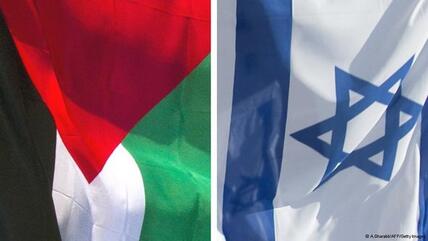 Interview with Andreas Reinicke
''A Phase of Strategic Reorientation''
Andreas Reinicke, the EU's Special Representative to the Middle East Peace Process, believes that Egypt will continue to play a constructive role in the region in the future. He also urges Israel's new government to agree to a two-state peace solution. Michael Knigge spoke to him about the situation in the Middle East
-
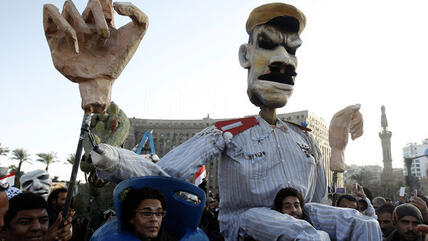 Political Power Struggle in Egypt
On the Brink of Ungovernability
Current events in Egypt are often represented as a confrontation between two camps: one that is bent on establishing a dictatorship, while the other one is struggling to defend freedom and democracy. In reality, all parties in Egypt today are pushing the country to the brink of ungovernability, says Nagwan El Ashwal
-
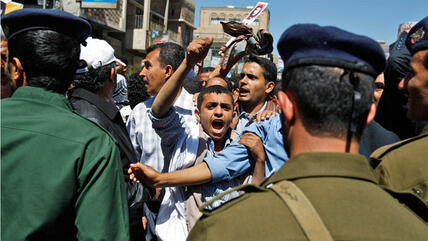 Yemen and the Arab Spring
Revolution on Hold
While political turbulence continues unabated in Tunisia and Egypt – the two countries where the Arab Spring started – and a bloody civil war still rages unchecked in Syria, the transition in Yemen seems to have ground to a complete halt. By Nader Alsarras
-
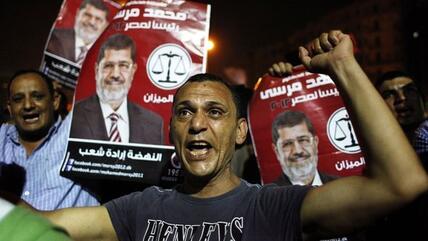 Muslim Brothers as Victims
''25 TV Stations Are Working against Us''
Unfair media coverage, hostile opposition, and violent demonstrators: Many Muslim Brothers see themselves as being wrongly attacked. A visit to a party office of the Islamists in Cairo. By Markus Symank
-
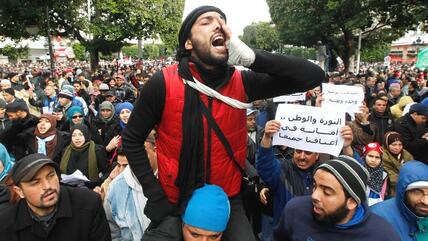 Islamism and Secularism after the Arab Spring
Muslim's Multiple Modernities
For Muslim societies, the way to democracy will inevitably involve religious politics, says Nader Hashemi in his essay. And for historical reasons, he argues, Muslim societies will develop different concepts of democracy than the ones common in the West
-
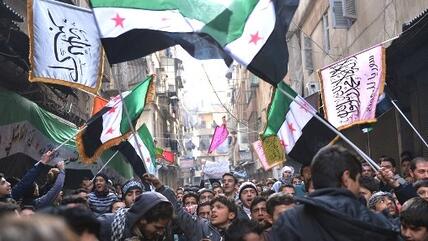 European Policy on Syria
The Time for Caution is Past
In view of the suffering and the destruction in Syria and the reticence of the US, the Europeans must assume more responsibility. They should expedite the reconstruction of liberated territories, bolster the National Coalition, finance rebels fighting for a democratic Syria and apply diplomatic pressure to pave the way for a political transition, says Kristin Helberg
-
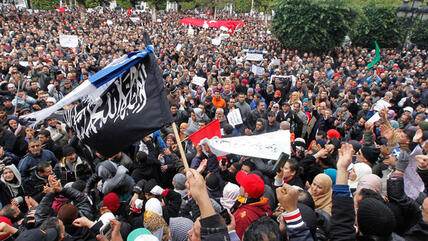 Essay by Amel Grami
A Turning Point in Tunisia's Transition
According to the renowned Tunisian academic and intellectual Amel Grami, the two-pronged policy being pursued by the Islamist Ennahda party under the leadership of Rachid Ghannouchi threatens to split Tunisian society in two and push the revolution to the brink of the abyss
-
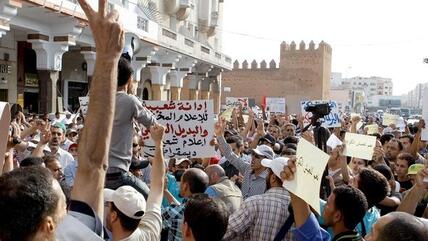 The Moroccan Pro-Democracy Movement
Down, But Not Out
The Moroccan protest movement has lost much of its initial momentum. A clever strategy on the part of the palace, that has combined political concessions with repression, a lack of allies, the international economy and the fate of the uprisings in other Arab countries have all severely weakened the movement. But the Kingdom of Morocco has not seen the last of protests and uprisings. By Beat Stauffer
-
 Tunisia's Government in Crisis
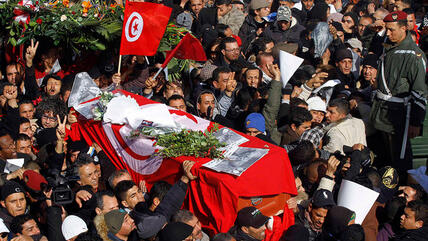
A Political Earthquake
The murder of the leftist politician Chokri Belaid has plunged the nation's already beleaguered government into deep crisis. In particular Ennahda, the strongest party in the coalition, now has its back to the wall. Sarah Mersch reports from Tunis
-
 Iran's Role in the Syrian Civil War
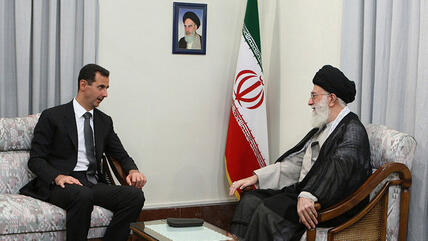
Masters and Servants
As the military situation has grown more and more difficult for Syria's Baath regime, Iran has become an irreplaceable ally for President Assad. The mullahs have succeeded in extending their influence in Damascus and building up a network of militias in Syria. Birgit Svensson reports
-
 Interview with Turkish Foreign Minister Davutoglu
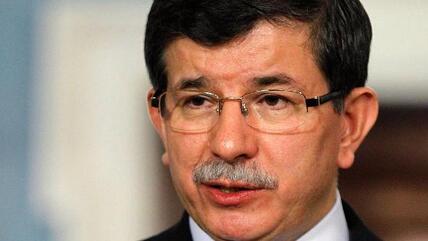
Dialogue Should Not Legitimize Assad
In an interview with Kersten Knipp, Turkish Foreign Minister Ahmet Davutoglu warns against interpreting Syria's civil war as a religious conflict. This perception could play into the regime's hands, he says
-
 After the Assassination of Chokri Belaid
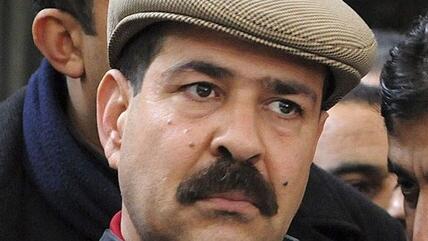
Searching for the Ringleaders
The Leagues for the Protection of the Revolution are considered to be the prime suspects in the case of the assassination of the well-known Tunisian opposition politician Chokri Belaid. However, it is also possible that Salafists or networks of members of the security forces from the Ben Ali era could also be responsible for the attack. Beat Stauffer reports
Most read articles
-
Religious diversity in Tunisia
The Virgin Mary on the streets of Tunis
-
Women in Saudi Arabia
Caught in a System of Gender Apartheid
-
Gilbert Achcar on the impact of 9/11
"The Iraq War shattered the promise of a new world order"
-
Sex tourism in Egypt
A bride for the summer
-
Sex education in the Arab world
Let's talk about sex, habibi!
-
Algeria and France
"We must deepen our understanding of the colonial era"