Strait of Hormuz
All topics-
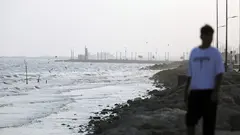 Hormuz and Bab al‑Mandab
Centuries of struggle for the Straits
Three colonial powers—the Portuguese, the Dutch and the British—gained, and then lost, control over the straits of Hormuz and Bab al-Mandab. Today, as the US and Iran struggle over these vital chokepoints, history offers a warning.
-
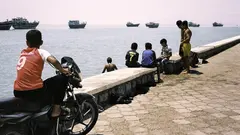 Iran's Gulf region
More than a strait
The Strait of Hormuz is at the centre of geopolitical tensions. But a closer look at the cultural landscape reveals a different picture: on Iran's southern coast, African, Indian and Arab influences converge, creating a cultural tapestry far removed from the image of a homogeneous theocratic state.
-
 Saudi sports policy
The limits of Saudi Arabia's football ambitions
Saudi Arabia has emerged as an influential player in the politics of international sports, particularly football. The 2034 World Cup will be hosted by the Kingdom, but war in the Gulf could be jeopardising its ambitious goals.
-
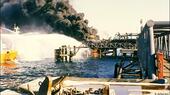
An enduring conflict – 40 years since the Iran-Iraq War started
The Iran-Iraq War was one of the deadliest military conflicts ever seen in the Middle East. The eight-year-long conflict, which saw the use of chemical weapons, killed thousands of people and divided the region along sectarian lines. By Shamil Shams
-
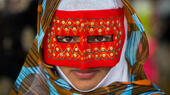
The masked women of southern Iran
Along Iran′s coastline and on the island of Qeshm in the Strait of Hormuz, women have been wearing masks for centuries. The styles vary according to region, ethnicity, but most noticeably according to religious affiliation. Shia women wear red rectangular masks, while those of Sunni women are black or indigo with gold, shaped to give the impression of eyebrows and moustache – once a ruse to fool invaders into thinking that the women they spied from a distance were in fact men. By Eric Lafforgue


