The limits of Saudi Arabia's football ambitions
A unique moment of ecstasy, euphoria and energy. Many years from now, everyone in Saudi Arabia with a passion for football—and that is most people—will remember where they were watching the match against the eventual world champions Argentina, led by the larger-than-life Lionel Messi. A game which sent an entire country into football fever.
That match took place on 22 November 2022 at Lusail Stadium during the Qatar World Cup. National heroes Salem Al-Dawsari—Saudi's Messi—and Saleh Al-Shehri turned a deficit into a sensational 2-1 victory. At that moment, Saudi Arabia thought it had entered football's global elite. Then, two years later, when the 2034 FIFA World Cup was awarded to Saudi Arabia, national confidence knew no bounds.
International superstars such as Cristiano Ronaldo, Karim Benzema and N'Golo Kanté have joined Saudi clubs thanks to multi-million-pound investments. They propelled the Saudi league into the international spotlight, while the acquisition of the English club Newcastle United by the Saudi Public Investment Fund (PIF) ushered in a new era of Saudi investment in sport.
By the end of 2024, almost 350 sports partnerships had been established. The logo of Saudi airline Riyadh Air, founded in 2023, now appears on Atlético Madrid's iconic shirts, while Saudi oil company Aramco, alongside the PIF, serves as a premium FIFA partner.
Between 2021 and 2023, investments totalled six billion US dollars. Most of this was channelled into football, followed by motorsport, golf, martial arts, boxing and gaming.
The Saudi strategy: profits over glamour
However, in the meantime, the boom has subsided. Having built a reputation through investments across various sectors worldwide, the PIF is now undergoing a period of strategic realignment. Instead of its previous scattergun approach, the current strategy focuses on tailored domestic investments.
More returns, less glamour—this is the new mantra of Saudi investment strategy. In sport, this means the PIF is, among other things, withdrawing from LIV Golf, a high-profile golf tour established by the PIF in 2022 in a bid to strengthen ties with passionate golf enthusiast Donald Trump and establish itself as a major player alongside the PGA Tour.
In 2026 alone, prize money totalling 470 million US dollars will be awarded in the hope of attracting the world's best male golfers. Yet the expected returns have failed to materialise, and losses are estimated at 1.1 billion US dollars.
Other sports are also suffering amid the Kingdom's austerity measures. The 2029 Asian Winter Games have been moved to Kazakhstan, and the Esports World Championships have been cancelled. Spectacular transfers have also become less common in the domestic football league.
Most recently, even Ronaldo complained that his club, Al-Nassr, had seen hardly any high-profile signings compared with its great rival Al-Hilal, and that payments to club employees had not been made. As a result, the biggest star in the Saudi league and a committed ambassador for Saudi football went on strike for two matches.
In an effort to generate fresh capital, the privatisation of Saudi football clubs is being accelerated. American businessman Ben Harburg acquired provincial club Al-Kholood through his Harburg Group, while Saudi businessman Al-Waleed bin Talal purchased the PIF's stake in Al-Hilal for around 373 million US dollars. These privatisations are intended to quadruple league revenues to 480 million US dollars per year by 2030.
Sport connects the global elite
Behind this lies an attempt to reconcile ambitious objectives with reality. Even before the outbreak of the Gulf war, from which Saudi Arabia has also suffered because of Iranian missile attacks, the Kingdom had already been forced to halt major projects or scale back plans. Costs for the smart city project “The Line” spiralled out of control, and the Saudi government now faces the delicate task of terminating existing contracts with partner companies, a move expected to cost 16 billion US dollars.
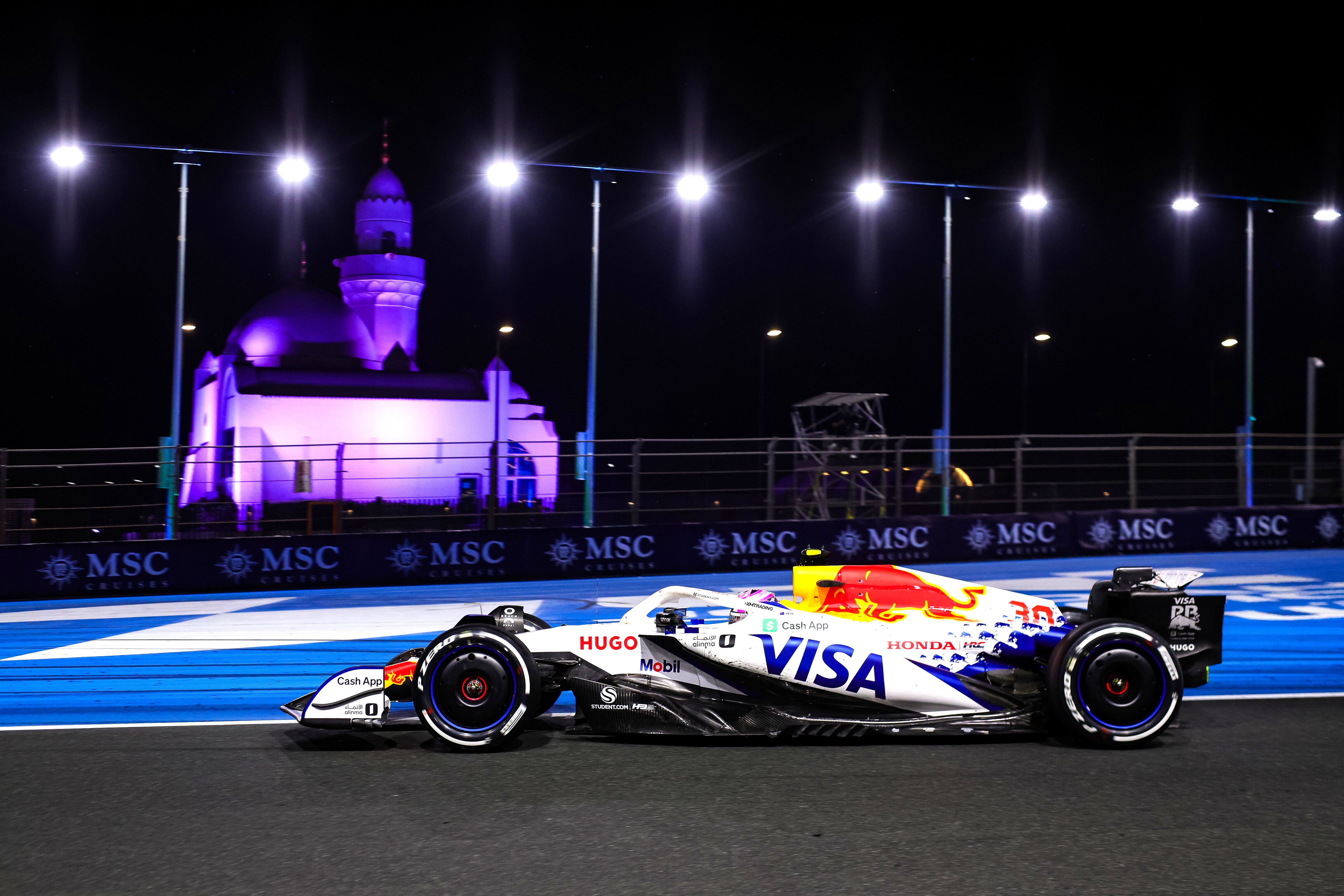
Although the war is generating higher oil revenues—as Saudi Arabia, unlike Qatar or Kuwait, is able to bypass a blockade of the Strait of Hormuz by exporting oil via the Red Sea—other sectors, including tourism, entertainment and sport, are suffering from its consequences. The Formula One race in Saudi Arabia, for example, had to be cancelled because of the escalating conflict in the Gulf.
The Saudi government is undertaking a delicate balancing act. On the one hand, sport serves as a strategic instrument for building international networks, gaining market access and expanding political influence. On the other hand, reduced resources must be spent wisely if the Kingdom is to remain credible.
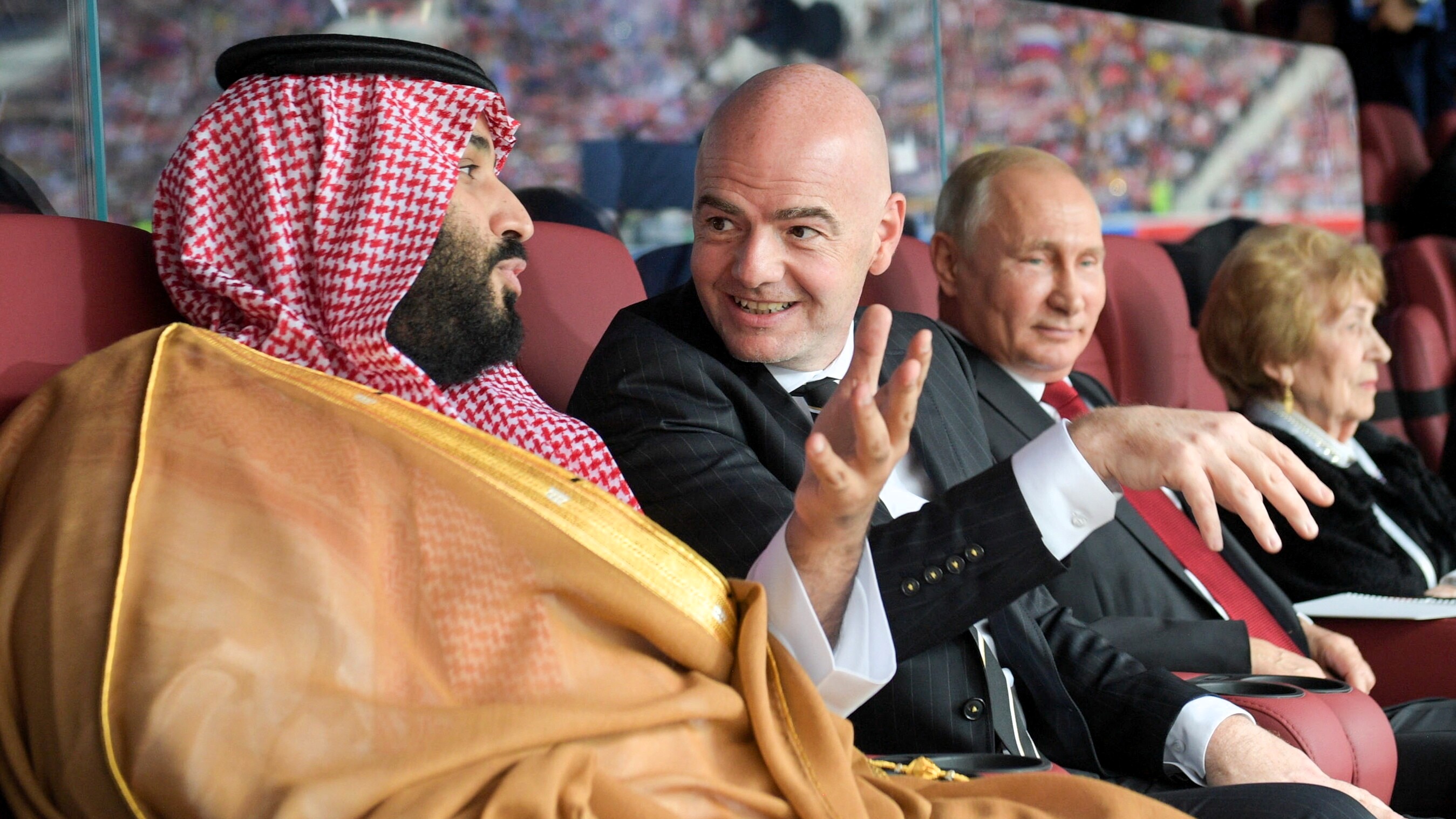
As a result, Saudi Arabia is concentrating increasingly on a small number of carefully selected projects. One of these is its partnership with FIFA, which has grown closer in recent years. The controversial FIFA President Gianni Infantino and Saudi Crown Prince Mohammed bin Salman (MbS) have a bromance that culminated in the 2034 World Cup being awarded to Saudi Arabia. Alongside Riyadh Expo 2030, it is the most important prestige project in Saudi Arabia's internationalisation strategy.
Infantino values Saudi money; MbS values the global appeal of football as a tool for nation branding. At the same time, the partnership also helps maintain Saudi Arabia's relationship with Donald Trump. Infantino and the President share a close friendship, as demonstrated by Infantino awarding Trump the so-called FIFA Peace Prize. It is surely no coincidence that both Infantino and MbS sit on the controversial Board of Peace established by Trump.
Saudi Arabia's calculations may be different from what many assume. Missiles and drones are striking Doha, Dubai and Riyadh. Yet there are indications that the Kingdom also hopes to derive advantages from the war with Iran.
Did the Saudis want this war?
Saudi Arabia's calculations in the Iran war may be different from what many assume. Rockets and drones are flying towards Doha, Dubai and even Riyadh—yet the kingdom could still see opportunities in the conflict.
Meanwhile, scepticism is growing within Saudi Arabia regarding the billions being invested in sport. Although Saudi clubs such as Al-Ahli have enjoyed considerable success in Asian football under German manager Matthias Jaissle and with the help of foreign stars, domestic youth development is suffering as a result.
More than 35 per cent of players in the Saudi Pro League are foreign nationals. Young Saudi players are receiving less playing time, which is also reflected in the national team's period of underachievement. The Green Falcons only qualified for the current World Cup via the play-offs and with a good deal of luck, thanks to a 3–2 victory over football minnows Indonesia and a goalless draw against Iraq.
Ahead of the tournament, many Saudi football supporters are sceptical, particularly as they face one of the favourites, Spain, in the group stage. As things stand, few believe a repeat performance of that unforgettable day against Argentina in December 2022 is on the horizon.
This text is an edited translation of the German original; translated by Jess Smee with the support of AI-assisted translation tools.
© Qantara.de