Politics
Topics
-
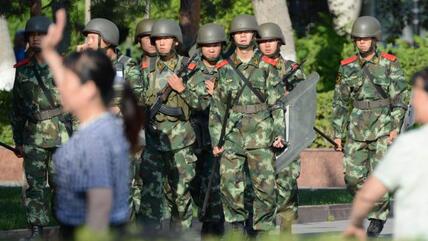 The Uighurs' situation
An escalation of violence in Xinjiang
The number of reports of murders, attacks and unrest from the Chinese province of Xinjiang has been on the rise for months. The province's Uighur population has long complained about being disadvantaged in religious, cultural and social terms. The authorities claim unspecified "terrorists" are responsible for the violence, but the public almost always remains in the dark about the true background to the attacks. By Ulrich von Schwerin.
-
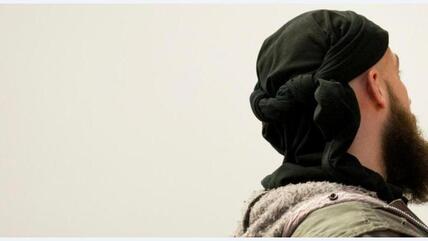 German jihadists
Turning their backs on the West
How is it possible to stop vulnerable young people attracted by the siren call of religious salvation from becoming radicalised and joining IS? Prevention is difficult — sometimes even impossible. By Naomi Conrad
-
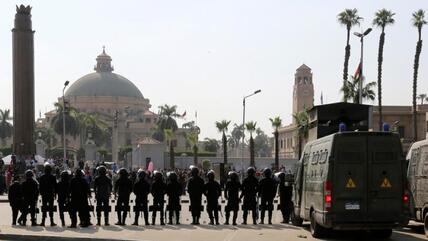 Unrest in Egypt's universities
Students in the firing line
The revolution lives on at Egypt's universities – still. But the government is moving ever more quickly to break the students' resistance. Details from Markus Symank in Cairo
-
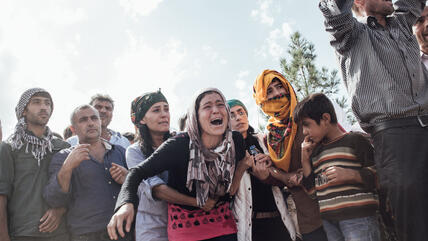 Inside Kobani
The political game and the humanitarian crisis
The city of Kobani in northern Syria has been under seige from Islamic State (IS) for over a month now. In recent days, Turkey has allowed a military convoy of Iraqi peshmerga and Free Syrian Army fighters to pass through its territory en route to Kobani. However, the peshmerga are arriving relatively late in the day. Thousands of Kurds from Syria, Turkey and Iraq have already joined the YPG and are in Kobani defending the city. They may all be fighting the same enemy, but they are certainly not united among themselves. By Kiran Nazish in Erbil
-
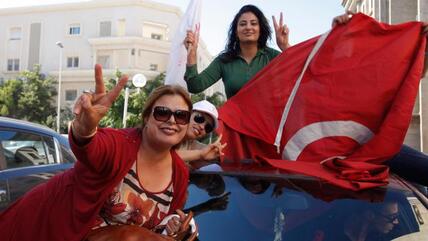 After the first free parliamentary elections in Tunisia
New horizons or back to square one?
Does the election victory of Nidaa Tounes mean a return to old mechanisms, cronyism and entrenched power structures? Or will the political alliance of convenience succeed in setting a new course for Tunisia's future, fostering socially acceptable compromises and swiftly tackling urgently required economic reforms? By Isabel Schäfer
-
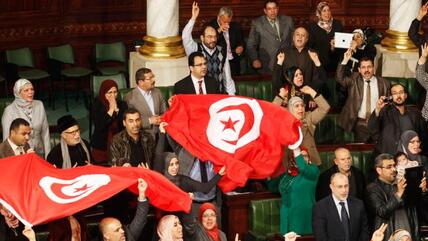 Democratic transformation in Tunisia
The model student faces difficult tasks
Tunisia is the only one of the Arab Spring nations that is on the road to democracy. Almost four years after the first protests, which began in the south, this North African country has become a beacon of light for the whole Arab world. But in spite of its successes to date, Tunisia still faces some huge challenges. By Ilyas Saliba
-
 Interview with the Tunisian documentary filmmaker Sami Tlili
"We've reached a crossroads"
In conversation with Martina Sabra, the Tunisian literary scholar and documentary filmmaker Sami Tlili talks about the political future of the North African country following the recent parliamentary elections, and the democratic prospects three years after the "Jasmine Revolution"
-
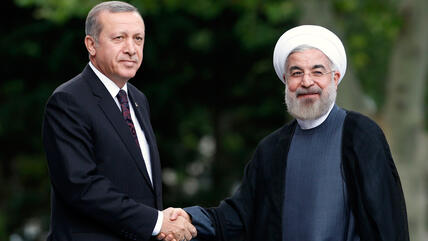 The Kurds and Turkish–Iranian relations
Caught between two stools
As differences over Syria and Islamic State continue to deepen between Turkey and Iran, Kurds living across the Middle East are set to become pawns in the intensifying rivalry between these two regional powers. By Dorian Jones in Istanbul
-
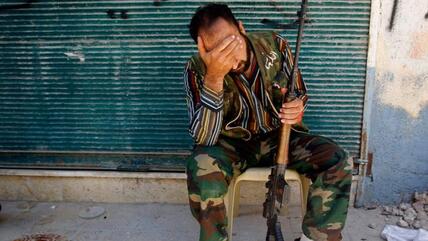 The Syrian conflict and the fight against IS
Time to treat allies like allies
In Syria, unilateral uncoordinated air strikes against IS (Islamic State) are turning people into victims instead of partners in the battle against terror. If they are to win over the Syrians, the international alliance must treat rebels and activists as allies, says Kristin Helberg
-
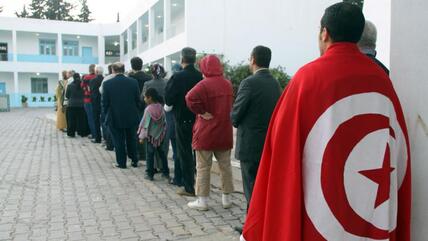 Parliamentary and presidential elections in Tunisia
The euphoria has evaporated
In the run-up to parliamentary elections on 26 October, more than five million Tunisians registered to vote, considerably more than in 2011. Nevertheless, observers expected voter turnout to be low. Many Tunisians are frustrated by the fact that their situation has hardly improved in the three years since the overthrow of Zine al-Abidine Ben Ali. By Sarah Mersch in Tunis
-
 Interview with Tunisian human rights activist Bochra Belhadj Hamida
"Demonised, insulted and threatened"
Bochra Belhadj Hamida is a lawyer and one of the most prominent human and women's rights activists in Tunisia. She is now running for parliament for Nidaa Tounes, a new party that brings together a range of political viewpoints. She discussed the current situation in Tunisia in an interview with Martina Sabra
-
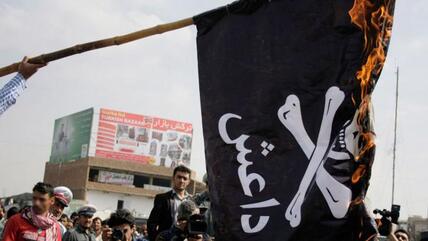 The genesis of Islamic State
A new chapter in the decline of the Arab world
IS is a child of the late cold war and at the same time the beginning of a total war against the countries of the Arab East. It is the consequence of a collapse of political, moral and social values in the region, writes the Lebanese author Elias Khoury
Most read articles
-
Islamic mysticism
Understanding the Sufis
-
The X-Games skaters in Palestine
If at first you don't succeed
-
Destination Morocco
A magnet for migrant women?
-
Prostitution in Tunisia
The big reveal
-
Syrian architects' group Syrbanism
"For a just reconstruction, the people must have a voice"
-
Palestinians in Iraq
Between sympathy and rejection