Politics
Topics
-
 Portrait of the Syrian President Bashar al-Assad
The Man of Missed Opportunities
Just as he did in the "Damascus Spring", President Assad has again chosen to suppress the democracy movement during the current "Syrian Spring" that has swept across the entire country. Over the past eleven years, Assad has squandered no less than five opportunities to steer his country onto the path to democracy. That's at least one too many for him to have any credibility now when seeking dialogue with the opposition, says Kristin Helberg
-
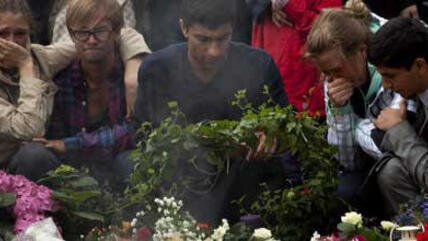 Aftermath of the Attacks in Norway
Isolate the Intellectual Incendiaries!
Right-wing populist politicians, bloggers and journalists have fuelled a climate throughout Europe in which a madman like Anders Behring Breivik could come up with the idea of fighting the "Muslim threat" with spectacular deeds. A commentary by Robert Misik
-
 Peace Research into the Arab Spring
''A Historical Turning Point like the Fall of the Berlin Wall''
The 2011 Peace Report, which was compiled by the five largest peace research institutes in Germany, demands for more support for the Arab Spring. By Bettina Marx
-
 Religion and Politics
Much Remains to be Done
For Indonesia, May 1998 was an important turning point – much like February 2011 was for Egypt and January 2011 was for Tunisia. At that time, Suharto had been in power for more than 30 years. Thirteen years on, Edith Koesoemawiria reports on the hopes of Indonesian voters
-
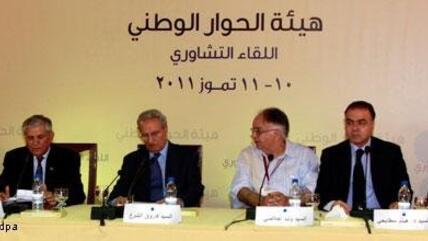 National Dialogue in Syria
A Political Farce
The latest meeting for the purpose of national dialogue in reality served the regime in Damascus as an opportunity to legitimise its own sovereignty as well as to weaken and isolate the opposition, in the opinion of the Syrian dissident and writer Yassin Al Haj Saleh
-
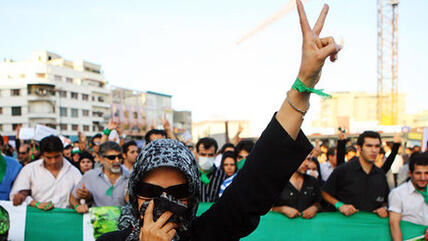 Interview with Nader Hashemi
''The War of Ideas in Iran Is Over''
The ideological support for the Iranian regime is waning – liberal and democratic ideas have triumphed within civil society, says political scientist Nader Hashemi in this interview with Lewis Gropp
-
Demonstrations against the Military Council in Egypt
The Revolution Comes First
"The military council is not cooperating with the revolution; it is trying to control it." This is the kind of thing that demonstrators are saying in Cairo. Once again, they are flocking to Tahrir Square in their thousands; only this time, they are protesting against the military council and the transition government. Amira El Ahl sends us this report
-
Egypt after Mubarak
Revolution without Change of Power
The euphoria over the ouster of Hosni Mubarak has died down, and Egypt's transitional government is increasingly coming under criticism. Many people ask themselves whether a new democratic order is really being set up. By Andreas Jacobs
-
Iran's Green Movement Two Years after the Protests
Simmering beneath the Surface
While Iran's revolutionary leader Ali Khamenei reinterpreted the fall of Mubarak as an Islamic rebellion, the protagonists of the 2009 Green Movement looked to Cairo in frustration: Why was there no Tahrir Square phenomenon in Tehran? By Marian Brehmer
-
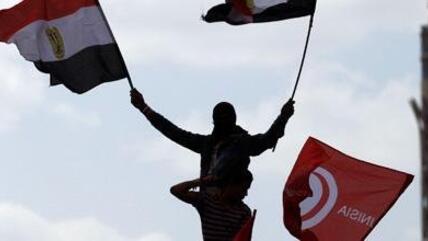 Critical Reflections on the Arab Revolutions
Profiteers from Authoritarian Decay
Khalil al-Anani, an Egyptian political scientist at Durham University in England, laments in his essay that, after the fall of the autocratic rulers of Tunisia and Egypt, sweeping social change has yet to come about, as the political realm is still dominated by the same old men
-
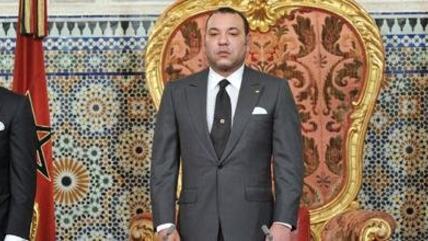 Constitutional Reform in Morocco
I Am the Reform!
Over the past 25 years, Morocco has been through a remarkable political opening process and encouraged social pluralism. However, no limits have been set to the king's extreme authority. Despite this, the changes to the constitution made in 2011 are more than a short-term reaction to the revolutionary upheavals in north Africa. By Sonja Hegasy
-
 The Turkish Role in the Middle East and Beyond
Moving Beyond the Dichotomy
The dichotomous perception of Turkish politicy as ‘pro-Western’ and ‘anti-Western’ or ‘pro-Muslim’ reflects a mental division of the world into Occident and Orient rather than the complex reality of 21st-century international politics. By Erik Siegl
Most read articles
-
Sex tourism in Egypt
A bride for the summer
-
Religious diversity in Tunisia
The Virgin Mary on the streets of Tunis
-
Black Lives Matter in Egypt
The controversy surrounding racism – are Arabs racist?
-
Introducing Dhee
Bangladesh's first lesbian comic strip heroine
-
Mafia scandal in Turkey
Mafia ties run deep in AKP politics
-
German academia and the war in Gaza
Universities must remain places of dialogue