US-Israel war on Iran 2026
All topics-
 Hormuz and Bab al‑Mandab
Centuries of struggle for the Straits
Three colonial powers—the Portuguese, the Dutch and the British—gained, and then lost, control over the straits of Hormuz and Bab al-Mandab. Today, as the US and Iran struggle over these vital chokepoints, history offers a warning.
-
 Saudi sports policy
The limits of Saudi Arabia's football ambitions
Saudi Arabia has emerged as an influential player in the politics of international sports, particularly football. The 2034 World Cup will be hosted by the Kingdom, but war in the Gulf could be jeopardising its ambitious goals.
-
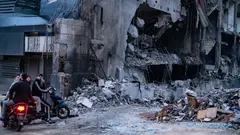 Lebanon
Shia families struggle for shelter in divided Beirut
More than one million Lebanese have been displaced by Israeli strikes. Destruction and occupation have made return impossible for many from the south, including Shia families, who are stranded in Beirut with limited shelter amid deepening sectarian mistrust.
-
 Lebanon
When war reached my Beirut home
In Lebanon, war is a test of social cohesion. Beirut-based author Manal Khader recounts how fear and uncertainty spread through her neighbourhood. Her building's WhatsApp group came to life—first with updates and practical questions, then the tone shifted.
-
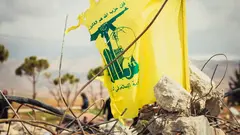 Lebanese writer Hazem Saghieh
"Hezbollah has never protected Lebanon from Israel"
Hazem Saghieh says that the renewed war between Israel and Hezbollah has revealed deep divisions within Lebanese society rather than fostering unity. He warns that Israel's intervention to disarm Hezbollah risks paving the way for a new occupation.
-
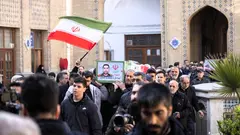 Ralph Ghadban on Iran
"The Islamic Republic is rooted in society"
Whether through appeasement or escalation, the West keeps making the same mistake with Iran, argues Islamic studies scholar Ralph Ghadban: it fails to recognise the regime's radical Shia ideological foundations.
-
 Opposition figure Behrouz Farahani
"The war has frozen Iran's protest movements"
The Iran war stems from two reactionary forces, the hegemonic ambitions of Iran’s Shia establishment and the Israeli vision of reshaping the Middle East, says Behrouz Farahani. A ceasefire is urgent, he argues, and real change must come from within.
-
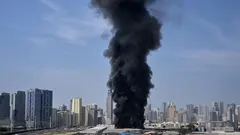 Iran War
Will the Gulf states stand together?
Hard hit by Iranian attacks, the business model of the Gulf states is under attack. Yet they are far from defenceless: with coordination—and unity—they could establish themselves as powerful agents of change.
-
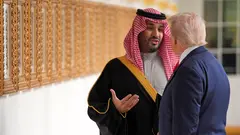 Attacks on Iran
Did the Saudis want this war?
Saudi Arabia's calculations in the Iran war may be different from what many assume. Rockets and drones are flying towards Doha, Dubai and even Riyadh—yet the kingdom could still see opportunities in the conflict.
-
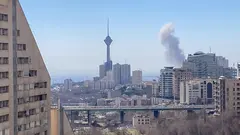 German legal expert Kai Ambos on Iran war
"International law is not a suggestion"
The attack on Iran by the US and Israel violates the UN Charter, says Kai Ambos. He argues that European powers cannot preach a rules-based order while failing to denounce clear violations, and warns of a slide towards global lawlessness.
-
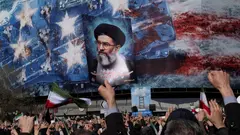 US-Israeli attacks
The perils of a power vacuum in Iran
The US believes removing Tehran's rulers will neutralise the nuclear threat. Yet destroying the Iranian state would not eliminate the danger of proliferation; it would decentralise it, making it elusive and impossible to monitor.