Politics
Topics
-
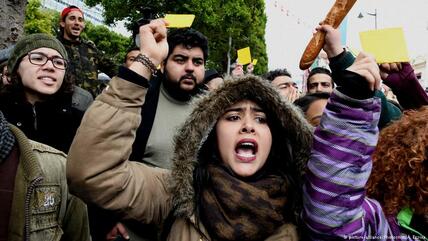 Social unrest in Tunisia
You′re on your own
Strip away the friendly overtures made by various European countries towards Tunisia and you’ll find nothing more than exploitation and non-reciprocation. How else to explain their failure to step in as the North African state slides inexorably towards poverty? Commentary by Bachir Amroune
-
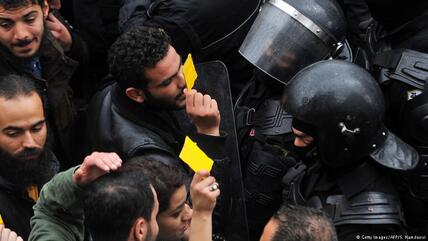 Protests rock Tunisia
A winter of discontent
Despite general frustration over economic hardships and the unfulfilled promises of the Arab Spring’s only success story, the revolutionary momentum that gripped Tunisia in 2011 has not waned seven years later. Tunisians seem intent on preserving the spirit of the revolution: bread, freedom and national dignity. By Houda Mzioudet
-
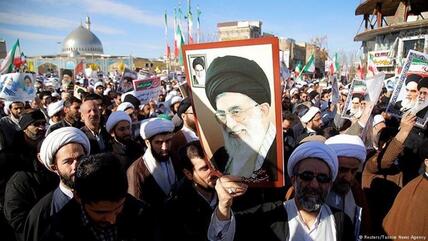 Protests in Iran
No revolution in sight
Forty years after the start of the Islamic Revolution, Iran is once again convulsed with protests. Many of the economic problems facing the country today resemble those in the 1970s, and the regime appears to be scarcely less repressive and ossified than it was back then. Nevertheless, the current protests are unlikely to be the beginning of a new revolution, says Ulrich von Schwerin
-
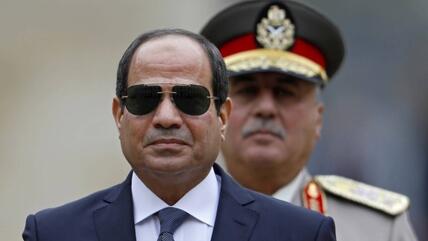 Presidential election in Egypt
Gearing up for re-election
Earlier this week, Egypt's National Election Authority announced that the country will go to the polls on 26–28 March to elect its president. Although Abdul Fattah al-Sisi has not yet announced that he will run, his re-election seems like a foregone conclusion. And while a number of other serious candidates intended to stand, it looks as if the field is thinning. By Bachir Amroune
-
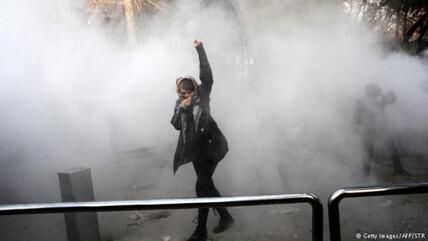 Protests in Iran
The spark that turned into a wildfire
In this essay, Ali Fathollah-Nejad looks at how the ongoing unrest in Iran is shining a light on the structural social and economic injustices inherent in the Islamic Republic and shows just how much trust in Rouhani's government has been eroded
-
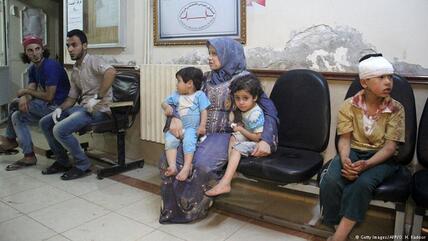 Civil war in Syria
Fighting the jihadists with unusual weapons
Idlib, in north-western Syria, is dominated by jihadists. But resistance there takes on many forms, and civil structures are emerging as an effective weapon in the battle against terror. By Kristin Helberg
-
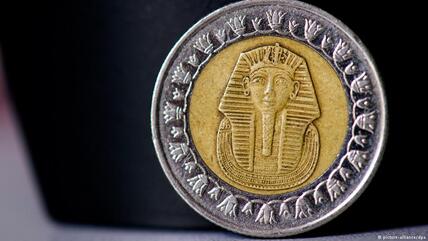 Egypt's rising debts
"A sign of crisis"
Egypt's military government is amassing debts to international lenders at record rates. With fiscal austerity measures biting, the country's poor and middle class are struggling to get by. By Tom Stevenson
-
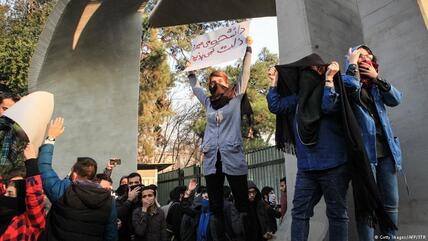 Protests in Iran
An own-goal for the hardliners
The blaze of popular wrath that has been ignited in Iran's provinces has long since begun to consume the cities as well. Initially intended by hardliners as a demonstration of dissatisfaction with President Rouhani, the demonstrations are now directed at the system as a whole. By Ali Sadrzadeh
-
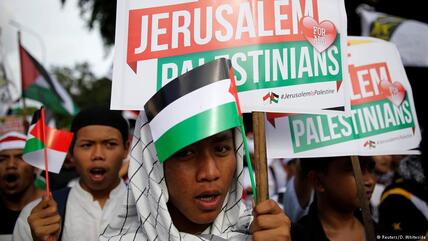 Trump's Jerusalem decision
Unleashing a new wave of radicalisation?
After 1967, jihadists and Islamists mobilised people by highlighting the victimisation of Muslims and Islam. In the wake of Trump's internationally condemned decision to recognise Jerusalem as Israel's capital, jihadist and Islamist groups could now use Palestine as proof of their theory that there is a "war on Islam". Trump's declaration plays right into their hands. Commentary by Abdalhadi Alijla
-
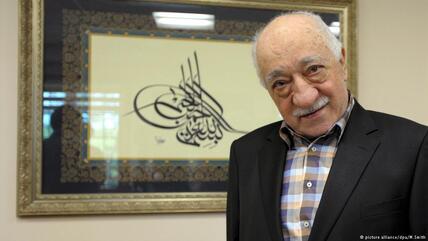 The Gulen movement in Turkey
Creating an elite to lead the state
The movement of Turkish imam Fethullah Gulen has relied on schools, educational institutions and clubs to expand to many countries. Many experts view the movement with scepticism, however. They claim that it has cult-like structures and is pursuing a secret agenda, only pretending to be an open-minded education initiative with a moderate take on Islam. Turkish President Recep Tayyip Erdogan considers Gulen public enemy number one. By Timur Tinc
-
 Austria's new programme for government
En route to a restrictive policy on Islam?
This week, Austria's new centre-right and right-wing coalition published its programme for government. This programme does not view Muslims through the lens of human rights and freedom of religion as people to be protected and people who are particularly affected by racism. Instead, they are very obviously cast in the role of a potential threat, writes Farid Hafez
-
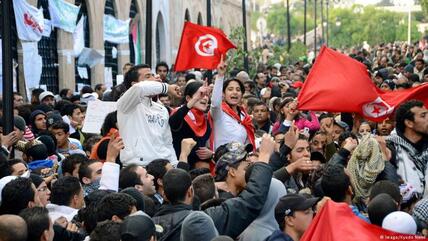 Tunisia seven years after the Arab Spring
Facing an uncertain future
The Tunisian revolution, considered the catalyst for the movement that became known as the Arab Spring, began seven years ago. Today, Tunisia is still struggling to achieve democratic reform and economic growth. By Sarah Mersch
Most read articles
-
Sex tourism in Egypt
A bride for the summer
-
German legal expert Kai Ambos on Iran war
"International law is not a suggestion"
-
Attacks on Iran
Did the Saudis want this war?
-
Iraqi women filmmakers
The power of stories and moving images
-
Mukabela in Bosnia and Herzegovina
A distinctive and enduring Ramadan tradition
-
Morocco's social gulf
The many faces of poverty