Society
-
 Lebanon
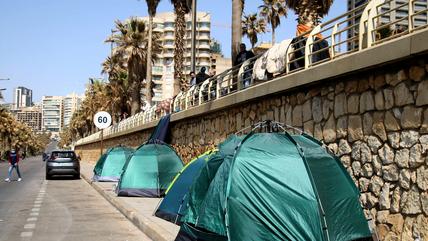
Shia families struggle for shelter in divided Beirut
More than one million Lebanese have been displaced by Israeli strikes. Destruction and occupation have made return impossible for many from the south, including Shia families, who are stranded in Beirut with limited shelter amid deepening sectarian mistrust.
-
 Lebanon
When war reached my Beirut home
In Lebanon, war is a test of social cohesion. Beirut-based author Manal Khader recounts how fear and uncertainty spread through her neighbourhood. Her building's WhatsApp group came to life—first with updates and practical questions, then the tone shifted.
-
 War and memory
Gaza's lost photographs
Through years of war, many people in Gaza have lost their personal photo albums. Palestinian journalist Asmaa al-Ghoul reflects on her family's vanished images and what their absence means for personal and collective memory.
-
 Ralph Ghadban on Iran
"The Islamic Republic is rooted in society"
Whether through appeasement or escalation, the West keeps making the same mistake with Iran, argues Islamic studies scholar Ralph Ghadban: it fails to recognise the regime's radical Shia ideological foundations.
-
 Jewish community in Syria
"One day we’ll drive from Damascus to Jerusalem"
The fall of Assad has prompted the return of millions of Syrians, including a small Jewish minority. Under Henry Hamra, son of the country’s last chief rabbi, they are asking whether a lasting return is possible.
-
 Palestinians in Egypt
Time to return to Gaza?
In Egypt, Palestinians displaced by war in Gaza face a painful dilemma: return to their families and a devastated homeland or remain in limbo without residency. Medical needs, financial hardship and border fears make the decision fraught.
-
 Culture in Germany
The politics of neutrality
This year’s Berlinale highlighted the tensions between art and supposedly neutral institutions. But state-funded cultural bodies don't operate outside politics; they set the terms of debate. Greater transparency about how boundaries are drawn could strengthen trust.
-
 Damascus book fair
A new benchmark for freedom
Syria has held its first book fair since the fall of Assad. The landmark event sets a new standard against which the government and its cultural policy will be judged.
-
 Research on Jew-hatred in Germany
"Antisemitism cannot be deported"
The concept of "imported antisemitism" is widespread in German politics but remains poorly researched. A new study provides nuance, context and data on antisemitism among both migrants and non-migrants. An interview with co-author Neta‑Paulina Wagner.
-
 Traumatic mutism
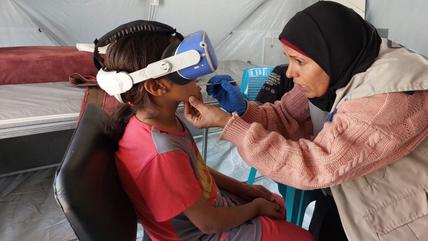
Gaza's silent children
Two years of war have left deep scars in Gaza. Some children have lost the ability to speak as a result of trauma. A team of psychologists is using new technology to help them find their voices again.
-
 Education in Syria
Returning pupils face language barrier
Eleven-year-old Ali spent six years in Germany. Now back in Syria, he is struggling with Arabic, his native language, as the new government appears overwhelmed by the task of reintegrating returning schoolchildren.
-
 Egyptian feminist Nawal El Saadawi
"Intersectional long before the term was coined"
A seminal feminist text by Nawal El Saadawi has been translated into English and German for the first time, over five decades after it first appeared in Arabic. Publisher and translator Sophie Haesen explains why it should be essential reading worldwide.
Most read articles
-
Jihadist terrorism in Tunisia
The tragic fate of shepherd boy Mabrouk Soltani
-
French author Bergeaud-Blackler
The Muslim Brotherhood's phantom caliphate
-
Sex tourism in Egypt
A bride for the summer
-
Book "The beauty of Christianity"
Love without agreement
-
Women in Saudi Arabia
Caught in a System of Gender Apartheid
-
10 years of Amal News
News for and by exiled communities