Politics
Topics
-
 The Egyptian President's Power Gain
Morsi Cannot Govern Against His People
When Mohammed Morsi assumed his presidential duties six months ago, he was derided as a "spare tyre". Now Time Magazine is running a front-page story on the man it calls "the most important man in the Middle East". But despite his burgeoning power, Morsi will not be able to govern in a way that ignores the interests and concerns of a highly politicised nation. Commentary by Thomas Demmelhuber
-
 Political Power Struggle in Egypt
Deeply Divided
Demonstrations for and against Egyptian President Morsi took place this weekend in Cairo. Egyptians face the uneasy choice of supporting a constitutional draft or starting the process over from the beginning. Matthias Sailer reports from Cairo
-
 Palestinian UN Initiative
A Positive Step
No one can expect the Palestinians to wait for all eternity for their own state, while Israel's rightwing government uses settlement expansion to create its own version of the facts. A commentary by René Wildangel
-
 Morsi Expands Executive Power in Egypt
I Am the State!
After his diplomatic success in Gaza, President Mohammed Morsi has begun to move against the judiciary and expand his power in Egypt, all with the support of the military. The opposition has taken to the streets. By Naomi Conrad
-
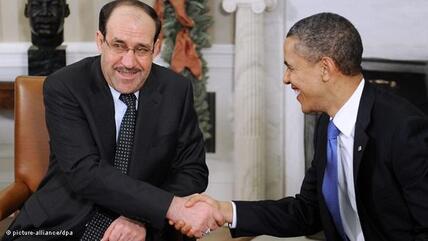 Iraqi-American Relations
Obama in Descent
Obama's re-election did not exactly spark a wave of enthusiasm in Iraq. Many Iraqis are disappointed that the US President failed to keep the promises he once made for the country on the Tigris River. The Maliki government's attempts to curry favour with Russia of late have also cast a pall on Iraq's relationship with the USA. An update from Baghdad by Birgit Svensson
-
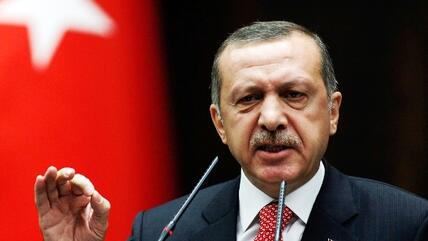 Capital Punishment Returns to the Turkish Agenda
A Message to Europe, a Warning to Kurds
Recent remarks by Turkish Prime Minister Erdoğan that Turkey might consider reintroducing the death penalty are not only indicative of the dire state of Turkish-EU relations. The move has also been perceived as a way of blackmailing almost 700 pro-Kurdish hunger strikers, whose protest has just been brought to an end. Fatma Kayabal reports from Istanbul
-
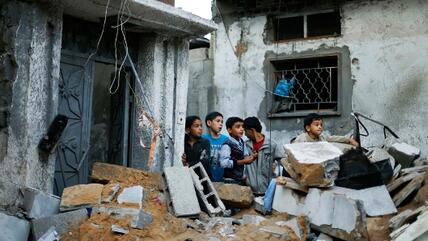 Israel and the Gaza Crisis
Trapped in the Language of Force
Lev Grinberg, Professor of Political Sociology at the Ben Gurion University in Tel Aviv, says Israeli intervention in the Gaza conflict is short-sighted. Exclusive recourse to military force blocks opportunities for peaceful negotiations in the long-term, and plays politically into the hands of Hamas, he says
-
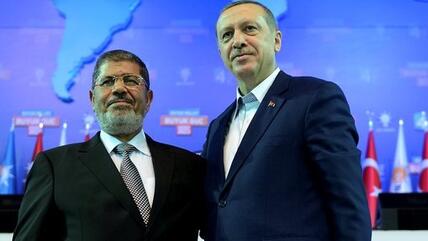 The Gaza Conflict in the Wake of the Arab Spring
The Regional Powers' New Confidence
Egypt and Turkey, two regional powers in the Middle East, are getting actively involved in the Gaza conflict. Not only have they condemned Israel's attacks on Gaza, they are also looking for a long-term ceasefire solution. This is creating a new regional diplomacy and reconfiguring the relationship between the region and Europe and the USA, writes Karim El-Gawhary
-
 Interview with Hassan Abu Haniyya
The Muslim Brothers' Rigid Structures
According to the Jordanian Islamism expert Hassan Abu Haniyya, the Muslim Brotherhood is still adhering to structures developed in the early 20th century by the movement's founder Hassan al-Banna. This, Haniyya says, blocks the organisation's evolution and at the same time encourages breakaway tendencies. Emad Ghanim spoke to him
-
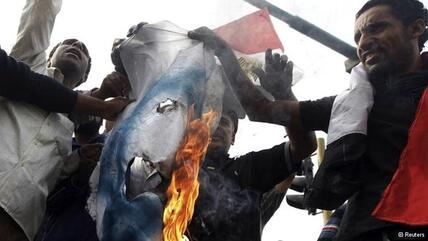 Egypt and the Gaza Crisis
Mounting Pressure on President Morsi
After the Israeli attacks on Gaza, Egypt's President Mohammed Morsi is under increasing pressure to balance domestic and international expectations. The anger among Egyptians over Israel and the US could even force Morsi to insist on renegotiating the peace treaty with Tel Aviv. By Matthias Sailer
-
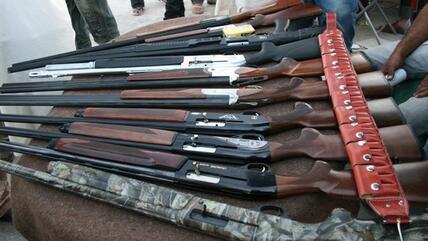 Libya's Unchecked Weapons Trade
''Gaddafi's Gangster Mentality Lives On''
They smuggle weapons, drugs and refugees: Criminal networks are controlling eastern Libya. The government has pledged to offer the impoverished region economic alternatives. By Markus Symank in Benghazi
-
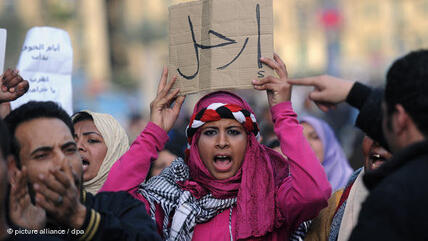 Two Years after the Arab Revolution
Disillusionment in the Middle East
Syria is caught up in a civil war, Islamists are in power in Cairo and Tunis, Turkey is caught between fronts and the Mideast peace process is stalled. What to make of the region two years after the Arab Revolution? By Bettina Marx
Most read articles
-
Women in Saudi Arabia
Caught in a System of Gender Apartheid
-
Religious diversity in Tunisia
The Virgin Mary on the streets of Tunis
-
Sex tourism in Egypt
A bride for the summer
-
Gilbert Achcar on the impact of 9/11
"The Iraq War shattered the promise of a new world order"
-
Prostitution in Tunisia
The big reveal
-
Sex education in the Arab world
Let's talk about sex, habibi!