Politics
-
 Opposition figure Behrouz Farahani
"The war has frozen Iran's protest movements"
The Iran war stems from two reactionary forces, the hegemonic ambitions of Iran’s Shia establishment and the Israeli vision of reshaping the Middle East, says Behrouz Farahani. A ceasefire is urgent, he argues, and real change must come from within.
-
 Israeli activist Yuli Novak
"The system is based on violence"
In this interview, the head of Israeli NGO B’Tselem discusses the increasingly boundless violence in the region and argues that defending Palestinian rights is defending human rights worldwide. She urges Germany to lead in upholding international law.
-
 Iran War
Will the Gulf states stand together?
Hard hit by Iranian attacks, the business model of the Gulf states is under attack. Yet they are far from defenceless: with coordination—and unity—they could establish themselves as powerful agents of change.
-
 Attacks on Iran
Did the Saudis want this war?
Saudi Arabia's calculations in the Iran war may be different from what many assume. Rockets and drones are flying towards Doha, Dubai and even Riyadh—yet the kingdom could still see opportunities in the conflict.
-
 German legal expert Kai Ambos on Iran war
"International law is not a suggestion"
The attack on Iran by the US and Israel violates the UN Charter, says Kai Ambos. He argues that European powers cannot preach a rules-based order while failing to denounce clear violations, and warns of a slide towards global lawlessness.
-
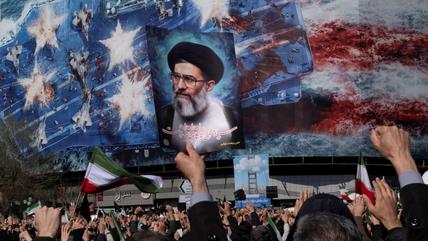 US-Israeli attacks
The perils of a power vacuum in Iran
The US believes removing Tehran's rulers will neutralise the nuclear threat. Yet destroying the Iranian state would not eliminate the danger of proliferation; it would decentralise it, making it elusive and impossible to monitor.
-
 Ahmadiyya persecution
The weaponisation of Pakistan's blasphemy laws
A high-profile blasphemy case has ignited tensions between Pakistan's courts and hardline religious groups. The fallout reveals how religion continues to be used for political leverage at the expense of the country's minorities.
-
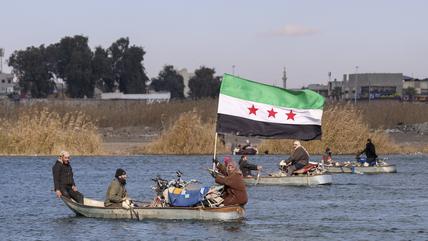 Kurds in Syria
Unity does not come by decree
The Kurdish-dominated autonomous government in northeastern Syria is now history, and the country's unity has largely been restored—at least on paper. But can a society brought together by military pressure become truly cohesive?
-
 Egypt after the Arab Spring
"We all live in the shadow of the revolution"
Fifteen years after Egypt's revolution, what remains of its demands? Four Gen Z activists reflect on how 2011 shaped their political consciousness and how resistance is being redefined today.
-
 Migrant exploitation in Libya
Landmark trafficking trial nears verdict
Judges are set to deliver a verdict in the case of an Eritrean man accused of extorting migrants in Libya. The first alleged leader of such a network to appear in a European court, the case reveals the inner workings of transnational trafficking.
-
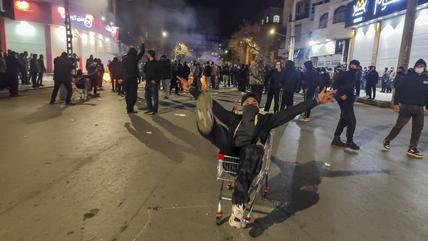 Nahid Siamdoust on Iran's protests
"Revolution has become more conceivable today"
Is Iran's regime at a breaking point? Nahid Siamdoust assesses the significance of the recent uprising, examines its potential leaders and outlines five possible scenarios for what comes next.
-
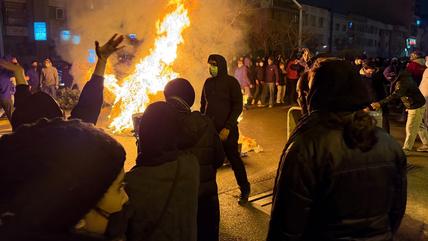 Iran protests
Mass anger in a political void
From bazaar strike to national revolt: Iran's current protest wave has achieved unprecedented social and geographic reach. But without a unifying programme or cohesive demands, can it withstand the regime's brutal response?
Most read articles
-
Jihadist terrorism in Tunisia
The tragic fate of shepherd boy Mabrouk Soltani
-
French author Bergeaud-Blackler
The Muslim Brotherhood's phantom caliphate
-
Sex tourism in Egypt
A bride for the summer
-
Women in Saudi Arabia
Caught in a System of Gender Apartheid
-
Book "The beauty of Christianity"
Love without agreement
-
Prostitution in Tunisia
The big reveal