"We must deepen our understanding of the colonial era"
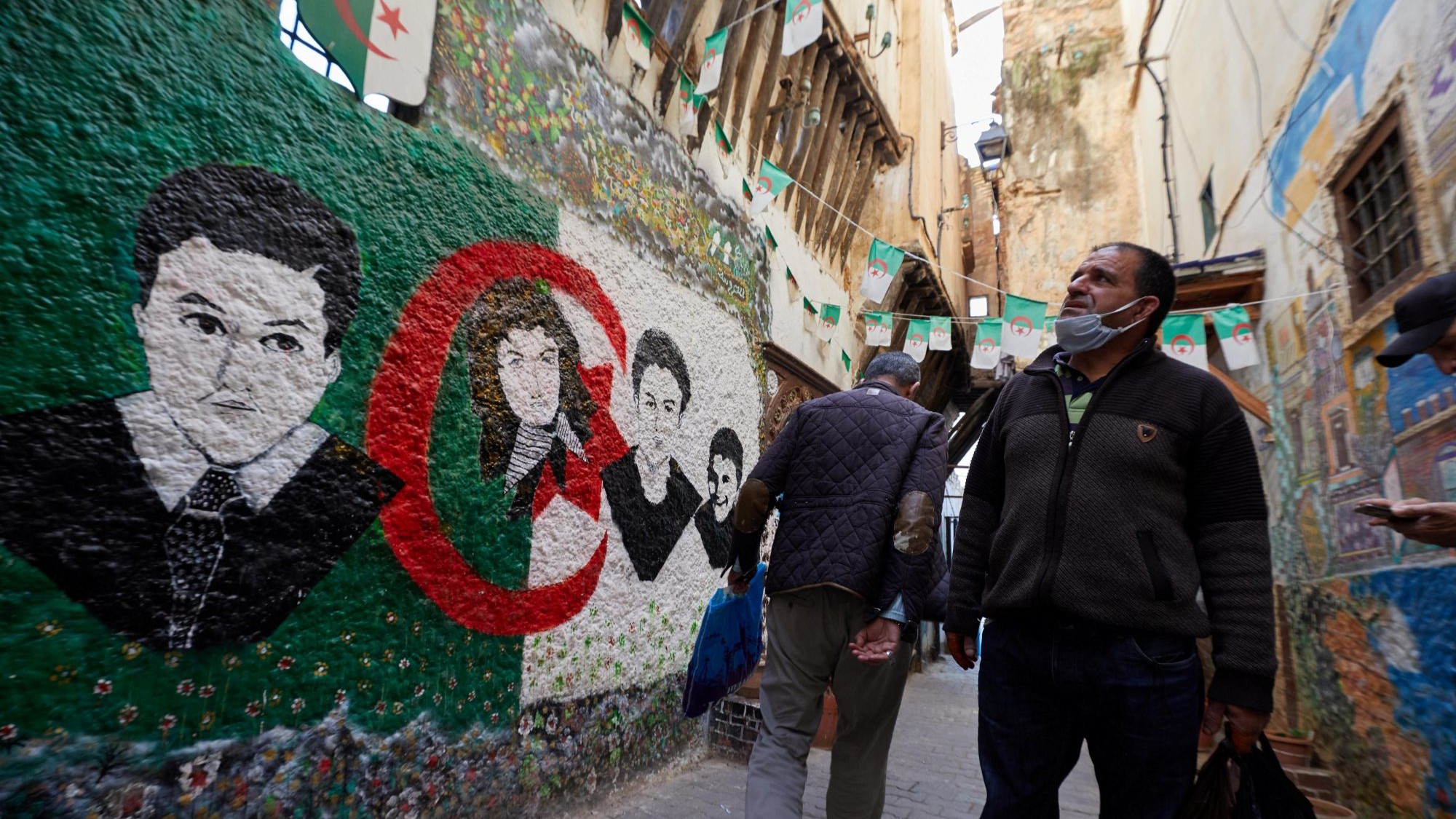
Qantara: In your book "The Arrival" ("L’arrivée", 2023) you write that, as an Algerian Jew, you were born into a "grey area". You were neither a coloniser nor a Muslim, but you were not a Frenchman from the "mother country" either. What does your identity reveal about the relationship between Algeria and France?
Benjamin Stora: Several worlds intersect within me. I belong to the colonial-French category of "indigenous people" (ed: Les indigènes), which included Algerian Jews who lived side by side with Muslims for centuries. I have been shaped by the French republican school system, and I remain true to the political convictions of my youth, which are rooted in anti-colonialism and the rejection of racism.
Added to this are my family heritage and my upbringing: my father had an excellent command of Arabic and a degree in Islamic law from the University of Algiers. I myself learnt to read Hebrew even before I learnt French.
This heritage enables me to view things from different perspectives, to overcome prejudices and to get closer to the facts. Yet this complexity can also become a burden, for both the French and Algerian perspectives seek to reduce me to just one of my identities. They constantly pit the different aspects against one another and fail to recognise that history has created a diversity of identities that must be accepted.
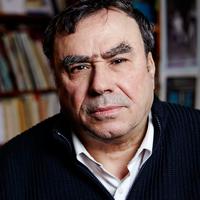
In your book, you also describe your emigration to France following Algerian independence in 1962 and the associated challenges of integrating and adapting to French society. Do the children and grandchildren of Algerian migrants today have the same opportunities as your generation did back then?
Above all, the economic and social context has changed. The decades between 1945 and 1975, known as the "Trente Glorieuses", were a period of growth and expansion. When I came to France in the 1960s, there were plenty of jobs. Today, there is a sense of stagnation amongst the younger generation. Social mobility has ground to a halt.
Furthermore, the children of those who immigrated from post-colonial countries come up against what is known as a "glass ceiling". They are not regarded as full French citizens. Throughout their lives, they are constantly reminded of their origins, as if these were at odds with a largely imaginary "French identity".
Nevertheless, influential figures of Algerian origin are gradually emerging in the fields of culture, academia and entrepreneurship. In local councils and community bodies, people with an Algerian background are taking up political office. The French political class will have no choice but to accept this new force.
In 2021, commissioned by President Macron, you published a report on promoting reconciliation between the French and Algerian peoples, which sparked a wide-ranging debate, particularly in France. What did that commission mean to you at the time?
My motivation for writing this report stemmed from my conviction that we must confront our colonial past and deepen our understanding of the colonial era. The proposals I put forward in my report are intended to help examine the impact of colonisation and the Algerian War of Independence (1954–1962) on the culture of remembrance amongst various interest groups, particularly in France.
This examination of the impact of memory follows in the tradition of my earlier works, ranging from "Gangrene and Oblivion" ("La gangrène et l’oubli", 1991) to "Dangerous Memories" ("Les mémoires dangereuses", 2015.)
Following your suggestion, an Algerian-French commission of historians was set up in 2022 during Macron's visit to Algeria. You represent the French side on that commission. How do you assess the work carried out so far?
I believe we must continue to make progress in coming to terms with the past. This joint process is still in its very early stages, particularly in France, and especially as regards the return of Algeria's archives and property. But in Algeria, too, the work of remembrance must continue. This includes researching the colonial system and its repercussions on nation-building, in particular the complex nature of the Algerian national movement and the careers of its key figures.
At the same time, we must not forget to highlight the progress already achieved bilaterally. This includes the recognition of the massacres of May 1945 in Sétif and Guelma, the handover to the Algerian authorities of maps showing mines laid along the borders at that time, the condemnation of the massacre of Algerians in Paris in October 1961, the acknowledgement of the murders of Maurice Audin and Ali Boumendjel, and the return of the skulls of a number of leaders of the Algerian resistance.
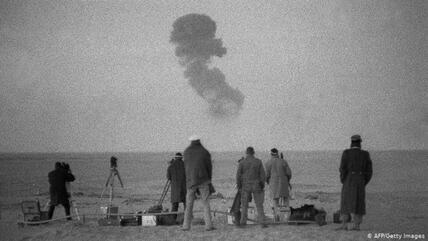
Delayed fallout in Algeria
Decades after the first French nuclear test in Algeria, thousands of victims are still waiting for compensation. To date only 51 claims have been filed under French legislation introduced ten years ago – and only one Algerian compensated. By Elizabeth Bryant
Is French society better equipped today to come to terms with its colonial past? And could the rise of the far right set this debate back?
Coming to terms with the colonial past remains difficult in the face of the growing influence of the far right, which seeks to glorify colonial history. Historical and academic research is all the more important in curbing such attempts at historical distortion.
Presidential elections are due to take place in France next year. Whilst "national identity" in the Republic is defined more in political terms than in cultural or ethnic ones, the way history is portrayed plays a central role in the speeches of prominent candidates.
Any discussion of Algerian history quickly raises questions that remain highly contentious in France, whether on the subject of immigration or Islam. The far right, moreover, practises a systematic erasure of the past. The historical narrative is being rewritten, and the crimes committed during the colonial era are being expunged from it.
There is a new generation of historians specialising in the history of Algeria. You have supervised the research of several, such as Malika Rahal and Naima Yahi. How can this research help to overcome the conflicting narratives about the colonial past?
Through my nearly forty years of teaching at various universities in France and abroad, I have indeed been able to pass on knowledge to several generations of students. Among the researchers whose theses I have supervised, I would like to mention Linda Amiri, who defended an outstanding thesis on the history of the French Federation of the FLN, as well as E. Alcaraz with his work on the memorials to the Algerian War. Marie Chominot wrote on the significance of photographs for "seeing’"the War of Independence, whilst Lydia Ait Saadi examined Arabic-language school textbooks.
In recent years, new areas of research have emerged, focusing in particular on the history of colonial expansion in the 19th century, the brutalisation of society and forms of resistance, as well as the role of women in everyday life. This expansion of collective knowledge demonstrates that no historical narrative is definitive, even if it appears to be set in stone within national discourses on both sides of the Mediterranean.
What do you see as the key prerequisite for stable relations between France and Algeria? Does the path towards this begin with political will, with the work of historians, or with cultural exchange and mutual recognition of memories?
All of this is necessary: the work of historians, the acknowledgement of painful memories, and the political will to confront the colonial past openly. In the meantime, however, our aim remains to maintain awareness of what has already been achieved in France and Algeria—whether in the field of education, at commemorative events, or through cultural activities in museums, cinema or literature.
The aim is not simply to satisfy all the groups affected by this painful history—which could cement the division of memories and further intensify the bitterness—but to bring these different groups together to shape the future jointly.
Nevertheless, the progress made so far could be reversed if the right or far right comes to power. What has been achieved could be undone, while further necessary steps, such as the return of archives or recognition of the French nuclear tests in Algeria, could be called into question.
This is an edited translation of the Arabic original. Translated from German by Max Graef Lakin with the with the support of AI-assisted translation tools.
© Qantara.de