Gender and society in transition
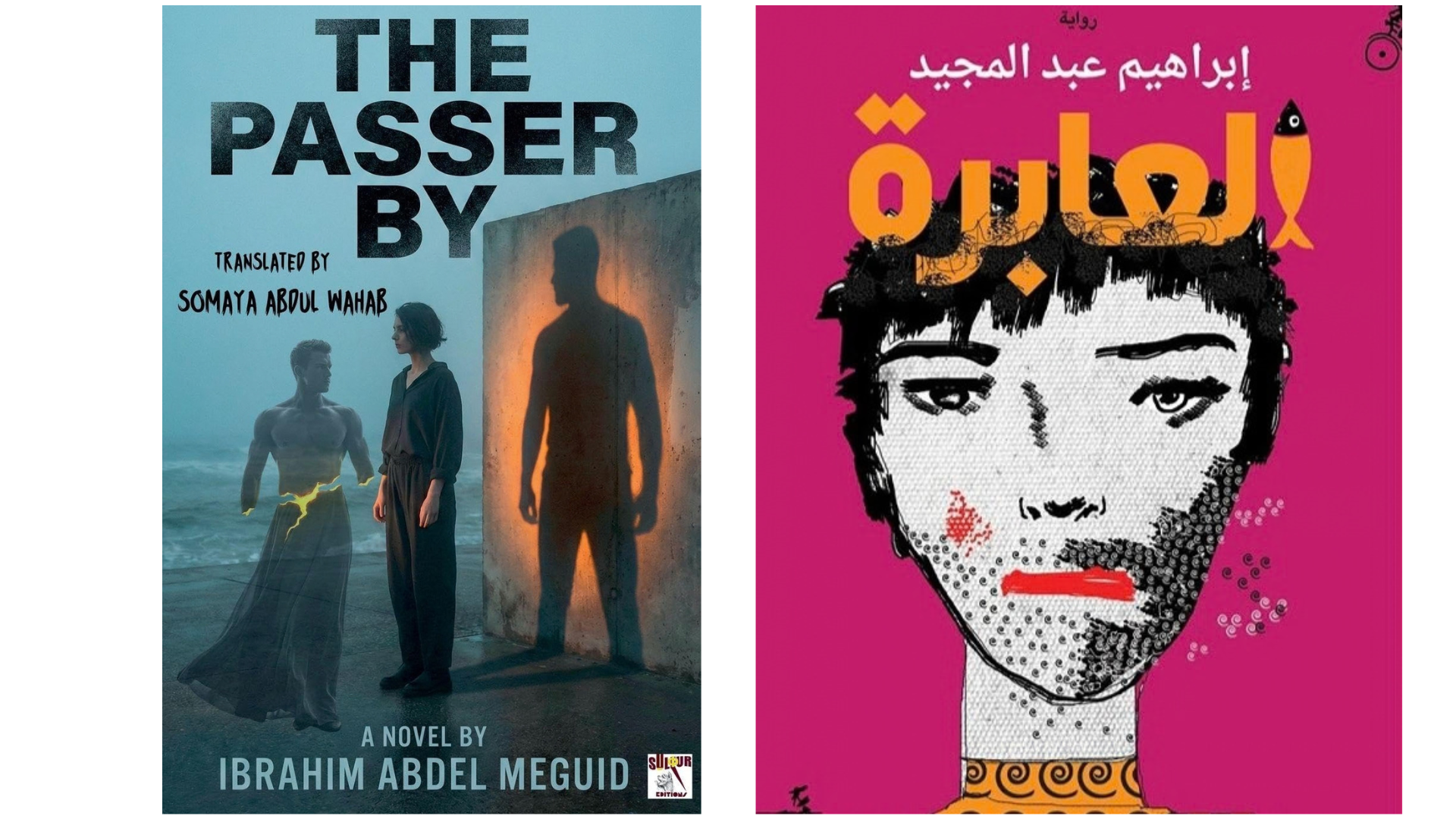
The plot of "The Passerby" (original title: "العابرة"; "The Transgender Man") by Ibrahim Abdel Meguid moves between two settings: it opens in a lecture theatre and closes in a courtroom. Throughout, the protagonist is placed in the dock, called to account before family, friends, neighbours, fellow students and the police alike. Society as a whole appoints itself as judge.
In his novel – originally published in 2020 and recently translated into English – the Egyptian writer Ibrahim Abdel Meguid courageously tackles the plight of transgender people – a topic that has now evolved from a social taboo into fodder for sensationalist headlines, without there having been any serious public debate on the matter in Egypt to date.
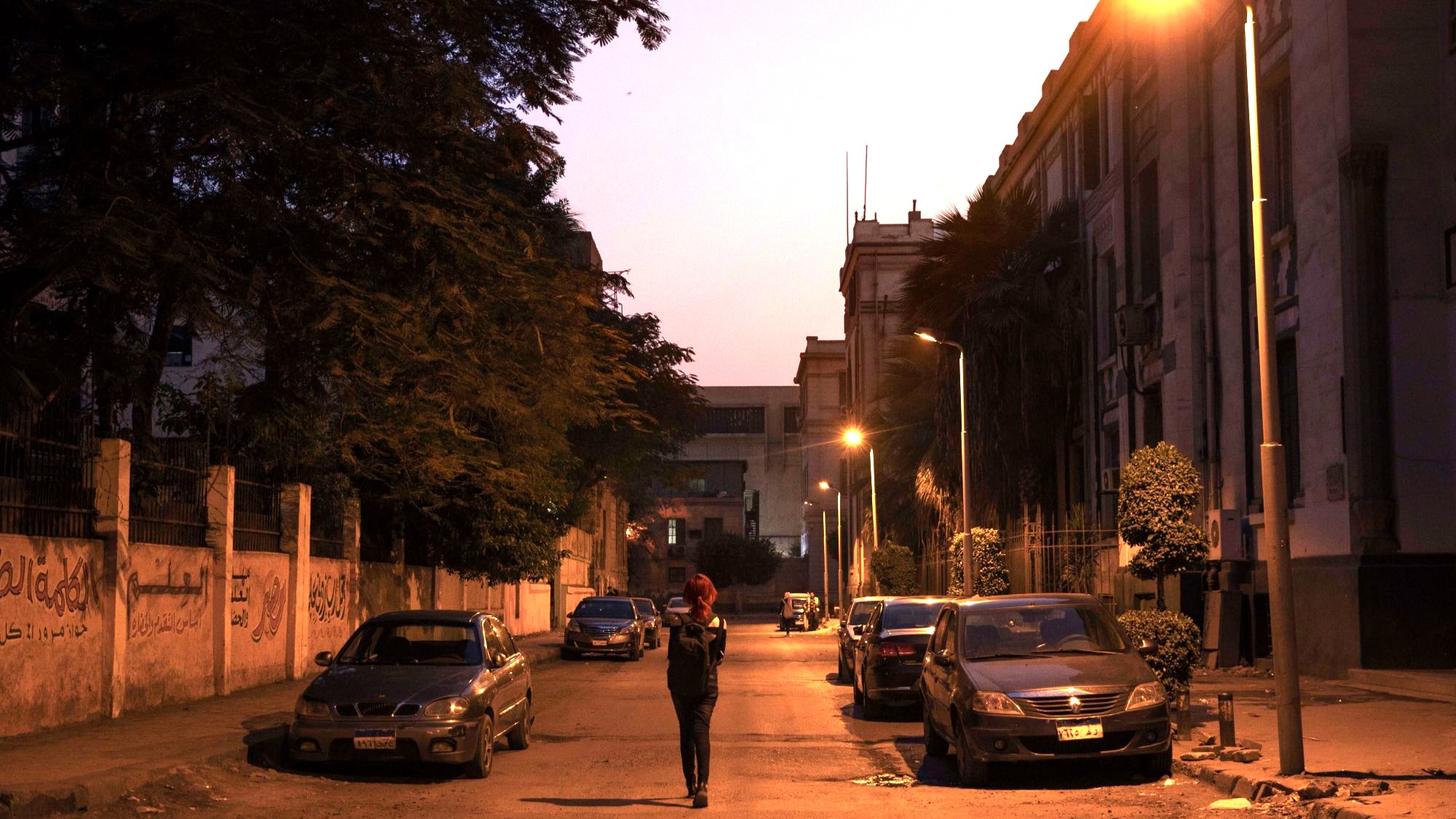
Before Abdel Meguid moved to Cairo to embark on his successful literary career, he graduated from the Institute of Philosophy at the University of Alexandria in 1973. For many of his literary characters, philosophy serves as a gateway to existential questions. It is therefore hardly surprising that the plot of "The Passerby" begins in the philosophy department of Cairo University.
Abdel Meguid divides his novel into two parts: the protagonist of the first part is Lamia, a philosophy student with a husky voice, a beautiful face and a rather masculine build. Her attraction to women leads to a barrage of condemnation in conservative Egyptian society, which rejects homosexuality outright.
The second part deals with Lamia after her transition and transformation into Hamza. He finds himself confronted by the same society as Lamia, yet his perspective is different: he struggles with outdated bureaucracy, social traditions, police mistrust and baseless accusations. Eventually, he is arrested and imprisoned alongside women, even though he knows himself to be a man.
Hamza is also tormented by inner conflicts regarding his sexuality. He is torn between Lamia's identity as a lesbian and that of the heterosexual Hamza. He feels uncomfortable in either role and wonders whether he is still the lesbian Lamia, trapped in a man's body. Added to this is the fact that he has erotic dreams about both men and women.
Abdel Meguid has never lacked courage when it comes to choosing his subjects. His first novel, "In the Summer of '67" ("في الصيف السابع والستين"), published in 1979, documented the consequences of Egypt's defeat in the 1967 war against Israel. Since then, he has repeatedly tackled socially and politically sensitive issues, including the upheavals in Egypt and the Arab world since 2011.
In "The Passerby", too, Abdel Meguid explores not only the theme of a transgender person's search for identity but also a political one: through symbolism and allusion, the author depicts the Egyptian security state that now governs the country – following a period of temporary freedom after the revolution of 25 January 2011.
The two narrative strands converge on a question raised by the protagonist, Lamia, before transition to a male identity: "Is our country transgender, and we just don't know it? Oh, many people say it’s a depressed country, whilst others say Egypt is full of joy!"
The security apparatus
The narrative structure of the novel uses the theme of gender transition as a mirror for a society in the stranglehold of the security apparatus. The protagonist witnesses other young people being arrested on the basis of dubious political allegations. He, too, is arrested both as Lamia and as Hamza.
Here, the personal and the political spheres overlap: the disclosure of both gender identity and political identity is seen in the light of the same process of surveillance and accountability.
In doing so, the novel clearly illustrates the violation of personal freedoms on the streets of Cairo: security forces search the mobile phones and social media profiles of passers-by. Even at university, young people are under surveillance – even the dean of the faculty and the waiter in the café are police informants.
While Lamia's experience of transition is marked by confusion, the text also invites the reader to ask which transition the author really has in mind. Is it the shift from one gender to another, or the passage of an entire country between two states, from freedom to the stranglehold of the security apparatus?
Alongside this harsh reality, however, the novel also offers scope for liberating (day)dreams: Lamia dreams of an island where men live without male genitalia and women without vaginas, where love and sexuality are expressed through kisses, where nobody has children and everyone lives forever.
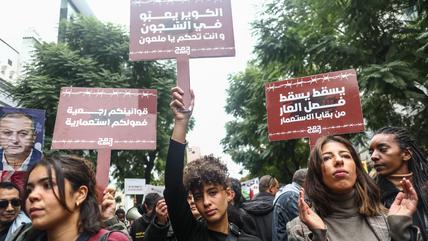
"Arab culture's flexibility distinguishes it from others"
Concepts of gender are shifting across the Arab world. Tunisian writer and academic Amel Grami reflects on emerging approaches to gender analysis in the region and examines how colonial legacies have shaped existing perceptions.
Gender transition costs a fortune
Through numerous details, readers learn a great deal about the challenges faced by transgender people – such as the cost of the gender-affirming surgery that Lamia, or Hamza, undergoes. This is estimated at half a million Egyptian pounds (approx. 10,000 US dollars). Gender transition in Egypt is by no means accessible to everyone.
The author also uses his fictional characters to highlight many social contradictions, for example within Lamia's family: her religiously fanatical mother takes pleasure in watching old films about gender reassignment, yet refuses even to look at her own daughter's body. To her, Lamia's suffering represents moral decay and a rebellion against God's will. The father, meanwhile – a respected merchant – is having a sexual relationship with the maid's daughter.
Other contradictions reveal profound societal aberrations. For instance, Hamza's fellow prisoners show him empathy, while the security forces lack any compassion – or at least any understanding. Instead, they set themselves up as judges and hand down pre-determined verdicts: they regard gender identity disorders as perversion, and view deviations or opinions they cannot comprehend as the first step towards membership of a terrorist organisation and as a threat to the country's security and stability.
The novel ends before the reader has learned the final court verdict in Hamza's case. Because of comments he made on Facebook, he is put on trial for terrorism and membership of a banned organisation – albeit under the name Lamia, because the state still does not recognise him as a trans man.
"The Passerby"
Ibrahim Abdel Meguid
Translated by Somaya Abdelwahab
Sulfur Editions
2026, originally published in Arabic in 2020 by al-Mutawassit
This text is an edited and abridged version of the original Arabic. Translated from German by Max Graef Lakin with the support of AI-assisted translation tools.
© Qantara.de