"Progress stops where equality begins"
Qantara: Morocco has its first female Prime Minister. Was the nomination of Fatima Ezzahra El Mansouri at the end of September a surprise?
Ghizlane Mamouni: The real surprise is that we had to wait until 2026 for a woman to become Prime Minister. Fatima Ezzahra El Mansouri is well-known for previous roles as the mayor of Marrakesh and Minister for Urban Development and Housing. She's the coordinator of the Authenticity and Modernisation (PAM) party, which won the parliamentary election on 23 September. According to the Moroccan constitution, the King has to appoint a member of the party with the most votes as Prime Minister. El Mansouri's name had been circulating for months.
There has been criticism of her appointment in Morocco, with some arguing that royal protocol will be compromised because, as a woman, El Mansouri can't pray alongside the King in the mosque. What's your take on that?
On that basis, she's being criticised not for her political platform, her professional track record, nor any lack of competence, but for where she stands in a mosque. Yet protocol is merely a custom whereas the Constitution is the supreme legal authority. Article 19 enshrines equality between men and women and Article 47, which governs the appointment of the Prime Minister, contains no gender-specific conditions whatsoever. If custom conflicts with the Constitution, it's the custom that should be changed. Never the other way round.
What is the situation for women in Moroccan politics in general?
Progress is slow. In the new House of Representatives, which has 395 seats, 107 are held by women. Of these, 90 owe their seats to the quota system, while only 17 were elected in direct contests in local constituencies, which means that, without the quota, the Moroccan parliament would be made up almost exclusively of men.
Ultimately though, it makes no difference whether a woman is an MP, a minister or the head of government. As soon as she leaves her office, she's not permitted to manage her own children's savings accounts or travel abroad with them without their father's consent. According to the Moroccan Family Code, the father is the legal guardian; only in the event of his death can the mother become the legal guardian.
Morocco's King Mohammed VI announced a reform of this family code known as the Moudawana, as early as 2022. What's the current status?
As yet, nothing concrete has happened. Following the King's announcement in his 2022 Throne Speech, a committee held consultations and submitted proposals, which were never made public, to the King.
For his part, the King submitted some of these proposals to the Supreme Council of Islamic Scholars—the Ulema—for assessment. They raised objections to the reform, specifically regarding issues such as inheritance, the legal status of children born out of wedlock, and polygamy.
At the end of 2024, the Ministry of Justice and the Minister of Islamic Affairs presented the broad outlines of a planned reform verbally. This was to serve as the basis for a commission to draft a bill, but we have heard nothing since.
What are your thoughts on the initial proposals?
Some genuine progress was in evidence. Under these proposals, women would be able to retain custody of their children even if they remarry. In the event of divorce, unpaid care work would be taken into account when calculating each spouse's contribution to the marital assets. Following the death of a spouse, the surviving partner would be guaranteed a lifelong right to reside in the shared home. But the progress stops well short of true equality.
A struggle over Quranic principles
Feminists in Morocco are eagerly awaiting a planned reform of the family code. Experts and the public have been consulted, but the king and the commission have yet to reveal the proposed amendments.
In what way, exactly?
Some key proposals were rejected by the Supreme Council of Islamic Scholars. DNA testing, for example, would still not be permitted as proof of paternity. That means that many children born out of wedlock would remain excluded from Morocco's lineage system, which is based on the father, and problems relating to identity documents, access to schooling and inheritance would persist.
With regard to inheritance law, the Ta'sib principle is set to remain in place, which means that where there are no sons, daughters would still have to share their father's estate with uncles or cousins. The reform also fails to address the issue of equality for men and women of the same degree of kinship, such as a brother and a sister.
Non-Muslim women would still not be allowed to inherit from their Muslim husbands. The only option in this case would be a gift made during the husband's lifetime. And still other proposals effectively amount to a step backwards.
Which specific proposals are you referring to?
Marriage for minors would remain possible in exceptional cases, albeit only from the age of 17. In practice, this would effectively set the legal age for marriage at 17.
Polygamy would still be allowed with judicial authorisation, and in future, a wife's infertility or a health-related issue which might impair her ability to carry out her "marital duty" could be used as justification. In other words, a woman's medical records could be used to negotiate her "marital duty", yet marital rape would still not be classified as a criminal offense, even though we've been campaigning for that for years. Essentially, women would be burdened with obligations, yet denied protection.
In short, men would retain control over women's assets, lineage, even their bodies. This legislation is a form of violence, albeit not in the form of physical blows.
The new parliament is yet to address the Moudawana reform. Is it already clear who supports the reform and who's against it?
Only two parties—the Alliance of the Left and the Party of Progress and Socialism (PPS)—have called for a reform of family law in their election manifestos, advocating, for example, for the abolition of child marriage. The Party for Justice and Development (PJD) rejects the reform entirely. The four parties which together hold a majority of seats in parliament made no mention of it in their manifestos, and that includes Prime Minister El Mansouri's PAM.
And what about the Council of Scholars, who had reservations about the initial proposals?
The Ulema has approved most of the proposals and rejected only a few, albeit the most crucial ones. From a legal standpoint though, that should be closely examined. The Supreme Council of Islamic Scholars can issue fatwas, which may be seen as formal opinions. They're not legally binding. Article 71 of the Constitution vests Parliament with the authority to legislate on family law. It's the legislature that drafts the law, and is answerable to the electorate.
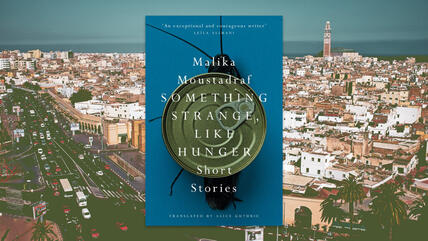
Feminist and literary activist
The Moroccan author Malika Moustadraf (1969 - 2006) wrote about sexuality, patriarchy and women's rights in her texts. When she died from chronic kidney disease aged just 37, she left behind an exciting, little-known literary legacy. By Melanie Christina Mohr
You're a lawyer and also represent the feminist Ibtissame "Betty" Lachgar, who is currently in prison for posting a selfie in which she wore a T-shirt printed with the words, "Allah is a lesbian". What's the background to that?
The phrase on the T-shirt is a variation of a feminist slogan from the 1970s; Lachgar used it to show support for two Iranian women who've been sentenced to death. She took the photo in the UK, where her actions aren't a criminal offence, but in Morocco she was convicted of blasphemy and sentenced to 30 months in prison and a fine of 50,000 dirhams (around 4,500 euros).
She's been serving her sentence since 10 August 2025. Lachgar is a bone cancer survivor and has an upper-arm prosthesis. In prison, a scheduled replacement of her prosthesis wasn't carried out, and it has since come loose. Lachgar suffered a fracture and can no longer move her arm. Her medical treatment consists of paracetamol. The situation is akin to a death sentence that no judge has signed.
What does the Lachgar case mean for the feminist movement in Morocco?
It is a warning with implications for us all. A feminist who causes a stir can be imprisoned because of a photograph, even if it was published abroad where such an expression of opinion is protected. No Moroccan living abroad—man or woman—should ignore that.
But this case is also a test for Morocco. The country presents itself as a reformist nation with a woman at the head of government and a constitution that guarantees freedom of expression. The fate of Ibtissame Lachgar will show whether those guarantees also apply to women who are not to the authorities’ liking.
In any case, the feminist movement will not be intimidated. You can't silence women by locking one of them up. You only unite them.
This is an edited translation of the German original. Translated by Louise East.
© Qantara.de