A long-forgotten visual legacy
Topics
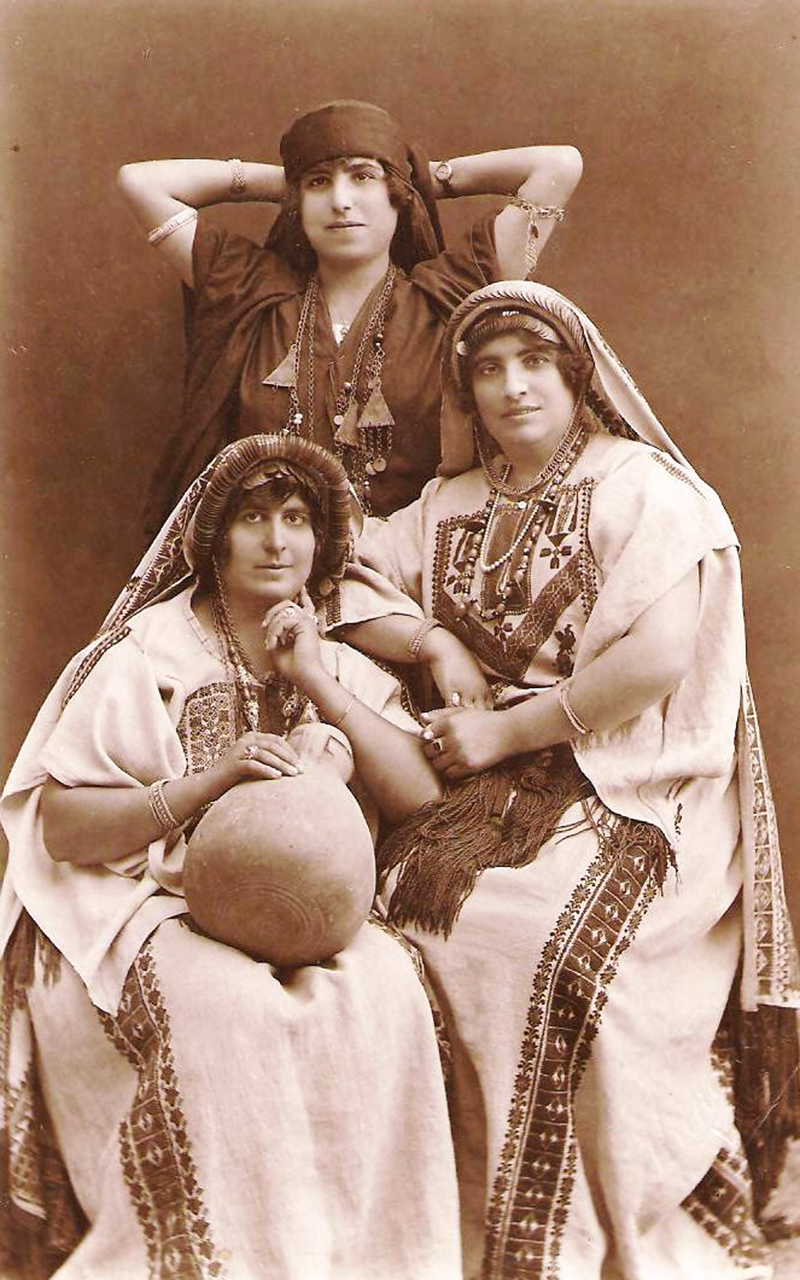
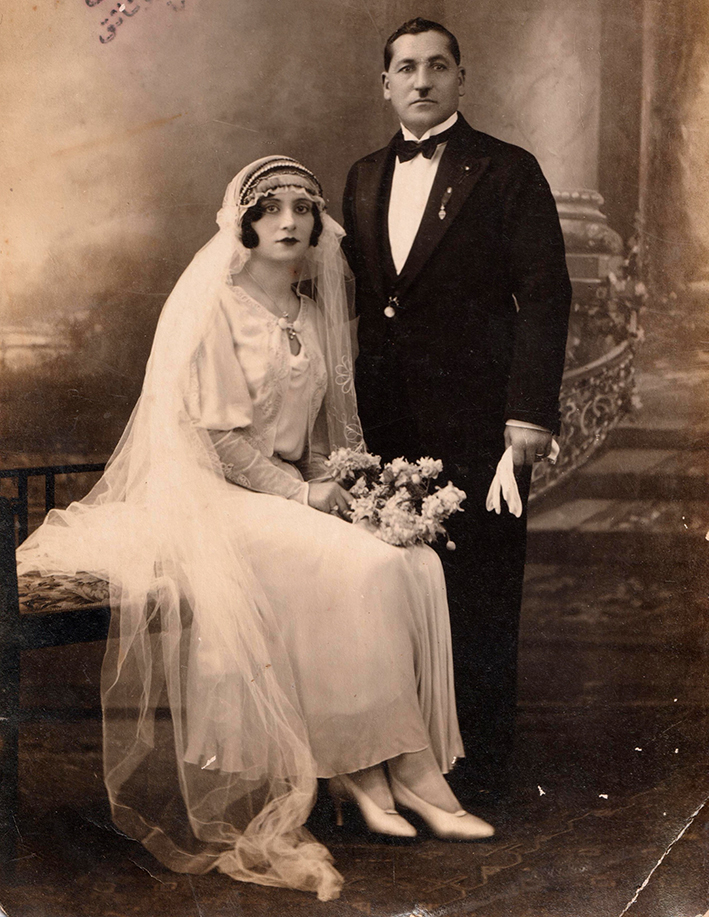
In one photograph, three women wear the thobe, a flowing, handmade dress with intricate cross-stitch embroidery known as tatreez; one carries a jarrah (a terracotta water jar), while another strikes a pose to show her traditional dress and jewellery. In another, a young woman wears a modern-style white wedding dress, perhaps an import from the West. Her husband, rigid in his dark tailored tuxedo, stands beside his bride. The image quality is remarkable given that it was shot 100 years ago.
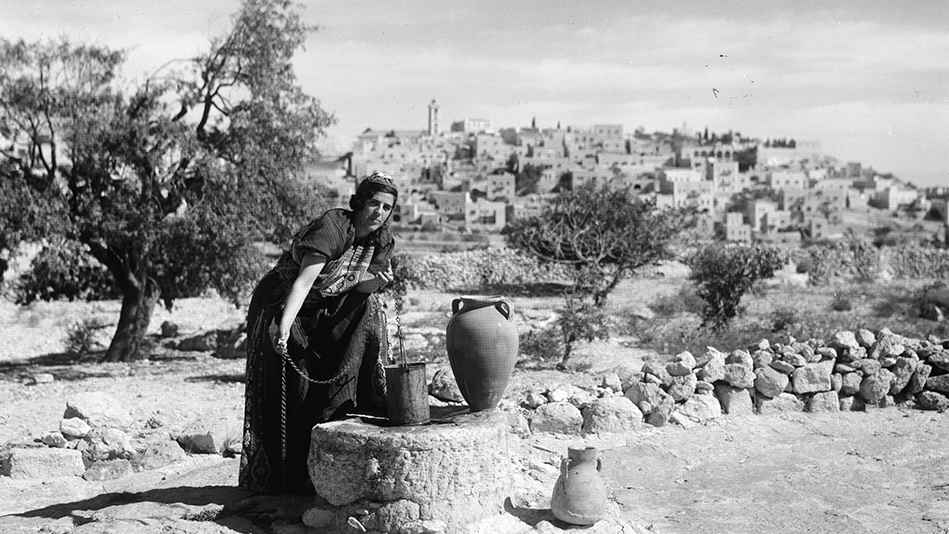
These are just two of the standout photographs from a collection of works by the pioneering Palestinian photographer Karimeh Abbud (1893—1940), who has recently emerged as a rare example of a female perspective in an era when men dominated the medium. She is widely regarded as the only Palestinian woman known to have run a photography studio in the region at that time. Although small in format, her photographs taken between 1924 and 1939 offer a unique insight into the everyday lives and scenery of the era.
And her legacy is reaching new audiences, with an exhibition of her work on show in Nantes in November, following an earlier one in Marseille. Last year, a wide range of her photographs were brought together for the first time in the trilingual monograph "Karimeh Abbud – Images de Palestine", published in Arabic, English and French by the Marseille-based publisher and photographer Abed Abidat, founder of the Images Plurielles publishing house, in collaboration with Barzakh, based in Algiers. The 248-page publication sheds new light on the long-overlooked photographer.
"There is no doubt that Karimeh Abbud made a major contribution to Palestinian photography and the representation of Middle East society of her time," author Ahmed Mrowat wrote. "Especially since many conservative families did not allow their daughters to appear in front of that strange invention, the camera." He urged readers from the region to check their family photo albums, in case they can identify more of her lost works.
The monograph has been produced thanks to the painstaking work of Mrowat, founder of the Nazareth Archive Project. Since 2006, Mrowat has tracked down photographs by Abbud, searching through commercial Israeli collections, the private collection of Karimeh's cousins Matil and Shafiqa Abbud, the Lutheran Church's archive in Bethlehem and elsewhere.
Abbud was born in Bethlehem in 1893, the second of six children born to educated parents. Her father Said Abbud was a Lutheran pastor and a teacher, and her mother, Barbara Yusif Badr, was a teacher. Born as an Ottoman citizen, in a region then administered as part of Bilad Al-Sham, or Greater Syria, Abbud lived through the waning years of the Ottoman Empire and the height of European influence in the region during the British Mandate for Palestine (1920—1948). She witnessed, and documented, an era of great social and cultural upheaval, including the Arab Revolt (1936—1939).
The book contains 200 of her photographs, dating between the mid-1920s and 1930s. Together they offer a glimpse into the lives of the urban, educated, middle-class Palestinian Christian community of the time, and are unusual for encompassing several portraits of women. She also depicted rural areas, as well as religious and historical sites in Palestinian cities. A few of these pictures were hand-painted, in keeping with the style of the era before the invention of colour film.
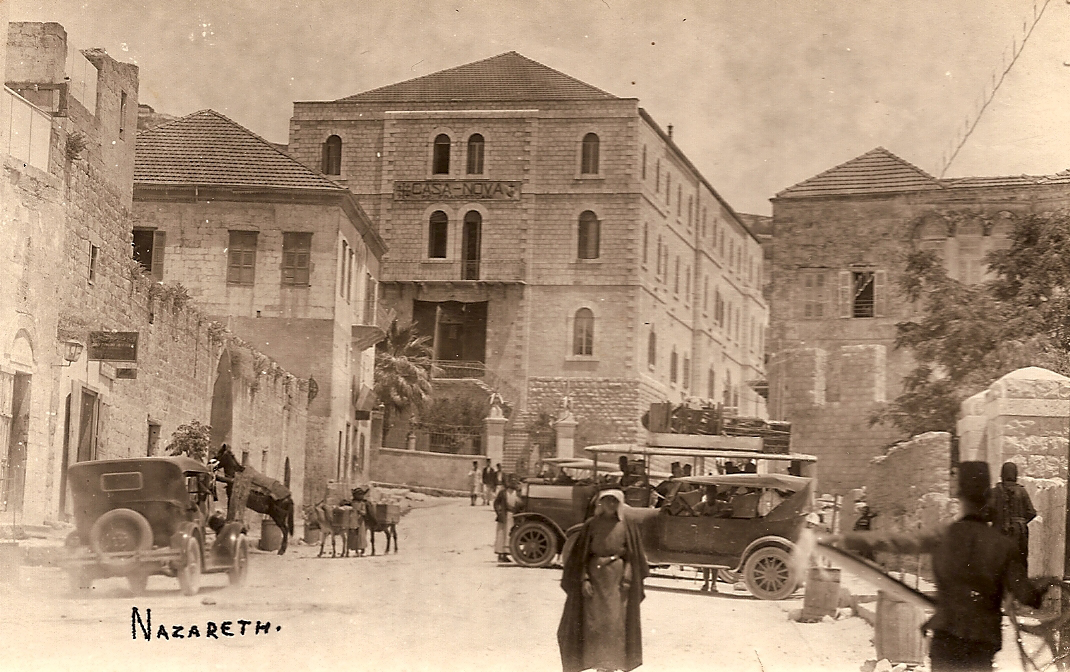
One of her most iconic photos of this kind shows the square in front of the famous Casa Nova pilgrim hospice in Nazareth during the British Mandate. In the shot, elements of modernity and tradition coexist, with vintage cars standing alongside a donkey cart, a traditional means of transport at the time. The urban scene also features soldiers (probably linked to the Mandate forces) and various passers-by.
Other photographers also worked in the region at the time, including the Armenian Garabed Krikorian, who opened the first studio in Jerusalem in 1885. Another prominent figure was Khalil Raad, widely regarded as the first Arab photographer in Palestine to achieve national recognition. Abbud is thought to be the only woman practising this profession in the region at that time. Details about her life, however, remain scarce.
She worked in Nazareth, Haifa (Dar Doumit), Jerusalem and had a studio in her father's house, Dar al-Jaar, in Bethlehem. Having grown up as a pastor's daughter, she broke with traditional gender roles and is said to have driven a car and occasionally travelled in other regions.
In 1931, at the age of 36, Abbud married Youssef Fares Tayeh, a merchant from her father's native region of Marjayoun. However, the marriage was unhappy and the couple soon separated. They had only one child, Samir, who was born in Brazil during a brief stay.
She advertised her studio in the influential Haifa newspaper Al-Karmil (or El-Carmel), founded in 1908 by Najib Nassar and his wife Sadhij, Arab Christians openly opposing land acquisition and colonisation in the region. In this advert, she described herself as the only wataniyye (local or native) photographer in Palestine, emphasising her identification with her homeland.
Her work was rediscovered thanks to a collection of postcards found in a former house in Jerusalem's Qatamon neighbourhood in 2006 and since then there has been a flurry of international interest in her. Abbud has been the subject of several documentary films, including "Restored Pictures" (2012), directed by Mahasen Nasser-Eldin, and one by Al Jazeera. The renowned Jordan-born Palestinian poet and novelist Ibrahim Nasrallah has also published a biographical novel about her, "The Biography of an Eye" (Sirat ’Ayn, 2019) and the inaugural Beirut Image Festival also celebrated Abbud as a central figure of early Arab photography.
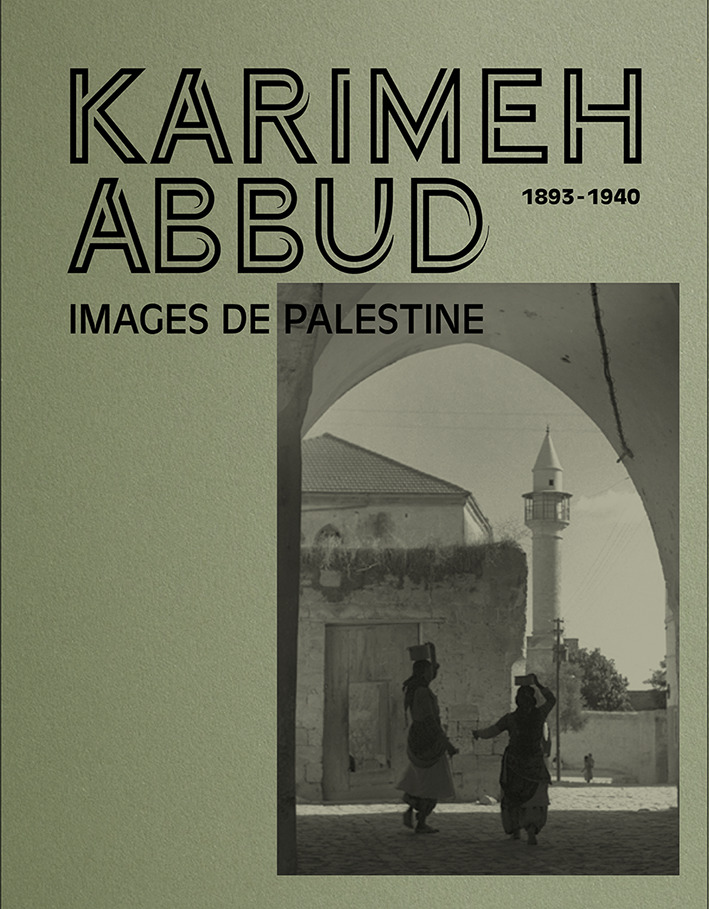
Karimeh Abbud – Images of Palestine (1893–1940)
Ahmed Mrowat (Foreword by Sandrine Mansour)
November 2025
248 pages
© Qantara.de