One author, multiple selves
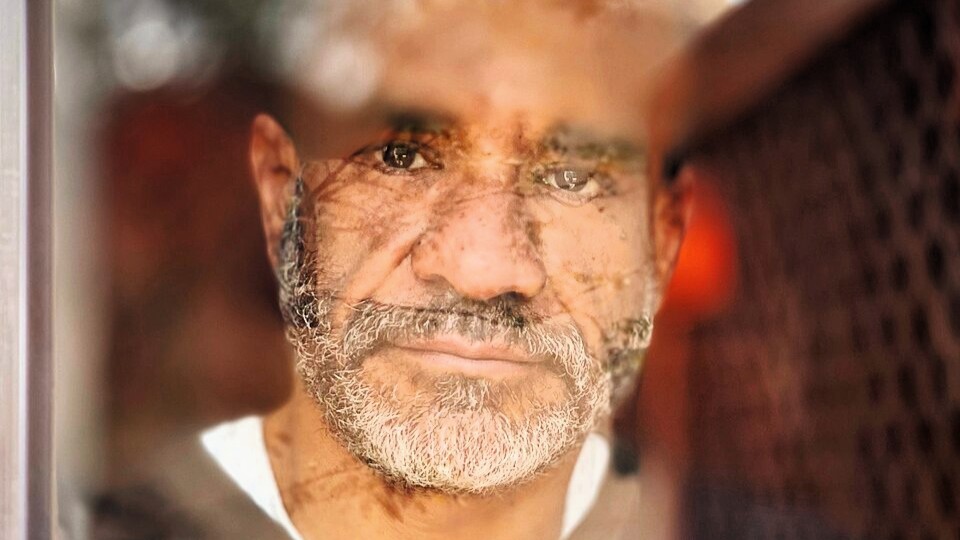
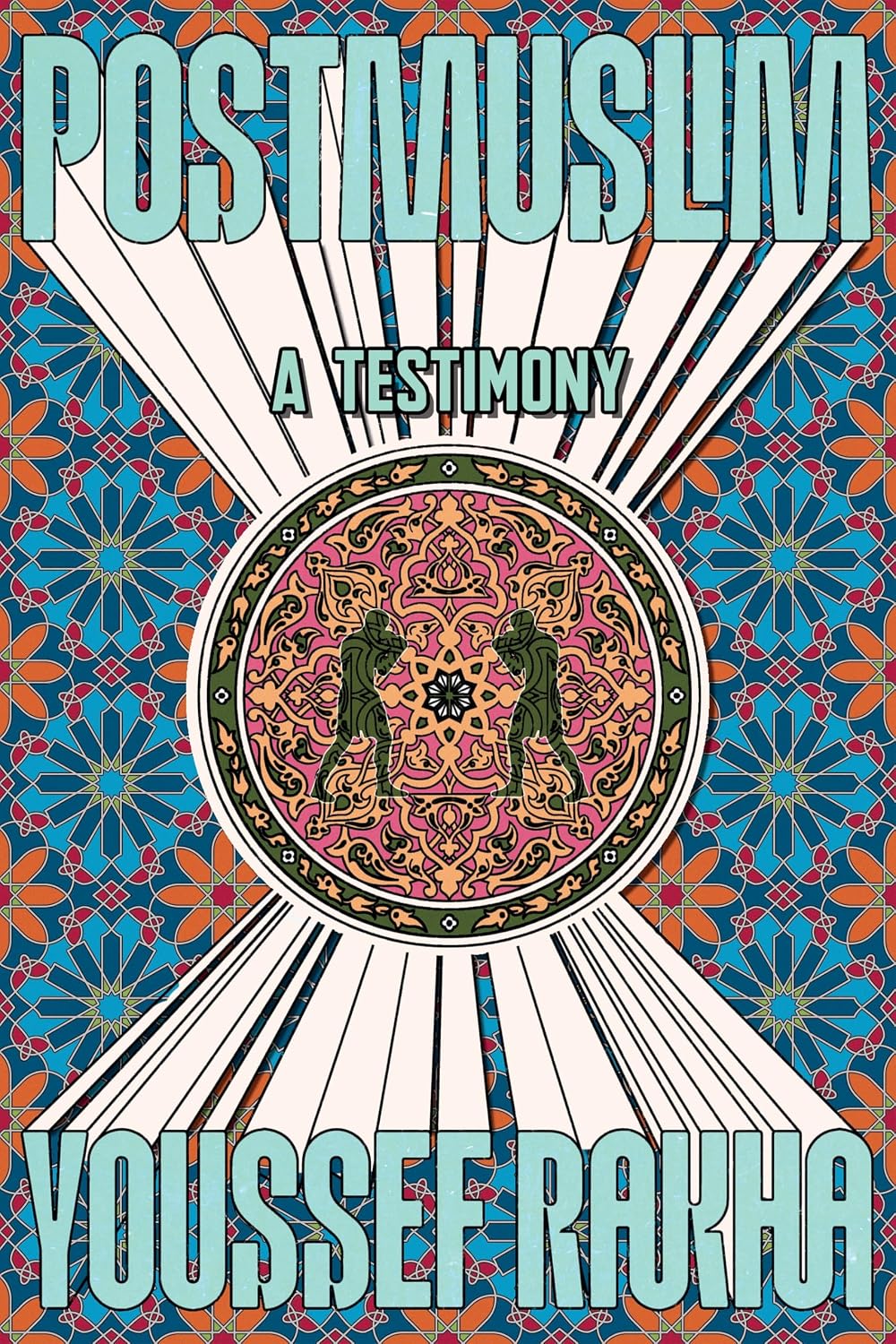
"Postmuslim" is a book that resists easy categorisation. Autobiographical elements sit alongside essays, literary recollections, political reflections and a form of cultural self-examination—not as neatly separated parts, but as interwoven layers. It is precisely from this that the text draws its strength.
One can read "Postmuslim" as a provisional culmination of a journey that Youssef Rakha ("The Dissenters"), born in Cairo in 1976, has been undertaking for a long time. He began publishing in the 1990s, initially in Arabic. Themes of his early work resurface here: Egyptian history, the friction between past and present, Islamic culture and revolution, sexuality and, time and time again, the question of how a modern Egyptian identity can be expressed through literature.
Rakha's literary career has been marked by a shift between Arabic and English. He used Arabic since his youth, but ater, began working as an English-language journalist and author. "Postmuslim" is also written in English.
For Rakha, language is more than a question of style. It becomes a space where identity is forged. This is particularly evident in the passages of "Postmuslim" where Rakha writes about his youth. Music, literature and, above all, English-language books opened up a world for him that extended beyond his immediate surroundings.
The alien and alluring West
Rakha describes his own intellectual development not as a sudden epiphany, but as a gradual shift in perspective. At some point, the world in which he grew up no longer seemed self-evident. Religion, sexuality, gender roles, social norms—everything began to waver. The English-speaking cultural sphere became the promise of a different way of life.
Particularly striking is Rakha's idea that, over the course of his life, an English-speaking version of himself has emerged, existing alongside the Arabic-speaking one. English does not replace Arabic. Both remain, competing and overlapping. Rakha rejects the notion that one must eventually make a choice.
In this regard, the term khawaga plays a central role. In Egypt, it is a common term for Western foreigners. For Rakha, the khawaga initially represented the foreign, which was simultaneously alluring because it seemed strangely familiar to him.
This tension becomes palpable in the chapter "The Khawaga Complex". In it, Rakha recalls his arrival in England in February 1996, and his expectation of being able to live out his own sexuality more freely there, surrounded by Western strangers. Over the course of the chapter, his encounter with European cultural history during his time in England becomes intertwined with a concrete physical experience of otherness.
An internal conflict
Rakha's relationships with various partners, and with his family, form an important part of his memories. His encounter with an English-speaking woman, who had come to Cairo before his time in England and became his first real partner, shifted his relationship with language and identity. Intimacy transcends cultural and linguistic boundaries, and this gave rise to what Rakha later describes as the English-speaking version of himself.
This idea is both fascinating and unsettling: Rakha speaks of slowly "murdering" the khawaga within himself and allowing an English-speaking version of himself to emerge in his place. This is a metaphor for an internal cultural struggle. The khawaga is not merely the Western "other"; he is a figure that Rakha carries within himself, at times embracing him, at times rejecting him. His identity takes shape within this tension.
This perspective is central to Rakha's critique of the West. It is directed against a Western order which, in his view, has repeatedly invoked democracy and freedom whilst Arab societies have experienced war, intervention and destruction.
"Postmuslim", however, is not a simple anti-Western polemic; Rakha's biography is too strongly shaped by English literature, Western music, European philosophy and his experiences in England. It is precisely because the West has become part of his history that he is able to view it critically. The criticism stems from proximity, and from disappointment.
"The Cairo I've known is being eroded"
Youssef Rakha revisits Egypt's 2011 uprising and its aftermath in "The Dissenters", the author's first novel written in English. The Arab Spring failed, he argues in this interview, because it was a neoliberal movement with no compelling vision for the future.
Rakha, meanwhile, describes Islam on the one hand in historical terms as a liberation from ignorance, and on the other, in light of his own biography, as a system whose rules increasingly came into conflict with his life.
His distance from religion therefore did not arise solely from theoretical considerations. It stemmed from the realisation that the world he read about, heard about and came to know was larger than the world of religious norms in which he had been socialised.
Not a neutral observer
Key reference points from which Rakha reassesses the relationship between the West and the Arab world are 7 October 2023 and the genocide in Gaza. In doing so, he does not write as an uninvolved observer. The chapter "The West doesn’t give a shit about me" marks a break with his belief in the liberal-democratic promise that had seemed so attractive in his youth.
This is where one of the most significant tensions in "Postmuslim" lies: Rakha breaks away from religious certainties, but fails to find an unbroken sense of identification with a liberal West.
Rakha does not romanticise the past. His examination of the "pathological nostalgia" felt by Arabs and Muslims for past civilisational achievements is self-critical: he recognises the danger of conjuring up lost grandeur rather than seeking to improve the present. History can provide stability, but it can also imprison.
Anyone expecting chronological order in "Postmuslim" may find themselves lost. Rakha jumps between decades, cities and themes. He styles himself neither as a hero of secularisation nor as a victim of Western politics. For him, secularisation does not simply mean swapping religion for rationality, but can mean enduring the cultural traces of one's own religion without continuing to follow them entirely.
"Postmuslim" marks an important stage in Youssef Rakha's literary and personal development. The book reads less like a concluded life story than an ongoing process of self-examination. Perhaps this is also where the true significance of the title lies: "Postmuslim" does not describe a person who has left their past behind, but someone who has learnt to interpret it differently.
Youssef Rakha: "Postmuslim: A Testimony"
Graywolf Press
September 2026
240 Pages
© Qantara.de