The war hiding underground
Topics
One morning in August, as Khadija al-Muhammad was preparing breakfast for her three children in a village in Idlib, an explosion shattered the silence. The screams of her children, who'd been playing in front of their dilapidated house, pierced the dusty air.
Khadija ran out barefoot and found her eight-year-old son, Ghayath, lying in the dry grass. The blast had torn off one of his arms and his clothes were drenched in blood. Neighbours took him to the nearest medical clinic; his mother ran after the car, wailing. Doctors told Khadija that Ghayath's injury was severe; the rest of his arm needed to be amputated.
What happened to Ghayath is a grim reminder that the physical remains of the war in Syria—such as landmines and unexploded ordnance—continue to threaten lives. Those most affected are the internally displaced who returned to their homes after the fall of the Assad regime in December 2024.
Khadija is one of them. After seven years of displacement, she returned to her village of al-Bara in southern Idlib province. Exhausted by life in a tent, she decided to return to her dilapidated house, she tells Qantara. She hoped it would be more bearable than the cold in the camp.
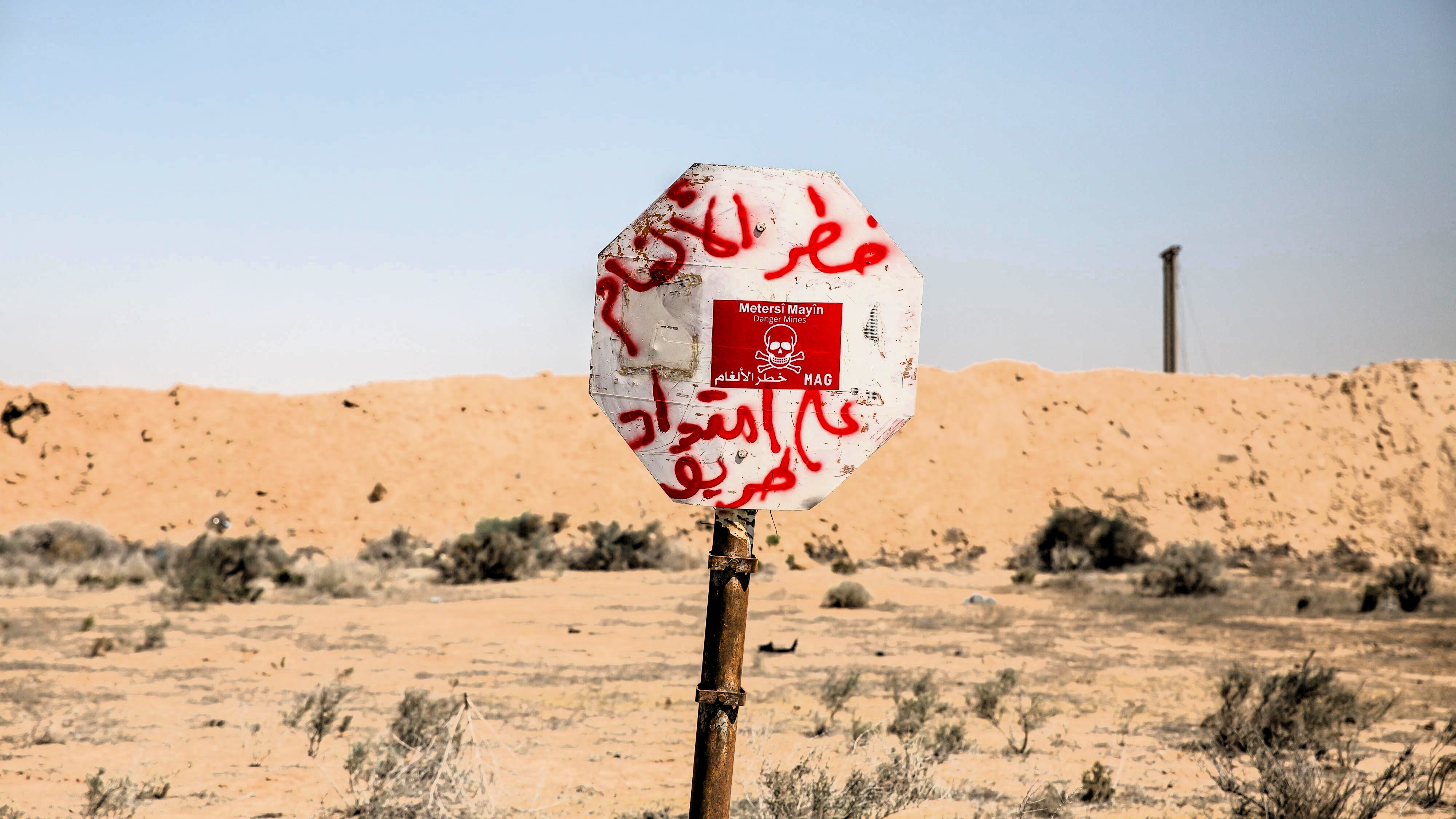
But as in so many villages in Idlib, Hama, and Aleppo, hidden traces of the war linger on in al-Bara. These areas were once on the front lines. Today, many outlying areas and olive groves are still affected. The danger is compounded by a lack of warning signs and maps marking the locations of landmines and unexploded ordnance.

Returning pupils face language barrier
Eleven-year-old Ali spent six years in Germany. Now back in Syria, he is struggling with Arabic, his native language, as the new government appears overwhelmed by the task of reintegrating returning schoolchildren.
On 21 May, a landmine exploded in an abandoned well in the village of Abu Habba on the eastern outskirts of Idlib after children playing nearby threw stones into it. Four children died in the explosion, including six-year-old Marwan al-Sulaiman.
"The mines disfigured his innocent face," his mother, Reema Hamdan, tells Qantara.
"I told him, 'Don’t go near the well!' but he was just a child. He didn’t understand that throwing stones could be lethal. I've lost not only him but also my sleep. Whenever I see a child playing in the alley, I call out to them to stay away from the well."
According to estimates by the international aid organisation Halo Trust—which specialises in mine clearance and has been active in Syria since 2017—there have been around 700 casualties resulting from unexploded ordnance in the country since the beginning of this year, with about a third of those incidents proving fatal.
Simon Jackson, Syria program director at Halo Trust, told the AFP news agency in September that the average rate of such accidents in Syria was "one victim every six hours". Jackson attributes the significant increase in accidents in early 2025 to the Syrian population returning to their homes following the fall of the Assad regime.
Yet according to Jackson, the existence of unexploded ordnance in many areas is preventing residents from rebuilding their homes and businesses, and stopping farmers from cultivating their fields. He warns that the problem could take 20 to 30 years to be fully resolved.
Every centimetre could be lethal
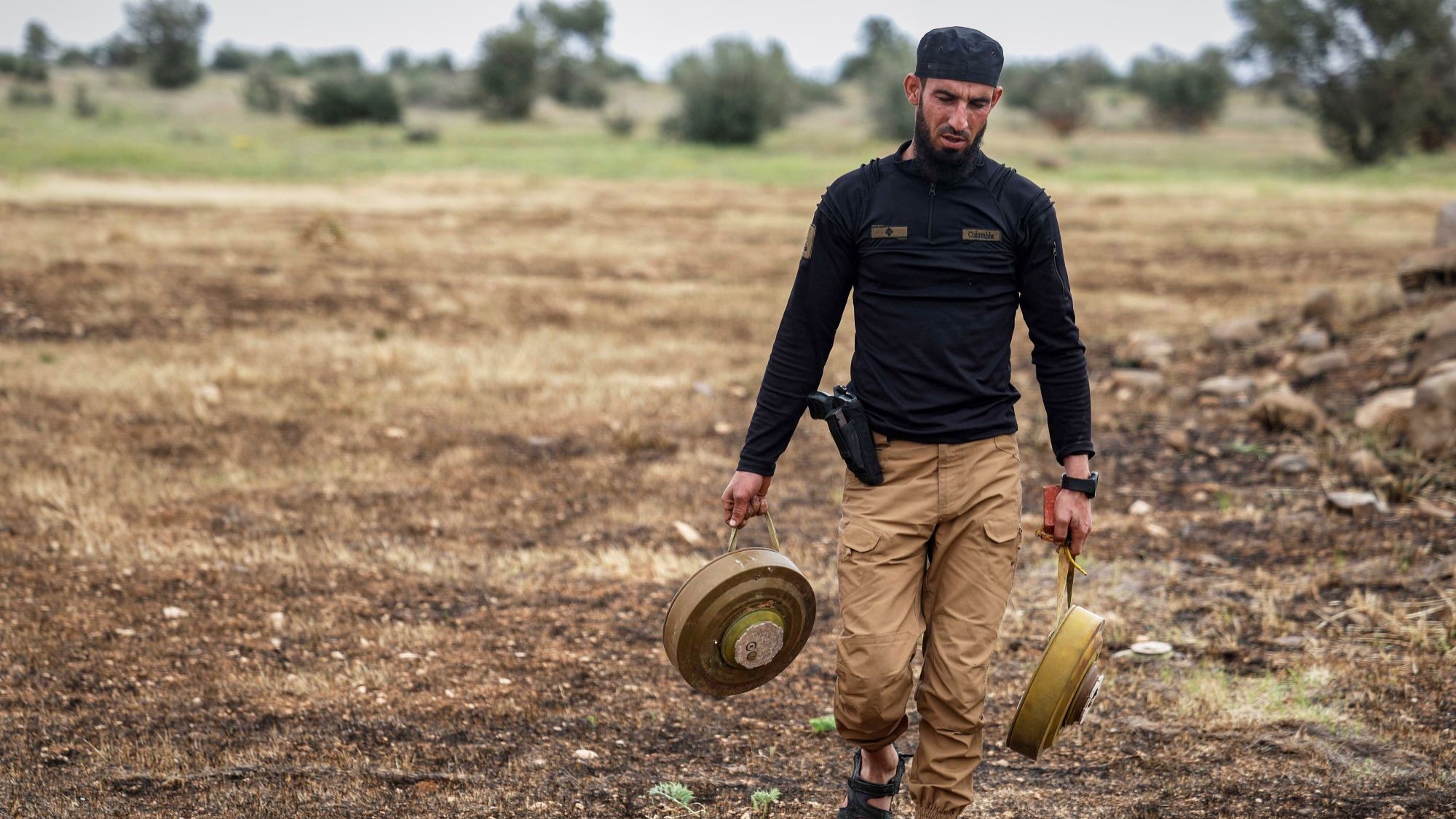
Specialised teams from international organisations, including Halo Trust, are working in coordination with teams from the Syrian Ministry of Emergency and Disaster Management, and with support from the United Nations Mine Action Service (UNMAS), to clear mines and unexploded ordnance in several regions of the country.
According to the Syrian news agency SANA, the Ministry’s teams carried out 311 clearance operations in the first quarter of 2026, identifying more than 200 contaminated locations.
The clearance teams survey which areas are likely to be contaminated with explosive ordnance, and install warning signs. Reem al-Rahmoun is a trained nurse in her 20s who joined the civil defence force about two years ago, motivated by the sight of women and children wounded in explosions.
Initially, al-Rahmoun worked in data collection and public awareness programs, before joining the explosive ordnance disposal team. Every morning, as she sets out for work in northern Idlib, she puts on a helmet, and shoulders a heavy equipment bag.
"Every step I take in the field is a confrontation with death. At the same time, every step contributes to saving lives—we've already suffered so many casualties. I do this although my family is scared for me," al-Rahmoun tells Qantara.
Al-Rahmoun treats every square metre of land as though it's potentially dangerous; "The most dangerous moment is not when you find the mine, but when you believe the area is safe."
The teams with which al-Rahmoun works urge families not to touch any unknown objects, even if they appear small or harmless, but rather to immediately report suspicious objects via a civil defence hotline.
Al-Rahmoun also recommends keeping children away from areas that have been bombed in the past or where unexploded ordnance has been found previously. Children should also be educated about the dangers of shiny or unfamiliar objects found in fields or on the street.
In the event of an accident, response teams are dispatched to secure the site, evacuate civilians and transport the injured to the nearest medical facility or field hospital. The area is then searched to ensure that no further explosive devices remain.
Once the immediate danger has been dealt with using established protocols, the teams visit the affected families to educate them, with the aim of preventing further incidents. The goal, ultimately, is to make sure civilians can safely access their land or homes and live without fear.
For al-Rahmoun, the recurring incidents are proof that their work is not yet done. Raising public awareness, she suggests, is just as important as clearing the mines and unexploded ordnance.
Mapping the minefields
Yet the mine clearance process in Syria faces a multitude of challenges, including identifying contaminated areas, securing the necessary funding and raising public awareness.
"From what I've seen, the civil defence teams and the Ministry of Emergency and Disaster Situations are working hard, but they lack a clear national plan and sufficient funding," says Salah al-Ahmad, a mechanical engineer who has worked with others to clear his own land and that of his neighbours.
Al-Ahmad outlines the different types of antipersonnel mines that were used in Syria: the OZM-72 jump mine, which springs upwards before exploding; the POM-2 mine, which is equipped with tripwires that can trigger the mine upon contact; and the PMN-3 mine, which has motion sensors, making it even more difficult to clear.
For al-Ahmad, the clearance of roads, schools, healthcare facilities and wells should be prioritised, closely followed by agricultural land. In parallel, he suggests, an accessible and innovative awareness campaign could be launched, aimed at varying levels of literacy and involving survivors, allowing them to share their own experiences.
In addition, an easily accessible digital platform could be built, featuring an up-to-date map of mine-contaminated areas. The public could report suspected mine locations via a mobile app, which would then be verified by trained teams. Al-Ahmad points out that long-term international support must be mobilised and mine clearance projects should be linked to economic reconstruction programs.
This text is an edited translation of the original Arabic. Translated by Clara Taxis / Louise East with the help of AI-supported translation tools.
© Qantara.de