Whose land will major investors build on?
Topics
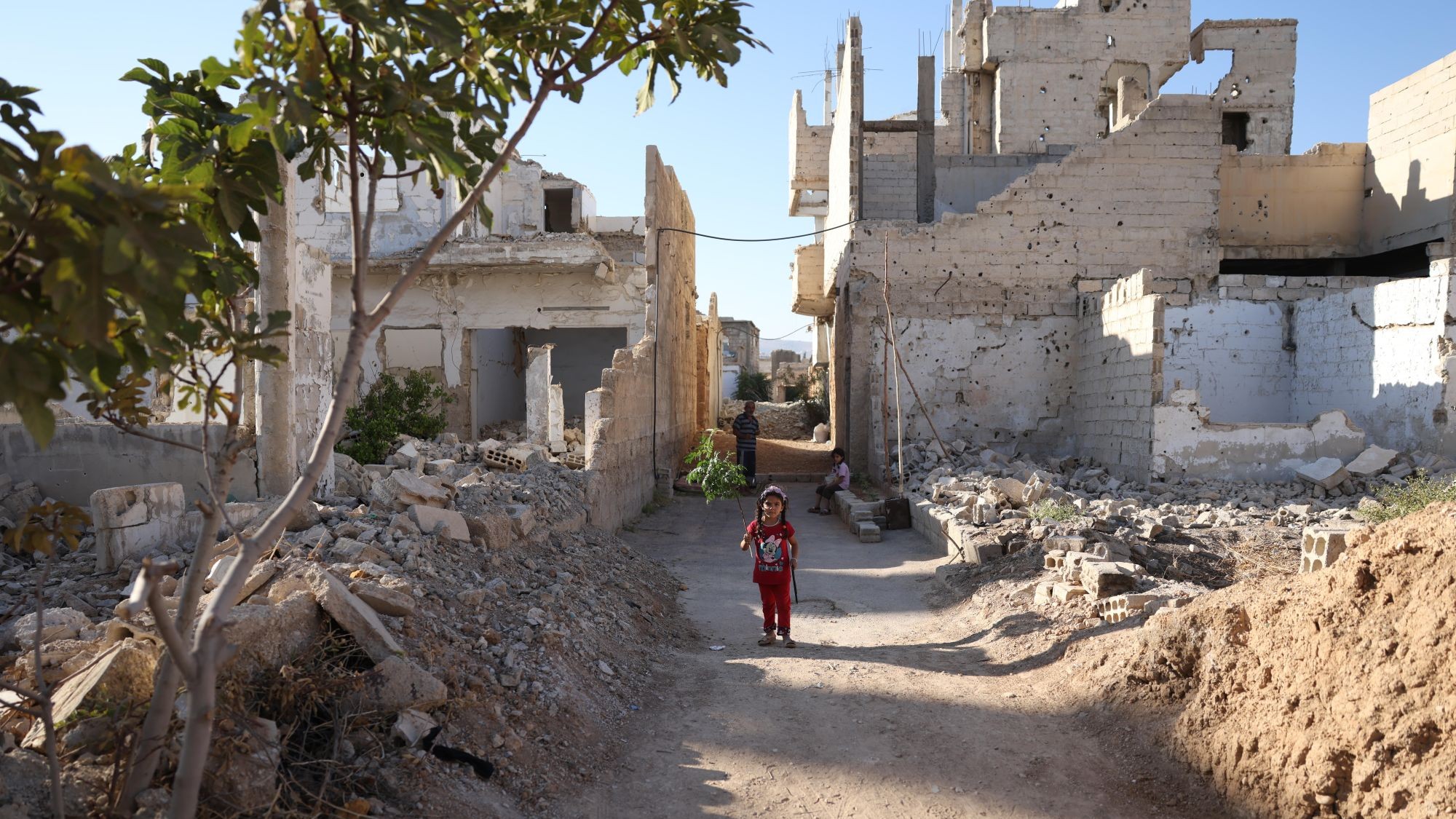
"We don't know what will happen now", sighs Hamza*, a landowner in Jobar, rural Damascus. His home was completely destroyed during the almost 14 years of civil war. Jobar, with its proximity to the Old City and major road networks, turned into a critical frontline, reducing 93% of it to rubble. A 2025 World Bank assessment estimated that the outskirts of Damascus are the second most damaged governorate in the country after Aleppo.
Its former residents hoped to rebuild and to resettle the land. In March, almost one and a half years after the fall of the Assad regime, the Damascus Governorate proposed a roughly 18 billion euro real estate investment project for the reconstruction of the Jobar, Qabboun and Tishreen neighbourhoods.
The details, however, are unexpectedly bad news for those affected, like Hamza. Under the plan, put forward by Damascus Governor Maher Marwan Idlibi, landowners are to hand over their land. In return, they are promised land equivalent to just 50 per cent of their residential property or 30 per cent of their agricultural land. When residents protested the decision, they received conflicting messages from government officials.
Hamza, too, received contradictory responses from various contacts: "There is no single reliable source," he explained. Some of the government officials had promised him even a full compensation.
The governor asks for understanding
The prospect that he might only have a plot of land half the size at his disposal is unacceptable to Hamza. "No one had a big house, especially not in Jobar". Before the war, Jobar was a part of the sprawling Damascene suburbs along the Barada river. It was a densely packed residential area, housing almost 2 million people. "Most people [in Jobar] have 120 square meters, some have 200 square meters", he explains. Since fleeing in 2013, he has started a family and fears that a house with "only one or two rooms" would not be sufficient.
In response to public outcry, the Damascus Governor Maher Marwan Idlibi hosted a public dialogue session on the project. There, he explained that the young state faced a fundamental decision regarding the funding of reconstruction. The first option was to leave the reconstruction to the citizens themselves. The second relied on grants and loans provided by the international community and international institutions. The third option was funding through investment.
"We don't actually have any loans," Idlibi explained during the same public dialogue event. On the orders of President Ahmad al-Scharaa, Syria has refused to take on foreign debt or borrow from the International Monetary Fund. Hopes for reconstruction through an export-oriented economy have been hampered by ongoing trade restrictions on Syrian imports, as Idlibi acknowledges.
Furthermore, the international community's promises to provide reconstruction aid have not yet been fulfilled: "Although pledges for grants have been made, nothing concrete or binding has yet materialised on the ground."
Reconstruction plans could deepen inequality
According to the World Bank's conservative estimate, Syria's post-conflict reconstruction will cost 189 billion euros. Regarding his reconstruction strategy, Ahmad al-Sharaa stated at an investors' conference in Riyadh in October 2025: "we chose the path of reconstruction through investment. We did not choose the path of rebuilding Syria through aid and assistance."
Following amendments to the relevant legislation, foreign investors are now permitted to fully own companies in Syria without the need for a local partner. Furthermore, legal safeguards for investors have been extended and the full repatriation of capital has been made possible, enabling foreign investors to transfer their profits to their home country after paying the necessary taxes. In addition, tax exemptions apply to selected sectors, including the pharmaceutical industry, agriculture and the export-oriented manufacturing sector.
Austerity and liberalisation won't rebuild the country
Syria's government is pursuing economic growth through liberalisation, foreign investment and cuts to state spending. These moves benefit the new elite but won't lift the majority out of crisis.
Benjamin Fève, analyst at the consultancy firm Karam Shaar Advisory Ltd., told Qantara that the current legislation makes "Syria the most attractive tax destination in the region", other than the Gulf states. This is an advantage for the transitional government: "For a government that wants to move quickly and preserve political control in an unstable country", flexibility brings benefits, explains Fève. "By shifting the costs of the state budget, it turns reconstruction into a project by project system."
Since its introduction, tax liberalisation has brought in promising row of large investment projects, particularly from the Gulf countries. $4 billion has been promised to renovate the Damascus International Airport by a Qatar-based developer, UCC Holding, owned by the Al-Khayyat brothers, originally from Syria.
The National Invest Corporation, a UAE based investment firm, has promised 1.7 billion Euro to construct a subway for Damascus. In addition, there are agreements with European investors such as the French company CMA CGM. On 1 May 2025, Syria signed an investment agreement with the company worth 230 million euros for the development and operation of the port of Latakia, the country's most important seaport.
Yet much of these investments have not materialised, explains Hani Al-Jundi, the managing partner of Damascus based advisory firm Sima Partners, to Qantara. "Of the 28$ billion in investment agreements signed nationally, approximately $10 billion is Damascus area specific, and of that, only the airport has moved to implementation."
Basing its economic recovery on the hope that capital injected by private industry will trickle down to the general population, it is unclear how the country as a whole will recover. According to Benjamin Fève, "The risk is for Syria to see a two-speed recovery, you have prime urban areas, airports, energy assets and more profitable sectors that may attract investments while poor and rural areas wait."
Economic shock therapy meets with resistance
Syria is moving towards a "competition-based free market system", according to Bassel Hamwi, chairman of the Damascus Chamber of Commerce. At the same time, the transitional government has introduced austerity measures that represent a clear break with the economic model under Assad. The Ba'ath regime had shaped its economic policy largely through state-awarded contracts and posts for those loyal to the regime, as well as extensive subsidies for essential goods.
Subsidies for diesel, fertiliser, water and bread were drastically cut or abolished by al-Sharaa's government, whilst new electricity tariffs were introduced to reduce dependence on state support and encourage investment. In addition, in January 2025, around a third of government employees were laid off, state-owned enterprises were wound up and their assets auctioned off, whilst import duties were reduced by 60 percent.
These reforms have repeatedly sparked protests. In January 2025, dismissed civil servants demanded to be reinstated; electricity price rises triggered demonstrations in several cities; and rising prices for grain and fuel led to further local protests.
Hamza, a landowner from Jobar, is refusing to sell his land for the time being. His attempts to get clarity from the authorities about their plans have left him frustrated. Until the reconstruction of his hometown begins, he is staying in Ghouta, a district neighbouring his former home, where he has rented a flat. He hopes for a future in his own four walls.
* Name changed
This article was translated from German by the author.
© Qantara.de