Society
-
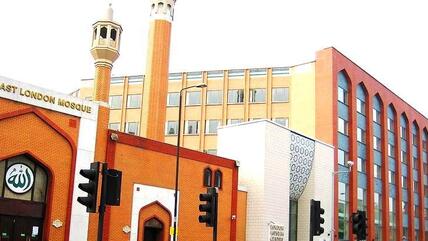 Islamophobia and Islam in Britain
The Battle for the Diversity of Tower Hamlets
Historically, the borough of Tower Hamlets is a multicultural part of Britain's capital. Today, it is home to over 70,000 Muslims. But some critics say the place has become a hothouse for Islamic extremism. Joseph Burke takes a look into a multi-faceted conflict
-
 Women in Palestinian Job Market
Wasted Talent
The Arab world is undoubtedly a patriarchal society, with labour markets that continue to be male-dominated. Although Palestinian women are better educated than men, their job opportunities are poorer. The greatest obstacles women face in working life are cultural ones. By Viola Raheb
-
 ''The House of Wisdom'' by Jim Al-Khalili
The golden age of learning in the Arab-speaking world
Arabic-speaking researchers have made major contributions to science. In his book The House of Wisdom, physicist Jim Al-Khalili examines the extent of their influence on the Western World. Anne Allmeling sends us this review
-
 9/11 and the Arab Spring
The End of the ''Antithesis''
Ten years after 9/11, the idea that Islam is fundamentally opposed to Western democratic values has had its day. In fact, the Arab Spring reveals both Muslims and the image of the West from a different perspective.
-
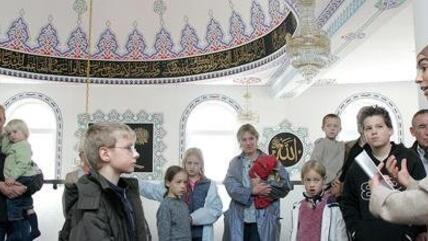 A Plea for a Euro–Mediterranean Youth Exchange Programme
An End to Age-old Animosities
The borders between the countries to the north and the south of the Mediterranean are almost impenetrable for young people. Yet dialogue and the breaking down of anti-Muslim attitudes can only take place within the framework of personal exchange. The year 2013 marks the fiftieth anniversary of the foundation of the Franco–German Youth Office (DFJW) and would be an appropriate time to establish a similar exchange programme for Euro-Mediterranean youth, say Sonja Hegasy and Nicolas Moll
-
 Religion in the Arab Spring
The Martyrs of the Revolution
When they attempt to grasp the role of religion in the Arab uprisings, non-Muslim observers often fail because of their tendency to see things in black and white: if religion does not show itself to be a protagonist, then the movement must be secular. In actual fact, the mingling of religious and political motives is much more subtle than that. Charlotte Wiedemann reports
-
 Teaching Islam in German Schools
Religion Must Not Be Regarded as an Integration Problem
If it wants to be authentic and relevant to practice, religious education along denominational lines should not become an instrument of integration and should take the expectations of Muslims seriously. Nimet Seker takes a stand
-
 The Tradition of Ramadan
Which Image of God Determines the Ritual Behaviour?
The Islamic month of fasting began last Monday – in Europe too, where the majority society still knows far too little about the holy practice, which is a religious duty of all Muslims and one of the "five pillars of Islam". Emel Zeynelabidin says that for this reason, posing questions that are free of fear and born of interest is now a matter of great urgency
-
 Interview with Minister of Social Affairs Aygül Özkan
''Diversity Is Better Than Closed-Mindedness''
Improved German skills, increasing numbers of immigrants in responsible positions: "Integration is progressing", deems Aygül Özkan. In this interview, the minister of social affairs for Lower Saxony demands that we not lose sight of what's been achieved in spite of all the critical debate
-
 Interview with Uri Avnery
''Israel Was Also Proclaimed Unilaterally''
The Palestinian leadership wants the United Nations to recognise them as an independent state. In an interview, Israeli human rights activist Uri Avnery says that this could lead to progress in the Israeli-Palestinian conflict
-
 After the Massacre in Norway
Critics of Islam Face a Dilemma
The massacre in Norway reveals just how wrong critics of Islam have been: it wasn't a Muslim who went to war against the West – it was one of their own, someone who shared many of their views. That has made it clear: the true enemies of the anti-Islam movement are not the Muslims, but its own supporters. By Stefan Weidner
-
 Libya after Gaddafi
The High Price of Freedom
For years, the autocrats of the Middle East have terrified their people. Libya's Muammar al-Gaddafi is no exception. Omar Ashour examines the prospects for democratisation and possible outcomes of the uprising in Libya
Most read articles
-
Jihadist terrorism in Tunisia
The tragic fate of shepherd boy Mabrouk Soltani
-
Algerian rapper Losez
"I get a lot of inspiration from raï"
-
Tunisia and Libya
A border economy in freefall, a town in mourning
-
Women in Saudi Arabia
Caught in a System of Gender Apartheid
-
Gaza documentary "NAZA"
Killing by algorithm
-
French author Bergeaud-Blackler
The Muslim Brotherhood's phantom caliphate