A border economy in freefall, a town in mourning
Topics
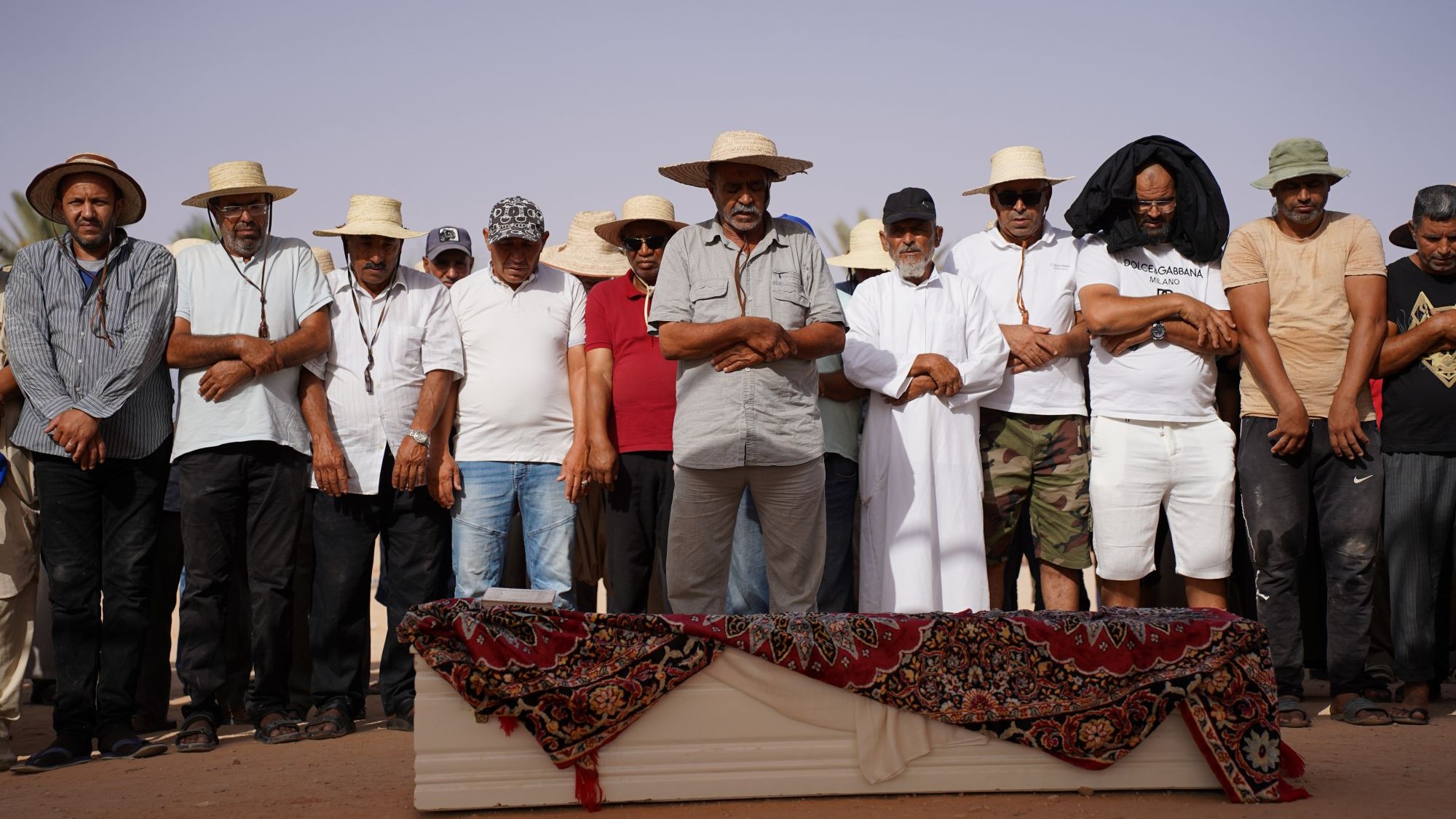
On a Thursday morning in August, 15 people set off in a boat from the south-east coast of Tunisia into the Mediterranean. Young people, a family of seven and a pregnant woman all had the same destination: Italy. But the boat capsized. Only one person survived.
Most of the victims were from Ben Guerdane. This border town, situated 32 kilometres from Libya, relies on informal cross-border trade – pejoratively referred to as smuggling. But this trade is precarious. The border is repeatedly closed, which leaves many people facing existential problems and drives them to embark on one of the deadliest migration routes in the world.
Atef Chouat lost seven relatives in the disaster. At their usual meeting place in their neighbourhood in Ben Guerdane, memories come flooding back: "It's as if their names were engraved here. They grew up together, were always together—and together they disappeared."
Some of them had dropped out of school, but they all earned a living from cross-border trade. The fact that this had come to an end had hit the young people in the town hard. They were used to earning their own money and supporting their families, according to Chouat.
The boat accident shook the town, where anger had already been building up due to the increasing lack of prospects and steadily deteriorating living conditions. Whilst the search for the missing was still ongoing, protests took place on 23 and 24 August. Demonstrators blocked roads and set car tyres alight; the police used tear gas.
Trade relations developed over decades
The demonstrators were not only concerned with the search for the missing; they were calling for better living conditions, new jobs and an end to marginalisation. With slogans such as "right to work, right to trade", protesters referred directly to the crisis caused by the disruption to trade at the Ras Jdir border crossing with Libya.
For decades, commercial activities like transport, currency exchange and the service sector had provided the town's young people with employment opportunities outside the official labour market.

Differences in prices and subsidies between Tunisia and Libya enabled local residents to earn money through cross-border trade, explains economic expert Jawhar Albacha. Ben Guerdane acted as a link in the regional trade network.
In the 1990s, the international sanctions imposed on Libya led to an increase in informal trade via Ras Jdir. Tunisian traders transported food, building materials and medicines to their eastern neighbour and, in return, imported Libyan fuel.

Landmark trafficking trial nears verdict
Judges are set to deliver a verdict in the case of an Eritrean man accused of extorting migrants in Libya. The first alleged leader of such a network to appear in a European court, the case reveals the inner workings of transnational trafficking.
Under the former Tunisian President Zine El Abidine Ben Ali, control over the border economy was firmly in the hands of the regime, wrote the researcher Hamza Meddeb in a 2020 study for the Carnegie Centre. Instead of investing in the development of this marginalised region, the regime allowed informal trade to flourish. In Libya, meanwhile, Muammar al-Gaddafi used trade to consolidate his own power and grant privileges to loyal tribes.
Following Gaddafi's overthrow in 2011, informal trade became even more significant. According to Albacha, however, the profits from parallel trade did not go towards building sustainable production structures that could have fostered a strong local economy in Tunisia. Ben Guerdane remained largely a transit region, with no significant establishment of factories or businesses that could have created jobs.
Following the 2011 revolution, the Tunisian government sought to change its approach to the region. In 2012, it announced the construction of a free trade zone in Ben Guerdane. The aim was to create a centre for warehousing, trade and re-exports that would serve as a gateway to African markets. However, the project was never completed. Albacha argues that a free trade zone and the expansion of ports would not have been appropriate for Ben Guerdane's specific economic and social circumstances in any case. Furthermore, he says, the local population was not involved in the planning process.
Border closures
Since 2014, armed conflicts in western Libya have exacerbated the vulnerability of the border economy. The Ras Jdir border crossing has been closed on repeated occasions, and trade has become increasingly risky for Tunisian traders. In 2024, the crossing remained closed for more than three months. Tunisian exporters suffered losses of 180 million dinars (53.8 million euros) during this period alone, according to estimates by the Arab Institute of Business Leaders (IACE).
In March 2026, the border crossing was closed once again, triggered by clashes in Libya between the Zuwara Military Council and troops loyal to the government in Tripoli. Tunisian traders were temporarily detained in Libya. Whilst 5,000 to 6,000 travellers and 300 to 350 lorries crossed the border daily before the closure, traffic volumes have since halved, according to unofficial estimates from October 2026.
This decline is also affecting Ben Guerdane: shops have been forced to close, the transport and retail sectors are in freefall, certain goods have disappeared from local markets, and prices for fuel and consumer goods are rising. "The decline over the last two years is unprecedented," says activist Cherif Zaitouni. Young people have been particularly hard hit by the border closure, as they often work in the retail sector.
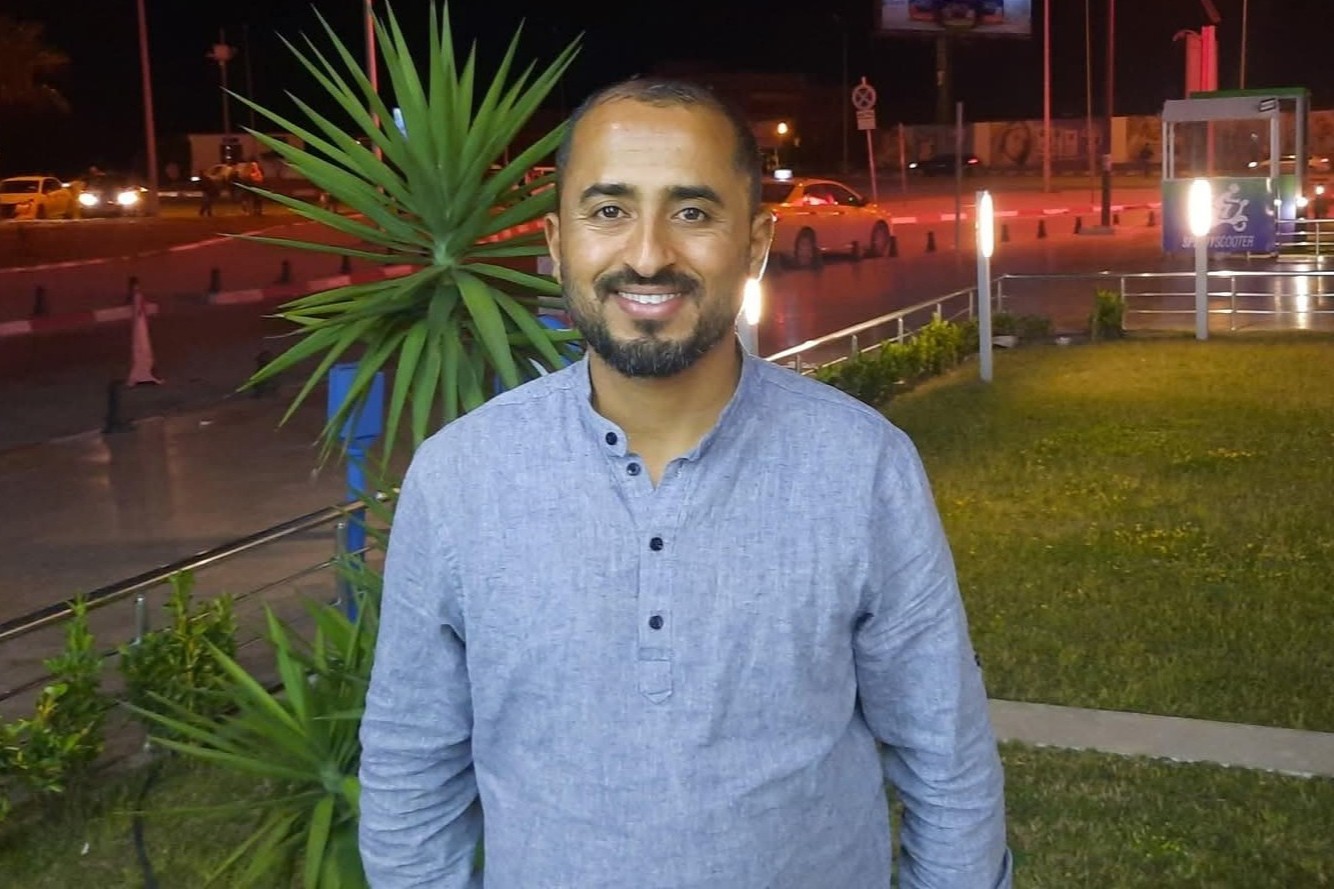
On 2 September 2026, during a telephone call with his Libyan counterpart Mohamed al-Menfi, Tunisia's President Kais Saied attempted to resolve the crisis and restore the movement of people and goods at the border crossings. In October, a Tunisian-Libyan delegation also discussed a possible expansion of the border crossing.
However, Ali Zaghoud, the Tunisian MP for Ben Guerdane, warns that simply resolving the current crisis is not enough. Rather, the region needs sustainable jobs and economic alternatives to reduce the population's dependence on cross-border trade.
Tighter controls in the Mediterranean
The victims of the August boat tragedy were also affected by this crisis. But they would each have had very different reasons for emigrating, says Chouat, whose relatives lost their lives in the tragedy. Some of them wanted to help their families, whilst others wanted to start a new life elsewhere.
However, reaching Europe has recently become even more difficult. Since Tunisia and the EU signed a memorandum of understanding to "combat irregular migration" in 2023, the Tunisian security authorities have tightened border controls. As a result, the number of migrants setting out from Tunisia has fallen. At the same time, however, the costs for people-smugglers have risen, as have the risks for the migrants themselves.
More than 2,000 people have lost their lives or are missing in the Mediterranean in the first ten months of this year, according to data from the International Organisation for Migration (IOM). On the Central Mediterranean route, which also includes the routes from Tunisia and Libya, the figure stood at more than 1,036.
Tighter controls in the Mediterranean do nothing to deter people's desire to leave the country. The loss of a source of income on which many families depend, coupled with a lack of alternatives, leads to frustration and a sense of hopelessness. The reasons for migration remain the same; it is merely the routes that are shifting.
This text is an edited translation of the Arabic original. Translated by Jana Treffler and Max Graef Lakin with the help of AI-assisted translation tools.
© Qantara.de