"I get a lot of inspiration from raï"
Topics
Qantara: In the track "HASNI 1993", you sing, "I feel like Cheb Hasni in 1993". How did Hasni, the king of sentimental raï, feel in 1993?
Losez: It was just a random sentence I wrote in my notes that came to mind because I was rewatching his tour of 1993. The year was really iconic for him in many ways. He got to tour the world as an Algerian artist, which had never happened before to that extent, and he was sold out everywhere. Then, in 1994, he was killed.
I started thinking about how much bigger he might have become. He was on top of the world, without knowing what the following year would bring.
The song is part of producer and musician Zouj's mixtape "Sabahu Al Kheir Men", in which he reimagines the Algerian genre raï through modern experimental music. What does raï mean to you?
Raï is very present in Algeria, in every way. When I used to go camping at the beach in summer, the only music playing was raï. At weddings, it's almost always raï. So it was genuinely present throughout my life, without me even being particularly curious about it.
Which artists did you grow up listening to?
There is Cheb Khaled, who was huge in Algeria and later on worldwide as well. But at home, Cheikha Rimitti was a big one. My mom loved Cheb Akil, may he rest in peace. His music was always playing on CDs in my mom's car.
Your music blends punk, trap and experimental sounds. How has raï influenced your approach to making music?
Something that really spoke to me from a very young age were the vocals, and the synths that sometimes respond to those vocals. You'd have one guy going "ah", and then a synth responding "oh". It's almost like a voice talking to a synth, where the synth becomes like a vocal. That was always intriguing to me, even when I didn't know anything about music or the technicalities behind it.
I get a lot of inspiration from raï, because there are certain things that come from there, for me.
Like what?
For example, the way auto-tune is used. The earliest track widely known to use auto-tune in a very prominent way is "Believe" by Cher. But about a year earlier, Cheba Djenet released a track called "Matajabdouliche" ("don't mention it to me"), and she even performed it live on TV with auto-tune. That video is super iconic. From what we know, based on the archives available, that was basically the first time it was used that way.
Raï music is known for confronting social issues, taboos and everyday struggles. Do you think your music does that?
To me, the topics I rap about are not necessarily specific to raï. We all have very similar stories, and people talk about them in different ways. I think rap, punk and raï are actually related in that sense, and in what they represent for each group.
In general, I would say my music is very... in French we say imagé, which means it's very visual, very descriptive. It can also be political. I talk a lot about Algeria and exile, which we call ghurba in Arabic, so that's definitely a topic you find in a lot of raï songs.
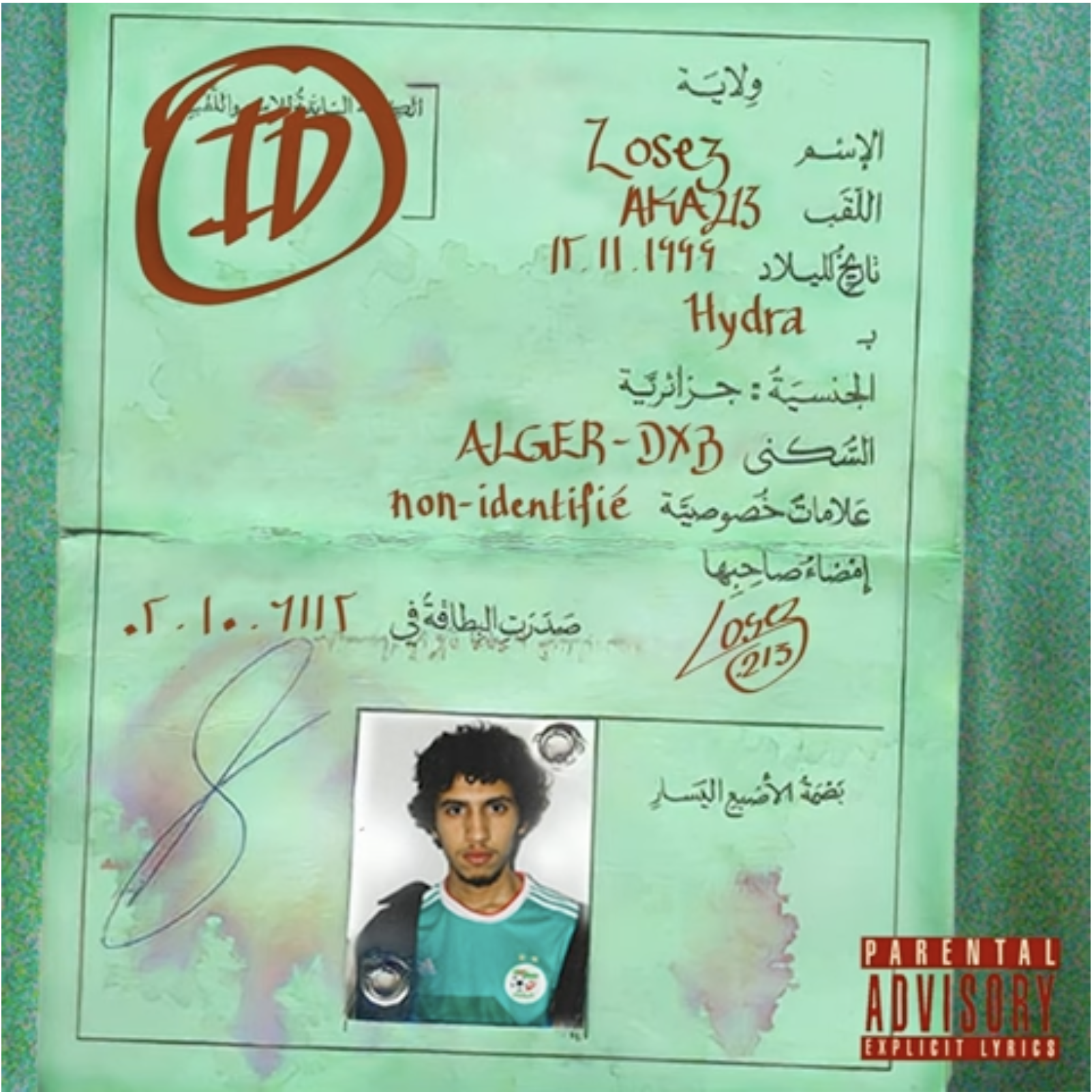
In one of your songs from your first EP "ID", you sing, "Algiers is like Medellín for Pablo Escobar or La Castellane for Zinedine Zidane". What role does your Algerian heritage play in your music?
I was younger back then, born in Algiers and moved abroad. I found myself in a place where people didn't know much about Algeria. I felt that I had to reaffirm my Algerian identity and everything around it. People would call me the French guy at university, because I spoke French and had some French friends.
I'm obviously still very, very attached to my country and my Amazigh roots, and I'm inspired by them in many ways. But I've learned how to share that without making it my whole identity. I'm already Algerian, I already carry that Algerian passport. I can carry it in my genes, in my culture, in the way I speak, in my inspirations, in so many ways. Sometimes you don't even have to try to show it, because it will show.
How has your approach to representing your Algerian identity changed?
If I did it today, I would never use an Algerian identity card for the "ID" cover. But at the time, it was meaningful for me to show, "Hey, I'm that Algerian kid who makes music."
Take a song like "Hasni 1993". If you don’t know who Cheb Hasni is, and you don't recognise where those synth lines at the beginning and end of the song come from, you won't necessarily know this is Algerian. But anybody who knows Hasni would immediately get it. Even if they don't hear the lyrics, they hear the track and recognise that it's a raï synth, played on an A1000 [Yamaha sampler/keyboard], which is specifically associated with raï music. I'm already representing Algeria without having to say it.
Music is a great way to share your identity, but at the same time, there's a danger of being reduced to it. How do you feel when people, for example, label your music as "new raï"?
People need to put people in boxes and categorise everything and that's fine. I understand it because I do it too, even when I try to avoid it. I feel like our brain works in a way where we always have to compare everything. If we hear something, we think, what does that remind us of? I don't mind being categorised anymore, to be honest, and I don't really care at this point about being reduced to my identity.
I am comfortable with my own art and I like what I'm doing. I think it represents me. I just make the music that I wanted to make. When I am doing it, I am not thinking about identity, new raï, or any of these things. I want to feel true to myself.
© Qantara.de