Killing by algorithm
Topics
"NAZA" is a Hebrew abbreviation for "collateral damage". It refers to the civilian casualties the Israeli military factors in, for example, during the Gaza war. In September, the documentary of the same name by Israeli filmmakers Yuval Abraham and Rachel Szor won the Special Jury Prize at the Venice Film Festival. From the end of November, "NAZA" will be streamed free of charge on The Guardian, which co-produced the film.
In "NAZA", 24 Israeli military personnel describe how AI-based systems are used to identify "targets" in the Gaza Strip, whether buildings or people, how the AI then calculates "collateral damage", and how attacks and killings are carried out on that basis, primarily from the air.
Almost more shocking than the automation of warfare is the matter-of-fact way the soldiers speak about killing civilians. One interviewee, for example, describes with no visible distress how strikes on individual floors were followed by the destruction of entire buildings, without first checking whether any survivors were still trapped beneath the rubble.
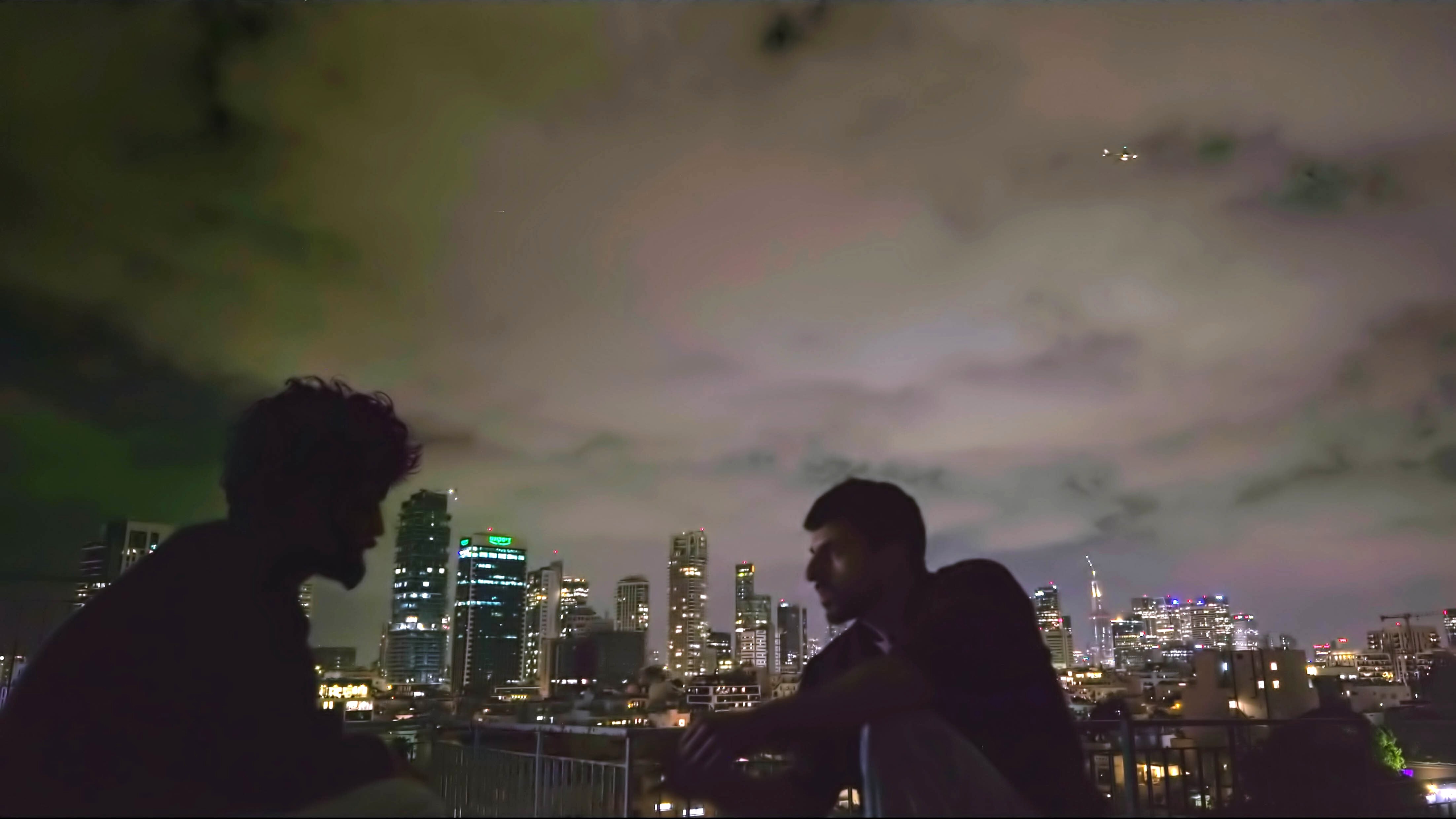
In the film's production, Szor's camera prioritizes anonymity. We see only the silhouettes of the military personnel. The glittering Tel Aviv skyline in the background at night evokes various associations: the threat that Hamas rockets pose to Israel's civilian population, but also the emotional distance from the violence in Gaza, 60 kilometers away, and the erasure of Palestinian culture by faceless new buildings.
The transparent Gaza Strip
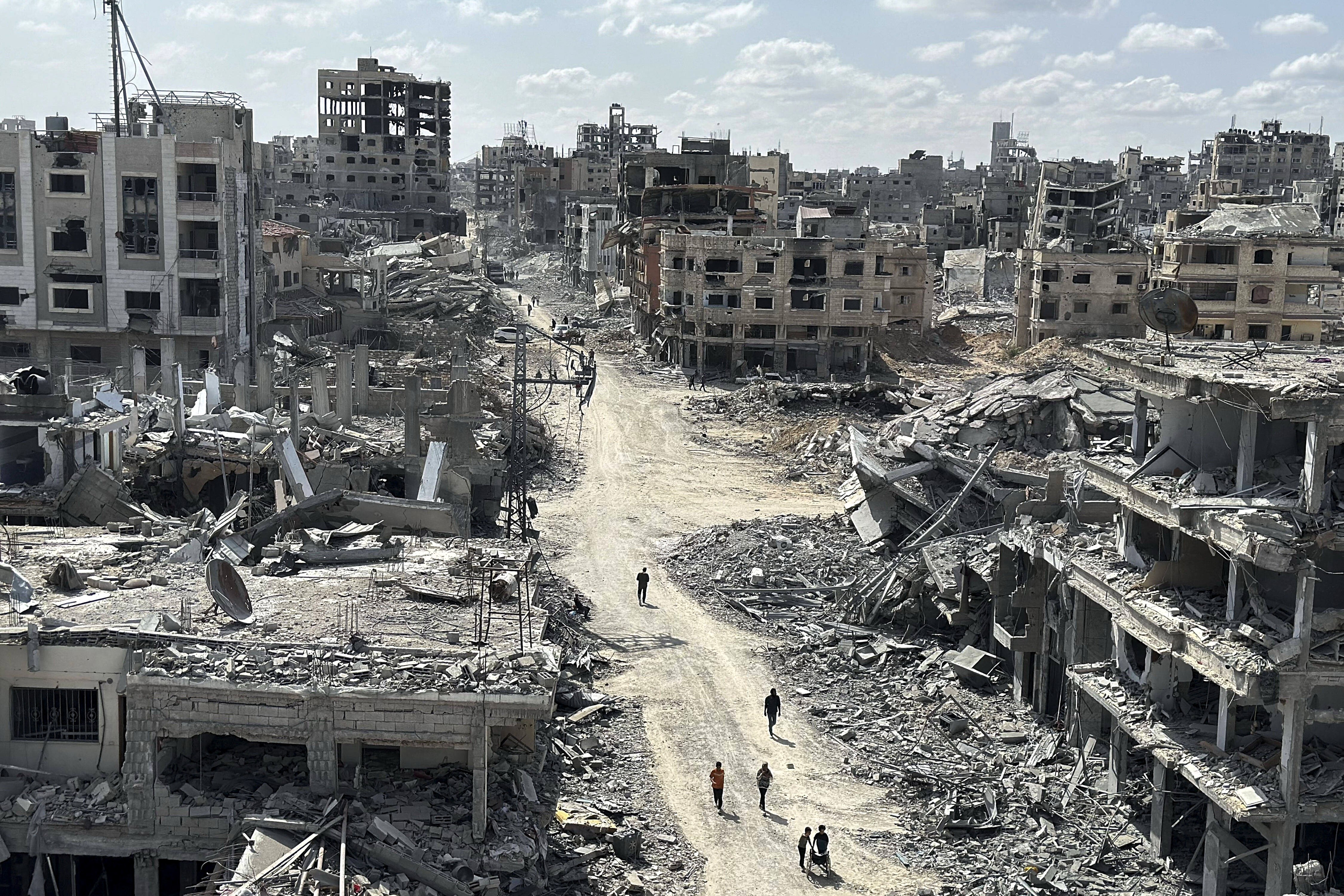
Gaza is one of the most thoroughly monitored regions in the world: virtually all buildings have been mapped, and its inhabitants are tracked. Digital traces left while shopping, at checkpoints, in administrative processes and on social media are used to create patterns that Israel hopes, when interpreted by machines, can be used to identify and predict criminal behavior.
What the military personnel report in the film is horrific, but for the most part already known. What "NAZA" achieves above all is to make the known facts tangible: to show how people can kill unimaginably large numbers of other people when media and technological means create sufficient physical and psychological distance.
Since 2023, Abraham has been conducting research into AI-based "decision support systems" used by the Israeli army in "targeted killings". He publishes regularly in +972 Magazine and The Guardian, and in 2024 caused a global stir with an investigation into the Lavender target identification system.
Lavender is also given its own chapter in "NAZA": the programme tracks most of Gaza's two million residents, flags potential threats and assigns each person a threat level based on their possible affiliation with Hamas or Islamic Jihad.
The military specifies an acceptable number of civilian casualties in the event of a potential attack. In the film, an average of twenty "NAZA" is cited as acceptable for the killing of a low-ranking Hamas member; however, according to a statement in the film, authorisation for 500 "NAZA" is said to have been granted in the case of a high-ranking target. The Israeli Defence Forces (IDF) disputes this figure.
In a podcast, Abraham reported that the military personnel he interviewed—23 men and one woman are featured in "NAZA"—belonged to different groups. Some had qualms, while others acted out of a conviction that Israel must be defended aggressively. Most, however, came from Israel's liberal, educated middle class, which has traditionally been more sympathetic to the Palestinians.
The film shows, however, that clear orders and a focus on the tactical objective led them to carry out actions they would have rejected on ethical and political grounds. According to the film, this was easier with air strikes but harder for snipers. One sniper in "NAZA" recounts shooting starving people who broke ranks at food distribution points.
Israeli criticism
The film has met with fierce opposition from the Israeli government and military. The IDF accused Abraham of divulging military secrets and spreading falsehoods. The government even released a YouTube video as a counterstatement, entitled "NAZA: The Real Story".
The Guardian said it had verified the identities of the military personnel and all the incidents described. It cited more than a hundred interviewed sources, including high-ranking military officials who were directly involved in authorizing attacks. Abraham, a journalist and filmmaker, is also well regarded in professional circles, and his work is discussed by an international network of AI experts.
The IDF does not deny in principle that it uses surveillance technology and AI programs to identify targets. It says, however, that AI-assisted “targeted killing” helps prevent civilian casualties. The makers of "NAZA" dispute this, as does technology researcher Jutta Weber of the University of Paderborn, who doubts that AI-assisted warfare prevents civilian casualties.
Weber points to the high level of trust placed in the perceived authority of AI, known as automation bias. Other factors include the extremely short time humans have to verify a result and the error rate inherent in any machine learning system (the subfield of AI currently at the center of public debate).

A new era of automated violence
In Gaza, mobile phones are both a lifeline and a threat, feeding algorithmic targeting systems while remaining essential for survival. Researcher Gihan AbouZeid examines how AI-driven surveillance technologies are reshaping the experience of war.
AI theorist Christian Heck, who researches new technologies at the Academy of Media Arts in Cologne, told Qantara that these systems draw on the very same technology we use in our everyday lives. In a sense, they are trained using our data. AI systems developed by corporations such as Meta, Anthropic, Google and OpenAI are designed from the outset for simultaneous civilian and military use.
The combination of AI-assisted surveillance, the identification and classification of people, and the transformation of lives into data and targets disperses military responsibility. The threshold for the use of violence is lowered to such an extent, as "NAZA" vividly illustrates, that the death toll in Gaza could reach over 70,000.
Heck goes on to say, however, that the IDF's practices are not unique in a global context: the military use of AI dates back to IBM's computing operations during the Vietnam War and received an enormous boost after 9/11. In the war on terror, the US invested heavily in "network-centred warfare", drone surveillance and machine learning. The aim was to use technological means to track down the "unknown known".
Anonymous sources
"NAZA" also faced criticism for anonymising the sources in the film. However, this kind of source protection is part and parcel of investigative journalism. In 2013, during the NSA scandal, whistleblower Edward Snowden first contacted The Guardian under the pseudonym "Citizenfour" to report mass surveillance by US intelligence agencies.
Such responsible source protection stood in contrast to the publication practices of Julian Assange's WikiLeaks, which in 2010-11 released material on possible US war crimes in the Iraq and Afghanistan wars, exposing the identities of at-risk sources.
Criticism of a completely different nature comes from the Palestinian side. Filmmakers such as Kamal Aljafari, as well as journalists such as Mahmoud Mushtaha, accuse the film of cementing an emotional distance from those who have suffered: the voices and images of the victims were almost entirely absent. Ayat Abou Shmeiss wrote in +972 Magazine that he could not watch "NAZA" for this reason.
Abaraham and Szor are aware of this imbalance. As clearly as the directing duo have condemned the attack on Israel on 7 October 2023, they have assured the press at press conferences that every scene in "NAZA" was filmed in memory of the Palestinian victims.
© Qantara.de