Sounds of the "Stadtbild"
Topics
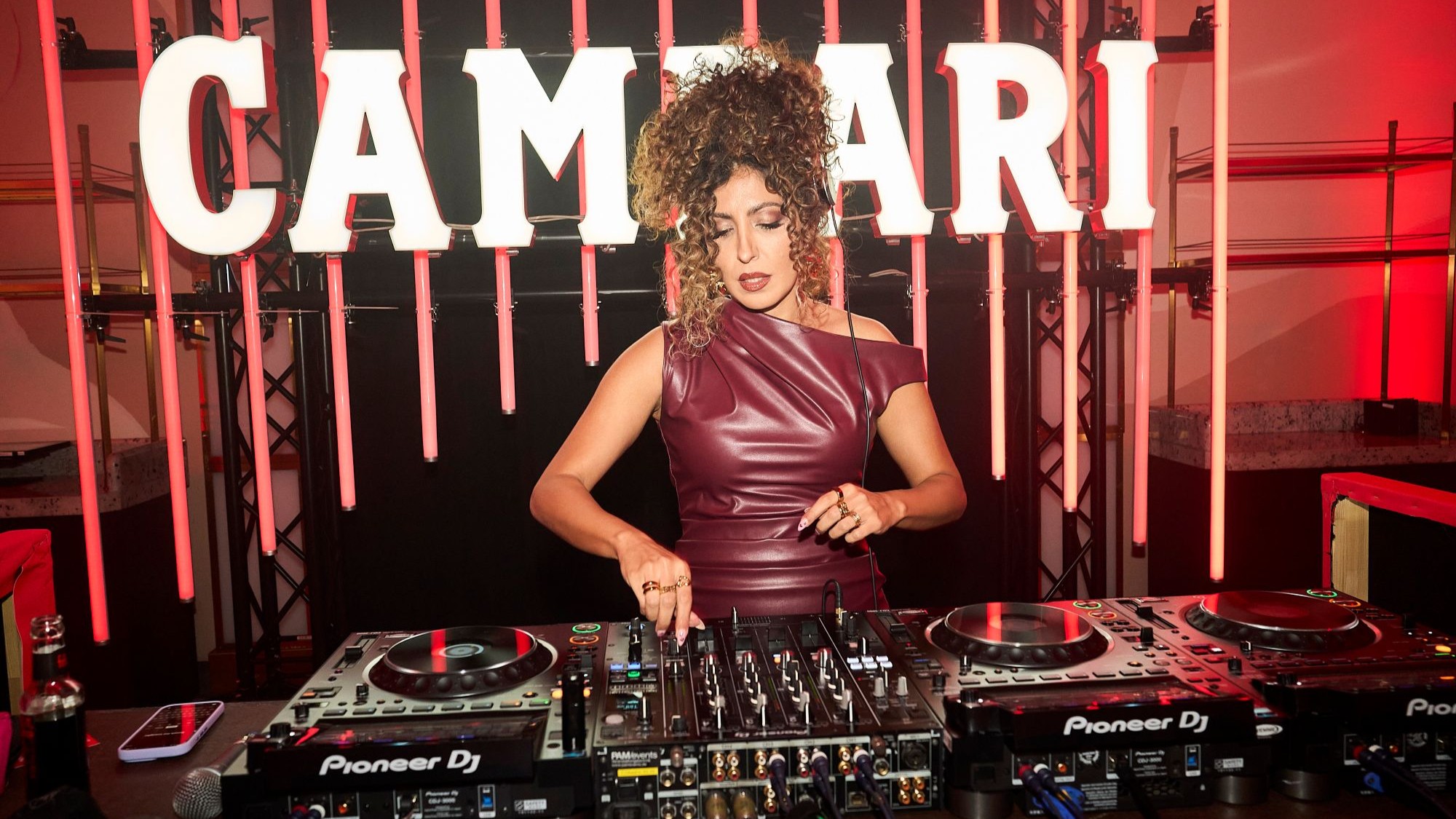
The atmosphere is electric as DJ Shari Who fills Hamburg's Mojo Club with her mix of Algerian raï and South African amapiano basslines. The Hayatis, as she calls the revellers whipped into a frenzy by her set, wave scarves to the rhythm and sing along—even if they don't all understand the Arabic and Kurdish lyrics.
The party, in December 2025, was one of a series of Hamburg club events organised by the Hayat Sounds collective. Founded by DJs Shari Who, Breakdnz and Sir Manselot, the collective combines contemporary South-West Asian and North African (SWANA) sounds, like Moroccan-Belgian rapper Dystinct, with timeless music from the cassettes and CDs of their youth, like Egyptian artist Amr Diab.
It isn't just boundaries between musical genres that blur at these parties. Hayat means "life", and Hayati "my life". The word has migrated from Arabic into Turkish, and become part of German youth slang. For the Hayatis on the dancefloor, part of the thrill is in a sense of togetherness that transcends cultural boundaries, as roots reaching across continents find fertile ground in German clubs.
"Thank you for representing the culture so wonderfully through your music", one of the guests says, an extraordinary compliment for any DJ. In January, the Hamburger Club Award showed its appreciation too, recognising Hayat Sounds as Promoter of the Year.
Celebrating the "Stadtbild"
The party at Mojo Club wasn't a political event, but it was conscious of its political context. Shari Who opened her set with a remix of Dammi Falastini (My Blood is Palestinian) by Arab Idol winner Mohammad Assaf, an anthem of the self-proclaimed SWANA subculture.
There was a joyous spirit of immigrant pride and solidarity. Keffiyehs were draped over shoulders, and wound around a woman's body as a top. A sign held up from the dance floor read "music is resistance".
Later, guest DJ Kizzi from the BBC Asian Network roused the crowd with iconic Bollywood hit Dhoom Machale, the song that played Zohran Mamdani out after his victory speech as New York's first Muslim mayor. An Indian-Ugandan New Yorker, Mamdani's election campaign celebrated his city as one built by immigrants.
Likewise, celebrating SWANA sounds in Germany is itself a defiant response to calls for deportations and racist political rhetoric. In October 2025, Chancellor Merz referred to a "Stadtbild" (cityscape) shaped by immigration as a "problem" that must be addressed. At Hayat Sounds, those labelled a problem by politicians and media feel seen and represented. At Mojo, one man wore a T-shirt branded "United Colors of Stadtbild",
There was no entrance stamp to mark out those welcome or excluded. In a country that slams doors—to exclusive clubs, to boardrooms and to spheres of political influence—on immigrants, the event at Mojo went out of its way to create a safe and welcoming space for all. It is not "Menschen mit Migrationshintergrund" (people with a migrant background) who party here; here, Third Culture Kids dance to a colourful mix of sounds. They leave the conflict between different cultural roots behind by confidently developing a hybrid, global identity.
Club music is culture
In 2021, a Bundestag ruling classified clubs as cultural institutions, rather than entertainment venues. One indication of the cultural value of collectives like Hayat Sounds is that they are appreciated beyond the club scene.
Last year, the collective compiled a playlist for the Hamburg Museum für Kunst und Gewerbe's Inspiration SWANA exhibition. A fusion of cultural soundscapes, its 50 tracks from diaspora artists include Dutch-Turkish band Altın Gün and Palestinian star Saint Levant (and are available on Spotify).
German-Iranian artist Madanii, supported by Berlin's Musicboard, also features, with the song Dast. In it, the singer rails against Germany issuing her a "non-member’s card" with a powerful message of belonging. The song was written in the wake of the racist attack in Hanau that killed nine people in February 2020, but it could just as easily have been written in response to the chancellor's recent "Stadtbild" comment.
Representing across Germany
Hayat Sounds is part of a growing German SWANA music scene comprising various collectives and events, many of which were founded after 2020. Among them is Arab women's collective SAHRA (meaning "night out"), who in 2024 received an award from Clubcommission Berlin and took part in Berlin's Tag Der Clubkultur (Day of Club Culture)
The awards highlighted that SAHRA's parties create political spaces where marginalised groups experience representation and a sense of belonging. The musical focus is on genres like electro-tarab and post-shaabi, which translate Arab traditions into modern club beats. Their programme also includes a Latin Arab Edition event and DJ workshops for women and queer people.
The concept works in other cities too: the Hamburg-based collective Diarfest has embraced the "Statbild" concept and hosts the Beautiful Stadtbild party series. In December, they organised a concert featuring Syria's "king of electro dabke" Omar Suleyman. Through their music and visual installations, they tap into the community's collective memory and create new ones.
In Düsseldorf, Diarfest partnered with Habibi Act to organise the Levant Fusion Fest, featuring music, performances, and a bazaar "beyond shawarma, falafel, and dessert." Habibi Act was founded by Syrian event organiser Basel al-Ali, who has made a name for himself in North Rhine-Westphalia with initiatives to build vibrant community spaces and cultural bridges.
The event programme includes concerts, DJ sets, an "Arab-Tronica" Night and the Damascus Day street festival. Habibi Act's first political panel discussion, titled "New Perspectives for the New Syria", was held in September 2025, and a future event focusing on the diaspora's role in Syrian reconstruction is in the works.
The Disco Arabesquo series also makes regular stops in Cologne, Hamburg and Berlin. Like Hayat Sounds, the founder, a Dutch-Egyptian DJ, mixes modern beats with sounds familiar to many in the Arab community from weddings or old cassettes, as images from old Arab films are projected onto the walls and Dabke circles form on the dance floor.
The musical culture of SWANA communities is breathing new life into the club scene in German cities. "Hayat Sounds" and other SWANA events are more than just safe spaces for the diaspora. They open doors and make the pulse of post-migrant society palpable.
This text is an edited translation of the German original. Translated by Ruby Russell.
© Qantara.de