"The Nile is part of our collective consciousness"
Topics
Qantara: You have been following the Nile and documenting the communities living along its banks since 2017. How did the journey begin?
Roger Anis: It started as a journalistic assignment in the Nile Delta in Egypt. There, I met a farmer who told me that the river's water no longer reached his land as it once did, and that they were forced to rely on groundwater. From that moment, a question stuck with me: what does the Nile look like beyond Egypt?
In truth, my relationship with the Nile is not exceptional. Rather, it is an extension of the collective relationship that Egyptians have with it. The Nile is not merely a waterway but is part of our daily lives and our collective consciousness. Even those who have never lived on its banks know it through its deep presence in Egyptian culture, in songs, films and stories.
During my studies at the Faculty of Fine Arts in Minya, we used to go to its banks to paint. The river was present in my life long before it became the subject of this multi-year project.
You have worked in countries across the Nile Basin, from Egypt to Sudan, Ethiopia and beyond. How has your perspective on the Nile changed?
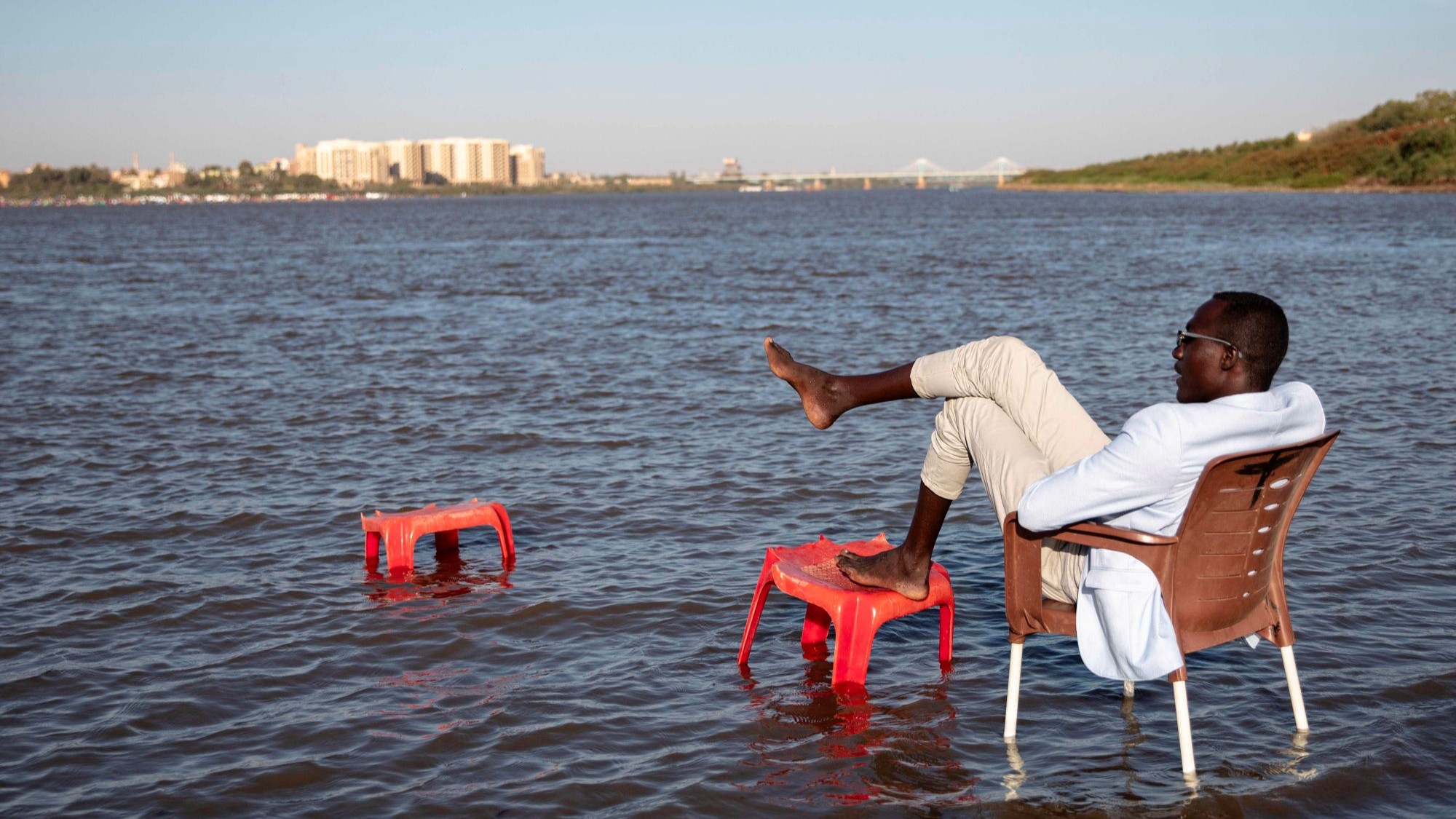
The further I moved from Egypt, the more I realised that the Nile we know is not the Nile that everyone else knows. In some upstream countries, you do not see the river in its full form. You only see the small streams and lakes that gradually converge to form it. Then you witness how the White Nile meets the Blue Nile in Khartoum to become a single river.
Yet the difference was not only in the river's physical appearance, but also in how people relate to it. Each community has its own methods of living and engaging with the Nile. I came to understand that we have moved from an era when the Nile was sanctified and understood as a source of life, to one in which the river is simply consumed far more than it is contemplated.
You describe your photographic project as having multiple chapters, combining history, mythology, science and work with local communities. Did you have a clear plan from the start, or did the process lead you in unexpected directions?
I hadn't expected the project to expand to this extent. It began as a documentary photography project, but once it was complete, I felt that images alone were not enough to tell the full story. That is how the EverydayNile project was born in 2021, bringing together photographers from all eleven Nile Basin countries. They are best positioned to tell the river's stories and create narratives rooted in their own communities.
In addition to your photographic projects, you have organised an annual boat procession on the Nile, departing from Qursaya Island in Cairo, for the past three years. How did that come about?
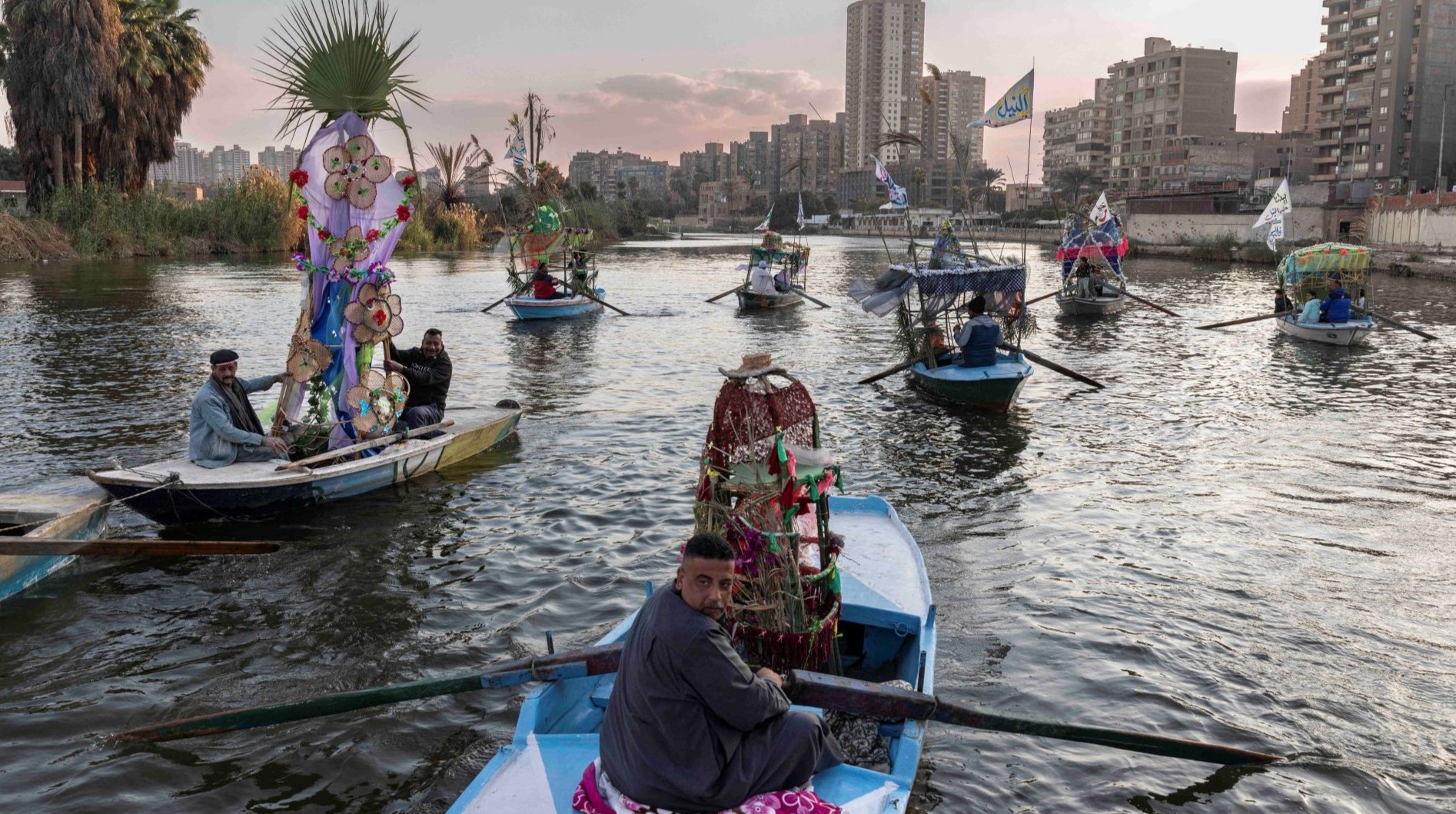
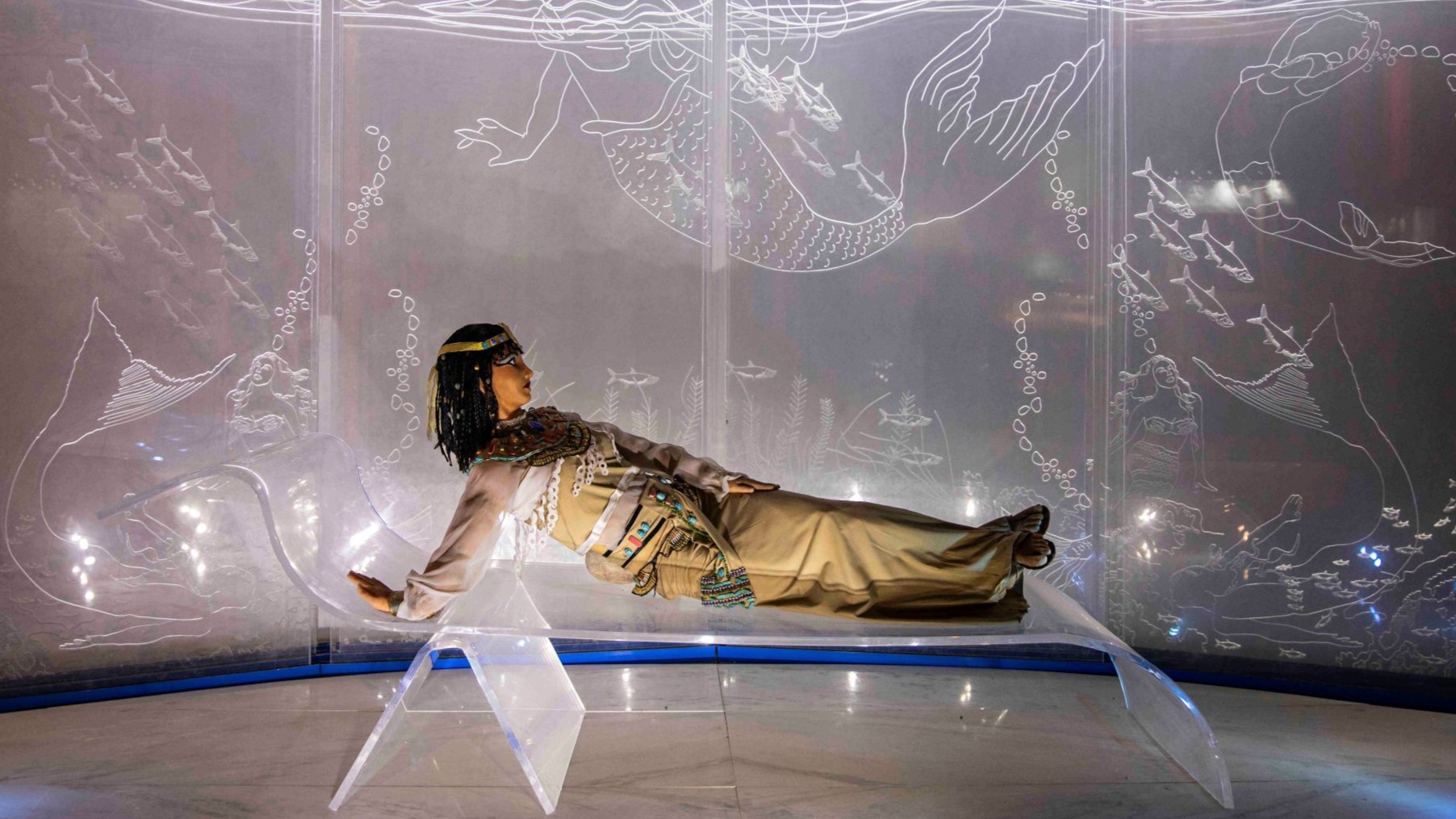
My research led me to the Bride of the Nile legend, which I discovered was linked to an ancient celebration known as the Nile Procession, a tradition that disappeared long ago. I began to think about reviving it: I believe these rituals are not merely symbolic traditions but a means of making the connection between people and the river tangible. I set out to revive the procession as a contemporary way of rebuilding our relationship with the Nile.
In 2024, we organised the first edition in collaboration with the VeryNile initiative, the residents of Qursaya Island and a group of fishermen, coinciding with the celebration of Nile Day across the Nile Basin on 22 February. Twenty fishermen participated with their boats, along with around sixty attendees. It gradually evolved into a community project that includes artistic and cultural workshops and photo exhibitions, involving fishermen, children and women from the island, and contributing artists. This year, in its latest edition, it attracted almost two thousand visitors. My dream is for the procession to one day extend to all the Nile Basin countries.
How has the Nile Procession changed the way you think about photography as a tool for engaging with a place?
What the procession has most proven to me is that photography does not merely document reality, but that it can also actively intervene in it. The fishermen no longer think of the procession as just an annual celebration but as an event to look forward to, because it brings them together and restores some sense of belonging to the place. The island's residents have become partners in the project, welcoming visitors and introducing them to their island and their river.
In the last two editions, we organised two photographic exhibitions: one featuring images from the Nile Basin countries and another showcasing my visual journey with the river. The way the island's residents stood gazing at the photos, as though they were discovering something about themselves for the first time, has stayed with me. The photos from the other Basin countries also sparked curiosity. People asked about the river's sources, the boats, the fish and the other communities that share the river.
At the first EverydayNile exhibition, I heard visitors say with surprise that they did not know this or that country shared the Nile with them. That was when I realised that knowledge is not about the availability of information but about its ability to reach people. Among the experiences I am most grateful for is working with fishermen. They gave me knowledge that I could not have found in any book.
What do you see as the main challenges facing the river in the future?
The first challenge is bringing the countries and peoples of the Nile Basin together to work collectively for the river. This includes scientific cooperation, the exchange of data and technology, coordination on water-resource management and consumption, as well as involving citizens in keeping the river clean.
The second is pollution, especially plastic pollution. The Nile is not the world's most polluted river, but it is among the most significant contributors to plastic pollution in the sea. This is a real problem.
There is also the issue of water scarcity, which is linked both to how we consume water and to environmental changes, like climate change. Rising temperatures are increasing evaporation rates and changing flood seasons and water levels. This is where science becomes crucial, as does the need to empower scientists, researchers and water engineers to develop solutions for better water management. Journalists and media professionals must also be able to engage with these issues and bring greater visibility to them.
In recent years, much of the discussion around the Nile has centred on the Grand Ethiopian Renaissance Dam (GERD) dispute. How do you read the repercussions of this crisis on Egypt and its relationship with other Nile Basin countries?
Egypt has been under water pressure for many years, even before the GERD crisis. The possibility of conflict over water remains, but I believe that politics, no matter how difficult, is still the only path to avoid a scenario that will be costly for everyone. When we look at history, we see that Egyptians, relying on a narrow strip of water amid the desert, managed to build one of the world's most storied civilisations.
What truly concerns me is pollution: that is the silent danger seeping into the river day by day. Protecting the Nile is not the responsibility of any one country alone. It is a collective responsibility shared by all Basin nations.
This is an edited translation of the Arabic original. Translated from Arabic by Basyma Saad.
© Qantara.de