The survivor who brought her torturer to justice
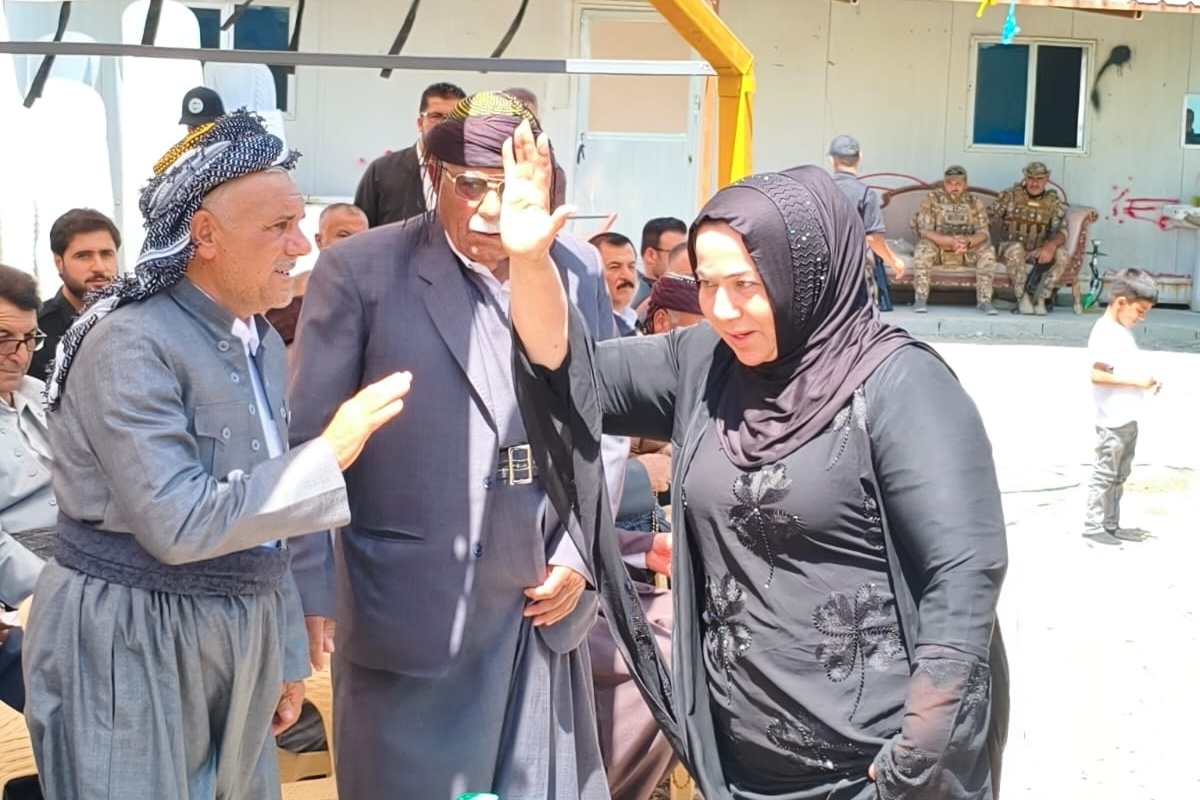
Rusafa Criminal Court, Baghdad, 14 May 2026. The judge announces the decision: "Ajaj Hardan Ahmad Al-Tikriti is sentenced to be hanged until death." The crowd of victims and their families break into applause. Among them stands Fazila Mohammad. She is dressed in black, but says her heart is filled with joy.
It was she who recognised Al-Tikriti's face after more than three decades. It was she who filed the first police complaint, she who mobilised other witnesses to testify. Without her, the man Kurds call "the monster of Nugra Salman" might never have been brought to justice.
In February 1988, Saddam Hussein's Ba'athist regime launched Operation Anfal against the Kurdish population of northern Iraq. Kurdish authorities estimate that 182,000 people were killed or disappeared by September of that year; a 1993 Human Rights Watch report puts the figure at between 50,000 and 100,000. The campaign has since been classified as genocide by the post-Ba'ath Iraqi government and by human rights organisations. It unfolded largely in silence, ignored by Western governments absorbed in the Cold War's final chapter and the aftermath of the Iran-Iraq War.
Anfal's goal was to clear the rural areas where Peshmarga (Kurdish partisans) were most active. The region of Germiyan, where Fazila was born and raised, was the heart of the Kurdish resistance and therefore, the heart of the Anfal campaign.
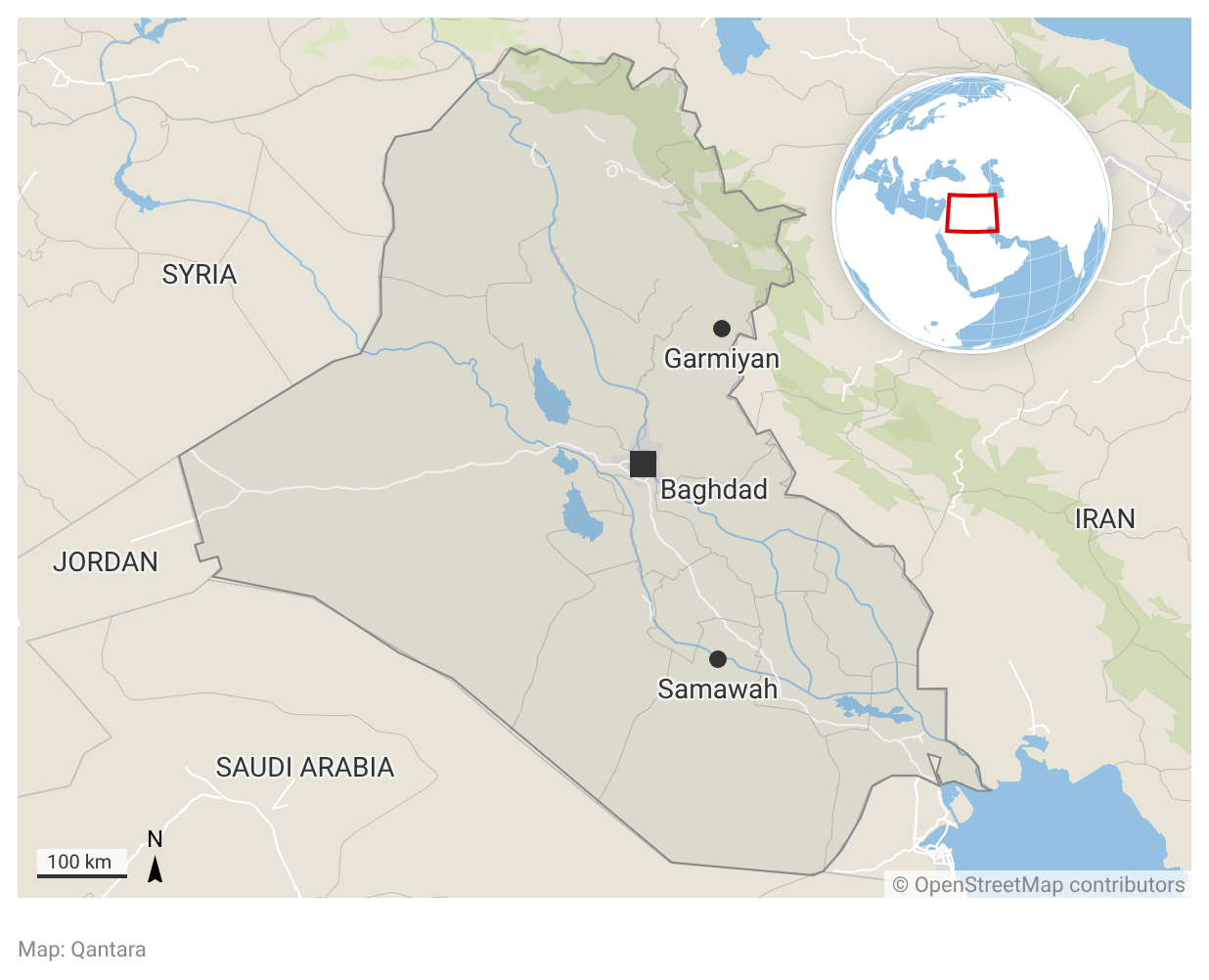
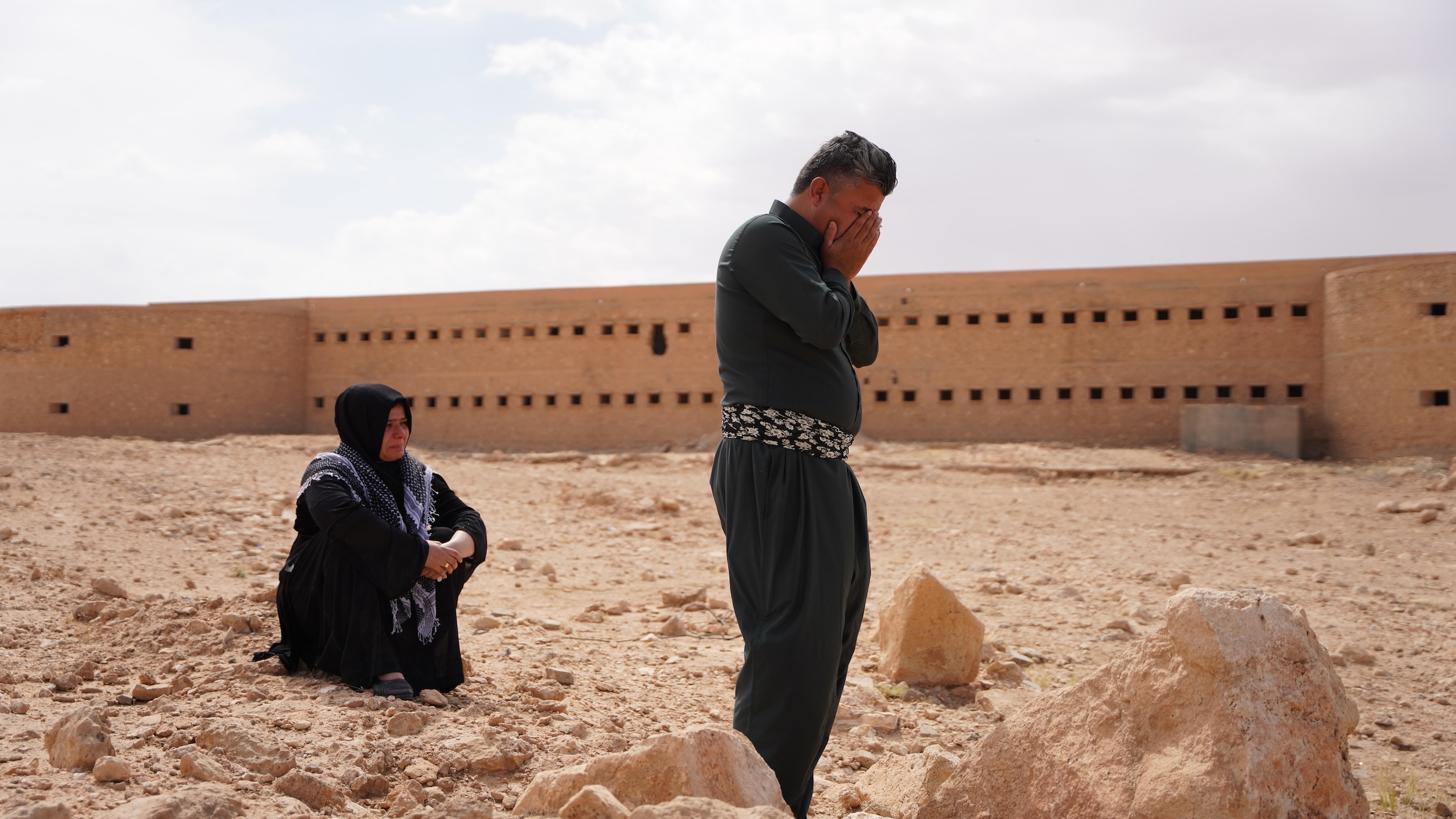
Fazila was fifteen years old when soldiers arrested her alongside her family and the residents of several neighbouring villages. They were all transported to Nugra Salman, a fortress prison in the desert of Samawah, southern Iraq, and a place that remains one of the Anfal campaign's most notorious symbols.
It was here that the most barbaric crimes were committed under the command of Al-Tikriti, the officer in charge of the facility. According to Al-Tikriti's own confessions, crimes including starvation, sexual harassment, mass killings and fatal torture were systematically committed against civilian detainees.
Abducted as a teenager
"I was only 15 when we were abducted and taken to Nugra Salman, where we spent eight months and seven days enduring oppression, torture, and starvation," Fazila recalls. "We were locked inside closed halls for four months, sometimes with 350 to 500 people packed into a single room. For all that time, we never saw what was outside the walls. During the last three months, we were occasionally permitted to go out into the yard."
She still remembers every one of these atrocities as if they happened yesterday. But it is the deaths of her three siblings that have left a scar that nothing can heal.
"I lost a brother and two sisters. One of my sisters was only six months old. One day, as usual, Ajaj (Al-Tikriti) came into the prison hall and began beating people with his baton, regardless of their age or gender. When he reached us, he threw his baton at my baby sister while my mother was breastfeeding her. With that single blow, he murdered the infant. My mother's nipple was still in her mouth when she died."
The torture did not end with death. Families were subjected to systematic psychological torment after losing their loved ones, and corpses were intentionally desecrated. Fazila recounts her brother's fate with precision and flatness, as if the years have not softened the image at all.
Breaking down barriers and pushing for independence
After two incredibly tough decades for women since the overthrow of Saddam Hussein, it is now cool to be young and female in Iraq. A report from Baghdad
"Soon after, Qadir, my six-year-old brother, died of agony, hunger and illness. The guards took his body and told us they would bury him. A few days later, some other prisoners and I went to take the trash out, and we found several wild dogs eating corpses right outside the prison walls. Looking from afar, I instantly recognised my brother's clothes. The dogs were eating him."
Such stories are far from unique. According to Fazila and other witnesses, anywhere from 20 to 30 children would die in Nugra Salman on certain days, mostly from malnutrition and disease. "When we were finally allowed into the yard and discovered what had happened to our dead family members, we had to beg Ajaj and the other officers, weeping at their feet, just to permit us to bury our dead with some dignity."
An anonymous informant
After Saddam's fall in 2003, two significant developments occurred. Thousands of documents were uncovered, exposing the scale of the regime's crimes and identifying the perpetrators behind them. And the Iraqi people demanded justice.
Al-Tikriti's name surfaced in the very first days following the regime's collapse. But he exploited the ensuing chaos and lack of governance to vanish, as did hundreds of other Ba'athist criminals, until he was finally tracked down in May 2025.
Since the liberation of Iraq, families of Anfal victims have regularly organised visits to Nugra Salman to honour their dead. It was during one such visit, as Fazila sat beside her siblings' graves with tears in her eyes, that a man she had never met approached her and struck up a conversation.
"I was so drowned in my memories that I didn't notice him until he greeted me," she says. "He asked me whose graves they were, and I told him their stories. Then he asked me if I would recognise Ajaj if I saw him."
"Yes, I will never forget his face," she replied.
"Are you sure you would recognise him? If I show you a few pictures, can you point him out?"
"I guarantee you that I can."
Many different rumours circulate regarding this mysterious man. Some believe he works for Iraqi intelligence; others claim he was simply a local who harboured a tribal or personal grudge against Al-Tikriti. Sources close to the case declined to elaborate, citing the sensitivity of the matter and the need to protect his life.
Regardless of this man’s identity, Fazila's mission has always been to find the monster of Nugra Salman and bring him to justice, no matter what it took. She agreed to cooperate.
"He showed me a few pictures, and I pointed Ajaj out. We exchanged numbers and agreed to stay in touch. He asked me not to speak to anyone about it, because if the criminal suspected anything, he would flee. Weeks later, I travelled to the man's city, and he pointed Ajaj out to me from a distance. I had no doubt left. I recognised him by his eyes."
Al-Tikriti was identified in Salahaddin province. The exact location has not been disclosed due to the sensitivity of the case. Fazila was the first to go to the police and file an official complaint. She actively mobilised other witnesses to testify at the trial and served as the loudest voice in the press, ensuring the public remained informed about the case.
Incomplete reckoning
Al-Tikriti is due to be executed in the coming weeks. But those closest to the case are clear that this is not the end.
A lawyer representing Kurdish victims told Qantara that the trial could pave the way for the arrest and prosecution of other Ba'athist perpetrators. "The names of at least eight other high-ranking officers were provided to the court," he specified. Many of them are believed to be alive and hiding inside Iraq.
Akram Salih, president of the Association for Advocacy for the Anfal Issue, expressed his gratitude for the court’s decision but expressed regret that the trial was not more detailed. "The criminal could have provided more information or confessed to more crimes. People underestimate the importance of documenting these atrocities," Salih noted.
While the arrest and sentencing of the monster of Nugra Salman offers some solace to the agony, the victims and their families still hold onto one final dream, as Salih resumes:
"Since 2003, out of at least 100,000 deaths, only 3,000 bodies have been recovered from the Iraqi deserts and returned to Kurdistan. Their families have only one wish left in this life: for the mass graves to be uncovered and for their loved ones to be returned to their homeland."
© Qantara.de