The "angel of death" on trial
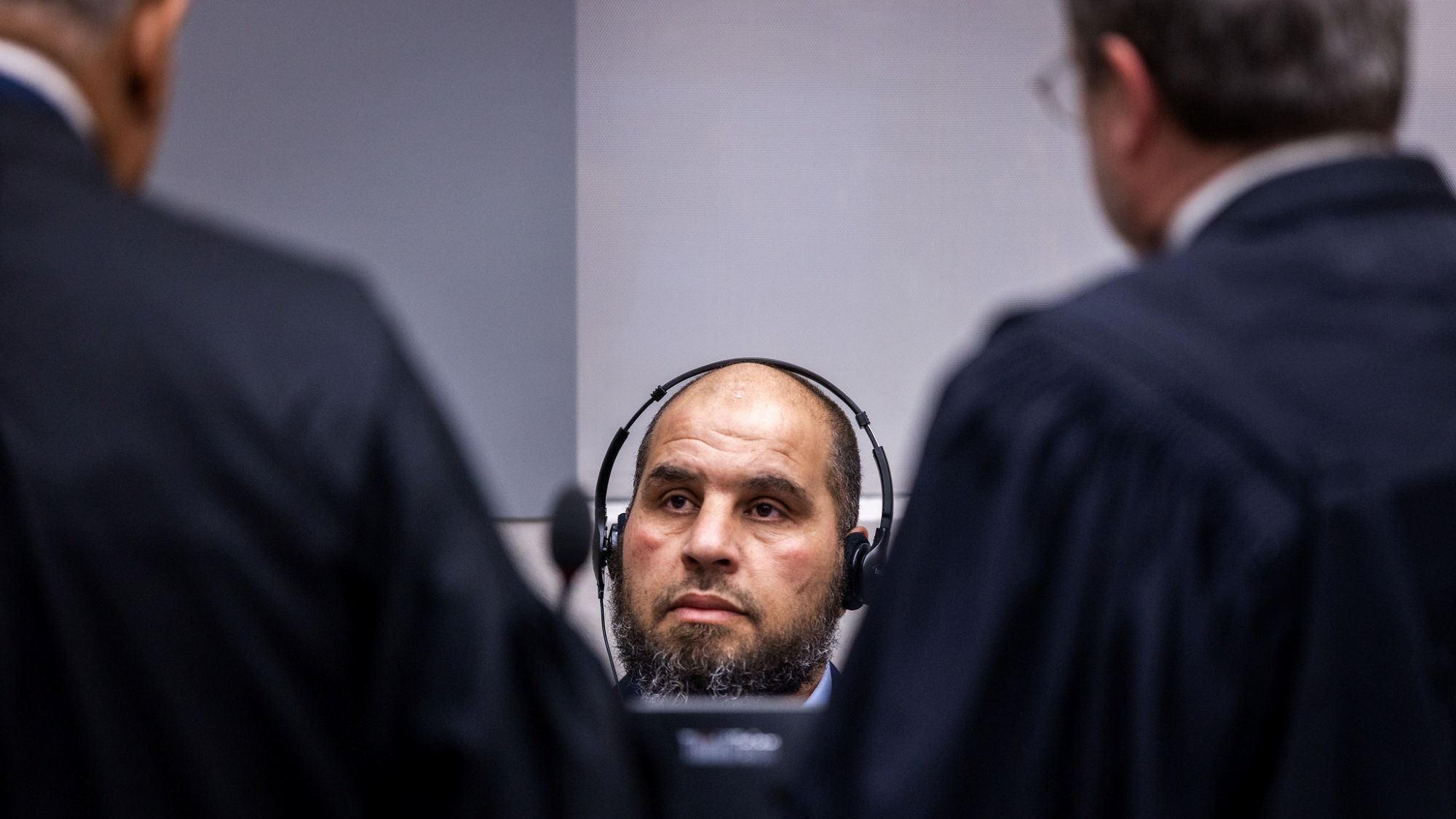
On 16 July, the judges of the International Criminal Court (ICC) confirmed all charges of war crimes and crimes against humanity brought by the prosecution against Libyan national Khaled Mohamed Ali El Hishri. He is accused of detaining and torturing thousands of Libyans, refugees and migrants in the infamous Mitiga prison in the Libyan capital Tripoli. The case will now move to trial.
El Hishri, also known as Al-Buti, is the first Libyan suspect to appear before the ICC. He is charged with 17 counts, including torture, sexual violence, enslavement, persecution and murder, allegedly committed between 2014 and 2020. A trial will likely begin in a few months and could last for years. In earlier hearings, the defence denied all charges.
The 48-year-old, who was arrested by Germany at Berlin's airport in July 2025 on a sealed arrest warrant, is accused of being a senior commander at Mitiga prison, where he had authority over the detainees and was directly in control of the women's section. In this role, he allegedly personally abused and killed at least 159 detainees, and instructed guards and others to do the same.
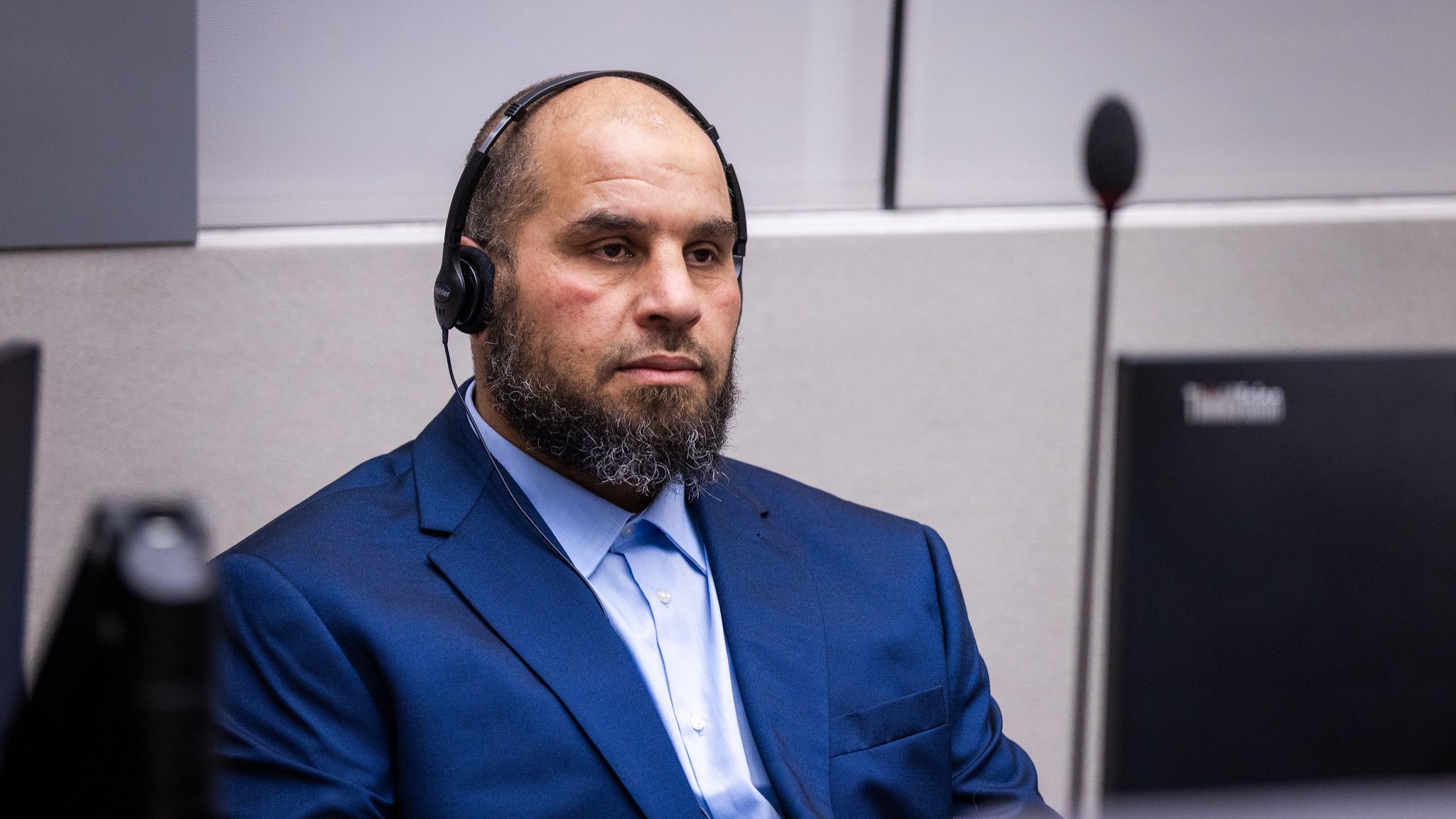
In the 84-page-long decision, the pre-trial judges acknowledged the "core" contribution of the 63 witnesses, 47 of whom are former detainees.
"This is a landmark moment", said Allison West, legal advisor at the Berlin-based European Center for Constitutional and Human Rights (ECCHR). "It's the ICC's first trial looking into crimes against humanity in Libya's detention system."
David Yambio, the founder and executive director of the survivor-led organisation Refugees in Libya, said: "My greatest excitement and fulfilment comes from the fact that I continued to place my trust in the ICC to uphold truth and justice on my behalf. That trust came with an unwavering commitment in the face of the mental, physical and psychological trauma I had to relive over and over again."
After his arrest in Berlin, El Hishri was transferred to the Hague in December 2025. The move was widely welcomed by observers, particularly in light of the case of Osama Lamasri Najim, who was arrested, released and returned to Libya on a government jet by Italy. Najim, also a Libyan national, is wanted by the ICC for crimes allegedly committed as the director of the very same Mitiga Prison.
The ICC began its investigations in Libya during the Arab Spring in 2011, after the UN Security Council asked it to look into attacks against civilians by the then-leader Muammar Gaddafi, who was ousted later that year.
Systematic crimes
According to the judges, El Hishri was a senior member of a militia known as the Special Deterrence Force or RADA, which emerged as an anti-Gaddafi force in Tripoli. To this day, the militia, led by Abdalraouf Kara, controls the Mitiga compound, a large area to the East of the city that includes the prison, the group's headquarters and the capital's only functioning international airport.
Under Kara, the prison's leadership included El Hishri, Najim and others. RADA's power grew in 2015 through its affiliation with the so-called Government of National Accord (GNA), a short-lived UN-backed attempt to reunite Libya politically. The GNA "nominally integrated the RADA into state structures and assigned it law enforcement tasks", the judges' decision states. However, the militia maintained its power and independence, so the crimes "could be committed systematically and with impunity", the judges wrote.
According to the judges, RADA carried out "widespread and systematic attacks directed against the civilian population", meeting the legal definition of crimes against humanity. Between 2014 and 2020, the militias "violently arrested, detained and systematically mistreated at least 5,140 persons", the decision states. The victims were women, men, girls, boys, Libyans, migrants and refugees.
Conflict and coronavirus – Libyan women pay the higher price
War was ever a man's game. In Libya, where political rivals have been fighting it out for years, the needs of women have all too often been overlooked. Yet the country is going to need everyone’s contribution, argues Asma Khalifa, if it is to survive the upcoming changes
The judges agreed that there were sufficient grounds to proceed with war crimes charges. The armed conflict in Tripoli "facilitated the means, structures, or authority through which the crimes were perpetrated", they wrote. "Detainees were also forced to participate or be involved in hostilities".
The case also represents a development in how the ICC recognises gender-based violence and its intersection with other forms of persecution. "The evidence demonstrates that the perpetrators targeted women and girls for arrest and detention because they considered their behaviour inappropriate for their gender", it reads in the decision.
Women were targeted for having professions such as being a singer or appearing on social media. Presiding Judge Iulia Antoanella Motoc wrote in her separate decision that "gender discrimination was closely intertwined with political, religious, and racial discrimination."
Unimaginable conditions of detention
The prosecution outlined the charges in three days of hearings from 19 to 21 May, during which the victims' and the defence lawyers also presented their arguments. In her opening statement, Deputy Prosecutor Nazhat Shameem Khan quoted a witness who described El Hishri as "the angel of death", and said his "preferred torture methods" were shooting people in the legs and knees and hanging them.
"Anyone could be arrested", Khan told the chamber. "Either because they were perceived as political opponents, enemies of the group or its allies, as migrants, or because their views or behaviour conflicted with the group's beliefs, or merely because they had something that RADA wanted, be it money, properties, land or information. Many were never told why they were arrested at all."
The conditions of detention were "unimaginable", said Khan. Some cells were so "overcrowded that detainees had to sleep on the ground in turns." Others were so small that detainees in isolation could barely move, "leading to muscle atrophy."
Food and water were scarce, and basic hygiene was lacking. Diseases such as tuberculosis spread, and El Hishri weaponised them, the prosecution said, "by placing the detainees whom they wanted to punish in cells where they were likely to be infected."
In the women's section, which El Hishri directly controlled, detainees were shot, tortured, beaten and sexually assaulted. "Their own children often witnessed the violence", Khan said, and were themselves subjected to it.
One woman told the prosecution that she was cursed, and that the interrogators ripped her veil off. "In my culture, it is the end of a woman's life if a man takes off her veil against her will", Khan read from her testimony. "It showed that they could do anything they wanted with a female prisoner. I felt completely powerless and vulnerable."
"They referred to us as slaves"
This will be the first ICC trial to prosecute crimes against migrants and refugees, who were also detained, besides Libyans. "Their suffering is the result of structures of abuse, militia control and international complicity", lawyer Paolina Massidda told the Court. Many were intercepted at sea by the so-called Libyan Coast Guard and returned to Libya.
It was "a system in which those in control exercised power akin to ownership", said Massidda. She quoted one victim who said her captors "referred to us as slaves". Victims report being allowed to sleep a few hours per day, only in order to be exploited for work, such as construction, cleaning or performing bodily searches and abuses on other detainees.
How Libyans see Europe
Libyans have mixed feelings about the EU. On the one hand, they admire what Europeans have achieved, but on the other, they feel let down. Moutaz and Walid Ali report from Tripoli
One of the registered victims is A.C., a Gambian woman who prefers to remain anonymous. She was 19 when, in 2017, she and others were arrested by RADA during a violent raid in Tripoli, "simply because we were migrants."
A.C.'s written comments were shared with Qantara by ECCHR, which supports survivors with migrant and refugee backgrounds in participating in the case. In Mitiga, "We thought they were going to kill us all." A.C. writes. "But instead, they strip-searched us and took everything from us."
She stayed in the Women's section for around three months and remembers El Hishri: "We called him 'sir'". The guards "lined us up and beat us regularly. To this day, I can't squeeze very strongly, like to wring out laundry, because they beat my hands and wrists so badly."
A.C. was later transferred to a detention centre under Libya’s Directorate for Combating Illegal Migration (DCIM), where she was told she must accept repatriation through the International Organisation for Migration (IOM). She was returned to the Gambia, where she still lives.
The scars that A.C. and many others carry from Mitiga are not only physical. "I still get scared sometimes by noises, and it takes me back to the memories of what I suffered in prison". She also faces social stigma: "Even though I did not experience sexual violence myself, there are still assumptions about it."
"What happened to me in Libya is something I will never forget", says A.C. "I never thought these crimes would reach the ICC, so the confirmation of charges makes me very happy."
A node in a wider system
Mitiga is a "really important detention site" for the ICC to focus on, says Allison West from the ECCHR, as crimes committed against Libyan and non-Libyan detainees intersect there. When it comes to migrants and refugees, the notorious prison "is functioning as a node" in a wider system.
While some victims were brought to Mitiga after being intercepted at sea, others were picked up in street raids, brought to Mitiga and shortly after transferred to a DCIM prison. "The porousness of the broader detention industry and economy around migrants and refugees in Libya is going to come out in this trial, even if it is not the main focus."
West also hopes this case will shed light on some "opaque" aspects of Mitiga, such as "how it is funded and the finer nuances of the government affiliation with RADA".
She also points to the responsibilities of the European Union: "EU migration policy has become inextricably linked to the abusive criminal detention industry in Libya, where various armed groups gain political legitimacy and income by positioning themselves as partners in migration control, including via interceptions and pullbacks at sea, detention, and cooperation with mechanisms like the IOM voluntary return program."
West says El Hishri's is an "incredible first case for the ICC to look at, as it has the potential to open the way to wider accountability."
© Qantara.de