Military imams to be introduced in Germany
Topics
The death of a comrade, time away from family, cabin fever—soldiers deployed overseas face harsh conditions. To cope with emotional strain, German troops can turn to a military pastor or rabbi, depending on their faith.
There are, however, currently no military imams for Muslim soldiers in Germany. "When I was in Afghanistan in 2011, and my father was ill, I would have liked to have had someone to encourage me," says Nariman Hammouti, a soldier in the German Bundeswehr (armed forces) and a Muslim. "My boss and my comrades were there for me, but it's different when you seek solace in faith."
The 46-year-old from Hanover, who has completed several deployments abroad, has long advocated for the needs of soldiers with a migrant background.
Now, the army has decided to introduce a military chaplaincy for Muslims. "With the 3,000 Muslim soldiers we now have, it is important for us to recognise diversity and create dedicated chaplaincy services," says Colonel Thorsten Weber, who heads the Department of Internal Leadership and Military Chaplaincy at Germany's Ministry of Defence. That total is based on an estimate; soldiers are not required to disclose their religious affiliation.
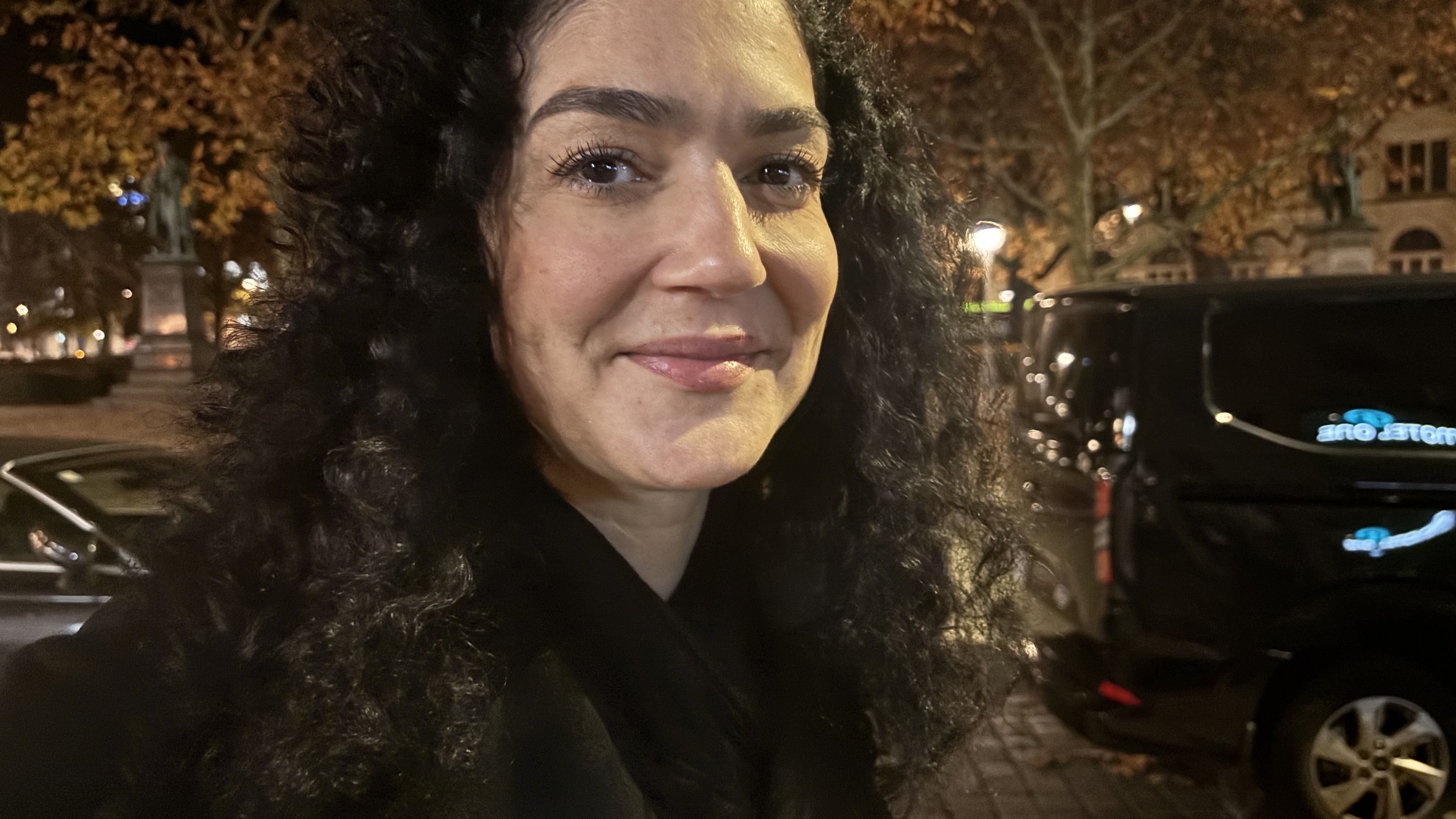
Lieutenant Commander Hammouti is not alone: calls for a military chaplaincy for Muslims have circulated in the Muslim community for over 20 years, echoed by Muslim associations and the last two parliamentary commissioners for the armed forces, Eva Högl and Hans-Peter Bartels.
The Bundeswehr currently employ around 100 Protestant and 80 Catholic chaplains. Since 2021, rabbis have also been providing pastoral care for Jewish soldiers. The nine rabbis who make up the military rabbinate are responsible for an estimated 300 Jewish soldiers in the Bundeswehr.
Currently no plans to deploy imams abroad
The planned Muslim chaplaincy will initially be a pilot project, scheduled to begin in early 2026. The first Muslim chaplains for the German Armed Forces will be recruited via public tender and employed on a service agreement basis. For the foreseeable future, pastoral care will be provided as-needed and essentially purchased by the hour. The deployment will initially be limited to Germany.
According to Weber, it is not yet unclear how many military imams will be needed. The planned pilot project is designed to run indefinitely, which means that the Muslim chaplaincy will not be institutional in character, as is the case with the Christian and Jewish military chaplaincies.
This, Weber explains, is for legal reasons: "In Germany, we face the challenge that there is no single representative of the Muslim religious community." This rules out a state treaty with a specific contact person.
Weber asserts that a treaty between Germany and a religious community—like the existing agreements with Jews, Catholics and Protestants—is the prerequisite for a fully institutionalised Muslim military chaplaincy that includes access to the barracks, a necessary component for deploying military imams abroad.
But lawyers, such as Benedikt Plesker from the Cologne law firm Lenz und Johlen, see things differently: "I think it is possible to offer permanent military chaplaincy on a contractual basis. In my opinion, this does not require a state treaty. It is more a question of political will and, above all, financing."
It is also clear, Plesker continues, "that without proper funding, all attempts will remain stuck in pilot project mode and a permanent military pastoral care for Muslim soldiers will never be established."
The British army employs Hindu chaplains
After initial joy at the Bundeswehr's about-face, Hammouti now views their tentative approach with scepticism, pointing to positive examples among NATO allies. In Germany, she says, there are "a lot of ifs."
"It can be done. The British have a military chaplaincy for Muslims; they even have one for Hindus. The Dutch, Belgians and French all have them.”
Hammouti argues that, given the increasingly proximate threat, the fact that the Bundeswehr may need more personnel in the near future should not be overlooked. "We shouldn't simply ignore the 3,000 to 5,000 Muslims in uniform who are prepared to give their lives for their country," she says.
France has had an established Muslim military chaplaincy since 2005, but military imams were present in the French army even earlier. The country's history as a colonial power in North Africa required it to address the needs of Muslim soldiers sooner than most.
"France is a secular state that is very reluctant to allow religions into the public sphere. Nevertheless, the country has managed to establish and institutionalise a military chaplaincy for Muslims in recent decades—using very pragmatic methods, because, of course, this hasn't always been a smooth process," says Benedikt Plesker.

No pastoral care for Muslims in Germany's armed forces
Lieutenant Nariman Hammounti-Reinke risked her life for Germany in Afghanistan. But when it comes to her religion she feels left out by the Bundeswehr, despite the growing number of Muslim troops in the country's army. By Christoph Strack
Plesker observes that across Europe, establishing military chaplaincies for Muslims has hinged on two factors: political willingness and funding. He notes that countries like the Netherlands and Great Britain face the same problem as Germany: the state struggles to find a cooperation partner because, unlike with other faiths, there is no single, unified Muslim body or "Islamic church." "This is comparable throughout Europe," he concludes.
For Plesker, France and the United Kingdom offer the most successful examples of Muslim military chaplaincies, a result of significant investment. Beyond chaplains for Christian, Jewish, and Muslim faiths, multi-faith services have been offered in both countries for several years.
"That could be a model for Germany. But it would require existing state treaties to be amended and, above all, it would require very adequate funding. I don't currently see a political majority for that," says Plesker.
Colonel Weber says the Bundeswehr plans to take a step-by-step approach, guided by the specific needs of Muslim soldiers. Only after gaining initial experience within Germany, he notes, can the military consider the foreign deployment of imams. By then, a legal solution might be found to ensure Muslim chaplains can access military facilities during deployments abroad.
© Qantara.de