A new benchmark for freedom
The pace at which Syria’s transitional government wants to lead the battered country back to normality is breathtaking. As recently as January, Kurdish militias and Syria's new army exchanged artillery fire in the middle of Aleppo, a major city. Less than a month later, the integration of the militias into the army is a done deal. The country was also admitted to the anti-IS coalition—under the presidency of a former jihadist, Ahmed al-Sharaa.
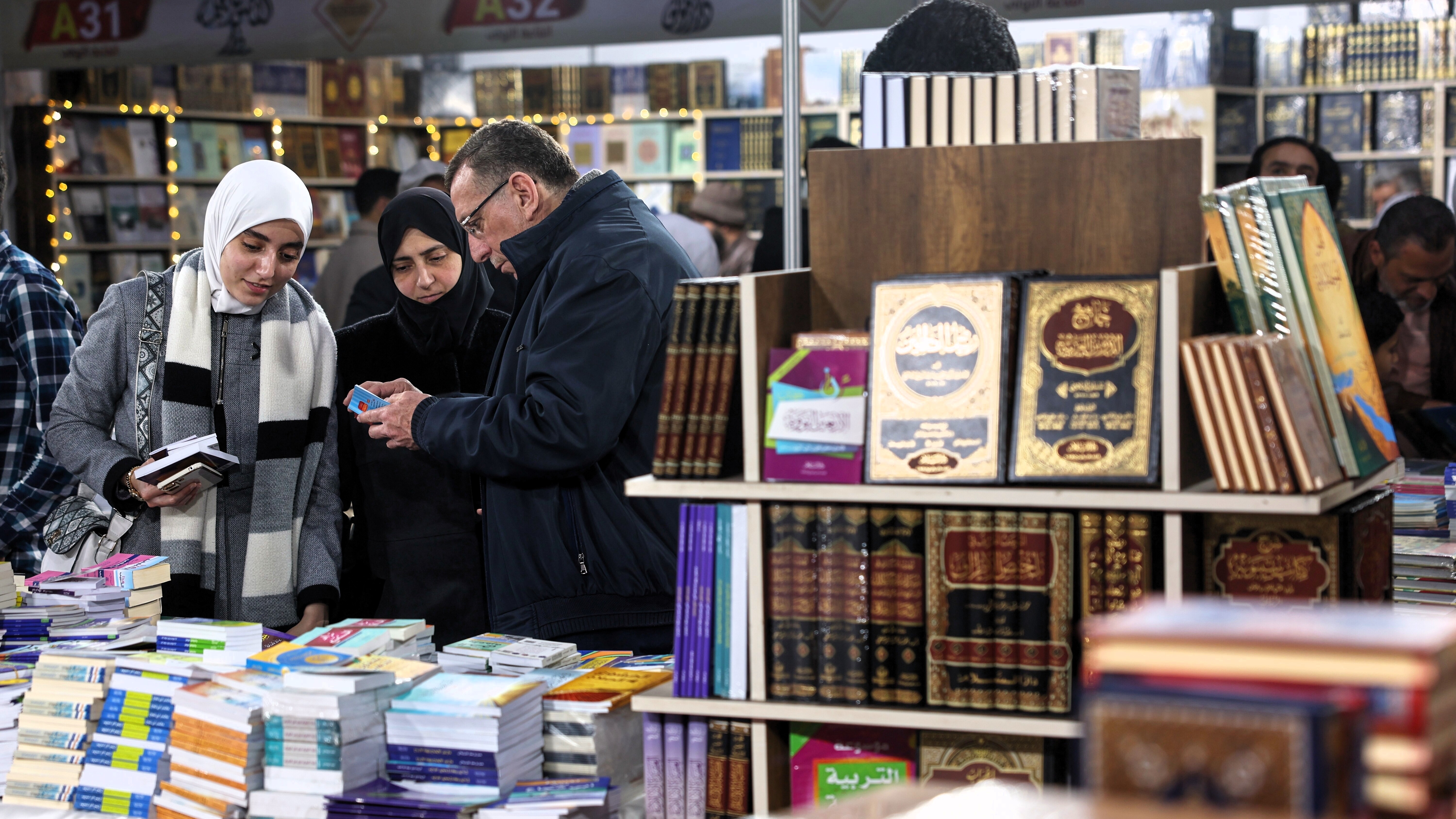
Meanwhile, in the capital Damascus, February saw the first large-scale cultural event since the fall of the Assad dictatorship in December 2024: an international book fair. Under the Assads, such fairs had been bleak, heavily censored events with little appeal.
The 2026 book fair, where most titles could be purchased at a discount, will be remembered as a moment of awakening, hope and reunion. It set a standard of accessibility, popularity and intellectual freedom, against which the government and its cultural policies will be judged in the future.
Five million dollars were invested directly from the presidential budget into the fair. Qatar and Saudi Arabia were guest countries, close friends and financiers of the new government. On the book fair site by the highway to the airport, Qatar in particular created a lively atmosphere. Folk ensembles played traditional songs from the Gulf, accompanied by a variety of on-stage performances.
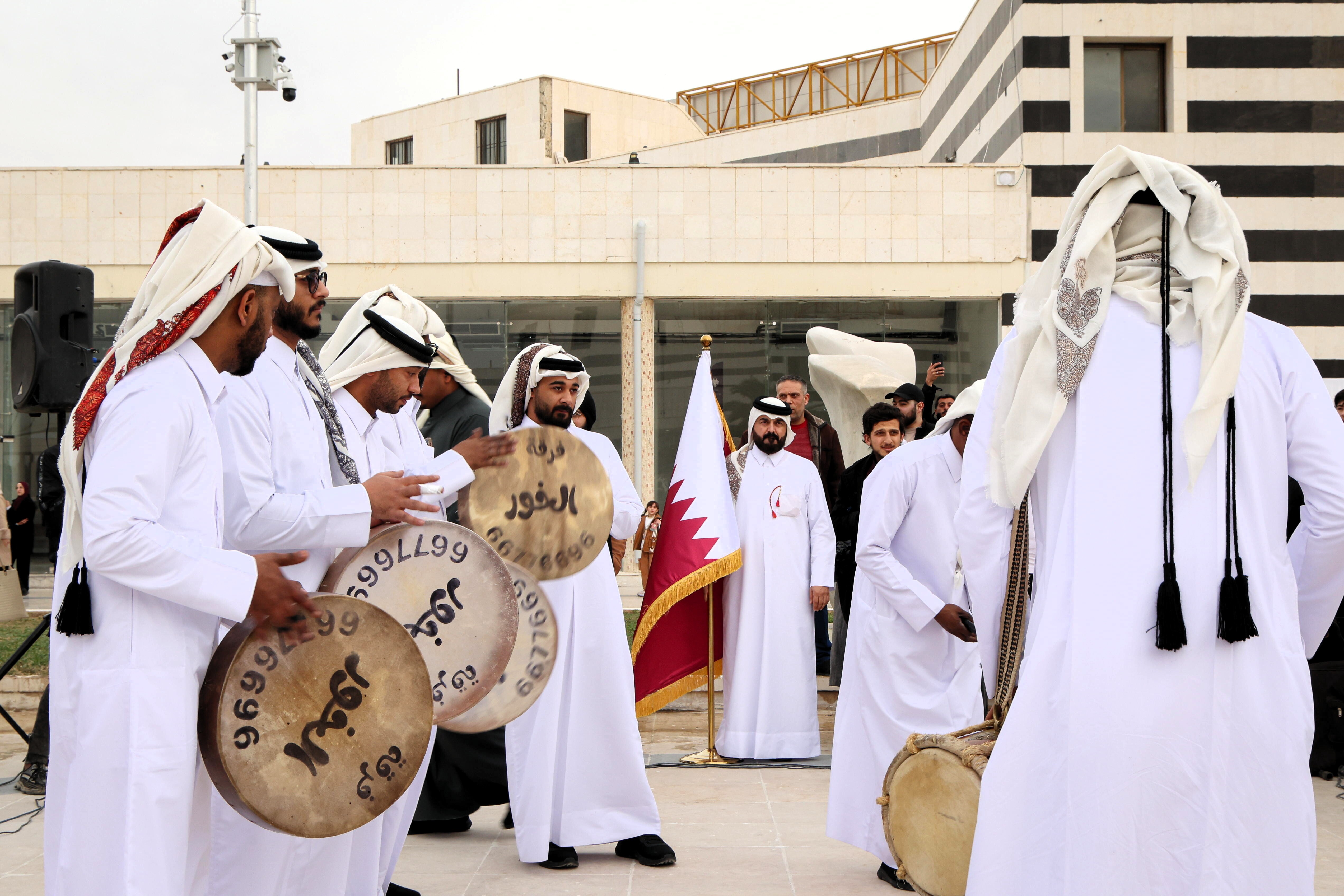
Given all the folklore, it was easy to overlook that Qatar's influence in Syria, as elsewhere, is strong in the intellectual realm. This influence comes not in the form of Islamism, as it did in the past, and as critics of Islam often assume, but in media and knowledge production.
With the involvement of leading Western researchers, Qatar completed the first historical dictionary of the Arabic language in December, the "Doha Dictionary". The next major planned project is a comprehensive Arabic encyclopedia modeled on the great European Enlightenment encyclopedias, under the name "Arabica". While Europeans and Americans are cutting cultural funding to increase defence budgets, the Qataris are investing in soft power, a kind of "soft (Pan)Arabism" (العروبة الناعمة).
The fair as a propaganda tool?
Syria and the book fair are the ideal testing ground. The country is searching for a new identity. The government is composed of Islamists and former jihadists, while the Syrian population mostly is not, though conservative Sunnis form the majority.
Nevertheless, national unity cannot be achieved under the banner of Islamism. Resisting the threat from the outside, Kurds, Christians, Druze, Alawites and many Syrians in exile have formed an informal front against potential Islamist encroachments. So far, successful: clear warning signs of authoritarian Islamism, such as mandatory veiling or an alcohol ban, do not currently exist in Syria.
At the book fair, freedom of opinion prevailed; there was no state or religious censorship, as even critical participants confirmed. This new freedom has, ironically, caused confusion among Western and secular observers.
On social media, Syria's first free book fair was discredited as an Islamist propaganda tool. "Thirty tons of Islamic literature were sent into the country by Saudi Arabia," according to videos shared on Facebook and Instagram. Supposedly, dangerous books were on sale, even writings by Sayyid Qutb, the ideologue of the Muslim Brotherhood, who was executed in Egypt in 1968—his multi-volume Quran commentary written in prison, or his anti-Western manifesto "Milestones".
Kurdish as a living language
"When I was a child, I felt ashamed of my identity," says linguist and translator Marwan Sheikho. Determined to create a different reality for his own children, he's made his publishing debut with three bilingual Kurdish children's books.
The idea that the presence of such works at the fair would turn the Syrian population into Islamists is as naïve as the hope that a ban could make the country safe from them. These titles have long been freely available online. Islamic classics such as Ibn Taymiyya—a challenging medieval thinker of the stature of Thomas Aquinas, often criticised by Islam's critics—have always been present at Arab book fairs.
Separation of state and religion
Against the backdrop of social media-fueled mistrust, many Syrians boycotted the fair. Many Syrian refugees currently rule out even a temporary return to Syria. The traumas of the past linger, understandably so.
All the more moving were the counterexamples: those who returned from exile specifically for the fair, to contribute to the country's situation in an enlightened and democratic spirit. Among them were publishers, poets, activists and academics. Milan's Al-Mutawassit, the most important Syrian publishing house in exile and one of the most innovative publishers in the Arab world, was also represented in Damascus.*
Among the fair's most prominent activists was Burhan Ghalioun, former chairman of the opposition Syrian National Council. On a large stage, he addressed the highly contentious issue of identity politics in Syria, calling for a clear separation of state and religion, and of state and identity politics. In this respect, he is ahead of many contemporary Western politicians. His discussion partner that evening was the Syrian-German academic Housamedden Darwish, a leading figure in the "Arabica" project and a thinker on Arab soft power.
Where is Europe?
"Our vibrant media landscape must be rebuilt," said Syria's Information Minister Hamza al-Mustafa, who invited a group of journalists to dinner following their visit to the fair. The question is who will fund this. For now, funding is coming mainly from the Qataris, who are guided on media policy by the think tank of the astute Azmi Bishara, who earned his doctorate in East Berlin in 1986 and served as an Arab member of the Israeli Knesset.
Minister al-Mustafa, formerly head of the exile broadcaster Syria TV, asked us why Germans, and Europeans more broadly, no longer get involved. We did not know. "It is easy", the minister said, "to complain about the influence of the Gulf states while avoiding the costs and effort oneself."
While organisations like the Deutsche Welle Academy once again hold workshops and provide training in Syria, the question remains whether this is enough. The future in Syria is still open; those who go there can help shape it. How long this will remain so, nobody knows. One thing is clear: the next book fair in Damascus—if not the country as a whole—will be measured against the magic of this 2026 new beginning.
* This paragraph was amended after publication. We have removed the names of individuals who did not have an official role at the book fair.
Translated from German by Max Graef Lakin.
© Qantara.de