How the Amazigh language is thriving online
Topics
In a Facebook video, Algerian television presenter Takfarinas Nait Chabane mourns the death of a colleague – in his mother tongue, Tamazight, formerly also known as Berber. He speaks spontaneously, and the scene seems unremarkable. Yet it reflects a profound shift.
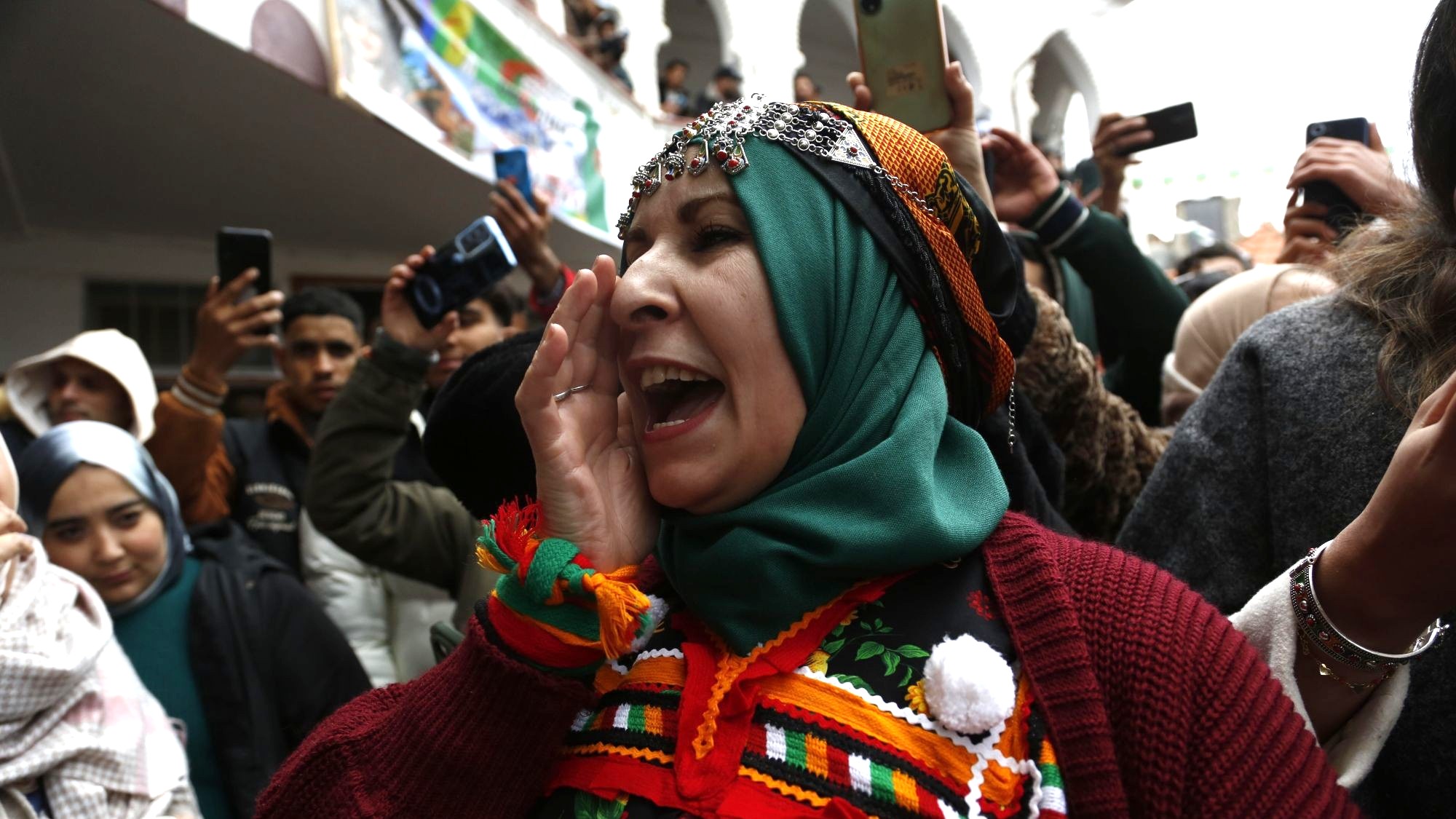
For decades, Tamazight was associated with militant slogans and demands for recognition of Algeria’s Amazigh population. Today, however, the language has become part of everyday life, both on digital platforms and on the streets.
In recent years, an increasing number of Amazigh influencers have begun showcasing their culture on social media. They use humour, music and personal stories to reach audiences far beyond the traditional Amazigh regions. For many, speaking their mother tongue is now less a political statement than a natural expression of their identity.
Tamazight as an everyday language
Algeria began gradually introducing Tamazight into school curricula in the late 1990s. In 2002, it was recognised as a national language, and following the adoption of the 2016 constitution, it was also granted official language status. The Algerian Academy of the Amazigh Language was established as well, with responsibility for developing the language and compiling dictionaries.
Although the transition from legal recognition to wider everyday use remains fraught with challenges – particularly given the widespread use of Arabic and French – Tamazight has now established a digital presence: in humorous videos, cooking tutorials, travel blogs and even commentary on current affairs.
Nait Chabane used to teach Tamazight at Mouloud Mammeri University in Tizi Ouzou. He says that a language can only survive if it is used in day-to-day life. Addressing audiences exclusively in French or Arabic, he says, risks further weakening a language that has historically been marginalised.
He added that with the growing influence of artificial intelligence, the amount of digital content currently available in Tamazight is crucial in determining whether the language will be represented in future technologies.
Writer and influencer Chabha Ben Gana says she began creating content in the Kabyle variety of Tamazight because she wanted to share her interest in her mother tongue with others. In her online content, she combines her love of her native language with her passion for literature.
This has created an online space where she can engage directly with her audience. Ben Gana is convinced that the new generation of influencers is no longer content simply to preserve the language, but also wants to develop it further.
Journalist Madjid Serrah shares this view: "What is being produced today – limited though it may be – creates opportunities to bring voices, opinions and artistic talents into the spotlight that would otherwise struggle to reach such a wide audience," he says.
The diaspora abroad can also track social debates that they might miss if they follow traditional media, he added, not least because the best-known figures in this scene did not emerge as digital influencers, but made their names as activists, writers or academics.
Economic barriers
Enthusiasm for the digital development of Tamazight should not, however, obscure the structural obstacles influencers face. Although Tamazight is now integrated into apps such as Google Translate, Serrah points out that the transition from oral to written use of the language is still in its early stages. This point is evident if you look at specialist fields: those discussing geopolitics, medicine or history in Tamazight have to search extensively for the right terminology.
As a result, influencers often switch between Tamazight, Arabic and French. Tamazight itself also encompasses a wide variety of dialects. In Algeria, for instance, these include Kabyle, Chaoui, Mozabite and Tamasheq.
Tamazight can be written using different writing systems: the Latin alphabet, the Arabic script or Tifinagh, its traditional script. This lack of uniformity raises questions about the extent to which digital content can reach audiences across linguistic differences.
Another obstacle is economic. The Tamazight-speaking audience in Algeria does not offer particularly lucrative advertising opportunities, limiting the incentive for professional investment. For this reason, Serrah says that producing digital content in Tamazight should be seen less as an attempt to build a profitable industry and rather as a bid to create an alternative space.

Language sparks change
As Amazigh culture becomes increasingly visible in digital content, its influence extends beyond spreading the language. Music, clothing, traditional dishes and folk tales also gain visibility, Serrah explains.
Important here, is that traditional culture is shown as part of influencers’ everyday lives, rather than as a folkloric performance aimed at tourists or ethnologists. This lends the content authenticity and helps establish intimacy with the audience.
The writer Ben Gana sees conversations in Tamazight about culture, society, technology and art, not just folklore and traditions. She describes this as "a form of digital collective memory."
At the same time, the digital space brings its own challenges. The fast pace of social media platforms and the pursuit of high click counts can lead to culture being reduced to stereotypes and entertainment.
Efforts to preserve Tamazight have shifted in focus. Rather than prioritising legislation and official state recognition, the emphasis is now on keeping the language alive in everyday life. This is vital for a language with a centuries-old oral tradition.
Whether digital platforms can replace schools or public broadcasting to preserve the language remains to be seen. What is certain, however, is that they have created a new space in which the younger generation – both men and women – can speak Tamazight and express their identity, far removed from the political polarisation that has shaped the language debate for decades.
This text is an edited translation of the original Arabic version. Translated by Jess Smee with the assistance of AI tools.
© Qantara.de