Preservation or erosion?
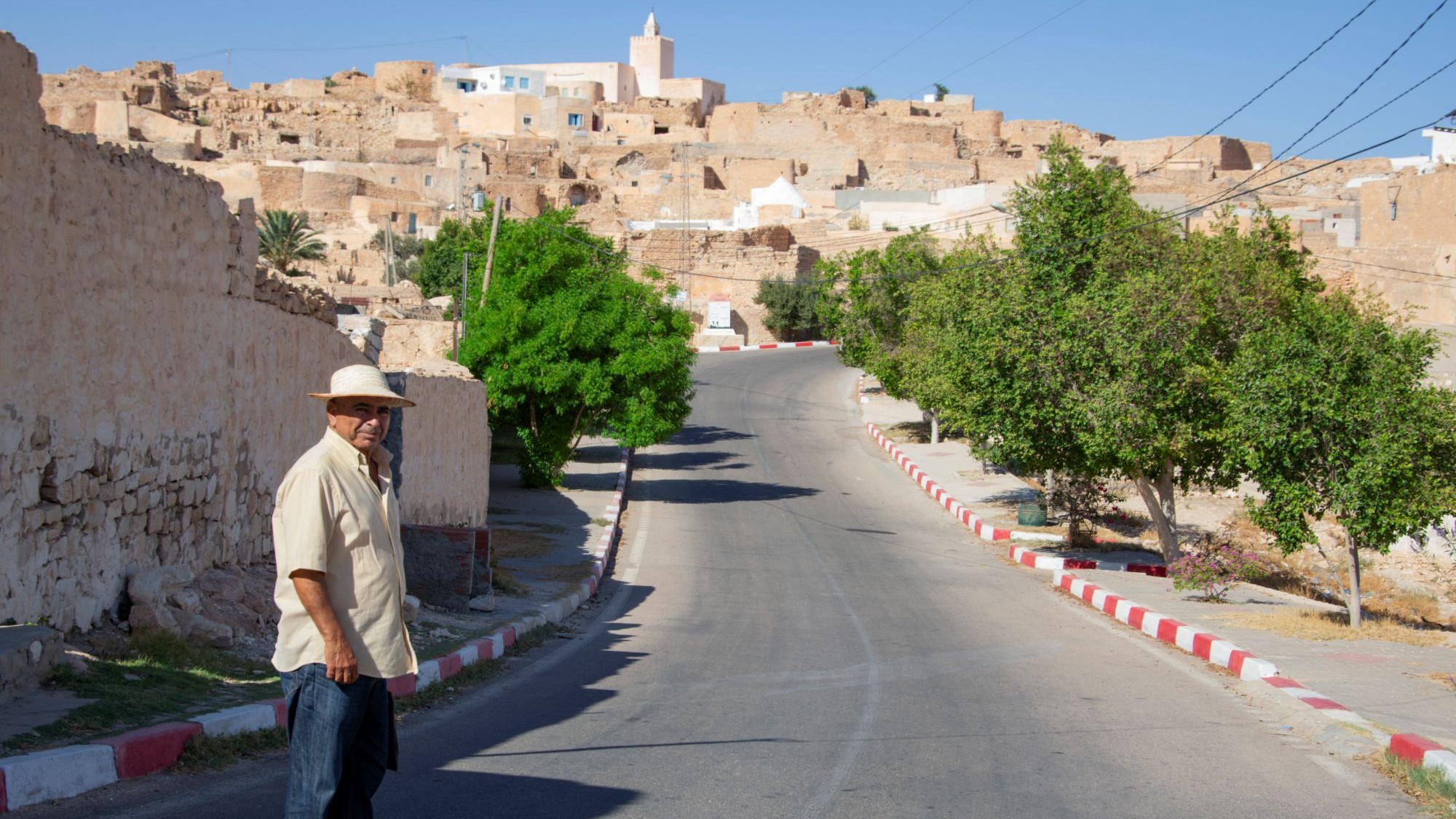
Jalloul Ghaki makes his way through the shattered houses of Tamezret, a village in southeastern Tunisia. Sunlight reflects off the rubble. The silence is broken only by a braying donkey. "In Tamezret, we have nothing. The clinic opens only a few times a week. And for elderly people with chronic illnesses, it’s not feasible to stay," says the 70-year-old man, who grew up in the village.
Located in the Dahar mountains, Tamezret is emptying. Occasionally, it is briefly animated by buses full of tourists, attracted to the village for its Amazigh, often referred to as "Berber", identity and culture. This heritage survives thanks to the Imazighen, the indigenous peoples of North Africa and parts of the Sahel. With the mountains and the desert acting as a barrier to successive conquerors, these communities have resisted total assimilation.
Many tourists in Tamezret take quick snapshots, stop in cafés tailored to foreigners and then move on. Trekking enthusiasts visit it along the route mapped out by Destination Dahar, an agency that promotes sustainable tourism.
Despite its growing popularity as a tourist destination, little has changed for the residents of Tamezret. "The state is not here when it comes to Amazigh issues", says Ghaki. "If we don't build our own houses and roads, everything is lost. And yet we are the indigenous people of this country. We are presented only as a tourist product to be exploited during the summer season. Nothing more, nothing less."
The lack of opportunities in Tamezret led Ghaki to study in Tunis. But after a career as a civil servant, he decided to move with his wife back to southern Tunisia, to Nouvelle Matmata, a twenty-minute drive from his native village. Today, just over 400 inhabitants, 95 families, remain in Tamezret, according to the former official. "Climatic conditions and the labour market have forced most residents to migrate to Tunisia's major cities or abroad."
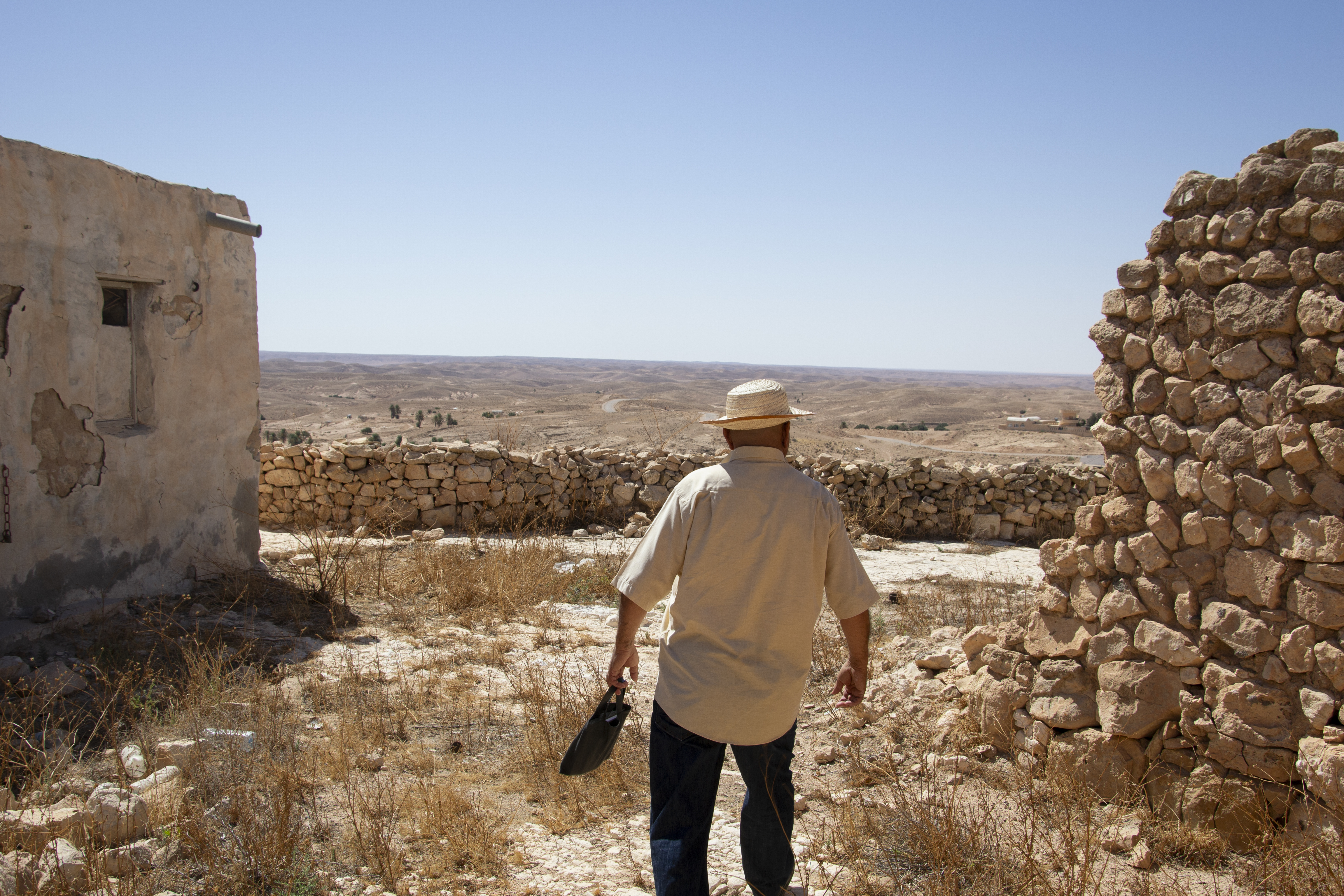
For Tamezret and other vulnerable regions, tourism is the only economic engine. But for residents, tourism plays an ambivalent role, as it risks reducing millennia-old culture to folkloric displays for tourists, while the economic benefits are not felt by all.
The poverty rate in the administrative district of Matmata, which includes Tamezret, stands at 26.4% according to the latest Poverty Map, released in 2020. This is despite a huge influx of visitors to villages like Matmata and Tamezret, where accommodation facilities report occupancy rates exceeding 90%.
New space for Tunisia's minorities after 2011
Jalloul Ghaki is currently General Secretary of the Tunisian Association of Amazigh Culture (ATCA). ATCA was founded in Matmata in April 2011: following the so-called "Jasmine Revolution" which led to the fall of the dictator Zine El Abidine Ben Ali, opening up space for expression for Tunisia's cultural and religious minorities. Among the goals of ATCA is the preservation of Amazigh architecture.
In Tamezret, "walls were built using white calcareous sand, fired together with animal remains. This produced a material equivalent to modern cement," Ghaki says. "Everything was local: the stone, the building materials, the palm trunks used for the roofs." An example of vernacular architecture, as described by Ghaki, is now at risk of disappearing. In fact, there is no state plan to preserve the historic part of Tamezret.
In 2022, the Amazigh villages of Zarat and Toujane were designated tourist municipalities, giving them access to dedicated protection funds. Tamezret has been excluded. Its hope of receiving similar support may lie in the designation of the Dahar Mountains as a UNESCO Global Geopark, granted in April this year.
The first wave of abandonment in Tamezret took place in the 1970s, when the first president of independent Tunisia, Habib Bourguiba, implemented policies aimed at modernising and unifying the country under an Arab-Muslim national identity. These policies left little room for local languages and cultures.
An uphill struggle for Tunisiaʹs Amazigh
The Amazigh claim that the regimes of Bourguiba and Ben Ali stole their finest asset, namely their culture. Is Tunisiaʹs Jasmine revolution on the way to restoring their rights? By Lina Shanak
"Claiming Amazigh identity meant exposing oneself to marginalisation and repression, so many preferred not to declare themselves as such," explains Anna Maria Di Tolla, founder and president of the Amazigh Studies Center at the University of Naples L'Orientale. "The result has been an obscuring of the country's Amazigh history and roots," she adds, contributing to a collective amnesia that until today leads many Tunisians to begin their historical memory with the Arab invasion and subsequent Islamisation in the 7th century.
Preserving the Tamazight language is also a major part of ATCA's mission. There are no official statistics on the number of Tamazight speakers in Tunisia. Estimates vary widely, from as few as 10,000 speakers to as many as 1 million.
Despite some advancements in minority rights since 2011, ATCA accuses the Tunisian state of obstructing its work for ideological reasons. "They do not want to provide the means for associations to promote the language. Tamazight is in a state of clinical death; we truly risk losing it," says Kilani Bouchahoua, ATCA's president.
Unlike neighbouring Algeria and Morocco, Tunisia has not yet recognised Tamazight as an official language. But in villages like Tamezret, Tamazight inscriptions can still be found on the walls of buildings, marking family property.
Tourism as a family business
Further south, the same inscriptions can be found in Douiret, Tataouine governorate, carved into the walls of homes in the now-abandoned old village and ksar (fortified village). The position of Douriet's ksar was strategic, allowing the Amazigh population to defend themselves against potential attacks. It also functioned as a communal storage complex where essential food supplies, such as cereals, oil and dates, were preserved.
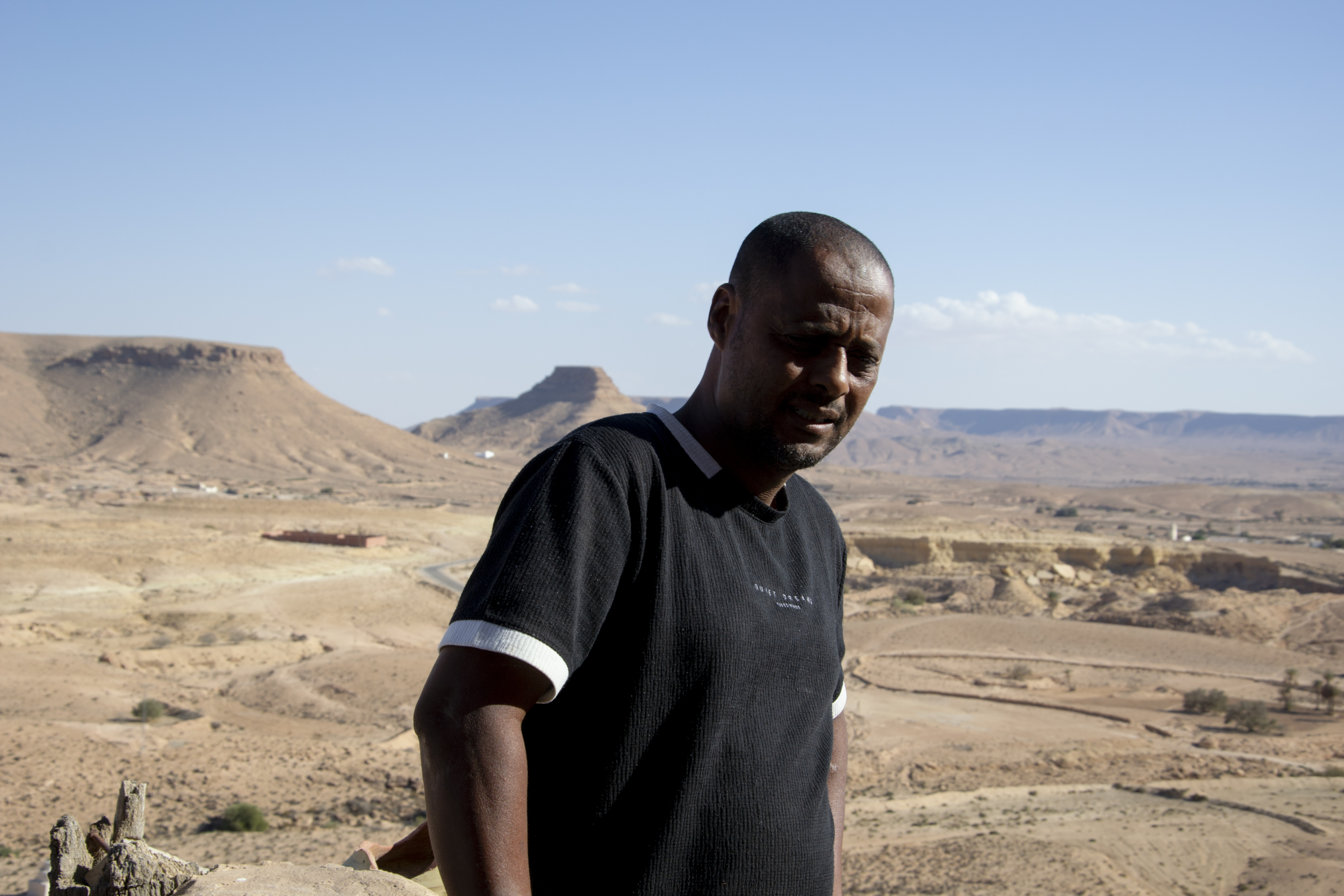
This architectural heritage is still visible in the crumbling houses and Jamaa en-Nakhla (the Mosque of the Palm) a striking white landmark standing out against the ochre-yellow tones of the hillside. Like Tamezret, Douiret's old village has largely been abandoned. Right beside the ruins stands "Gîte Raouf", a guesthouse run by 48-year-old Raouf Talbi.
Talbi still remembers when families left the hilltop settlement to move to the "modern village" in the valley, following the policies introduced by Bourguiba after independence. Back then, new settlements were created in the plains and connected to water and electricity networks to encourage integration and promote the idea of a unified nation. This approach was influenced by the former French colonial model, based on centralised territorial administration and the sedentarisation of peripheral communities.
Having moved to the modern village as a child, Talbi returned to old Douiret at the age of 20 to work as a guide in the ksar while selling local handicrafts. He later opened a café, a restaurant and a guesthouse, which provides work for all of his family.
"At first, we had three rooms. There was no bathroom, no electricity. Tourists came with their own mattresses and sleeping bags," he recalls. As visitor numbers grew, he transformed the modest home into a place with all the comforts now expected by tourists.
In the absence of any real commitment from the Tunisian state to revive the old village of Douiret, Talbi has, at least in part, managed to transform an abandoned village into a place capable of welcoming Tunisian tourists, as well as visitors from all over the world in search of "authenticity".
According to Talbi, preserving Amazigh heritage also means introducing and immersing visitors in his native world. "I believe this culture will continue to exist here. Even though it has been Arabised over time, its roots remain deeply Amazigh. Many aspects of daily life—marriage, traditions, and food—still preserve that heritage. The culture and identity have not disappeared, but they have evolved."
© Qantara.de