"Religious practice can take place anywhere"
Qantara: Negah, you compared the spiritual practices of Sufis in Germany and Morocco and how they integrate their faith into their day-to-day lives. Now you are presenting an exhibition on one local community in Frankfurt, Germany. Who are they? What is their story?
Negah Angha: The community belongs to Maktab Tarighat Oveyssi Shahmaghsoudi, or MTO, a Sufi school with deep roots in Iran. It traces its spiritual lineage back around 1,400 years to Oveys Gharani, a contemporary of Prophet Mohammed. The school expanded internationally during the twentieth century and has been present in Germany for more than four decades.
Today, the Frankfurt community describes itself as having around 50 active members, with Iranian, German and other international backgrounds and connections. Those identities overlap; this is not simply an Iranian community on one side and German participants on the other.
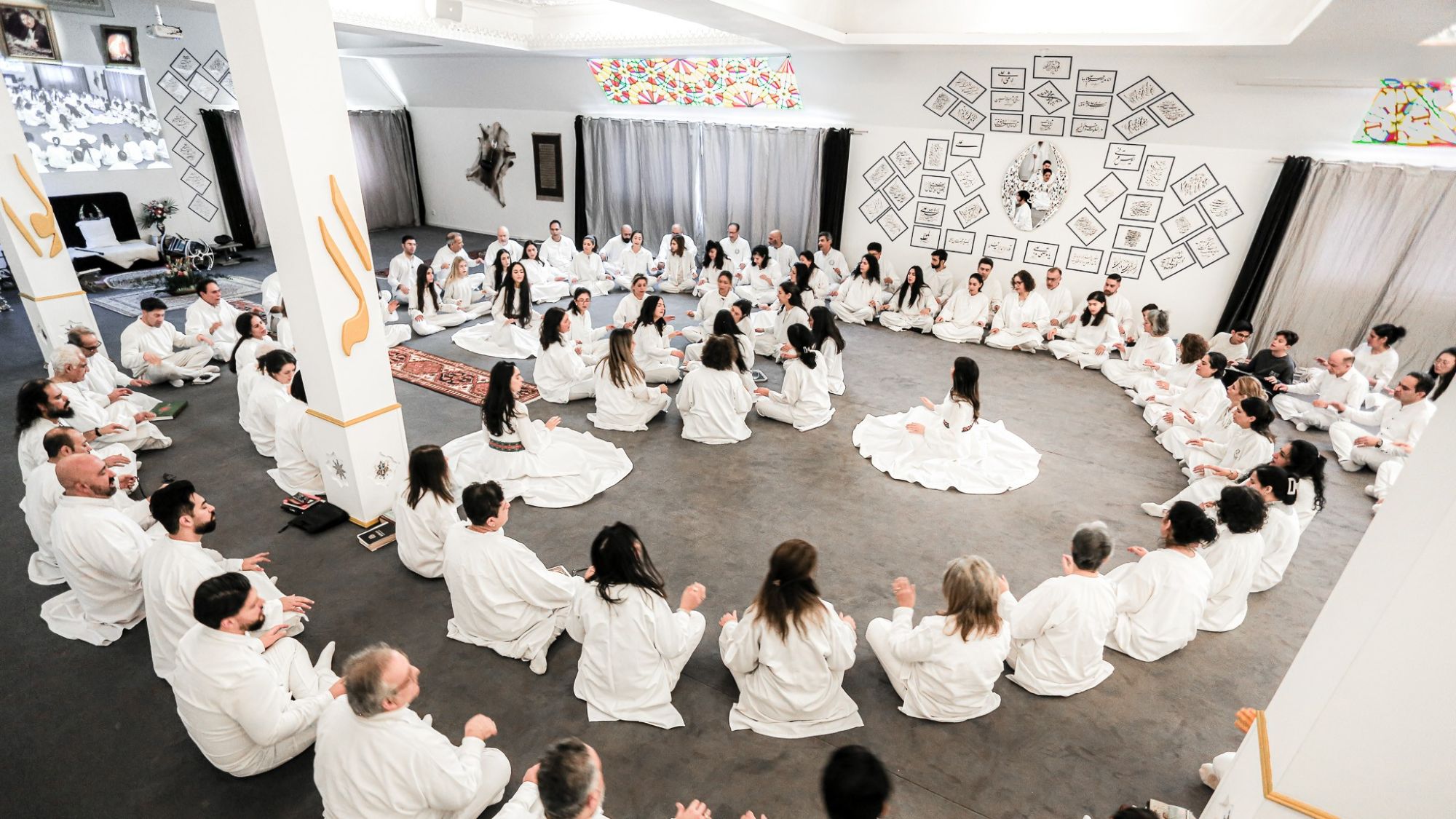
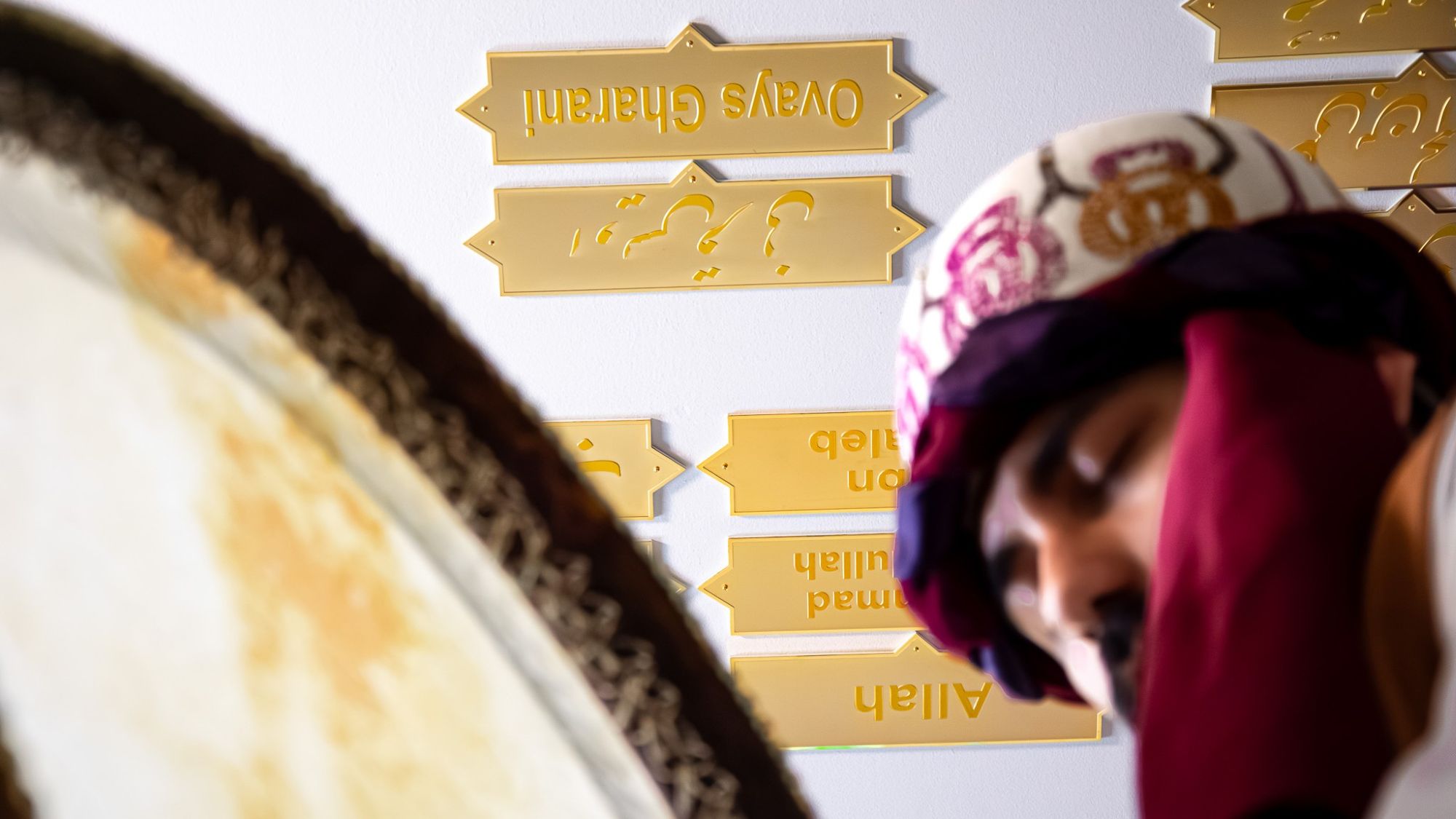
This year, the new centre of the community was opened in Frankfurt-Eschersheim. A lot of volunteer work went into it, which is very telling about the spirit of the community. It is envisioned as a "Haus der Begegnung", a house of encounter. Persian mirror work, calligraphy and music are part of its character, alongside meditation, interfaith conversations and neighbourhood initiatives.
As a photographer, I am interested in how those histories become part of a present-day life. This is not only a story of preserving an Iranian tradition abroad. It is also about the people who have made that tradition part of Frankfurt.
In your academic work, you compare Sufi communities in Germany and Morocco. Is there a typical German way of practicing Sufism?
The minority–majority context matters. In Germany, a community such as MTO may need to explain its practices to neighbours, public institutions and people encountering Sufism for the first time. In Morocco, my research considered practice within a Muslim-majority social environment. But that does not mean there is a single or uncontested understanding of Sufism.
What interests me is how inward commitments take an outward form under different circumstances: who people understand themselves to be responsible for, how they organise that responsibility, and how practice is transmitted. That is more revealing than trying to identify one "German Sufism" against one "Moroccan Sufism."
Please tell us about your upcoming exhibition. What can visitors expect?
The exhibition features photographs and interactive elements. It is the first exhibition of my photographic work and the first I have curated. It brings together my photographs and those of two fellow photographers, Aram Norouzi and Mehdi Varvani. We have funding and support from the local government in Hessen and are staging the exhibition in cooperation with the Academy for Islam in Research and Society (AIWG) at Goethe University Frankfurt.
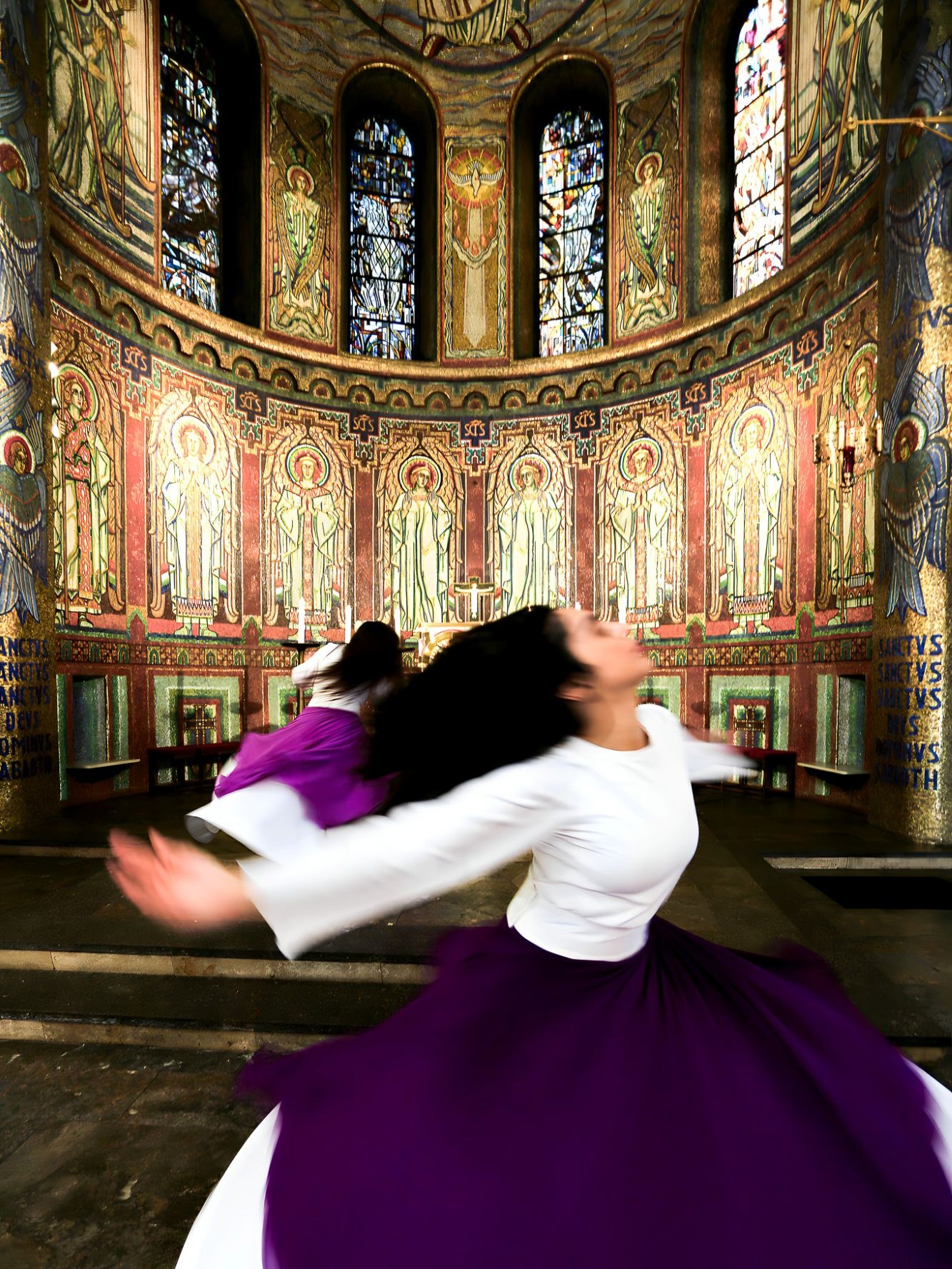
Sufism and spirituality in general are not easy to capture in a photograph. It is about what happens within a person, which does not necessarily show on the outside. How did you capture spirituality in your pictures?
You've put your finger on an interesting point, because the idea is to make this exhibition relatable. It should speak to someone who is an atheist, someone familiar with Islam or with Sufism. It should also speak to someone who is simply curious, passing by the Römerhalle and wondering what is happening inside. This takes us back to your earlier question: which image conveys a message about Sufism — specifically, Sufism in Frankfurt?
That's very difficult. I would not claim to have captured someone's spirituality. I wanted the exhibition to be accessible without suggesting that looking at someone gives us complete knowledge of them.
How did you achieve that?
We spent a lot of time observing and taking photographs. Then we selected a group of images that together convey the message we want to share. For example, one wall in the exhibition shows two photographs of the same person: one in her everyday professional life and one during her spiritual practice. This is where the exhibition's title, "Seen and the Unseen: Sufi Life in Frankfurt", comes in. It is about what you see and what you don't see when you meet someone in daily life, depending on the moment — whether at work or during spiritual practice.
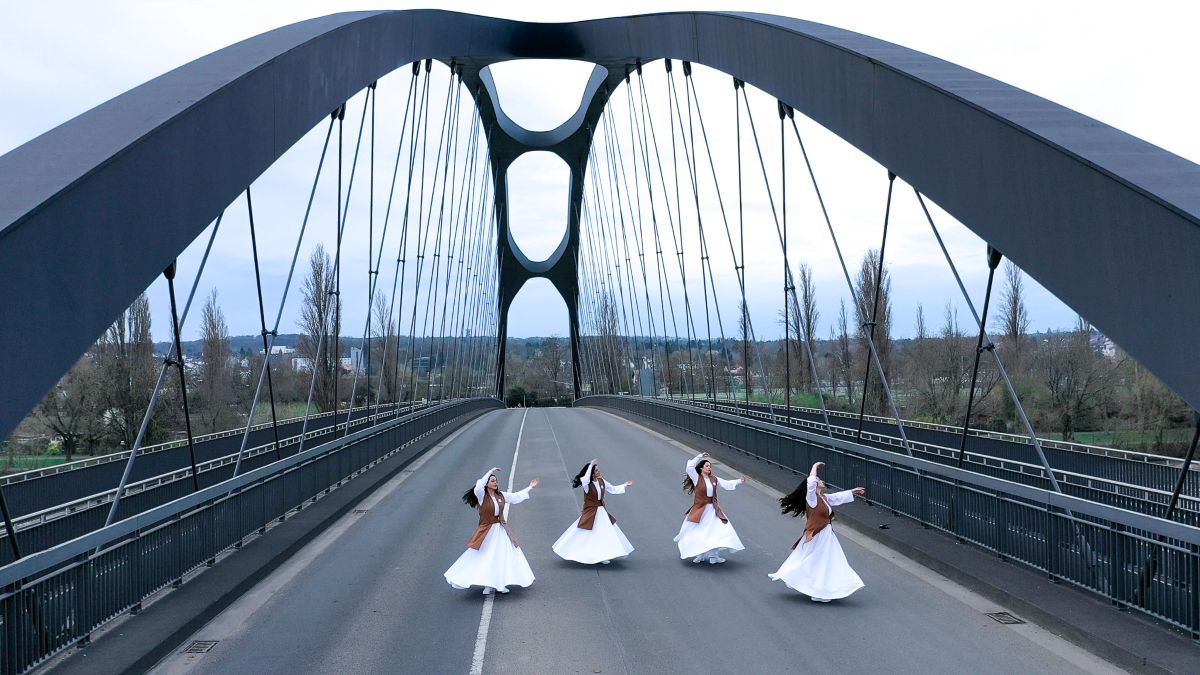
There is a striking photograph of samāʿ practitioners on a bridge in Frankfurt. To me, it conveys great openness and freedom. What is the story behind it?
The photograph is a still from a film made on Frankfurt's Osthafenbrücke, which is also shown in the exhibition. It shows members of the MTO Sufi ensemble Zendeh Delan in samāʿ, a practice of listening expressed here through movement. The bridge places a Sufi practice within a recognisable urban landscape. We wanted people to see that this practice can take place anywhere, in public or in private.
Do you practise Sufism yourself?
Yes, I do. So, I bring an insider's and an outsider's perspective. I practise within the MTO tradition, but I am not part of the day-to-day life of this particular local community. That gives me familiarity without making every experience familiar. Research requires me to ask questions rather than assume that I already understand. I move between participation and observation, and I want that position to be explicit.
You are not only an academic translating your research into a visual narrative; you also used to advise the US government. I imagine your interviews usually address very different questions, especially now, given that you are an Iranian-American foreign policy expert.
I worked in US foreign policy and national security, where knowledge matters a great deal, but so do obligation and trust. My doctoral research examines these concepts on a much more intimate scale: how people understand their obligations to one another and how that understanding shapes their everyday lives. This is also reflected in my photography.
I also serve on the board of the Musée d’Art et de Culture Soufis MTO (MACS MTO), in Chatou, near Paris, a museum dedicated to Sufism. There, we raise another set of questions about how the public understands Sufism and Sufi art and culture. What unites these different activities is my strong interest in peacebuilding and how people can live together in harmony.

Let's get back to our starting point, your exhibition in Frankfurt. If a politically engaged person like you presents an exhibition like this, there must surely be a political message in it?
For me, the political question is who gets to appear as an ordinary part of the city's life, rather than only as the subject of a debate.
When Muslim life is approached primarily through questions of integration, security or cultural difference, there is a risk that individuals disappear behind these categories. I wanted the exhibition to offer a different starting point without pretending that the wider political questions do not exist.
Presenting the work at the Römerhalle places that conversation in a civic space. Visitors do not need to share the practitioners' beliefs to engage with their lives. Nor should belonging depend on demonstrating that a community is especially harmonious, useful or reassuring. I would resist presenting Sufism as an "acceptable Islam" against which other Muslims are judged.
My policy background makes me cautious about claiming that an exhibition can resolve political divisions. Images cannot replace rights, institutions or material support. But they can make a simplified account harder to sustain and create an occasion for people to ask questions of one another.
That is the kind of bridge I hope for: not agreement imposed by an image, but the possibility of a more attentive encounter.
About the Exhibition: "Seen and Unseen" is presented by MTO Sufi Verband e.V., with support from the Hessian Ministry of Science and Research, Arts and Culture and Frankfurt’s Office for Multicultural Affairs. AIWG at Goethe University Frankfurt is the academic partner. It runs from 16 to 22 October in the Römerhalle in Frankfurt.
© Qantara.de