The critic of Sufism who became its archivist
Topics
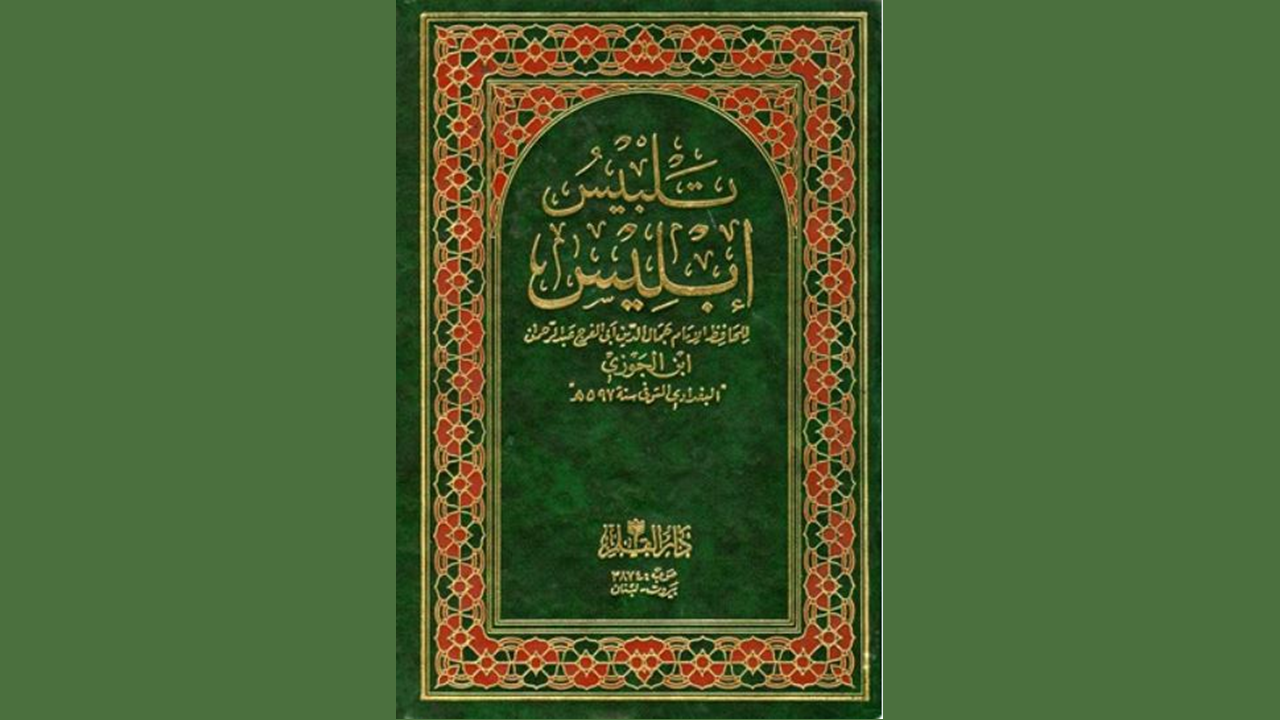
Imam Abu al-Faraj ibn al-Jawzi (d. 1197 AD) was a media superstar in Baghdad during the Abbasid Caliphate (750-1258 AD). A gifted orator who electrified the masses and a tireless defender of the Hanbali orthodoxy, his sharpest tool was his pen. Ibn al-Jawzi's most famous work, "Talbis Iblis" or "The Devil's Deception", was a pamphlet written to incite an intellectual purge.
His goal was to expose the "deviant paths" taken by Sufis, whom he branded victims of diabolical manipulation. His text is still widely available today in Arabic, English and several other languages. It is usually published conventionally, within a Salafist-informed context, to be read as Ibn al-Jawzi intended: as a cautionary text against mystical "deviations".
But there is a counter-trend too. Within academic Islamic studies and among those interested in intellectual history, Ibn al-Jawzi's book is increasingly being read as an unparalleled historical source providing invaluable insight into early Sufi practice, language and psychology. Seen from this perspective, "Talbis Iblis", with its polemical wealth of detail, is an indispensable archive of historic Islamic spiritualism.
An unwitting encyclopedia
Historical distance reveals a fascinating irony. Although intended as a deterrent, "Talbis Iblis" reads today more like a fervent homage to the world of mysticism. Ibn al-Jawzi's purpose was criticism, but his text functions as a kind of bridge, offering readers access to a deep, almost intimate, understanding of Sufism's human dimension.
In literary criticism, we often distinguish between an author's intention and the actual effect of a text. Ibn al-Jawzi wanted to expose Sufis as "heretics", but in his eagerness to document the mystics' every error, he adopted working practices to rival a modern journalist. He recorded their statements, described every ritual, and archived Sufi biographies down to the smallest detail.
The result? Rather than a straightforward indictment, Ibn al-Jawzi created a vivid panorama, unwittingly preserving the spiritual DNA of his opponents. The book has become one of the most important source texts for understanding Sufism not as an abstract dogma, but as lived experience. This is particularly evident in its portrayal of the early ascetics.
Ascetics with iron will
Even a keen critic such as Ibn al-Jawzi could not entirely ignore the sincerity of the early ascetics, the forerunners of Sufism. He describes figures who renounced the world with a radicalism that is still startling to readers today.
He tells of Abu Abd Allah al-Muqri, who inherited a fortune of 50,000 dinars and gave all of it to the poor, and of Abd Allah ibn Chafif, who rebuked his servant for bringing him 15 raisins instead of the 10 he had requested to break his fast.
Ibn al-Jawzi may dismiss this as "excessive piety", but for readers, the portrait he paints is of a group of people capable of huge inner strength and heroic self-control, a portrait more likely to provoke admiration than revulsion.
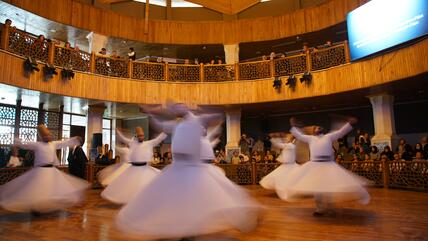
Understanding the Sufis
To understand Islamic mysticism, we must first clear up a number of misconceptions, as Marian Brehmer writes in his essay – part 1 of a new series on Sufism
The core of Sufism is the jihad al-nafs—the struggle against one's own ego. Ibn al-Jawzi may have presented stories of this inner conflict as evidence of Sufism's confused thinking, but they read like gripping psychological case studies.
Take the story of Abu Hamza al-Sufi, who drove himself to near madness in his efforts to suppress his forbidden affection for a young man, or the ascetic who burst into tears at the sight of human beauty, searching within it for a trace of the Creator. Ibn al-Jawzi's intent may have been to denounce their "aberrations" as misguided, but what persists is a moving testimony of radical self-awareness and dramatic human struggle.
The power of quotation
Perhaps the greatest risk for any critic is to quote their opponent verbatim. Ibn al-Jawzi did precisely that. He considered the "ecstatic utterances" (shathiyat) of figures such as Bayazid Bastami or Al-Hallaj blasphemous and printed them to condemn them.
Yet words such as Bistami's "Praise be to me, how great is my glory!" possess a poetic power that transcends legal judgment.
These quotes convey the feeling of fana, the complete annihilation of the self, in which the individual merges with the divine. For the contemporary reader, Ibn al-Jawzi becomes the unwitting curator of a spiritual avant-garde. The literary power of Sufi poetry proves stronger than the dogmatic critique framing it
Ibn al-Jawzi presented himself as a relentless prosecutor of the faith, but the evidence he gathered against Sufism is now its most valuable exhibit. "Talbis Iblis" has become, not a wrecking ball, but rather a monument. Details once intended to put people off are now a source of fascination. Stories meant to warn against deception instead awaken a longing for this intense spiritual experience. Ibn al-Jawzi wanted to bury Sufism. Instead, he built it an enduring museum.
This is an edited translation of the German original. Translated from German by Louise East.
© Qantara.de