Who are the Imazighen?
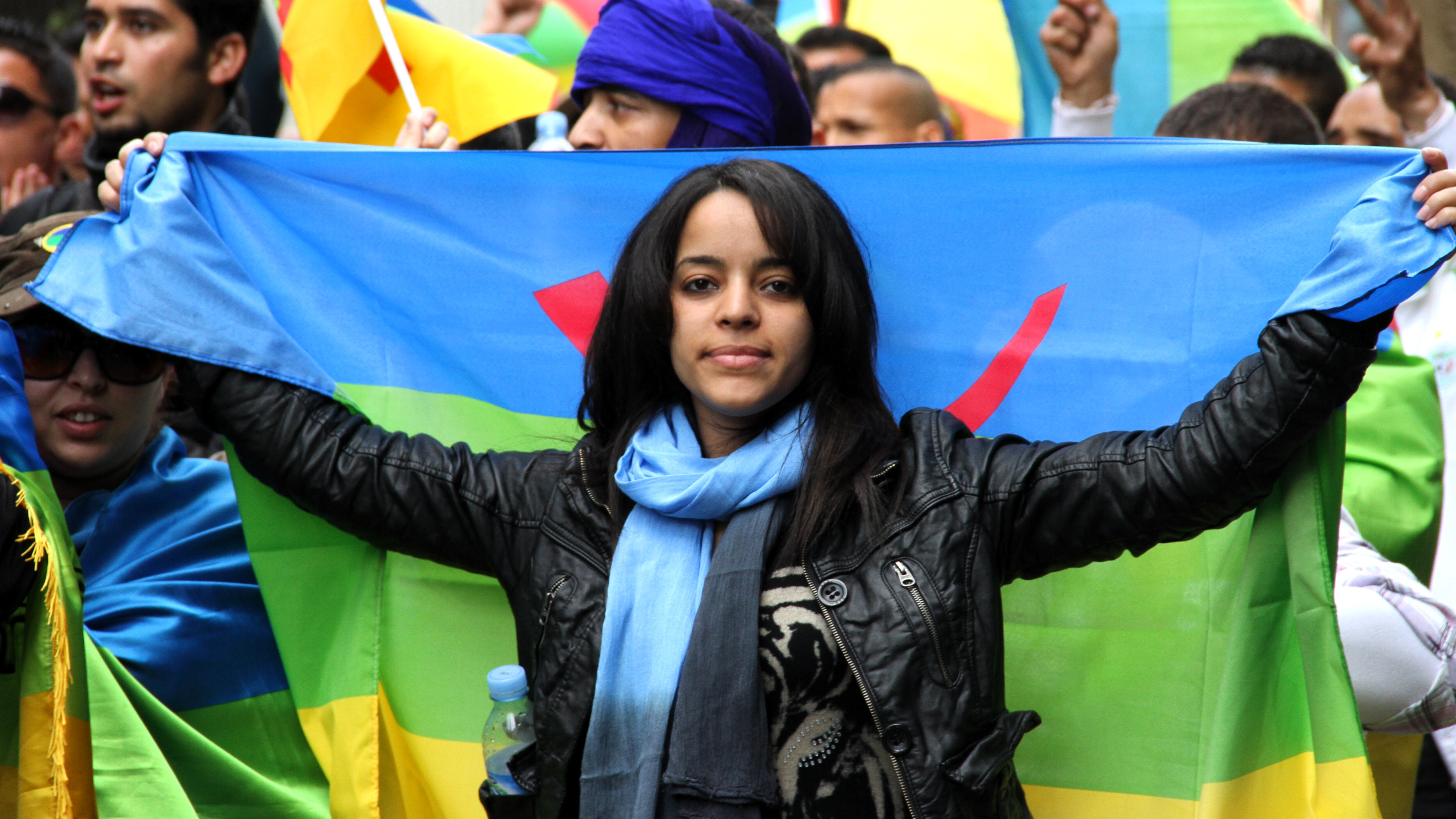
Imazighen (sing. Amazigh) are the Indigenous people of Tamazgha, the reindigenised name for their homeland. It covers a vast area stretching from the Canary Islands to west Egypt and from the Mediterranean to the Sahel.
The region was historically known in Arabic as bilad al-barbar—literally "land of the Berbers"—one of several outsider-imposed names that the name Tamazgha seeks to supersede.
Totalling 35 to 40 million people globally, most Imazighen live in Morocco and Algeria with large populations in Libya, Mali and Niger. Small groups also reside in Egypt, Tunisia and Mauritania.
Tamazgha’s geographic diversity is represented by the three-striped Amazigh flag which was designed in the 1970s. Adorned by the Amazigh letter ⵣ (Z), it is blue, green and yellow, symbolising the sea, the mountains and the Sahara.
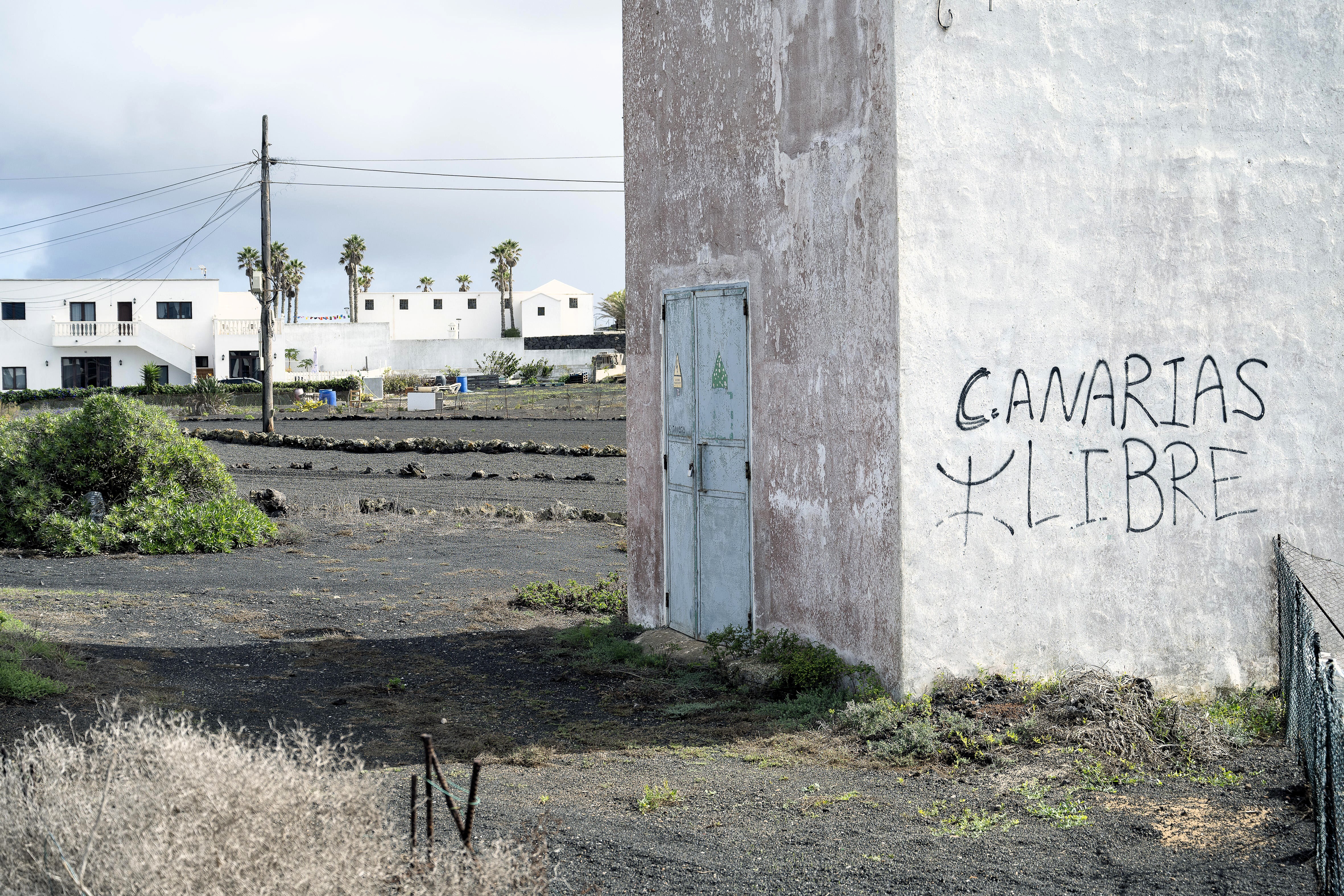
The majority of Imazighen today are Muslim. However, they also practised animism with Christianity and Judaism in the past. The noun Amazigh denotes a linguistic and cultural identity rather than a religious one, defining the people through their language.
Why is the term "Berber" increasingly rejected?
Amazigh activists prefer the term Imazighen to the widely-used term "Berber" as part of their endeavour to rethink and indigenise terminology.
Medieval historian Ibn Khaldun popularised "al-barbar, " but the term has negative connotations. "Barbarus", its Latin original which was borrowed from Greek, suggested foreignness and strangeness as well as barbarity and brutality.
The Romans used the name as a designation for anyone they considered different, but this word has come to define Imazighen. Ramzi Rouighi, the author of the book "Inventing the Berbers", wrote that "barbar" may have also described a category of slaves.
Opponents of the revival of Amazigh culture defend using Berber. They say the terms Amazigh and Tamazight are a French invention, claims that are challenged by historical sources.
What language(s) do Imazighen speak?
Imazighen speak varieties of Tamazight, including Tashelhit (Tashlhiyt) in Morocco, Kabyle (Taqbaylit) in Algeria, and Tamasheq (Tuareg) in Libya, Niger, and Mali.
Both colonisation and post-independence nationalism, which formalised geographical distance into national borders, have led to the development of different sub-languages that are not entirely mutually intelligible.
Today, Tamazight is taught in schools and is used by media outlets. Morocco recognised it as an official language in 2011, followed by Algeria in 2016. Since the demise of Qaddafi’s regime in 2011, Libyan Imazighen have been able to make decisions about their language and culture.
What was the Arabisation of the Imazighen?
Arabisation in the post-independence period undermined the long-touted national cohesion of the northern part of Tamazgha. Deadlocked in their struggle against colonialism in the 1930s, nationalists adopted Arabic and Islam as the main references for their societies’ identities.
Abdelhamid Ibn Badis, one of the founders of Algerian nationalism, said that "Islam is our religion, Arabic is our language, and Algeria is homeland." After independence these anti-colonial slogans became policy. A "good" Amazigh was one who assimilated into Arab-Islamic society.
Under the pretext of fighting the French language, nationalist parties promoted Arabisation policies in education and culture even as their leaders sent their children to French schools. The discursive defence of Arabisation served to camouflage the reign of Arabic and French over the lives of Imazighen.
Moroccan nationalists even accused France in the 1930s of attempting to evangelise Imazighen and separate them from Arabic and Islam. This legacy still haunts Imazighen to this day. They continue to be accused of being pro-France, or oftentimes pro-Israel, when they demand their rights.
Decades of systematic de-Amazighisation left many Imazighen no choice but to fully embrace the hegemonic identity. Arabic is still regarded as sacrosanct by many political parties and members of the religious establishment across Tamazgha. Even if it is no longer debated in the same way as before, the legacy of Arabisation is ongoing.
Are Imazighen discriminated against?
Imazighen’s situation has improved compared to the second half of the 20th century. Today, Tamazight is constitutional in Algeria and Morocco, and markers of Amazigh identity—from the Tifinagh alphabet to the Amazigh flag—are displayed on official buildings and documents. Amazigh names are no longer illegal, and there is widespread awareness about Amazigh issues.
Nevertheless, in the Arab nationalist core of the northern Tamazghan states, Arabic continues to be an almost sacred language. As a result, Imazighen’s status as second-class citizens in their homeland often remains.
Imazighen’s healthcare has been impacted by doctors’ and nurses’ inability to communicate with them. When a devastating earthquake hit the predominantly Amazigh region of the High Atlas in Morocco in 2023, first responders could not communicate with the Amazigh victims of this disaster.
Even teachers assigned to teach in predominantly Amazigh areas have no knowledge of their students’ language. In Morocco, thousands of children leave primary school every year, many of them because they are forced to learn a "foreign" language for their instruction.
What is the Amazigh Cultural Movement (ACM)?
The ACM, which is now a collective of hundreds of loosely coordinated civil society organisations, was first spearheaded by Académie berbère, which a handful of Algerian expatriates in France put in place in 1966 under the leadership of Mohand Aarav Bessaoud.
The Académie’s revivalist activism targeted immigrants and students in Europe but its message reached Algerian and Moroccan youth. In Morocco, its influence was visible in the establishment of the Moroccan Association for Research and Cultural Exchange (AMREC) in 1967.
Led by educated Imazighen, the ACM grew and multiplied to include hundreds of associations by the end of the 1990s. The ACM disseminated a new Amazigh consciousness in which Imazighen’s rights to their identity could not be separated from the demands of equality, democratisation, and social justice.
Following the 1993 World Conference on Human Rights in Vienna, the adoption of indigeneity would broaden the scope of Amazigh advocacy. In dialogue with the global Indigenous movement, demands extended beyond linguistic and cultural recognition to include rights to land and natural resources.
Tamaynut, an organisation with branches across Morocco and the diaspora, has been the main hub for the propagation of indigeneity as a framework for Amazigh struggle.
Do the Imazighen play a political role today?
Amazigh activism has always functioned in the context of civil society. As well as being Amazigh, ACM activists are full citizens who participate in political parties, trade unions, as well as human rights and cultural associations.
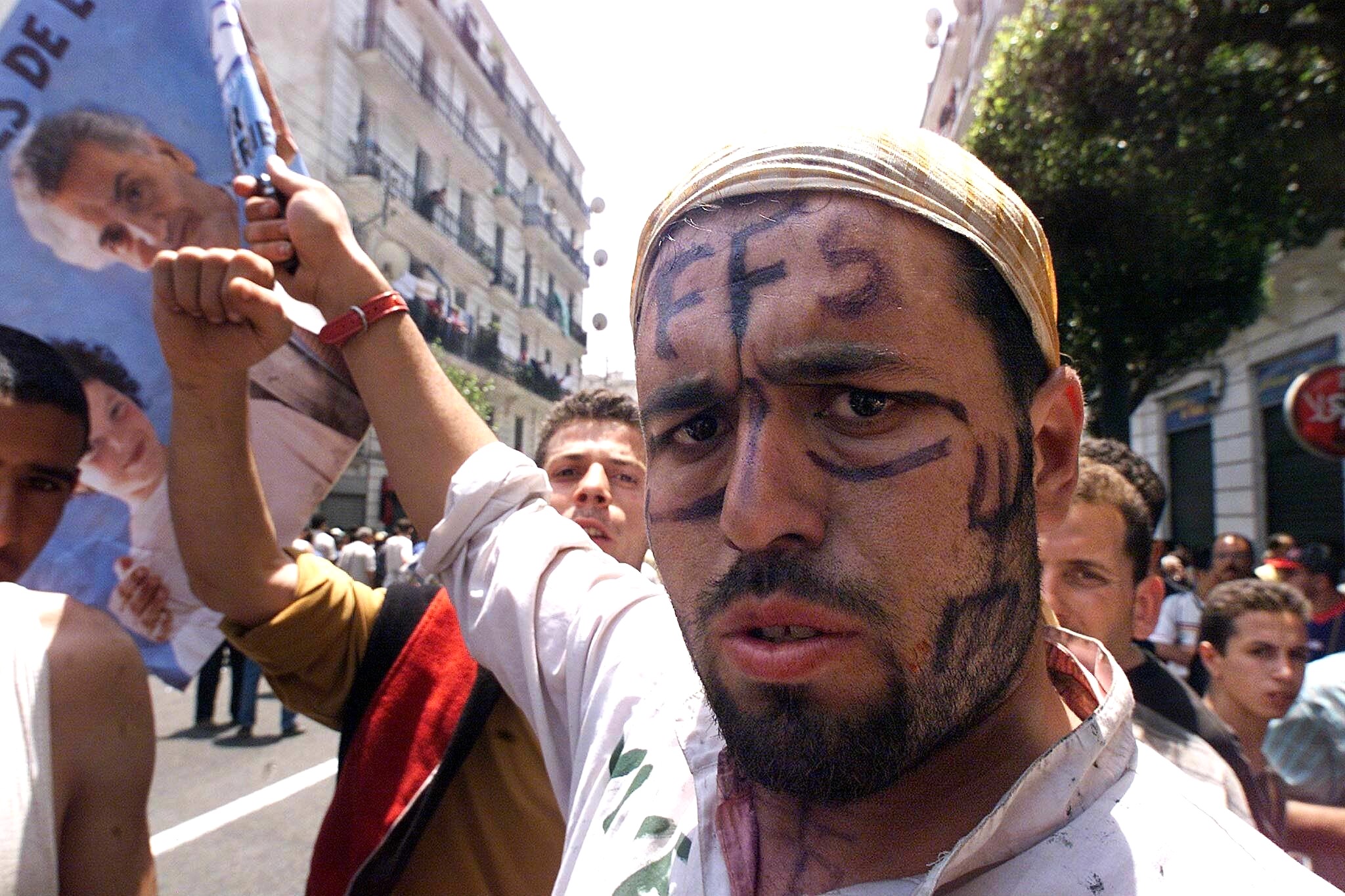
In Algeria, the "Rally for Culture and Democracy" (RCD) and "Socialist Forces Front" (SFF) are the two parties that are known as being rooted in Amazighity. Both have played an important role in representing Amazigh demands to authorities. Their leaders were pragmatic and worked to negotiate their co-existence with the military-dominated regime.
However, the inability of these parties to bring about change led to the emergence of a separatist movement led by Ferhat Mhenni. Mhenni is the president of the Movement for the Self-Determination of Kabylia who in 2025, declared the Federal Republic of Kabylia, offering the state an opportunity to continue its demonisation of the Amazigh movement.
Between 2005 and 2008, Morocco authorised the Amazigh Democratic Party. Although it was short-lived, it marked the first time a Moroccan party had Amazigh in its name. Amazigh issues were for the most part taken up by Mahjoubi Aherdan, the founder of the political party "National Popular Movement", whose modus vivendi with the state elicited the criticism of Amazigh elites.
Amazigh indigeneity and human rights efforts can be clearly seen in the 2016–17 Hirak al-Rif protest movement in Morocco. This grassroots mobilization made socio-economic demands for the Amazigh region. Similarly, the Amussu xf Ubrid n '96 (Movement of Road 96) is an Amazigh-informed encampment which ran between 2011–2019 to protest the depletion of water resources by silver mines in southeast Morocco.
© Qantara.de