"War is not an adventure playground"
Topics
Qantara: Ms Foerch-Saab, through your NGO Fighters for Peace, you are campaigning for peace. What does peace mean in a country like Lebanon?
Christina Foerch-Saab: For us, it is primarily about internal peace and social cohesion. Our eyewitnesses all fought in the civil war, but come from different social backgrounds and from all corners of the country. Some are Sunni, others Shia, Druze or atheist. Our former fighters say: "We tried using violence and failed. To bring about change, non-violent means are needed."
The Lebanese civil war has been over since 1990. The fighters from back then are now in their sixties and seventies. Do young people still listen to them?
Fortunately, yes! Many don't know much about the civil war. And when they do hear something about it, it’s usually from their immediate family circle, where they often receive a pre-determined narrative and are not exposed to different perspectives on the country's violent history.
Is it different with Fighters for Peace?
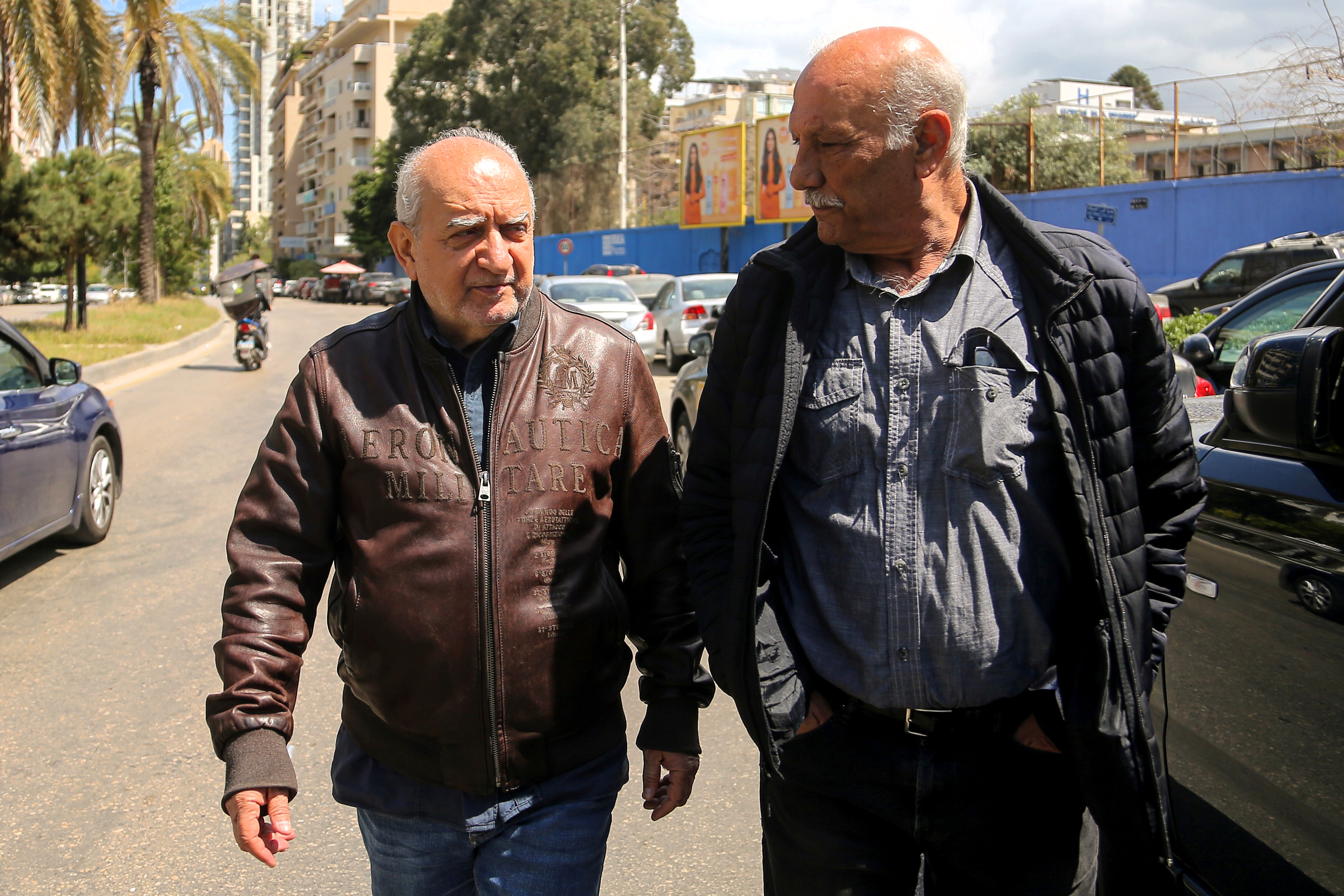
When we visit schools, youth clubs or universities, we always appear in pairs: two former enemies from different armed groups, often a man and a woman. Young people find this interesting because it's authentic.
What do young Lebanese people take away from these encounters?
We want to encourage critical thinking and prevent extremism. In technical terms, this is known as primary prevention. Our main message is this: when you start a war, you open a Pandora's box. You don't know how long it will last or how heavy the losses will be. War is not an adventure playground.
Our veterans always say they wish someone had warned them at the start of the civil war. In the 1970s, political violence was glorified across a broad spectrum of Lebanese society. Those who did not go to war themselves often at least cheered it on.
Is it different today?
Unfortunately, this is still the case among sections of the Shia population and in circles close to Hezbollah. But in wider society, the glorification of war has declined significantly. Admittedly, I do see a danger that young people know very little about the civil war. At the same time, however, they are now experiencing war first-hand again and have new points of reference. They now also know what war feels like.
Is the current escalation between Israel and Hezbollah is making people more willing to listen?
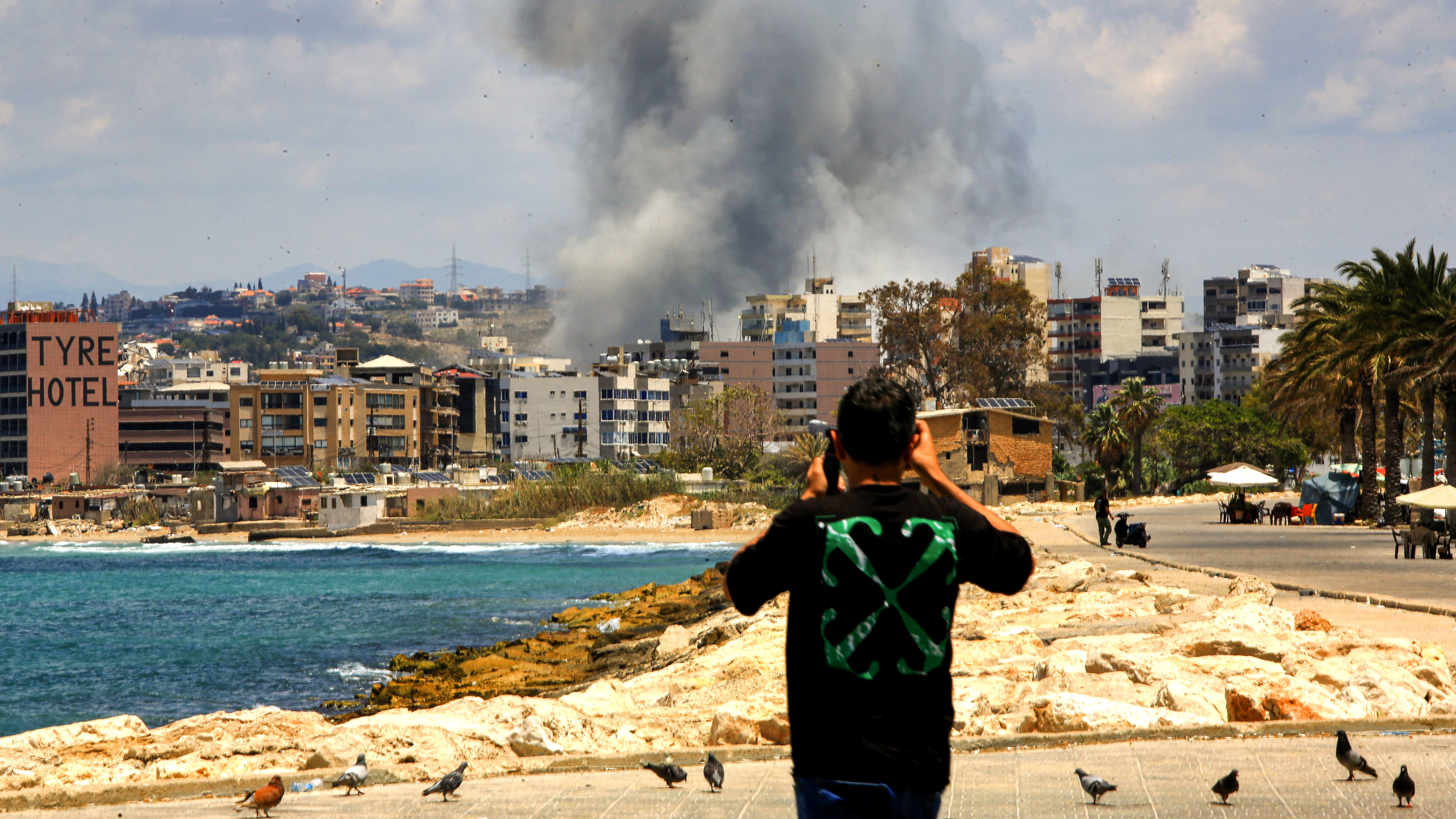
For some, yes. But others are also asking why we want to talk about the civil war after everything that has happened: the coronavirus pandemic, the port explosion in 2020, the economic crisis and now the periods of war in 2024 and 2026.
What is your response?
We are trying to highlight the connections. Why are we at war today? Because we have an armed group in the country—Hezbollah—which originated during the civil war and was excluded from the peace treaty on the grounds that it had to fight against Israel in southern Lebanon. Hezbollah remains active to this day because the war has not been properly addressed. There was no accountability; instead, an amnesty law was passed. This was terrible for the victims. It was a mistake made during the process of ending the war.
Since Hezbollah's military strength has been weakened, there has been renewed discussion of the long-standing aim of disarming the militia. This was also explicitly set out in the framework agreement between the US and Israel signed in June. Do you consider disarmament to be a realistic prospect?
It is now being openly discussed that weapons should be under state control. In the past, this was a political and social taboo. While there were always courageous voices from civil society, most people were afraid.
How do you identify this shift in the discourse?
Calls for disarmament are growing louder and are now coming even from within the Shia community. Recently, for example, a Shia podcaster caused quite a stir.
Why is the discourse changing?
Apart from the weakening of Hezbollah, it's also because people have had enough. They can see that Lebanon has once again been dragged into an adventure that helps neither the people in Gaza nor those in southern Lebanon. Southern Lebanon had been liberated since Israel's withdrawal in 2000—so why did this have to happen? For large sections of the population, this is utter madness.
On the other hand, the Israeli bombings and the invasion by ground troops are causing public sentiment to swing back in the opposite direction. This creates a false impression. This is exactly what Hezbollah needs to position itself as the only organisation standing up to Israel.
If Hezbollah were actually to be disarmed, what would that mean for the Fighters for Peace?
We are giving a great deal of thought to how we could support and reintegrate former Hezbollah fighters in such a scenario. We are therefore stepping up our presence in Shia communities. We are trying to organise dialogue at community level in southern Lebanon. Initially, we are simply there, listening and seeking to understand what people's visions for Lebanon actually are.
Do you already have any former Hezbollah fighters in your group?
We have contacts. While the war in Syria was still ongoing and Hezbollah was supporting the Assad regime, some fighters approached us of their own accord because they were disillusioned.
Why?
At the time, they asked themselves: "What are we doing in Syria? We're supposed to be a resistance organisation against Israel." They wanted support to bring about change within Hezbollah, which of course we were unable to provide. But we were able to help them come to terms with what they'd been through. Ultimately, we encouraged them to leave the organisation by urging them to seek study grants abroad and to leave the country as quickly as possible.
What does a typical exit from an organisation such as Hezbollah look like?
Generally speaking, this is how extremism works: young people are drawn into a militia or extremist group with great enthusiasm. They are integrated into the organisation's structures, receive recognition and are offered opportunities for advancement. For them to leave, something has to happen. Often this comesin the form of disappointment, for example, the realisation that theory and practice do not match up, as in the case of Hezbollah's support for the Assad regime. Key factors also include life transitions. One's perspective changes when, for example, someone becomes a father.
Don't experts say that the process of deradicalisation takes years?
Research suggests it takes around ten years. After the triggering event, you still have to leave the extremist group. Those who leave lose their contacts and are treated with hostility as traitors. They lose status, purpose, prospects in life and power. All of this has to be gradually replaced.
Does Fighters for Peace help with this as well?
I, for example, carry out biographical work with people who have been involved in extremist groups. Together, we reflect on the ideals they were originally committed to. If an ideal such as "justice" is mentioned, we consider how one can still champion justice now that violence has failed. In this way, those affected can find a new, meaningful role.
You have also brought former Lebanese fighters to Germany for Fighters for Peace events. Why?
It all began with the 2015 refugee crisis. In a suburb of Stuttgart, 750 Syrian refugees suddenly arrived. Many of them had lost everything, and in some cases they were at odds with one another: supporters and opponents of the regime, people who had fled from IS or from the Assad regime. Suddenly, they were all living together in an asylum centre. Our former fighters shared their experiences. For the refugees, it was like a dam bursting; they simply couldn't stop talking.
Do you also visit schools in Germany, as you do in Lebanon?
We go to vocational colleges. We once visited a class in the heart of Bavaria where, out of 25 pupils, 20 were from Syria or Iraq. It was important for the young people to hear from former fighters about where violence leads and that it is possible to break free from it.
What motivates your former fighters to work in Germany, when there is plenty to do in Lebanon?
The world has become a smaller place. Groups such as Hezbollah or IS have networks abroad, including in Germany. Added to this are displacement and migration. In Germany, there is often little space to address traumatic experiences. Teachers, lecturers, school psychologists and social workers often fail to address such issues, even when conflicts, such as the current one between Israel and Lebanon, flare up again. People don't dare to talk about it.
Note: The organisation Fighters for Peace has previously received funding from the zivik programme run by the Institute for Foreign Cultural Relations (ifa). Qantara is also based at the ifa.
This an edited translation of the German original. Translated by Max Graef Lakin with the support of AI-assisted translation tools.
© Qantara.de