A solution to Lebanon's prison crisis?
Built in 1963, Roumieh prison is a worn-out correctional facility located northeast of Beirut. Today, the structure embodies not only a bygone era, but also a Lebanese political and judicial system that has since deteriorated. As the country's largest prison, Roumieh hosts 4000 detainees, far exceeding its intended capacity of 1300.
Abu Yousef* is an inmate of Roumieh's notorious Block B. He described a harrowing reality. "Drug use and sexual assault became so normalised that they are now part of our daily life," he wrote. He added that needles are often shared between inmates, leading to the development of abscesses in the body parts of drug users.
Abu Yousef, who declined to disclose the reasons for his incarceration, spoke to Qantara via WhatsApp on condition of anonymity. Generally, cellphones are banned in Lebanese prisons. However, they have historically been smuggled in as a form of "prison resistance".
"We want people to know what is going on inside. But despite the horrific reality we are facing, nobody seems to care." When asked if incarceration in Roumieh had led him to reevaluate his life, Abu Yousef vehemently disagreed. "No one repents here. We only grow more resentful."
To address the apalling conditions of its prisons, and first and foremost the overcrowding, Lebanon is attempting to pass a General Amnesty Law (GAL). If passed, GAL could reduce many sentences by up to one third. It could transform the sentence for death penalty crimes to 28 years in prison. Those convicted of life imprisonment could have their sentence reduced to 17 years.
In its current form, GAL also requires the release of people who have spent at least 14 years in prison without a judgement, in an attempt to address the staggeringly high number of inmates detained in long-term pre-trial detention. According to Ramzi Kaiss, a researcher with Human Rights Watch, four out of five prisoners in Lebanon are still waiting for a judge to rule on their cases.
Political deadlock
GAL has been the subject of fierce political and sectarian debate. A major point of contention has been the fate of Lebanon's Islamist detainees under the law. In GAL’s current circulating version, those charged with “terrorism acts against civilian, military, or security personnel” are excluded from the amnesty. Sunni lawmakers and families of the detainees say that this clause deliberately excludes Islamist prisoners.
In mid-July, GAL was due to be debated and voted on in Lebanon's parliament. The discussion, however, was postponed, because not enough members were present. This marked the second postponement, following last May's.
Representatives of the Sunni-dominated National Moderation bloc and the National Accord bloc had boycotted the session, declaring in a joint statement their "political and moral responsibility toward our people in Lebanon and the families of the detained Islamists", and their refusal to "accept the renewed victimisation of the Sunni community." Representatives of other factions also walked out.
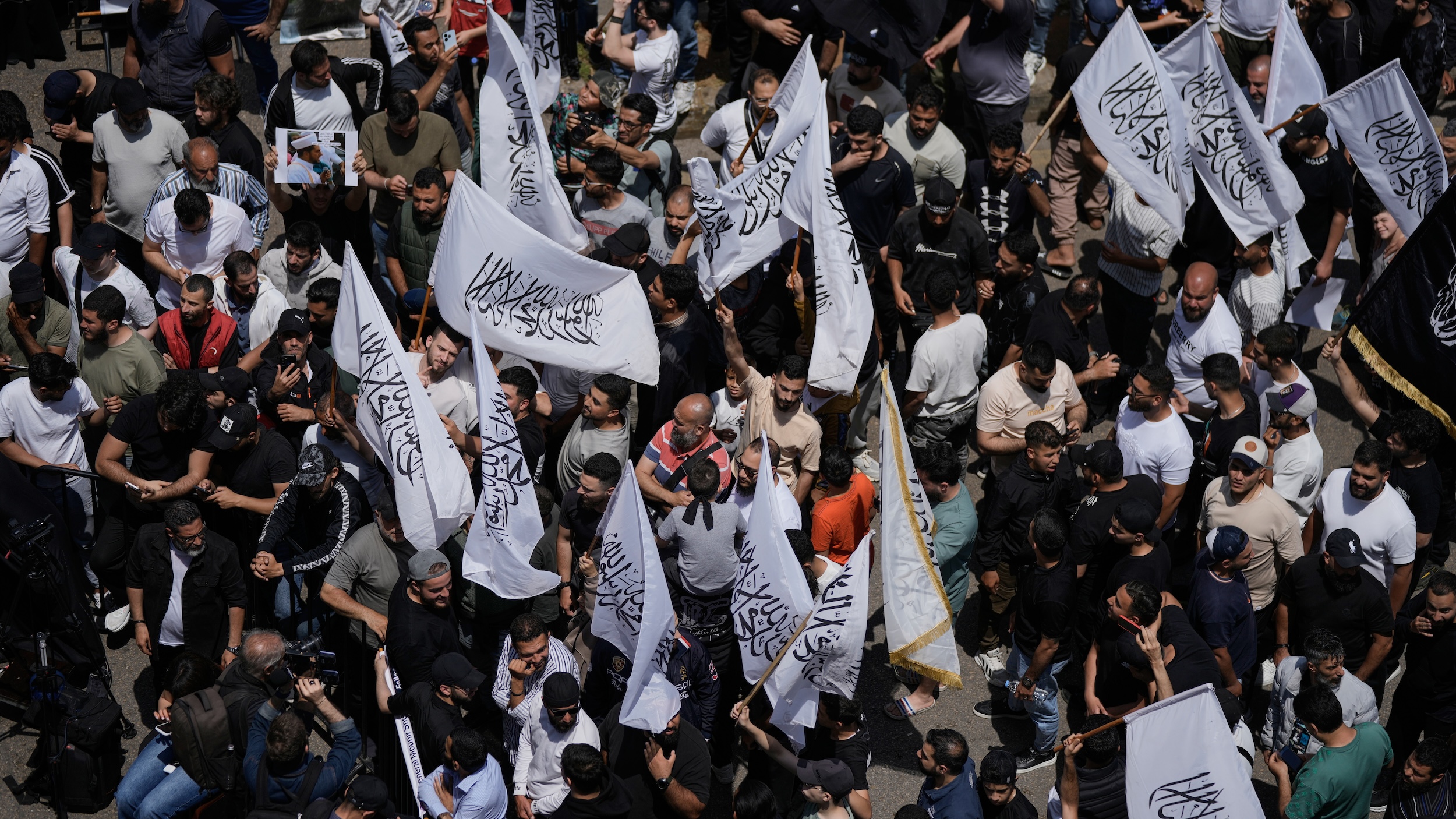
Inside Roumieh itself, the debate around the draft has led to outbreaks of violence. In May, videos circulated online of riots in Block B, which has been described as having the "largest concentration of Jihadis per square meter in the world". These riots were accompanied by protests in Beirut, Sidon and the Beqaa valley, where family members of the incarcerated voiced their opposition to the "biased" nature of the law.
Featured often in the media and even Islamic State (IS) propaganda, Block B is one of five blocks of Roumieh prison. It houses members of Sunni extremist groups, including Fatah al-Islam, the Al-Nusra Front and IS. Inmates have reported that prisoners are subjected to torture and sexual assault to extract information.
Will GAL be implemented?
"You are trained to become immune to the emotional toll that [the inmates] stories carry," says Sarah*, an employee at Roumieh, who regularly engages with inmates, including those in Block B. "But, when I listen to some of [the inmates'] stories of [sexual] torture, whether it was during interrogation or otherwise, I feel like it drains me."
Sarah was recruited at a young age, just days after graduating from college. She was aware of Roumieh's reputation but did not expect her application to be accepted. "No matter what the crime is, however, I try to find one redeeming quality in the person. I try to empathise with them because of their traumatic past and difficult upbringing, and I realised that 'human connection' does wonders".
Following July's cancelled debate, Elyas Abu Saab, deputy speaker of Lebanon's parliament, insisted that "GAL will still be revisited. Hopefully, there will be another session, devoid of any boycotting, to address it and other laws."
It is unclear when the law will next be debated and if a consensus could be reached. Given Lebanon's long history of political deadlock, agreement from all sides is often difficult to achieve. Meanwhile, with the attention of the media diverted in recent months to the hostilities between Hezbollah and Israel, the judicial debate over GAL and conditions at Roumieh has become less prominent.
"The judicial system in Lebanon is very unfair," says Sarah. "There are people (in Roumieh) who have spent 5 or 6 years in prison without a trial; there are people who haven’t gone through due process. We think that such injustice doesn’t exist, but the fact is that it does. These inmates do not feel like they are listened to or heard."
*Names changed to protect privacy.
© Qantara.de