Qantara Startseite Englisch
-
 "Postmuslim" by Youssef Rakha
One author, multiple selves
"Postmuslim" is an intimate new collection of essays in English by Youssef Rakha. The Egyptian author explores his complex relationship with the West while tracing his intellectual evolution over several decades.
-
 Education and climate in Yemen
Too hot for class
In Houthi-controlled Yemen, the decision to schedule the school year by the Hijri calendar has pushed classes earlier into the harshest heat of summer. For students this has compounded the impact of climate change, posing health risks and driving up dropout rates.
-
 Turkish women's association Havle
"White secular women do not have a monopoly on feminism"
The Muslim queer-feminist group Havle uses religious arguments to challenge discrimination. Facing growing hostility and, most recently, arrests, two members speak about the struggle for LGBTQ rights in the country.
-
 Detainees in northeast Syria
What will happen to the women and children of al-Roj camp?
Deteriorating conditions are fuelling tensions at al-Roj camp, where people with alleged links to IS have spent years in detention. As control of the camp shifts to the Syrian central government, uncertainty grows over their future and prospects of returning home.
Politics
More about Politics-
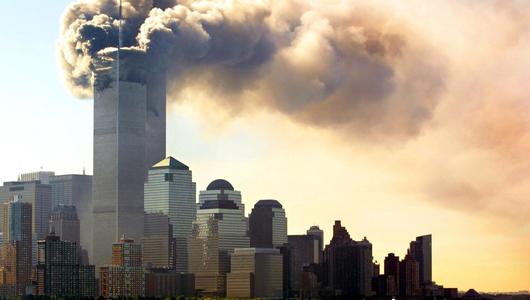 Gilbert Achcar on the impact of 9/11
"The Iraq War shattered the promise of a new world order"
The attacks of 11 September 2001 fundamentally altered US foreign policy and triggered a series of wars that have reshaped the Middle East. 25 years on, Gilbert Achcar reflects on the US response to 9/11 and its enduring impact on the region.
-
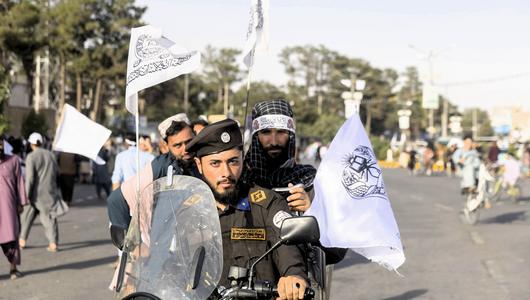 Taliban in Afghanistan
Power consolidated, society reshaped
In the five years since regaining power, the Taliban have cemented their rule in Afghanistan, bringing armed conflict in the country to a relative lull. Their ambitions go beyond maintaining control: they are seeking to transform the country from the bottom up.
-
 Recep Tayyip Erdogan
Securitising Turkish foreign policy: Turning back the clock
Turkey′s armed forces chief is due to visit Tehran this week, the trip is the latest by the region′s top generals in and out of Ankara. This military traffic is being seen as evidence of a foreign policy increasingly dictated by security concerns, last seen in the 1990′s. Dorian Jones reports from Istanbul
-
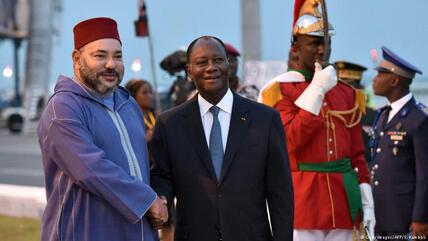 Economic Community of West African States
Morocco's grand plan: In pursuit of economic union
Morocco is launching a charm offensive as the kingdom seeks to expand its influence in West Africa. Membership of the economic union ECOWAS is also on the agenda. Yet not everyone welcomes the idea. By Gwendolin Hilse
-
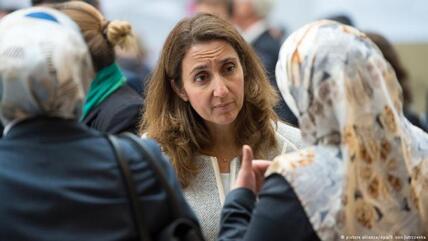 Immigrants in Germany
Electioneering in the Federal Republic: Courting the immigrant vote
"What′s the Turk doing up there?" a caller to the Green party complained when he saw Cem Ozdemir in the Bundestag in 1994. Today 37 MPs and one in ten voters have a migrant background. Could they swing the election? By Andrea Grunau
-
 Interview with Phil Robertson of Human Rights Watch
Myanmar's denier-in-chief: ″An utter failure of moral leadership″
An estimated number of 270,000 Rohingya Muslims have fled ethnic cleansing in Myanmar and have crossed over to Bangladesh. Aid agencies are struggling to cope with the influx and are reporting an acute shortage of provisions. Roma Rajpal Weiss spoke to Phil Robertson, deputy director of Human Rights Watch in Asia
-
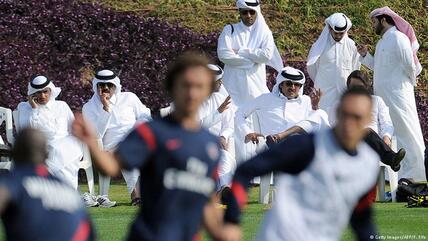 Soft power and football
Qatar vs. UAE: The not-so-beautiful game
In the race to buy influence, garner soft power and win over hearts and minds, those involved in the three-month old Gulf crisis are hell-bent on raising the stakes. Commentary by James M. Dorsey
-
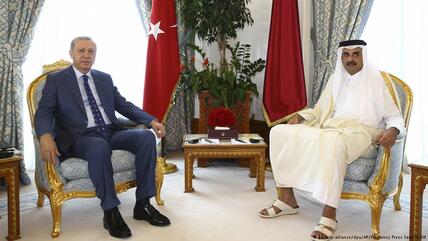 Turkey and the Gulf states
Recep Tayyip Erdogan: Sticking his neck out for Qatar
Ankara′s unilateral siding with the Emirate of Qatar in the Gulf crisis is giving rise to fears that the Turkish President is gambling away his role as a credible mediator in this key region, writes Aziz Bouabe
Society
More about Society-
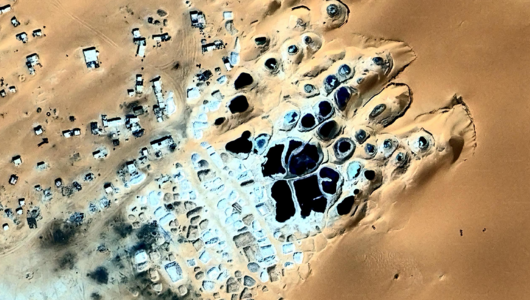 Ahmed Isamaldin
"Gold is directly connected to the violence in Sudan"
Artist and researcher Ahmed Isamaldin uses satellite imagery to trace how Sudan's gold industry has expanded during the war. His research reveals how the conflict is linked to global supply chains and the commodities we consume.
-
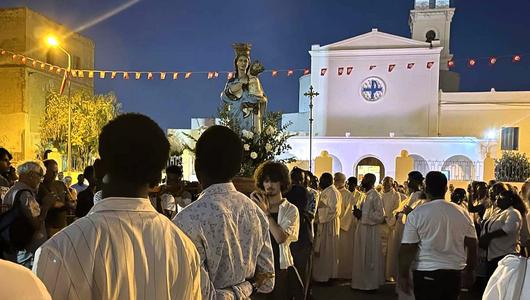 Religious diversity in Tunisia
The Virgin Mary on the streets of Tunis
In Tunisia, a tradition is being revived: the Marian procession in La Goulette. Christians, Jews and Muslims from around the world are coming together to make a statement in favour of peaceful coexistence, in a country where the authorities are cracking down on migrants.
-
 Muslim talaq law in India
Divorce by email
India's Supreme Court is currently considering the Muslim practice of instant divorce. The family law allows Muslim men to end their marriages by simply repeating the word "talaq" (Arabic for divorce) three times. But there is growing opposition to the practice. Ronald Meinardus reports from New Delhi
-
 Combatting Salafist radicalisation in Germany
Under scrutiny
Media representatives and academics would do well not to pre-judge the German security services′ Salafism prevention initiatives. Hazim Fouad, Islamic studies expert for the Senator for Home Affairs in Bremen, submits his response to the arguments proposed by Salafism researcher Nina Kasehage
-
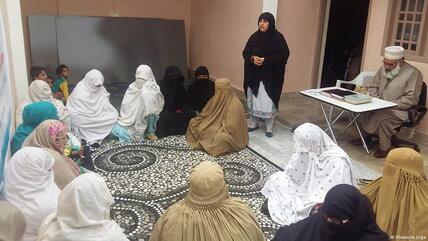 Women in Pakistan
Challenging the patriarchy
In rural Pakistan justice is administered on an ad-hoc basis. Men make the decisions and women can sometimes face brutal treatment. Now a group of them are fighting back. Report from the Swat Valley by Naila Inayat and Jennifer Collins
-
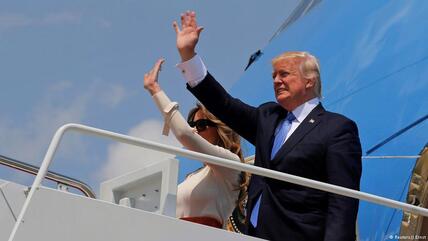 Islam, Judaism, Christianity and Donald Trump
So much cotton candy
This week U.S. President Donald Trump conducted a whistle-stop tour of three world religions, visiting Saudi Arabia, Israel and the Vatican within six days. Despite being spared any major diplomatic gaffs, the rest of the world has little reason to rejoice. Commentary by Alexander Görlach
-
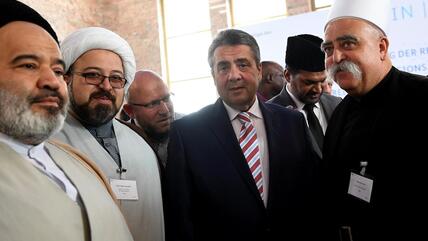 ″Peace responsibility of religions″ conference
Religion′s potential for peace
German Foreign Minister Sigmar Gabriel recently invited around a hundred representatives of religious communities in North and West Africa, the Middle East and Europe to attend a confrence in Berlin. In future the Foreign Office is aiming to co-operate more closely with religious communities. By Christoph Strack
-
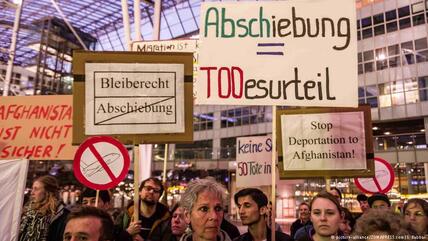 Afghan asylum seekers in Germany
Facing the cold shoulder
For dozens of Afghan asylum seekers in Germany, an interview with German officials is a decisive moment that shapes their future. Despite serious security concerns, many asylum applications by Afghans are rejected. By Zivile Raskauskaite
Culture
More about Culture-
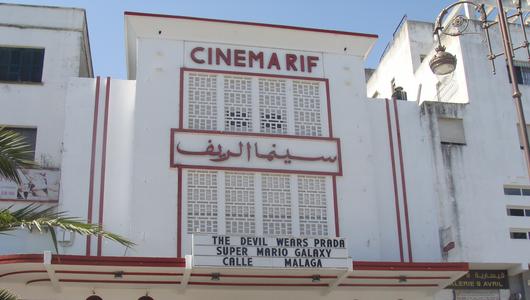 Arthouse film in Morocco
Keeping Tangier's cinematic history alive
20 years ago, the historic Cinema Rif in Tangier was renovated and reopened as the Cinémathèque de Tanger, one of the few arthouse cinemas in North Africa today. Elisa Pierandrei traces its history and place in Morocco's vibrant film culture.
-
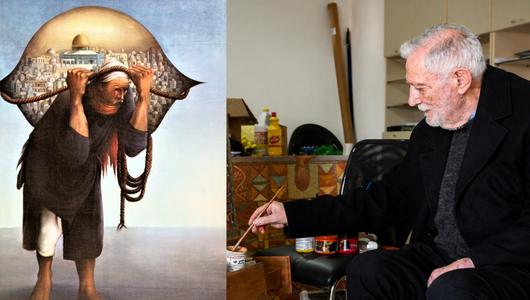 Remembering Sliman Mansour
The artist behind a Palestinian icon
"Camel of Hardship" by Sliman Mansour, who died on 24 August, is one of the most recognisable images in Palestinian art. Asmaa al-Ghoul tells how it came to appear on walls across the country and why it remains deeply embedded in collective memory.
-
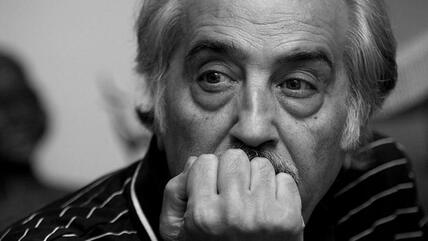 Obituary: Mohammad-Ali Sepanlou
A master of contemporary Iranian letters
Mohammad-Ali Sepanlou was known in his homeland as a critical thinker and "the poet of Teheran". The eminent Iranian poet and literary critic died in Teheran in May at the age of 75. Mitra Khalatbari spoke to Mahmoud Falaki about Sepanlou's life's work
-
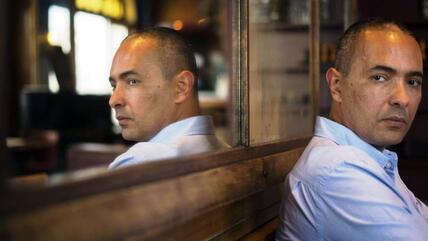 Book review: Kamel Daoud's "The Meursault Investigation"
To kill an Arab
In his impressive novel "The Meursault Investigation", Algerian author Kamel Daoud reopens the case of one of the most famous murders in literary history. His book lends a voice to the Arab murder victim in Albert Camus' "The Stranger" and is also an angry reckoning with contemporary Algeria. By Stefan Buchen
-
 New music from Pakistan
A captivating mix of sounds
Earlier this year, the Pakistani Foundation for Arts, Culture and Education (FACE) organised a showcase of Pakistani music at the South by Southwest Festival in Texas. It also released a promotional CD to the media. Richard Marcus listened to the music and was very surprised by what he heard
-
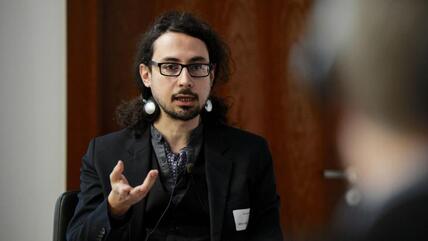 Interview with the Egyptian choreographer Adham Hafez
The disappearance of the kiss
One of the highlights of Berlin's recent Return to Sender theatre festival was a performance of the futuristic piece "2065 BC" by the internationally renowned Egyptian choreographer Adham Hafez. Astrid Kaminski spoke to him about national identities and the arts scene in Cairo
-
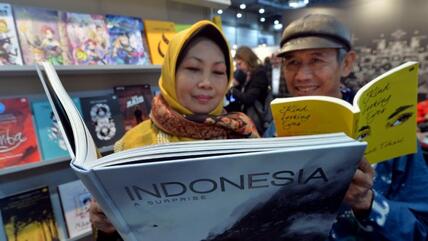 Literature in Indonesia
A land without readers
Indonesia is guest of honour at this autumn's Frankfurt Book Fair. That's a remarkable situation, because readers make up only a tiny proportion of the country's 250 million people. By Monika Griebeler
-
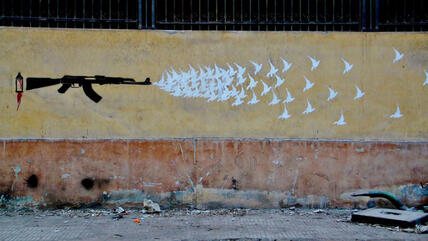 Art and revolution in the Arab world in 2015
Struggling against the restoration of "order"
Egypt's Al-Fann Midan (Art is a Public Square) festival, which took place for the first time in April 2011, was one of the most vibrant post-revolutionary spaces for public art in Egypt. But four years after millions of Egyptians took to the streets, the popular festival has disappeared. Marcia Lynx Qualey takes a closer look at the link between art and revolution in Egypt and the Arab world in 2015
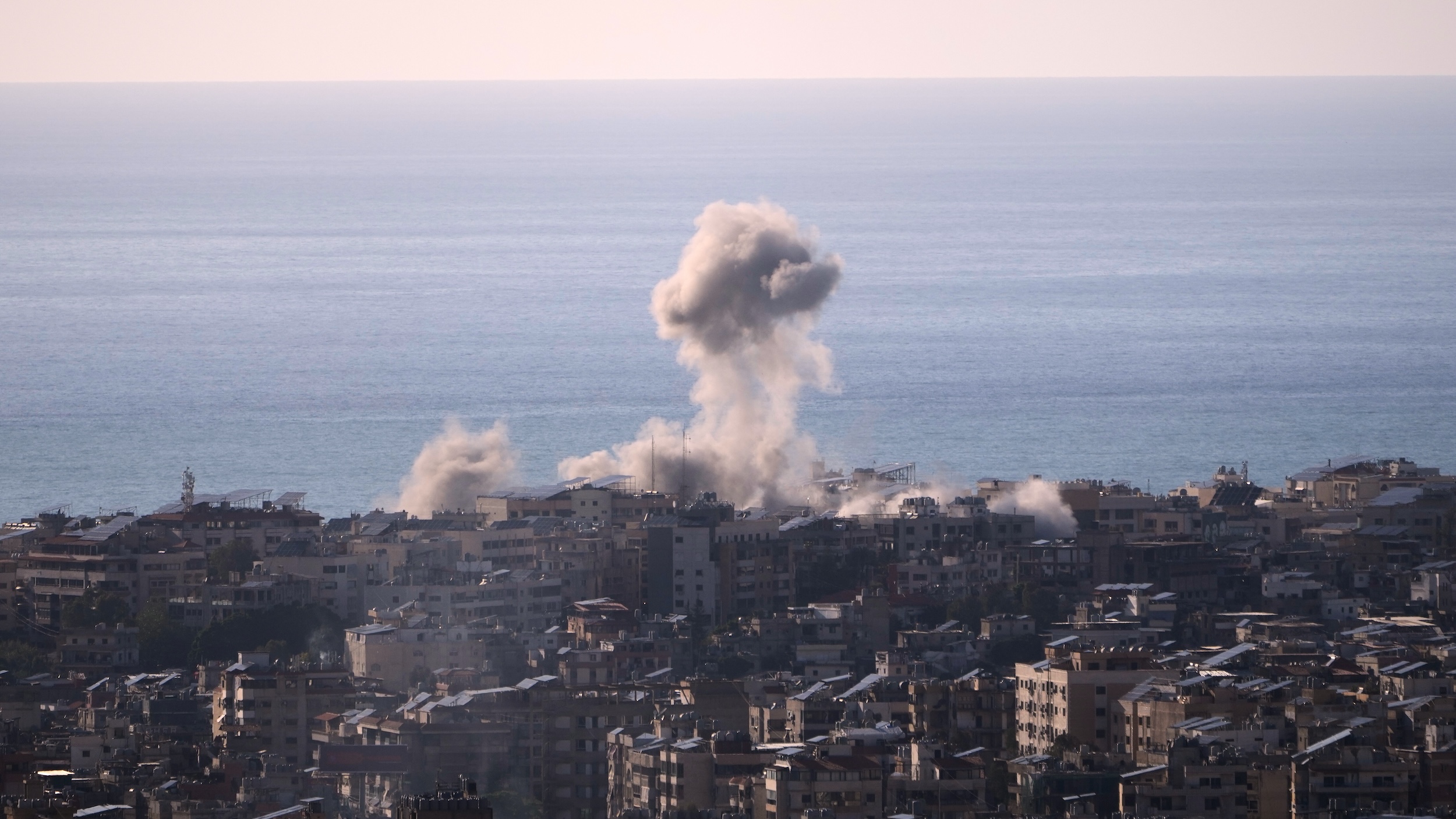
750th anniversary of Rumi's death
750th anniversary of Rumi's death - Qantara.de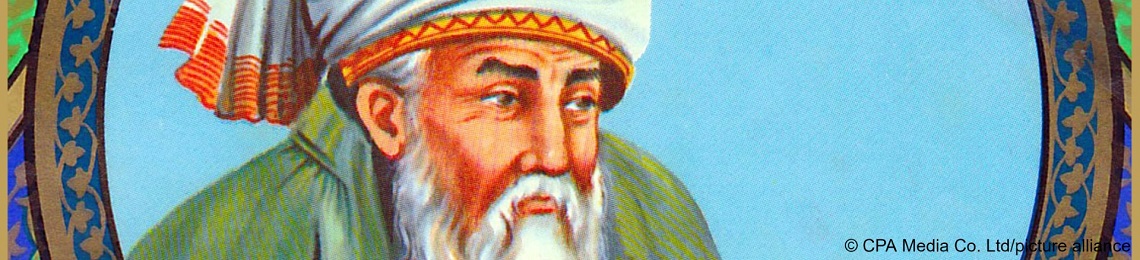
Most read articles
-
„Postmuslim“ von Youssef Rakha
Ein Autor, mehrere Versionen
-
Frauenverein „Havle“ in der Türkei
"Weiße säkulare Frauen haben kein Monopol auf Feminismus"
-
Arthouse-Kino
Wo Marokkos Filmgeschichte neu auflebt
-
Frauen in Saudi-Arabien
Gefangen in einem System der Gender-Apartheid
-
Streit schlichten in Gaza
Die Frau, die Frieden im Kleinen stiftet
-
Nach der Abschiebung
Die Sprache nimmt ihm keiner