A life rethinking the foundations of knowledge

Throughout the 20th century, a debate raged over how Muslim societies should confront modernity: should they adapt to Western intellectual frameworks or rediscover their own? Few thinkers pursued the question with the philosophical depth and persistence of Syed Muhammad Naquib al-Attas, who died on 8 March, aged 94. A philosopher, historian, linguist and educational theorist, al-Attas was often described as one of the last true polymaths of modern Islam.
Al-Attas spent a lifetime challenging the intellectual zeitgeist. His writings revolved around a single, persistent question: how had Islamic civilisation, once among the world's most luminous cradles of philosophy and science, become intellectually subordinate to the prevailing ideology of the modern West? He contended that the crisis facing the Muslim world was not primarily political or economic but epistemological.
Before institutions or societies could be renewed, he believed, the very foundations of knowledge had to be reimagined. Al-Attas was not merely a critic of Western thought. He was, more ambitiously, the architect of a philosophical project that sought to return Muslim thought to its own intellectual path.
From the army to academia
Born in 1931 in Java to a family of Hadhrami Arab descent, al-Attas grew up within the cultural and religious traditions of the Malay world, at a time when Southeast Asia was still negotiating the aftershocks of colonial rule.
As a young man, al-Attas seemed destined for a military career. He joined the Malay Regiment and later trained at Britain's prestigious Sandhurst military academy, receiving his commission as an officer in 1955. But travel through North Africa and Spain, regions in which the remnants of Islamic civilisation remained visible in architecture, libraries and historical memory, gradually shifted his ambitions from military life towards scholarship.
He left the army to devote himself to the study of Islamic intellectual history. He produced a doctoral dissertation at the School of Oriental and African Studies in London on the 16th-century Sumatran Sufi philosopher Hamzah Fansuri. This subject matter reflected his early fascination with the philosophical dimensions of Islamic spirituality, particularly the tradition of metaphysical Sufism.
Returning to Malaysia, al-Attas quickly established himself as a formidable presence in the region's emerging university system. His overriding interest was the intellectual development of Muslim societies in the modern age.
Across the Muslim world, universities had been modelled largely on their European counterparts, importing disciplinary structures and intellectual assumptions. Although these institutions succeeded in producing engineers, administrators and scientists, al-Attas believed they had also reshaped the way Muslims understood knowledge itself, amounting to a form of intellectual dislocation.
Al-Attas's philosophy pivoted on a critique of the Western conception of knowledge as a mere accumulation of information or mastery of empirical fact. For him, knowledge had a moral and metaphysical dimension: the disciplined orientation of the mind towards truth, meaning and ultimately divine reality.
He linked this deeper form of understanding to the concept of ma'rifah (gnosis), a form of knowledge which engages not only the rational faculty but also spiritual intuition. Such knowledge could not be reduced to empirical observation or logical deduction alone. It required the cultivation of the human being as a moral and spiritual agent.
This led al-Attas to another concept that became central to his thought: adab. Often translated as "etiquette" or "manners", the word carried for him a much deeper philosophical significance. Adab referred to the correct ordering of the human soul, an intellectual and ethical discipline that placed every form of knowledge within its proper hierarchy. Without adab, knowledge could easily become fragmented or instrumental, serving power rather than truth. Education, therefore, could not be reduced to technical training.
In his influential work "The Concept of Education in Islam", al-Attas argued that the true aim of education was the formation of what Islamic philosophy calls the insan al-kamil, the complete or perfected human being. Knowledge was meant to enable recognition of the divine order in the cosmos and in society.
The "Islamisation of Knowledge"
The erosion of this holistic conception of knowledge, al-Attas believed, lay at the heart of the intellectual crisis confronting the Muslim world. Educational systems had adopted Western epistemic frameworks without fully examining the metaphysical assumptions embedded within them.
This diagnosis formed the basis of his most famous and controversial idea: the "Islamisation of knowledge", which was widely invoked in Muslim intellectual circles during the late twentieth century. For al-Attas, Islamisation did not mean the superficial labelling of modern disciplines with Islamic terminology. It meant something more radical: a philosophical reconstruction of knowledge itself.
The first step in this reconstruction, he argued, was what he called "de-Westernisation", identifying and removing the secular assumptions of modern intellectual frameworks. Western knowledge, in his view, had emerged from a particular historical trajectory in which religion gradually lost authority over philosophy, language and society.
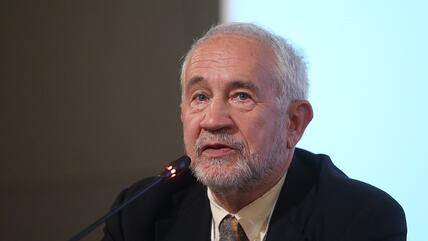
In his influential book "Islam and Secularism", al-Attas traced the genealogy of secular thought to developments within Christian and Greco-Roman civilisation. Secularisation, he argued, was not an inevitable stage of human progress but a specific historical outcome, a process in which the sacred was gradually separated from public life and intellectual inquiry.
Knowledge, detached from its metaphysical foundations, became merely a tool for managing the world rather than understanding its ultimate meaning. Against this trend, al-Attas proposed a reintegration of empirical inquiry with revelation and metaphysical insight. True Islamisation, he insisted, did not reject reason or science. Rather, it sought to place them within a broader framework grounded in the principle of tawhid, the unity of God.
An alternative model of higher education
In 1987, al-Attas attempted to embody his vision by founding the International Institute of Islamic Thought and Civilisation (ISTAC) in Kuala Lumpur. Conceived as an alternative model of higher education, the institute sought to revive the classical Islamic ideal of integrated knowledge, bringing together theology, philosophy, language and the natural sciences within a unified intellectual framework.
For a time, ISTAC attracted scholars from around the world and appeared to represent a rare experiment in rethinking the foundations of higher education in the Muslim world. Yet the project proved vulnerable to political shifts and academic rivalries. Changes in Malaysia's political landscape gradually eroded its autonomy, and by the early 2000s, its founding vision had largely faded.
Even so, al-Attas's intellectual influence extended far beyond any single institution. His project unfolded alongside that of other thinkers who differed in their diagnosis of the crisis facing Muslim civilisation. These included Ismail Raji al-Faruqi, Muhammad Abid al-Jabiri and Fazlur Rahman, to name but a few.
Al-Faruqi's project, backed by significant Saudi funding, sought to Islamise modern academic disciplines and mobilised a global network of scholars and patrons through institutions such as the International Institute of Islamic Thought. Al-Jabiri and Rahman considered the historical dominance of textual and mystical reasoning over empirical rationalism as the cause of the problem and advocated a revival of rational and empirical traditions within Islamic intellectual history.
Al-Attas believed the real crisis was a loss of metaphysical orientation—the severing of knowledge from its spiritual foundations. His response was neither a rejection of modernity nor an uncritical embrace of it. Instead, he called for a reengagement with modern knowledge from within Islam's own intellectual resources. His project was grounded in a conviction that might seem unfashionable in an age of academic specialisation: that knowledge and character are inseparable. A civilisation capable of producing meaningful knowledge, he believed, must first cultivate human beings shaped by discipline, humility and moral clarity.
The ultimate aim of learning, he argued, was not simply the mastery of information but the formation of a human being capable of recognising truth.
© Qantara.de