Iraq's economic reform experiment
Topics
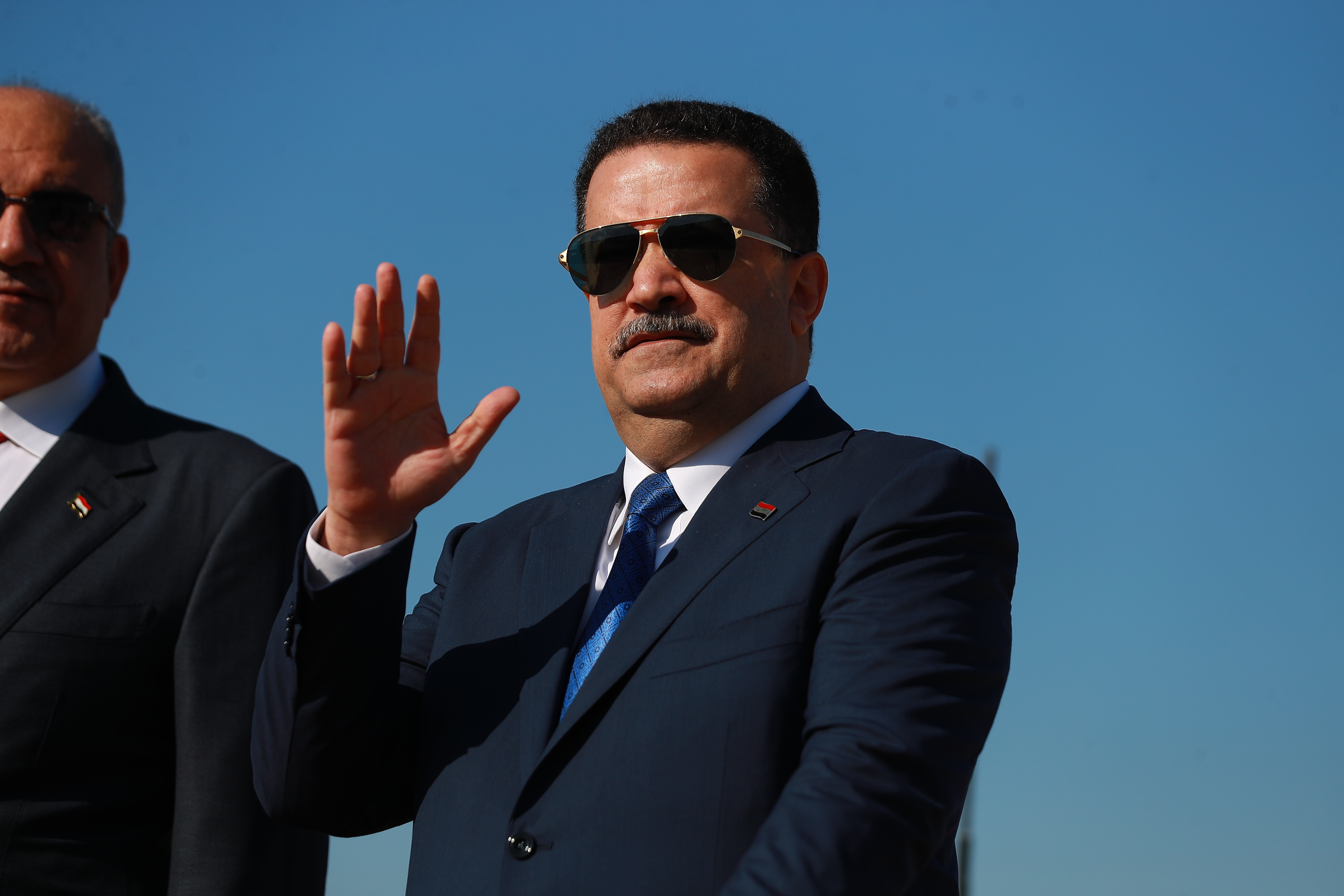
In the tightly secured green zone in central Baghdad—a heavily fortified district established after the 2003 US-led invasion—Iraqi prime minister Mohammad Shia al-Sudani has adopted a pragmatic approach to governing. When he took office in October 2022, he rolled up his sleeves, presenting himself as a reformer determined to curb corruption and nepotism and pull the economy out of its prolonged doldrums.
His efforts to break away from two decades of mismanagement, patronage and entrenched corruption have gained him admiration and plaudits among the middle class. However, al-Sudani also faces pushback from opponents, political rivals and groups affiliated with external powers.
A city under construction
Across Baghdad, the racket of jackhammers, drills and heavy machinery fills the air. Bridges are being built, main streets are being resurfaced and expanded, and pavements are cleared, after decades of negligence and public sector mismanagement.
In the noisy cafes and political saloons, the name on everyone's lips is al-Sudani, who has seized this moment, focusing on the mechanics of the state while navigating the intricate and often treacherous political landscape in this highly polarised country. He rarely stages grand spectacles. His reputation has been built on actions rather than rhetoric. In a city long defined by dysfunction, even incremental but tangible improvements in basic services and governance are now being experienced as significant reform.
Al-Sudani's government has thrown its weight behind an economic reform drive to rid the country of its excessive reliance on oil revenues. Some of that change is visible already—and proving his political point: new roads have reduced traffic jams, reopened bridges are now interconnecting districts with one another, and electricity is more abundantly available throughout the city. In Baghdad, flyovers that stood half-built for years are now finally nearing completion. Ordinary citizens note the impact of these measures, as service delivery has improved to a degree that eases everyday life.
However, despite the popularity of the premier and his hands-on approach, which some have referred to as activism, Iraq's capital spending remains pro-cyclical (increasing during economic upswings and contracting in downturns) and debt driven. This carries inherent risks: inflated contracts and politicised procurement driven by nepotism and favoritism. Meanwhile, there are limited private-sector spillovers, meaning that government spending generates few broader benefits for private business, such as new supply chains or increased investment, which serves to limit overall economic gains.
Overall, there are clear improvements in market organisation, fiscal stability and in the economic framework for transformation, according to the Bertelsmann Transformation Index. A closer look, however, reveals a difficult road ahead and many unresolved challenges.
An oil economy on borrowed time
Iraq's economy remains almost completely dependent on oil, with 99 percent of exports and more than 85 percent of state revenue derived from hydrocarbons, leaving the war-torn country dangerously exposed to price volatility and political instability. When oil prices spike, the government can go on a spending spree and the state thrives; when prices plummet, the system faces a reality check. The long-term energy transition therefore remains central to the country's reform challenge.
Even more so, because the vulnerability of Iraq’s economy is no longer hypothetical. By late 2025, public spending reached roughly 128 trillion Iraqi dinars, around $98 billion USD, driven largely by wages, pensions and infrastructure projects. The public sector employs over four million people, and wages consume nearly 60 percent of the annual budget.
At the heart of the debacle lies a bloated public sector, or what has been described as "disguised unemployment", meaning a significant portion of the public workforce is overstaffed and therefore redundant. Moreover, according to government sources as well as investigative journalists, political parties, religious groups and influential actors are believed to be selling positions at government offices for cash, from the army to the ministry of interior and other public institutions. Prices vary depending on salary and benefits. It is an open market for public sector employment.
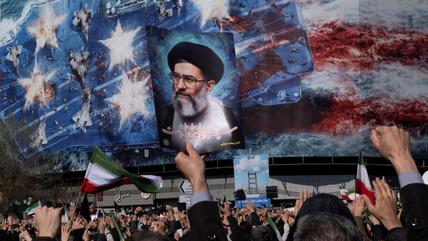
The fragility of Iraq's political reality has been thrown into sharper doubts by the American-Israeli airstrikes on Iran. Iran's retaliation disrupted oil tanker traffic and severely strained shipping through the Strait of Hormuz—sending global oil prices above the 100 USD mark.
The perils of a power vacuum in Iran
The US believes removing Tehran's rulers will neutralise the nuclear threat. Yet destroying the Iranian state would not eliminate the danger of proliferation; it would decentralise it, making it elusive and impossible to monitor.
For Iraq, sandwiched between the two belligerent states and deeply wired into both the Iranian economy and the Gulf financial system, the conflict represents a stress test that its fragile fiscal architecture was not designed to absorb.
A model put to the test
With his economic adjustment model, al-Sudani hopes to end the economic slide and downward spiral, revitalising the economy by creating a foundation for smoother trade and improving supply chains. In doing so, he has emphasised regional integration via the multi-billion-dollar Development Road project, designed to link up with the Gulf Cooperation Council and strengthen Asia-Europe trade ties.
Al-Sudani has also looked to build relations with Gulf States including Saudi Arabia, the United Arab Emirates, Qatar and Kuwait. As a result, more and more hotel chains owned by wealthy Gulf investors are now populating the skylines of Baghdad and Basra, the country's oil hub. Gulf investors remain cautious, however, because Iraq still lacks transparency and enforceable protections that safeguard their business dealings. Legislation falls short of international standards, and many regulatory procedures remain opaque, slowing down foreign investment and undermining confidence, as reflected in the US Department of State analysis of Iraq's investment climate.
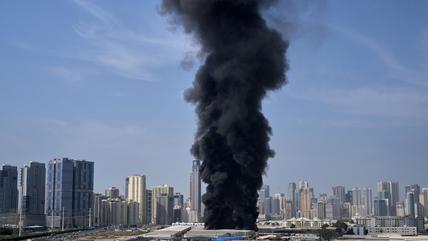
War has made cautious Gulf investment calculus even more precarious. Iranian strikes have struck Saudi Arabia, the UAE, Kuwait and Qatar—the very partners that Al-Sudani has spent years courting. Iraq is left between a rock and a hard place. Al-Sudani is now navigating a delicate neutrality, under pressure to align with Washington as well as Tehran-linked factions.
Reforming the energy sector is a political minefield
In parallel, al-Sudani has pushed forward a reform of the energy sector. To reduce structural dependence on oil, his government aiming to diversify, with solar partnerships with Gulf states and China and initiatives to capture flared gas, according to the Middle East Solar Industry Association.
Progress, however, has been painfully slow: weak institutions, political interests and an oil-funded budget model continue to make a meaningful transition difficult and vulnerable to intense political pushback. Iraq still flares vast quantities of associated gas and depends heavily on Iranian gas to run its power plants, a reality that energy specialists deride. Sitting atop one of the world’s largest hydrocarbon reserves yet importing gas for electricity is not merely inefficient; it is an indictment of mismanagement, short-termism, and political paralysis.
Technically, al-Sudani's reform is feasible. Politically, it is perilous, however, if not potentially fatal. Especially in a country where politicians, tribal leaders and militant groups often favour their own agendas over national interests. Iraq's heavy dependence on oil and weak governance structures constrains the government's capacity to implement comprehensive reform.
Stability without transformation
All in all, al-Sudani rules with a technocratic instinct—and his focus on infrastructure, energy reform, and regional reintegration has helped stabilise the country. The state appears to function better than it did five years ago, with measurable improvements across key areas: market organization, competition policy, banking, fiscal stability and private enterprise. Non-oil revenues in 2024 have tripled compared with 2022, driven in part by higher customs and tax collections, while social sector indicators, including safety nets and socioeconomic development, also show modest gains—though inequality and poverty remain widespread.
Still, Iraq's economic adjustment model remains mainly managerial and ultimately superficial rather than transformational. Oil dependence persists, agriculture is struggling, the trade balance remains deeply negative, local industry struggles while private-sector development is constrained by power politics. These structural weaknesses, combined with high public-sector employment and rising public debt, raise serious doubts about the long-term sustainability of current policies and their impact on the broader economy and public welfare.
Iraq today is still far from transforming its economy. Instead, it is managing its vulnerabilities and buying time. For now, Iraq walks a tightrope—seeking temporary stability while postponing badly needed reforms.
Article courtesy of the Bertelsmann Stiftung's BTI Blog.
© Qantara.de