"The Islamic Republic is rooted in society"
Topics
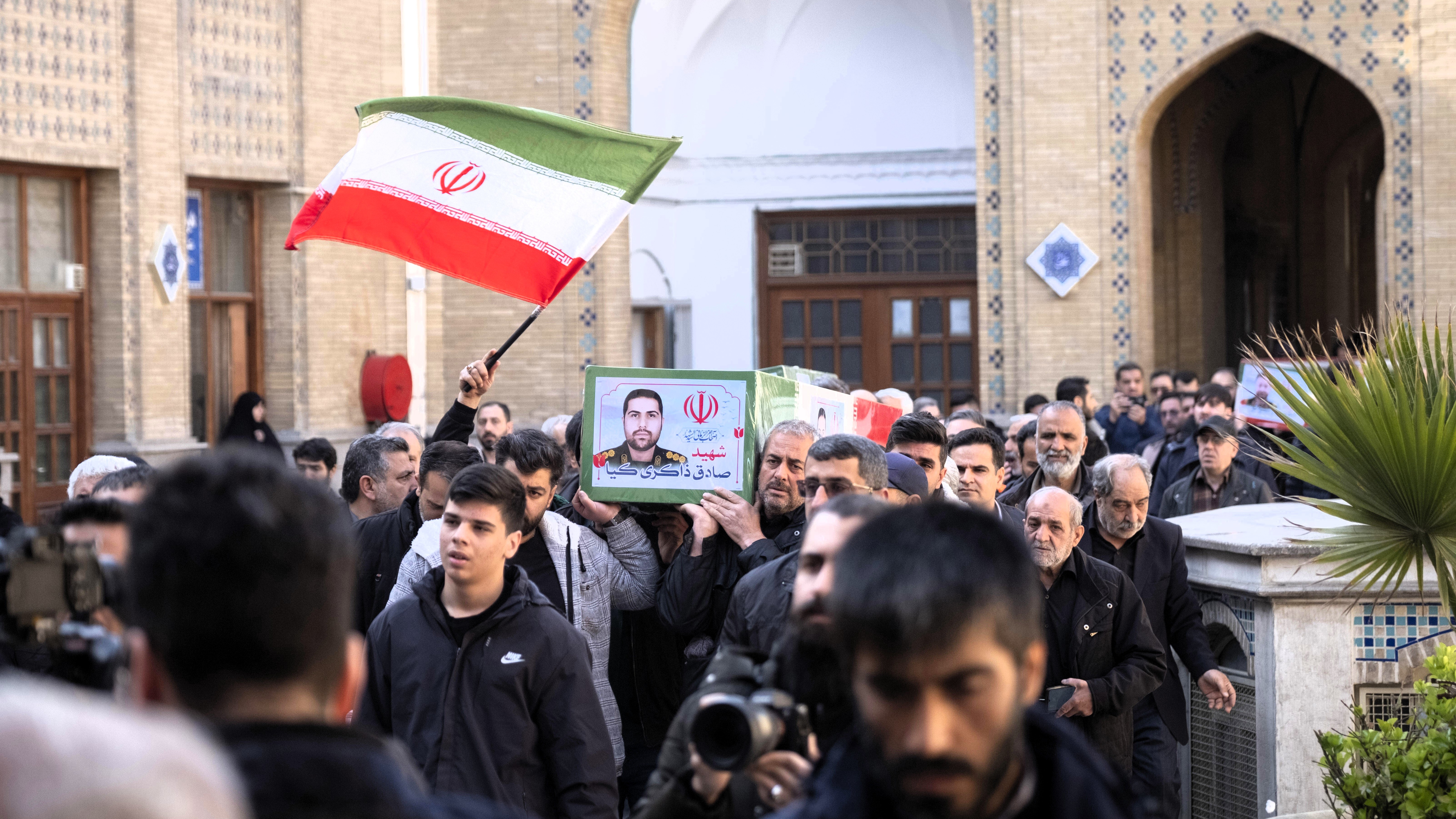
Qantara: When Ali Khamenei, Iran's long-time dictator, was killed in Israeli airstrikes at the end of February, many Iranians celebrated. Yet the regime has held on. Did that surprise you?
Ralph Ghadban: No. Already on the day after Khamenei's death, I said in an interview: the regime will not collapse. It will not even change.
Why not?
Because the Islamic Republic is rooted in society. It does not consist only of the clergy and the Islamic Revolutionary Guard Corps (IRGC), but also of the Basij, a militant volunteer organisation.
Observers estimate that not even 20 percent of Iranian society supports the regime.
For a military dictatorship, that is still an enormous level of support. The Shah never had such backing—the army abandoned him in 1979. For a military dictatorship, it is not about having widespread sympathy among the population, but about being able to rely on a sufficiently large segment of society that is willing to die or even kill to protect the system. The Basij has up to twelve million members.
But most of them are only members on paper, to gain access to state benefits—better education, easier military service.
Around one million Iranians are active, militant Basij members. They are not opportunists.
According to Iran's 1979 constitution, the head of state is supposed to be a high-ranking cleric. Under the principle of Velayat-e Faqih, the "Guardianship of the Islamic Jurist", he is meant to govern as the representative of the Hidden Imam Muhammad al-Mahdi. But you describe Iran not as a theocracy, but as a military dictatorship. Why?
The clergy has long been only the façade of the Islamic Republic. The real power lies with the IRGC...
...paramilitary force established to protect the Islamic Republic from internal and external enemies.
That was in 1979, shortly after the revolution. The next step toward a military dictatorship came in 1988 with a fatwa by the revolutionary leader Ruhollah Khomeini. He stated that in order to preserve the Islamic Republic, even Islamic principles could be suspended. Pilgrimages could be banned, mosques closed. It couldn't have been clearer.
The following year, his successor, Ali Khamenei, forged an even closer alliance with the IRGC. With their help, he brought the entire clergy in line. The more Khamenei relied on the IRGC for protection, the more privileges and influence they gained.
Today, many see the recent appointment of Ali Khamenei's son as the new Supreme Leader as the final consolidation of power by the IRGC.
With Mojtaba Khamenei, the veil has fallen. He is called an Ayatollah, but in reality, he is not even a Mujtahed, a mid-ranking cleric. What matters most are his strong ties to the IRGC and the security apparatus. Politics clearly takes precedence over religion—but this is not new in Shia Islam.
What do you mean?
In religious studies, scholars debate whether a religion gave rise to a political movement, or a political movement created the religion. In the case of the Shia, it’s clear: they split from the rest of the Muslim community over a political succession dispute.
This was in the 7th century CE. The question was who should lead the Ummah, the community of Muslims, as Caliph.
While the Sunnis chose Abu Bakr as the suitable candidate, the Shia insisted on Ali, Muhammad's cousin. They accepted only men from the Prophet's bloodline as rulers—the so-called Imams. And then the tragedy happened.
The Battle of Karbala?
It is the great Shia myth. Yazid, the second caliph of the Umayyad dynasty, demanded an oath of allegiance from Husayn, a grandson of Muhammad. Husayn refused. He set out for Kufa in present-day Iraq, where support had been promised. But in Karbala, he faced Yazid's superior forces. They simply slaughtered him. Yet for the Shia, his death represents heroic struggle in a hopeless situation, absolute self-sacrifice, and resistance. Millions of Shia commemorate his death every year on Ashura.
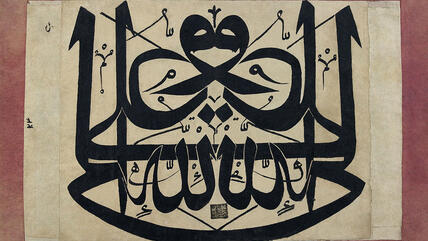
How the Sunni-Shia split shaped the Islamic world throughout history
Toby Matthiesen's new book, "The Caliph and the Imam", explores both the origins of the Sunni-Shia divide, what the two branches of Islam have in common and how the split has shaped the Islamic world
Ali Larijani, the influential politician who has since been killed, recently addressed Donald Trump on X, writing, "The Ashura-loving nation of Iran does not fear your paper threats."
Ashura remains the core of Shia Islam to this day. It is through these narratives that mobilisation takes place.
Many Western politicians, including Trump, seemed to hope that the military would be more pragmatic than the clergy—and possibly willing to compromise.
But they underestimate the role ideology and religion play for the IRGC. Compared to Sunnis, Shia belief is much more emotional. That is simultaneously their greatest weapon. This is why I consider Shia Islamism more dangerous than Sunni Islamism. Its emotional intensity makes it easier to mobilise people. If an order were to come from Tehran tomorrow to carry out attacks in Germany, the regime's supporters would do so immediately.
You said religion in Iran has been adapted for political purposes. But as we see now, the regime's ideology is extremely rigid, isn't it?
Yes. It is based on two elements, the first being the love of death. Already under Khomeini, death was no longer to be feared but actively desired.
Through what is called the martyr cult?
Exactly. The regime refers to Imam Husayn and his martyrdom in the battle against Yazid. In Shia belief, the merit of achieving martyrdom and entering paradise is far more valuable than life itself. That is the traditional Shia perspective. But the modern martyr cult in the Islamic Republic actually originates from the Muslim Brotherhood in Egypt: it is no longer just about self-sacrifice, but about dying as a martyr in service of an Islamist state model and in the struggle against imperialist powers.
And the second element?
That is the hatred of those very powers: the US and Israel. If the IRGC were to deviate from these two elements—radical Shiism and anti-imperialism—they would lose legitimacy with their base. That's why they cannot compromise; they must continue to show strength. Even more so, now that they are under attack.
Isn't that against their own interests?
That doesn't matter. Their influence comes primarily from their ideology, not because they are employers. The Nazis in Germany also fought to the death—why?
Is the West failing to recognise the regime's religious and ideological nature?
Absolutely. The West is completely ignorant on this issue. There are hardly any books, almost no reports on Shia Islamism.
For a long time, there was hope that the Islamic Republic could be reformed from within.
I never believed that, because I see Hezbollah in Lebanon. Hezbollah is the Islamic Republic in Lebanon. It is the IRGC there. And you see what Hezbollah has done to Lebanon: it simply killed opposition figures. They are willing to die for their ideology—but are dragging the whole country with them.
Is there no alternative within Shia tradition?
There is. A religiously justified alternative would be a so-called Velayat-e al-Ummah. No single Islamic scholar would rule until the return of the Mahdi, but the Muslim community collectively would rule as a sovereign. That would be a Shia-based democracy. But the Islamic Republic's constitution, with its principle of Velayat-e Faqih, is based on the opposite: the totalitarian rule of a single Islamic scholar. That is why fundamental reform of the regime is illusory.
What is the alternative, then?
The regime’s Achilles' heel is the economy. The January protests began in the bazaars, where the regime traditionally has its base. It also finances its repressive apparatus with oil revenues. If the Iran war ends but the embargo remains, it would lead to internal collapse. The regime's base would continue to erode, and its ability to suppress protests would diminish. To me, that is the greatest hope.
This text is an edited automatic translation of the original German interview.
© Qantara.de