"The war has frozen Iran's protest movements"
Topics
Qantara: The United States and Israel initially claimed they would launch a swift operation like the 12-day war last year. However, several weeks into the war and with no end in sight, it looks like they miscalculated Iran’s response.
Behrouz Farahani: This war is very different from the 12-day conflict in June 2025. That war was initiated and led by Israel, and despite logistical support from the US, it was short. This time, Trump has aligned himself with Netanyahu’s long-standing objective of going to war against Iran. This is something Netanyahu has pushed for since 2010. With the full involvement of the US military, the war’s scale and duration have increased significantly.
But Iran’s response has also surprised many observers.
Yes, because this time the war’s stated objectives went beyond dismantling Iran’s nuclear and missile programmes to include the possible removal of the Islamic Republic itself. That poses an existential threat to the regime.
The initiators of the war believed they could engineer rapid regime change, possibly by eliminating the Supreme Leader. Although Ali Khamenei was quickly killed, the regime did not collapse. Its hierarchical structure and the changes made to its military command after the 12-day war prevented a scenario like Venezuela from unfolding.
What was changed in the command structure?
The Supreme Leader used to be very central, but the blow Iran sustained during the 12-day war transformed its previously pyramidal system of governance and military command into something more decentralised. The hierarchy is like a tree with multiple branches. Each branch remains connected to the centre but operates with a degree of autonomy.
This structure explains why Iran has continued to respond to the attacks despite the loss of many senior military and political figures. Another sign of this shift is the speed of Iran’s response. Unlike during the 12-day war, when Iran’s first counterattack was about 24 hours after Israeli strikes, this time around, Iran responded immediately after Khamenei was targeted.
What impact has the war had on the domestic opposition in Iran, which has spent the past 47 years fighting for democracy at great human cost?
Like any war, it has severely weakened the opposition. A similar dynamic emerged after Iraq’s invasion of Iran in 1980, when Ayatollah Khomeini (the Islamic Republic’s first leader, ed.) famously declared that "war is a blessing". The regime used the conflict to suppress opposition forces and consolidate its power.
At the time, Iran was in a post-revolutionary phase, and opposition groups still had significant space to operate. Saddam Hussein’s attack allowed the regime to mobilise nationalist sentiment and eliminate progressive political forces through imprisonment and execution. The current war is having a similar effect.
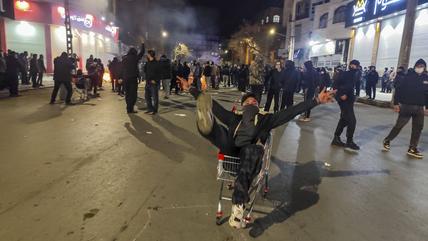
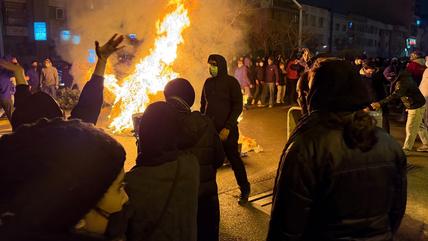
But even before this war, we saw a harsh crackdown on protesters in January.
Despite the crackdown, student groups and labour-related movements, particularly among pensioners and workers, were beginning to reorganise and resume their activities. The war has effectively halted those efforts. Netanyahu’s and Trump’s military campaign has frozen these movements, eliminating any space for protest.
The government quickly took advantage of the situation and declared a state of war, intensifying pressure on political prisoners, restricting internet access, and once again suppressing the free flow of information. This is a common pattern: when external powers attack a country, it leads to increased repression at home.
"Revolution has become more conceivable today"
Is Iran's regime at a breaking point? Nahid Siamdoust assesses the significance of the recent uprising, examines its potential leaders and outlines five possible scenarios for what comes next.
Another major development was the leadership transition after Ali Khamenei’s killing. Mojtaba Khamenei, who had faced opposition within the establishment, was quickly selected as the new leader. Would this have been possible without the war?
The war created a golden opportunity for hardline factions within the Islamic Revolutionary Guard Corps (IRGC), who had long sought to bring Mojtaba Khamenei to power. In the extraordinary circumstances following the leader’s death, there was no room for debate or dissent. He was rapidly declared the successor.
Before the war, there had been opposition to his leadership within the governing system, and even his father had opposed hereditary succession. But in the context of war, power shifted toward the most hardline elements. In particular, factions within the IRGC that hold an apocalyptic worldview and welcome war, gained more power.
Given these developments, what is the role of opposition groups outside Iran?
The immediate priority for all Iranians, not just those in exile, is to demand an end to the war. Anyone who hopes to see a free and prosperous Iran, and who does not want the country to resemble Gaza or southern Beirut, must advocate for an immediate ceasefire. The war has destroyed opposition forces inside Iran. So, opposition groups abroad, regardless of political differences, must unite in demanding an end to this devastating conflict.
Do you think cooperation with anti-war groups in Europe is possible?
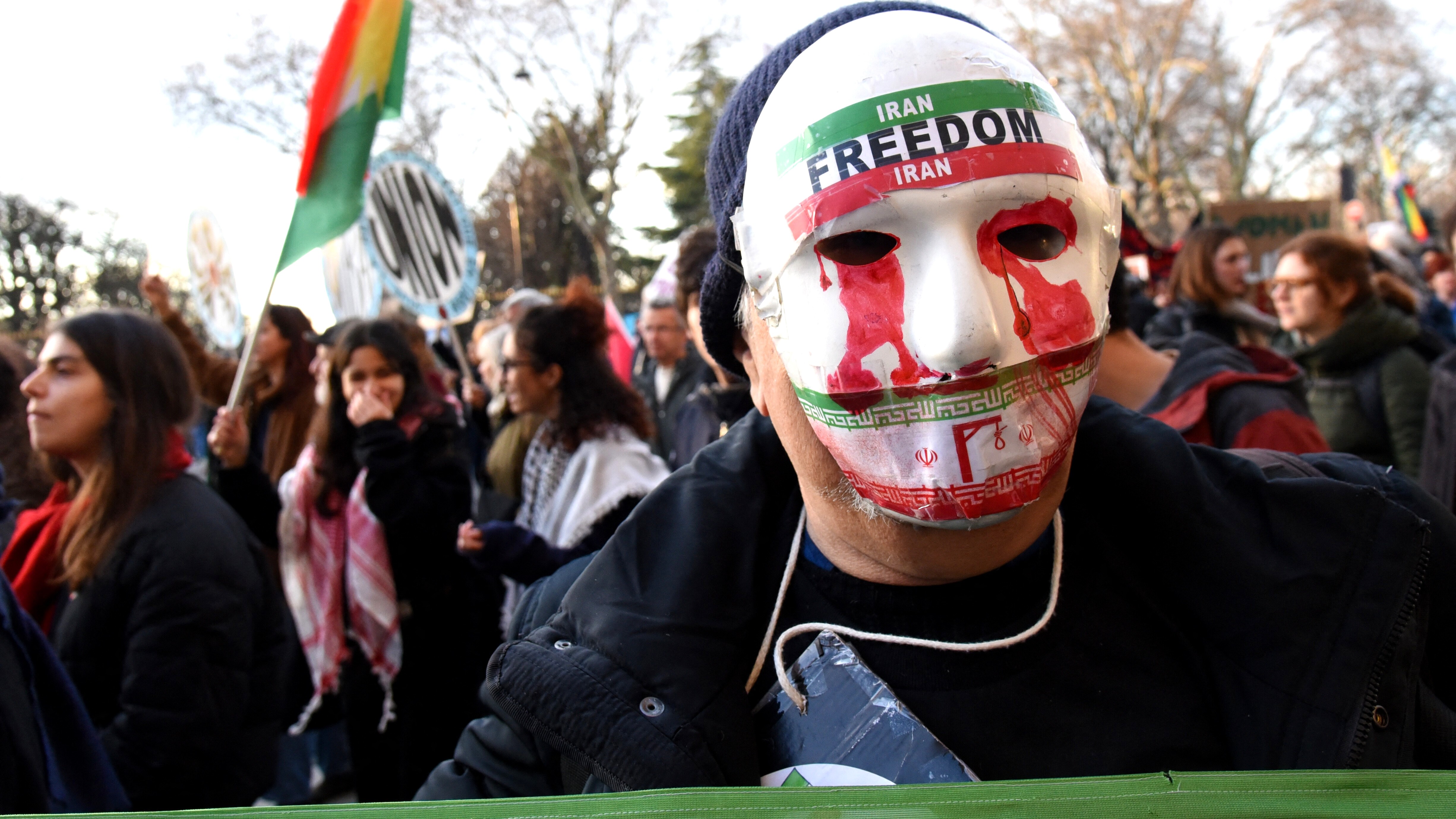
In France, Iranian opposition groups have collaborated with leftist parties, labour unions, and humanitarian organisations for many years. This enabled a large demonstration in January in support of Iran’s freedom movement, with strong participation from both French and Iranian activists.
I believe similar alliances are possible elsewhere, depending on how effectively Iranian opposition groups engage with political and civil society actors in their host countries. Anti-war movements already exist across Europe and North America, and their support could amplify calls to end the conflict.
You mentioned the leftist organisations, but some of these groups view the Islamic Republic as an anti-colonial entity and hesitate to criticise it.
This is a major challenge indeed. The Islamic Republic has positioned itself as an opponent of Israel and has used its rhetorical support for the Palestinian cause to cultivate an anti-colonial image. However, this narrative does not reflect the reality of the Iranian regime, which is repressive and reactionary. Iran has consistently supported reactionary groups such as Islamic Jihad and Hamas, rather than secular or progressive Palestinian movements.
Moreover, its goals are rooted not in support for Palestinian self-determination but in advancing a broader ideological project tied to the concept of the religious Islamic Ummah (community, ed.). This is why, when calling for a ceasefire, we often adopt this slogan: “No to war, no to the Islamic Republic, no to Netanyahu, no to Trump.” This war stems from two reactionary forces: the hegemonic ambitions of Iran’s Shia clerical establishment and the vision of reshaping the Middle East around a Greater Israel.
© Qantara.de