Syrian drama after Assad
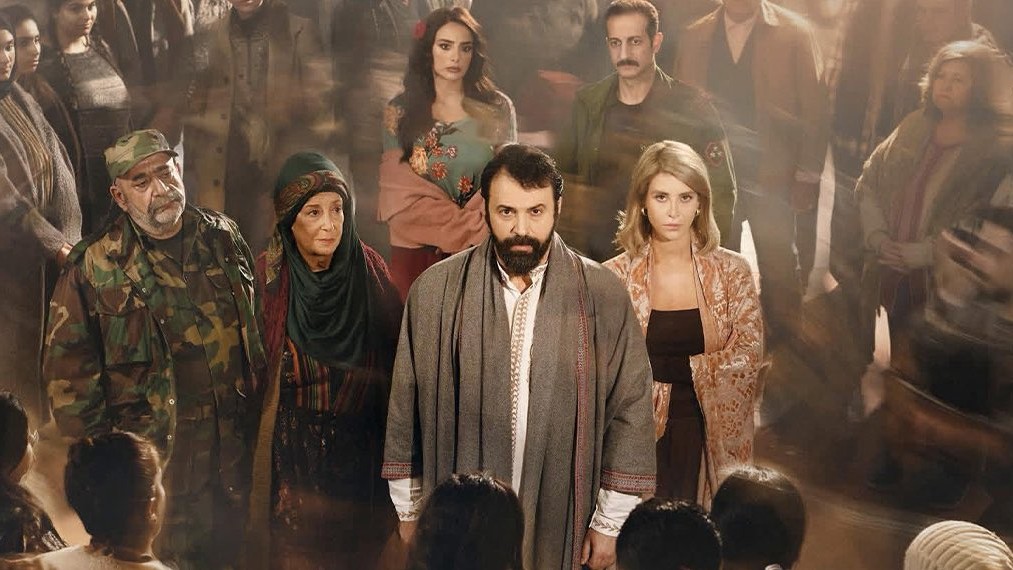
Syrian drama is undergoing a radical transformation, evident in this year's Ramadan TV season—the first to be entirely written and produced after Assad's fall. Following decades of bans, censorship and coded language, this shift reflects not only the absence of a censorship apparatus but a broad change in the production environment itself, as decision-makers and creators move beyond political fear and begin to respond to audience demand.
As a result, the TV screen—before which Syrians spend hours each evening after iftar watching Ramadan series—is no longer simply a space for entertainment. It has become a testing ground for the conscience of an industry that, for decades, was accustomed to evasion and the careful navigation through fear and censorship.
25 new drama series were produced for this Ramadan season. Before diving into them in detail, it is worth considering the broader trends. This year's productions largely followed two paths: revisiting Syrian trauma on the one hand, and leaning into entertainment and suspense on the other.
The road to a new Syria
A year ago, rebel forces ousted Syria’s Assad regime. How has the country changed since? Leading experts weigh in.
The first path has been far from straightforward. Works inspired by the prison system under the Assad regime (1970–2024), such as "Al-Qaisar" and "Exit to the Well", sparked broad debate over the ethics of dramatising the suffering of detainees before justice has been served or the fate of the disappeared clarified.
The "Al-Qaisar" controversy
Directed by Safwan Neamo, "Al-Qaisar" is inspired by real stories of detention and disappearance in Assad-era prisons. Its title directly references Farid Al-Madhan, known as "Caesar", the officer who leaked thousands of photographs documenting victims of torture in the regime's security branches. The subject matter lent the series considerable symbolic weight, raising expectations and heightening public sensitivity.
Yet once the series began airing, many viewers and critics argued it fell into the trap of oversimplification. Its fragmented structure struggled to convey the gravity and human complexity of the experience. It lacked narrative cohesion and dramatic development, as if relying on the tragic subject matter as a substitute for the essential elements of storytelling.
Spread across 30 episodes and divided into ten three-part stories, the series adopts a repetitive rhythm of successive shocks. In one storyline, the protagonist Naya, played by Dana Mardini, dreams of the revolutionary singer Abdul Baset Al-Sarout and takes it as a good omen. Events take a sudden tragic turn when she is arrested alongside her brother and dies in prison.
This abrupt shift from hope to catastrophe recurs throughout the series, where shock is used as an immediate device rather than the outcome of gradual dramatic development. Instead of carefully unpacking the trauma and reconstructing the past through sensitive dramatic treatment, the series presents Syrian suffering through stark, disturbing images without sufficient space for reflection.
The controversy soon took on a moral dimension. The Caesar Families Association, along with activists and relatives of the disappeared, objected to turning the issue into entertainment while the fate of their loved ones remains unknown. Some called for the series to be taken off air.
"Al Khoruj ila Albir"
In a similar vein, "Al Khoruj ila Albir" (Exit to the Well) centres on the 2008 uprising in Sednaya prison, tracing both the prisoners' rebellion and negotiations with the security apparatus, alongside a parallel storyline following the family of the disappeared detainee Sultan Al-Ghalib, played by Jamal Suleiman.
The series presents itself as a human-centred portrayal of the suffering of detainees and their families, with a narrative that moves between the "inside"—marked by torture and repression—and the "outside", where families face psychological strain and social fragmentation.
The series prompted significant engagement on social media, dividing viewers between those who saw it as a serious attempt to confront the trauma of Sednaya, and those who felt it focused too narrowly on certain Islamist prisoners, at times offering uncritical sympathy or simplifying complex historical contexts that demand deeper examination.
Through the character of Fahd, Sultan's son, played by Khaled Shabat, the show does include a portrayal of religious extremism. In the absence of his imprisoned father, he drifts towards rigid and restrictive religiosity. He seeks to control details of his family's life, objecting to his sister's outward appearance and dividing his household to prevent his wife from mixing with his brother. Some critics argued that this character created a counterbalance, distinguishing between more moderate and more extreme expressions of faith.
While the criticism of "Exit to the Well" did not reach the level of outright rejection or calls for its cancellation, it nonetheless raised similar ethical concerns about reenacting events at the notorious prison at a time when many of the disappeared remain unaccounted for. Both series, in different ways, were met with an audience that does not want to see a mere depiction of tragedy, but looks instead for a deeper reading—one that avoids instrumentalising or reducing suffering.
"Mawlana"
The second path, centred on entertainment and suspense, is represented by series such as "Mawlana" (Our Master). Blending thriller elements with dark comedy, it follows a fugitive who becomes the object of reverence in a village, drawing him into a web of social and religious contradictions. The series leans heavily on the charisma of its lead actor, Syrian star Tim Hassan.
A similar approach appears in "Bi khams Arwah" (With Five Lives), which tells the story of a garbage collector who discovers he is the illegitimate son of a millionaire and must track down his four siblings to claim an inheritance, weaving together characters from distant social worlds.
"Mawlana" itself revolves around a distinctly political question: does a leader emerge on their own, or are they created by the community? The story begins with a crime committed by the protagonist Jaber, who kills his sister’s husband, a supporter of the Assad regime, before fleeing to the border village of Al-Adliyah. There, residents await a saviour believed to descend from a sacred lineage. Through a series of coincidences, Jaber assumes the identity of this long-awaited figure, and the community projects its hopes onto him.
From this premise, the series explores how societies, faced with limited choices, can construct the figure of a saviour. For the villagers, who live under the authority of Assad’s army, it reflects a desire for rescue. “Mawlana” becomes a mirror of this collective need.
Some viewers drew comparisons with the Iranian film “The Lizard”, particularly in its premise of a fugitive assuming a religious role and becoming trapped within expectations far greater than his true identity.
The political dimension—including a critique of the Assad era—surfaces through depictions of the army’s control, land confiscations and the threat of conscription, as well as a security discourse that justifies these measures in the name of protecting the homeland. Yet these elements remain embedded within the narrative rather than foregrounded as direct commentary, making their treatment more fluid than in other series.
The series owes its success not only to the performance of Tim Hassan, or to the way some of its lined have become social media trends, but in its ability to reframe a heavy political question within a coherent, satirical narrative—offering an ironic critique of leadership and the way leaders are elevated to a sacred status.
This is an edited translation of the Arabic original. Translated by M. Taylor, edited by Max Graef Lakin.
© Qantara.de