When war reached my Beirut home
Topics
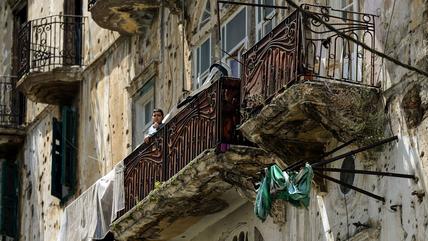
The war entered our building quietly at first. It is a 1950s structure—understated yet elegant—renovated with care for both restraint and individuality. Each apartment is distinct. Most residents share similar backgrounds, mainly Christian, well-off and educated. My neighbours would describe themselves as "civilised", a word that carries its own assumptions about order, taste and who belongs.
It stands in Badaro, Beirut, a neighbourhood that once lay along the Green Line during the Lebanese Civil War, and that now lives another life: cafés, restaurants, a cultivated urban rhythm. Close enough to Dahieh to feel the tremors, yet distant enough to imagine itself removed.
On 2 March, that distance collapsed.
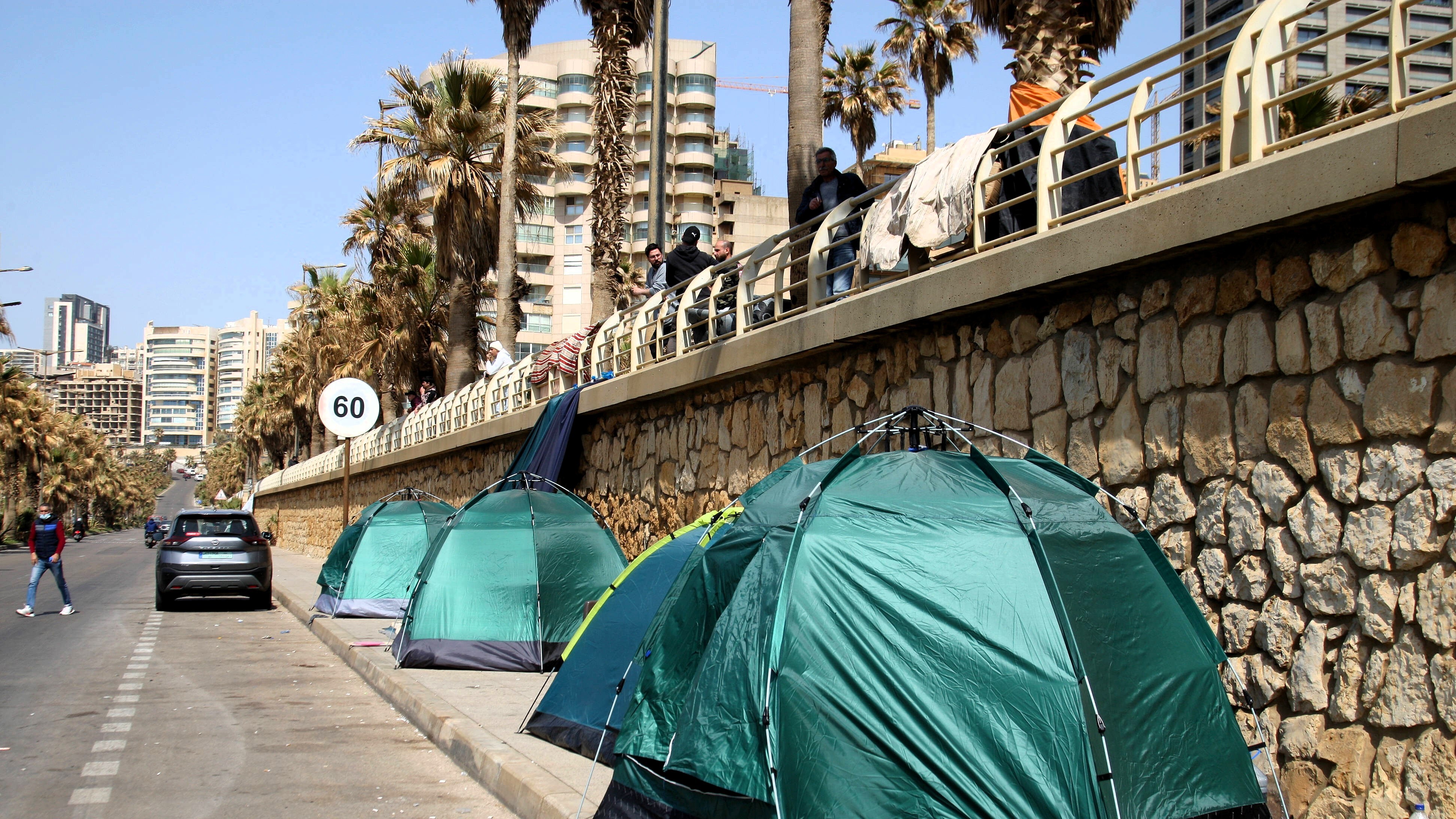
In the early hours, Israeli airstrikes hit Dahieh, the densely populated southern suburb of Beirut and a stronghold of Hezbollah. Around 3 a.m., explosions shook the city. By morning, that part of the city had already begun to change shape: streets emptied, routines suspended, entire neighborhoods dissolving into movement. Hundreds of thousands were displaced.
In fact, this displacement had already begun in late February, as cross-border strikes intensified and residents of the south of Lebanon started to leave. Dahieh marked the shift—the moment the war entered the city's center of gravity.
"We must remain vigilant"
In our building, the WhatsApp group came alive.
At first, the messages were practical: reduce gas consumption, turn off the heaters. Some objected—"it's too cold," "a building like ours should maintain basic comfort." The replies came quickly, in short bursts. We debated, we voted. The mechanisms of civility remained intact, though not without friction. The vote passed: no more heating. "This war is different," someone wrote. "We must adapt."
Then the tone shifted. Security became the concern. "We must remain vigilant. There are empty apartments in the building and nearby. We cannot allow strangers to occupy the building, or the buildings around us." A private security company was proposed. Again, discussion, then a vote: twelve-hour coverage, with the doorman covering the rest.
Beneath these discussions—gas, heating, security—the real concern surfaced: the displaced were coming. They would arrive from the south, from Dahieh. They would come here.
The postwar that never was
Fifty years since its outbreak, Lebanon's Civil War continues to shape its society and political system. The postwar era has been marked by violence, foreign occupation, political paralysis and economic crisis—raising the question: did the war ever truly end?
On 21 March, a message circulated across the city and reached our building chat group. It called on residents of Karantina and Achrafieh to remain vigilant. Karantina, a historically working-class, port-side area, and Achrafieh, an affluent, predominantly Christian neighborhood, were both named explicitly. The message warned—without verification—of plans to resettle displaced Shia populations in these areas, raising fears of a demographic shift that could alter their fragile social balance. It asked: Where are the representatives? Why is there no response?
War sharpens divisions
The message resonated. Insulated and orderly, the building began to speak differently. The language shifted from shared management to quiet suspicion, from civic procedure to communal reflex. Beneath the surface, the undertone was more troubling.
Words like "squatters" began to appear in the chat. One neighbor reported that an apartment in the building across the street was now hosting a large group—perhaps a family, perhaps not. Young men, worn-out motorbikes parked outside, constant movement, late nights, noise, shisha.
"We should call the mukhabarat," someone suggested—the intelligence services. "This is worrying. What if one of them is Hezbollah?"
Two particularly vigilant residents took it upon themselves to investigate. They contacted security, consulted a lawyer, made inquiries. It turned out an extended family, displaced form the south, had taken refuge with a tenant.
But clarification did not ease the tension. If anything, it deepened it.
Concerns that had until then been discussed with a sense of consensus now became points of fracture. What had seemed like a harmonious group could no longer sustain a shared language. The very idea of what it meant to be "civilised" seemed to come undone. Accusations surfaced. One resident denounced another as "fascist": you cannot speak of people who are suffering as if they were a threat. The exchanges escalated.
Some insisted on solidarity—on welcoming and assisting the displaced. Others refused the premise altogether, unwilling even to consider it.
Fear does not create new categories; it brings into view those already there—social, ideological and otherwise—usually held at a distance. Under pressure, they begin to shape how people see one another, and where they believe they belong.
War sharpens divisions, but its weight is carried most heavily by those who are displaced—moving from one place to another, inhabiting uncertainty, and entering spaces where they are not always fully received.
What lingers is a condition of fear, uncertainty and tension, shared by all, though never equally.
© Qantara.de