Keeping Tangier's cinematic history alive
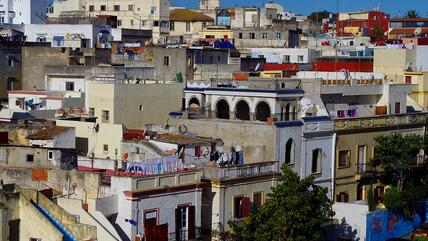
Stepping into the Place du Grand Socco feels like walking into a postcard. Colonial-era European influences beautifully contrast with the traditional Moroccan heritage of Bab al Fahs, the gate to the medina, and the quiet Mendoubia Gardens, located nearby.
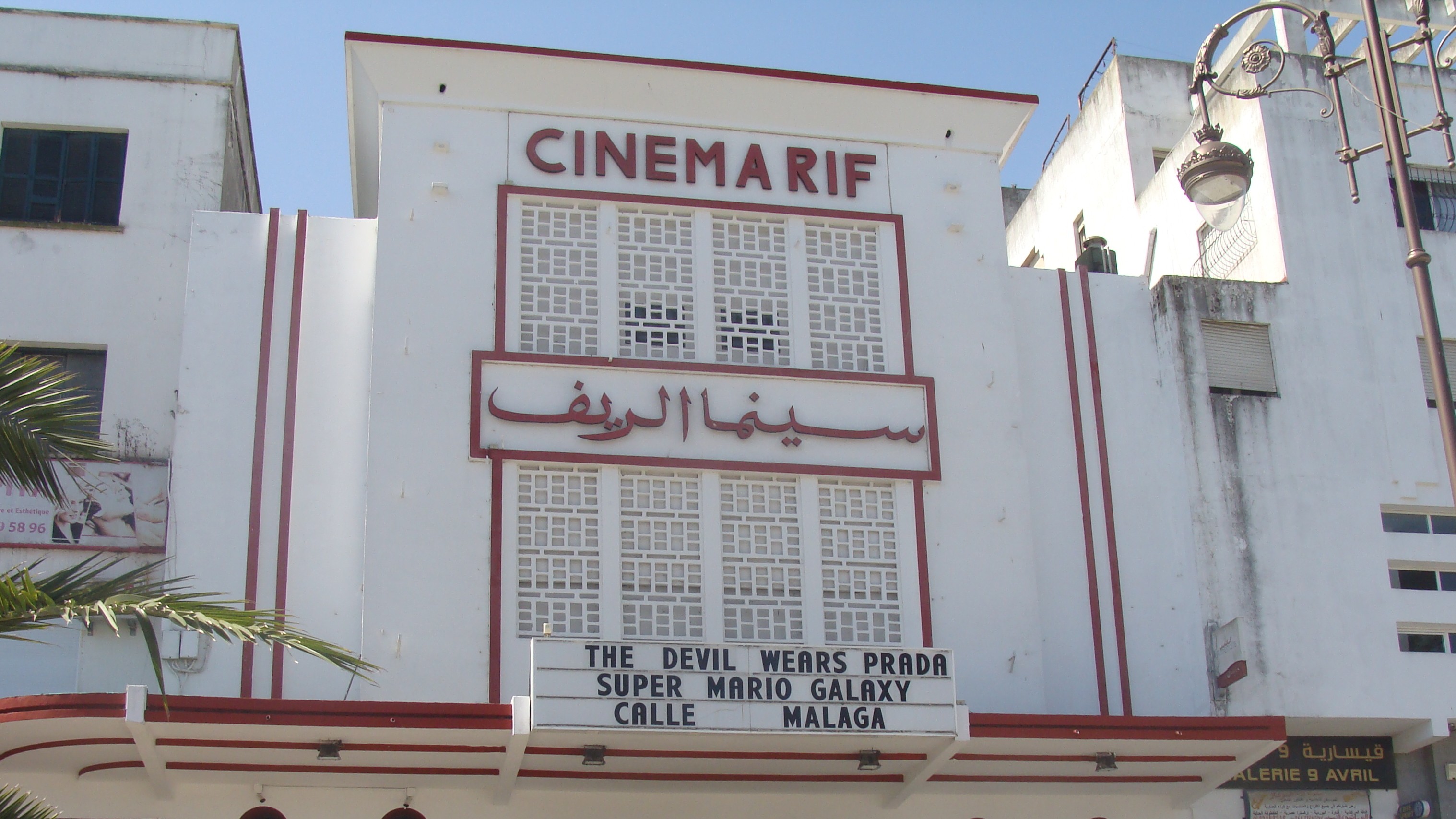
When entering the square, what really catches the eye is an Art Deco building, a widely celebrated landmark since its construction began around 1938. Bold lettering painted in rich red accents stands out against its white concrete facade, in both Arabic and French, indicating that this is the Cinema Rif, today home of the Cinémathèque de Tanger.
Noted for being one of the few arthouse cinemas in North Africa, the Cinémathèque celebrates its 20th anniversary this year. Co-founded and chaired by renowned French Moroccan artist Yto Barrada, a former member of the Beirut-based Arab Image Foundation, along with a number of artist friends, the Cinémathèque saved the historic Cinema Rif from closure.
"The Cinémathèque de Tanger was created as an independent non-profit dedicated to promoting world cinema in Morocco and Moroccan cinema internationally, as well as offering cultural and education programs for children and young people," the programme and operational manager Amaal Meftouh told me in a conversation I could arrange after visiting the place.
From the Interzone to Moroccan independence
Tangier's rich cinematic history can be traced back to the so-called "interzone decades", which lasted officially from 1925 until Moroccan independence in 1956. Tangier was an International Zone, surrounded on the land side by the Spanish protectorate and jointly administered by France, Spain, Great Britain, a representative of the Moroccan Sultan, and various plenipotentiaries.
A socially permissive atmosphere pervaded the city, attracting an eccentric community of expatriates. This community included a pivotal circle of American, British and Moroccan writers, centred around figures like Moroccan author Mohamed Choukri, writer and composer Paul Bowles and American writers Truman Capote and William Burroughs.
At the time of its inauguration, in January 1940, the cinema was called the Rex and was welcomed as a small architectural innovation, nestled within bright lime-coated buildings. The original design by an architect known as Mr Serret included a double roof to allow for natural ventilation. The Sharifian flag of Morocco hung on its facade, surrounded by the French and Spanish flags, as described in a report from that time by the correspondent of the Cinématographie Française, a French film industry magazine that went out of print in 1966.
When Moroccan independence came in 1956, several cinemas across the country adopted names with historical or geographical resonance, and the Rex became the Rif, taking its name from a mountainous region of Morocco. The Cinema Rif grew in popularity through the late 1950s and 1960s. It was initially a venue for screening American movies, then Egyptian movies, Hong Kong kung-fu movies and Bollywood.
Cinema thrived in the hands of Moroccans after independence. At its peak between 1950 and 1980, many theatres of all sizes operated in Tangier, with names that reflected diverse aspirations, such as Paris, Ciné-Americano, Goya, Mauritanian, Cine Alcazar, and of course Rif.
In the 1970s, film clubs sprang up across the city, attended by a left-leaning audience of teachers and intellectuals who liked debating Godard and Soviet films. In 1973, a National Federation of Moroccan Film Clubs was founded by a prominent Tangerine, the late Nour-Eddine Saïl, also a former head of the Moroccan Film Centre in Rabat.
Renovation and reopening
The cinema Rif was renovated in 2005 by French architect Jean-Marc Lalo, enhancing the original architecture and creating a new terrace. Founded in 2006, the Cinémathèque de Tanger moved into the building that year and opened fully to audiences in 2007.
Over the years, the Cinémathèque has developed a broad programme of retrospectives, national and international premieres, film festivals, workshops and dedicated screenings for schools, often in collaboration with local cultural institutions. It has also served as an important platform for emerging filmmakers. In 2009, the jury of one of its short-film competitions included then-emerging director Óliver Laxe, alongside Algerian-born filmmaker and sound editor Sarah Taouss and Moroccan filmmaker, screenwriter and producer Mohamed Cherif Tribak.
More recent highlights of the programme, according to Meftouh, include a workshop held last year with the African Film and Media Arts Collective. The collective includes award-winning filmmakers such as Mati Diop and Wanuri Kahiu. The Cinémathèque has also extended its programme beyond film, with artistic and design projects including a workshop with Nask, the Swiss studio responsible for renewing the cinema's visual identity.
But recent years have not been without difficulty. In 2021, following a chaotic period marked by a prolonged closure due to the COVID-19 pandemic, then-artistic director Sido Lansari complained in an interview with the French newspaper Le Monde that the place was "financially suffocated", overwhelmed by excessive expectations. Today, a lack of financial resources continues to threaten the already understaffed institution's survival.
The cinema now includes two separate screening rooms, the biggest fitted with 300 seats. A cafeteria, which opens onto the Place du Grand Socco, completes this Tangier destination.
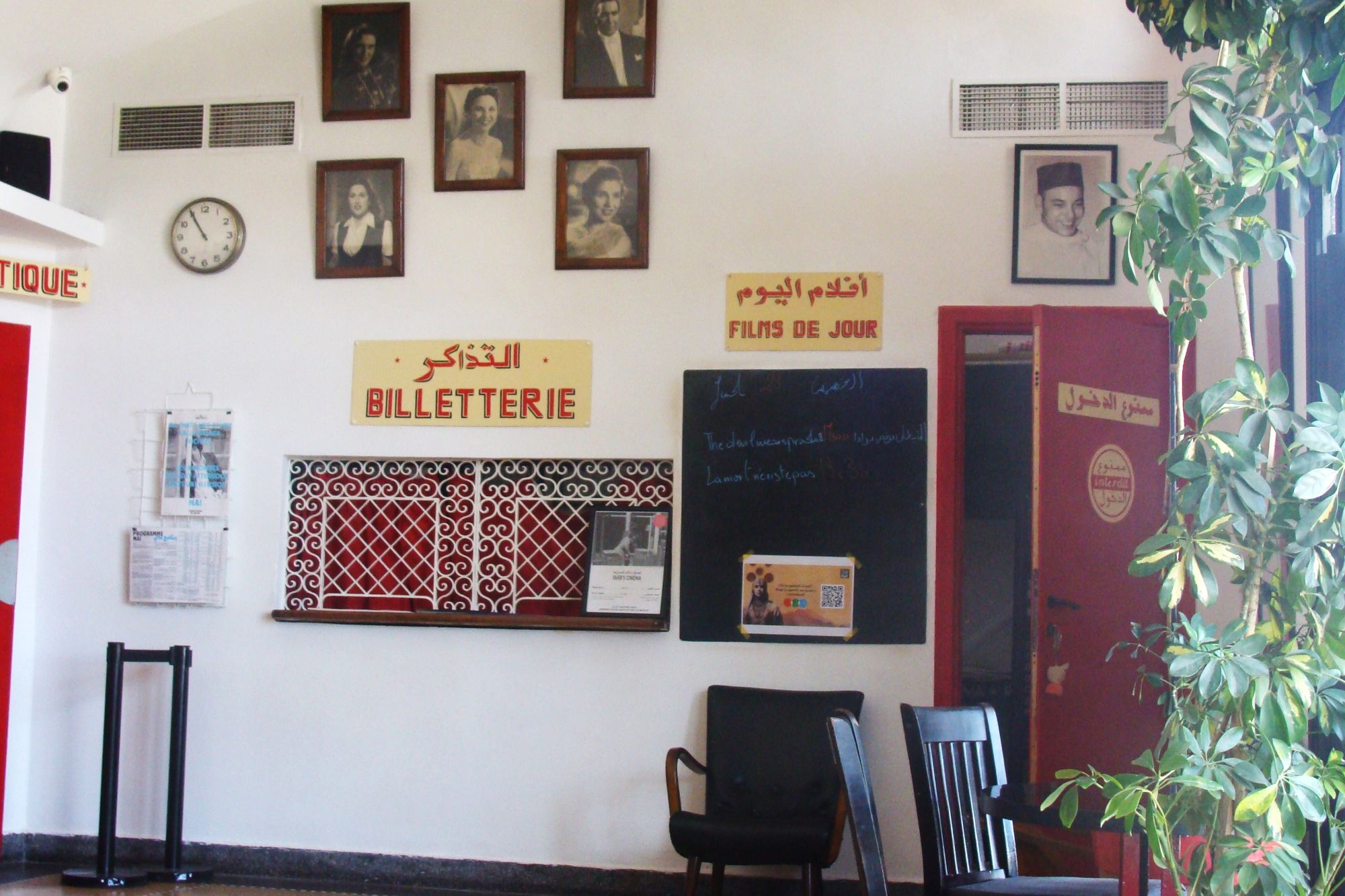
When, one Saturday in May, I attended the 5 pm screening of "Calle Malaga", a romantic drama by Moroccan director Maryam Touzani set in Tangier, a little crowd of people from various walks of life stood outside the ticket booth, a window decorated using Tangier's traditional hand-painted signage.
Locals recalled to me a time in the 1990s when the Rif was in a state of despair, with the neighbourhood's decline accompanied by increasingly restrictive social norms. They said that screenings were typically attended by men, some drawn by the violent films, others coming to smoke cigarettes and fantasise about Bollywood stars.
Today, outside the Rif, the different communities that inhabit the city seemed to intertwine: I could recognise students and young regulars from the cinema's cafeteria, a handful of foreigners and a couple from the nearby medina swathed in djellabas.
Meftouh reflects, "Moroccans have long seen going to the movies as a form of entertainment. Today, we are trying to increase participation by encouraging children and young people and teach them the importance of places like ours."
© Qantara.de