"For me, beauty is self-confidence and presence"
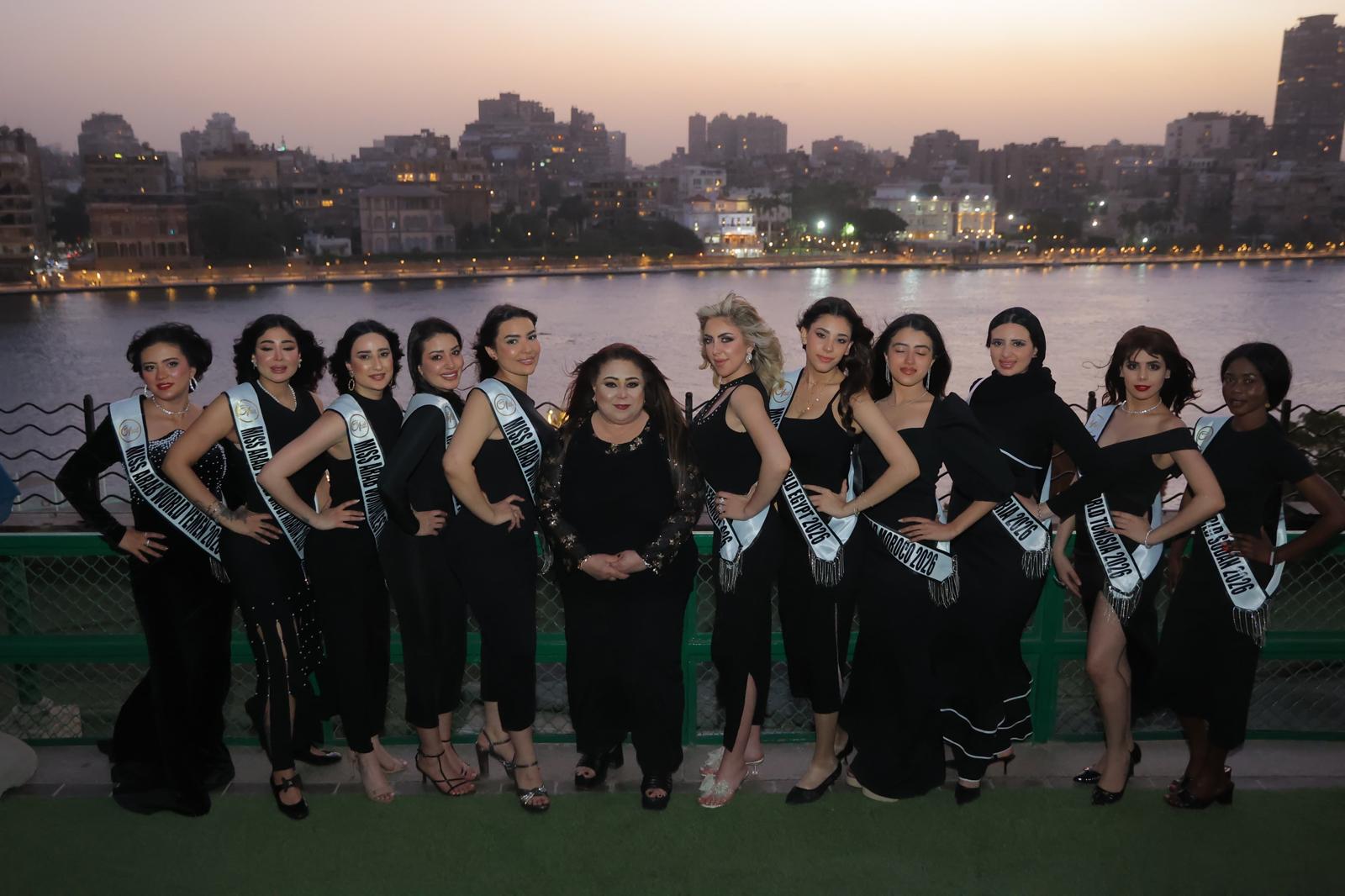
Qantara: Earlier this year, you took part in the Miss Arab World pageant. What motivated you to do so?
Muna Almohamad: Aesthetics and beauty have fascinated me ever since I was a child. For me, beauty isn’t necessarily just about outward appearance. Besides, that’s very subjective, and what’s considered beautiful varies from country to country. Personally, I associate beauty with poise, self-confidence and presence—inner beauty and good interpersonal skills.
I associate these same qualities with a beauty pageant. The overall score takes into account how you behave behind the scenes and how you interact with the staff and the other contestants.
On a personal level, I also wanted to learn how to walk and express myself professionally. I wanted to get to know other cultures and experience that sisterhood—connecting women from other cultures. That’s why I decided to take part.
What's the competition like?
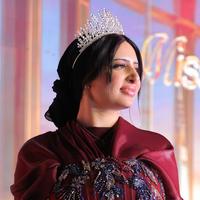
The competition has been running for 20 years now. It was founded by an Egyptian woman, Hanan Nasr, and any woman from an Arab country can apply. There's an initial national selection process within each country, which normally takes place locally. Due to the current political situation in the region, many of the national pre-selections took place online. Our runway and public speaking training was also held online.
I came out on top among the 15 Syrian contestants which meant I could represent my country at the Miss Arab World competition. Due to the tense situation in the Persian Gulf, it didn't take place in Qatar as planned, but in Cairo, and with fewer contestants than usual.
In Western countries, beauty pageants are often the subject of criticism. They are accused of promoting a specific, and sometimes unhealthy, ideal of beauty, or of reducing women to their physical appearance. Is this criticism also levelled in Arab countries?
I think it’s healthy to initially view beauty pageants with a critical eye. In Arab countries, there's criticism too, but the nature of the criticism differs from the West. In Western contests, it's the portrayal of women that tends to be scrutinised, whereas in Arab contests, the central question is whether such a competition fits in with our culture and our values.
There's no swimwear segment in the Miss Arab World pageant, for example. Personally, that was important to me. I wouldn’t have taken part otherwise as it would have gone against my personal values.
Do the ideals of beauty there differ from the traditional Western ones?
In the Arab world, "curvy" or full-figured is regarded as the ideal of beauty. What that means exactly is, of course, a matter of interpretation. What I really liked about our pageant was the diversity on display. The girls had different skintones; there was a Sudanese girl with a dark complexion, a Tunisian girl with a lighter complexion, but also fair-skinned girls. And there was a wide variety of body shapes. It's a very open concept of beauty and it sends the message I want to represent too, that every woman stands on her own, with her very own beauty.
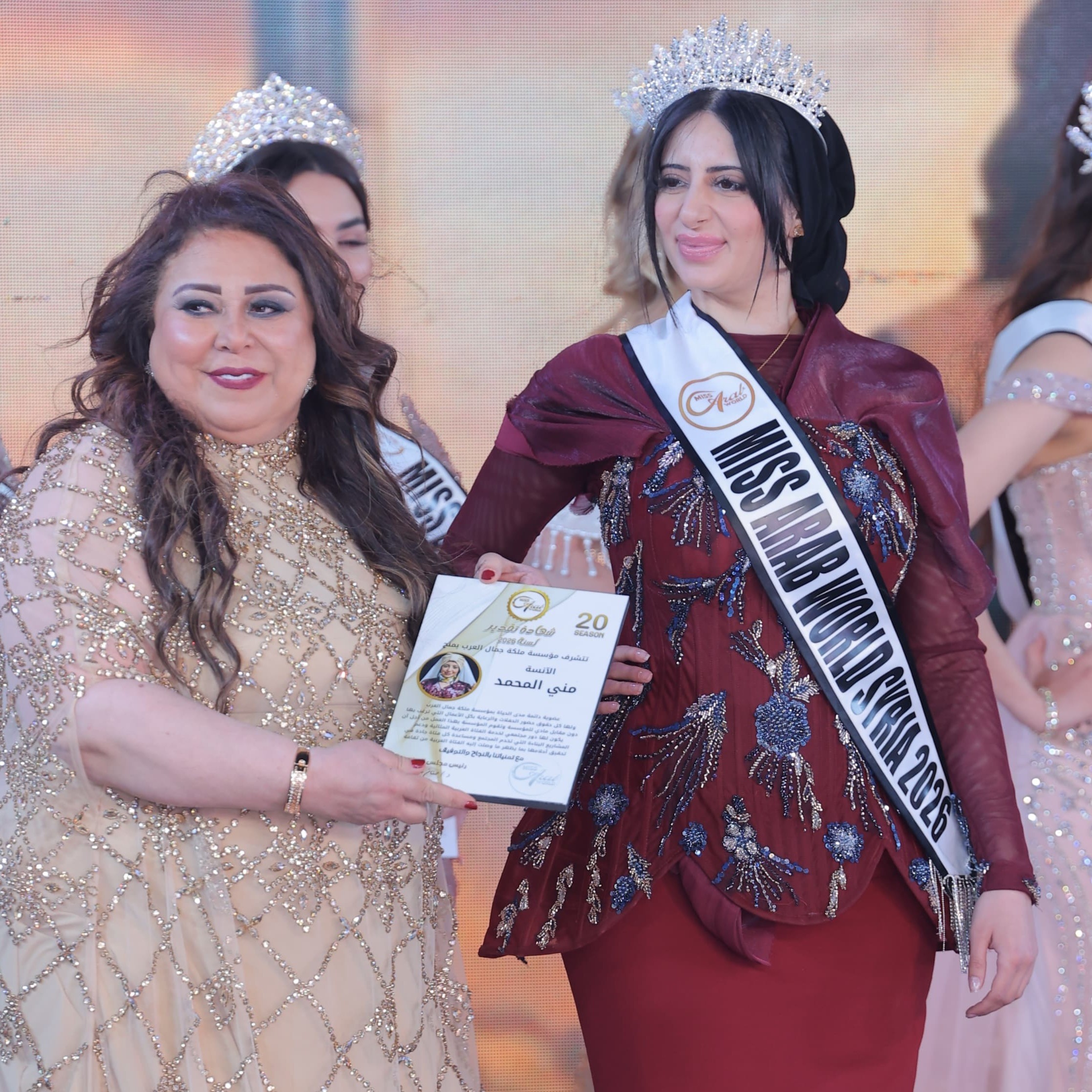
At the last Miss Germany pageant, two of the contestants wore hijabs. You yourself wear a hijab. Do you feel that traditional ideals of beauty, the kind previously dictated by these kinds of pageants, are beginning to break down?
I think it’s brilliant that two visibly Muslim girls were allowed to take part in that pageant. I’ve noticed a shift taking place worldwide. In 2016, a Somali woman, Halima Aden became the first woman to take part in a beauty pageant while wearing a hijab. She stood as a contestant for Miss Minnesota, drawing global attention to the issue of hijabs in beauty pageants. Since then, she's gone on to have a stellar modeling career.
At the 2025 Miss Universe pageant, Miss Pakistan had a burkini, or full-body swimsuit, tailor-made for the swimwear segment because she wanted to walk the runway "modestly". Alongside the classic model look—young, tall, measuring 90-60-90—more and more women who don't fit that particular mould are being booked in the West too.
Opinions are divided when it comes to cosmetic surgery. Lebanon is regarded as a hub for cosmetic procedures. How are such procedures viewed in Arab countries?
During my travels in Arab countries, I definitely see a lot of women who've had surgery. I think that's partly due to the influence of social media and global fashion trends, such as those set by the Kardashians.
At the same time, I also see a lot of natural beauty and traditional beauty rituals in Arab countries—using henna, for example, or visiting the hammam, the traditional bathhouse. They coexist.
I’d encourage every girl to think, why am I doing this right now? If someone is at peace with themselves and still wants to change something, I think that’s fine. But you shouldn’t let yourself be swayed just because everyone else is doing it.
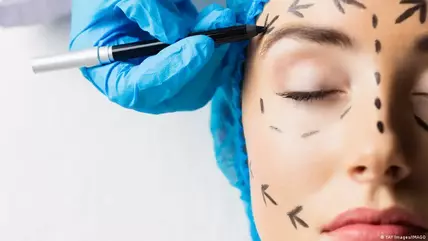
Turkey's plastic surgery boom
Ever more people are visiting Turkey from abroad for nose jobs, hair transplants and similar procedures. Prices are low, but what are the risks?
You were born and brought up in Germany. What does it mean to you personally to take part in the competition and represent Syria?
For me, it was something very special to represent my country. Especially given that I grew up in Germany. I felt that taking part helped me better bridge the gap between the two cultures. That's an issue for many people who didn’t grow up in their country of origin.
This competition has also reaffirmed my outlook on life and my way of thinking: that beauty comes primarily from within, that it radiates outwards and that treating other people well, even in small ways, creates beauty.
Do you think these competitions can also empower women?
We still have a long way to go as a society. I’m not so naïve as to say that a competition like this could solve challenges such as gender equality in the workplace or in a patriarchal system.
But a competition like this can be an opportunity because it offers women a platform. The participants are given a platform, and their voices can inspire others. Their self-confidence is also boosted, and that confidence can be passed on to those around them.
This text is an edited translation of the German original. Translated by Louise East.
© Qantara.de