Bint Jbeil – portrait of a decimated city
Topics
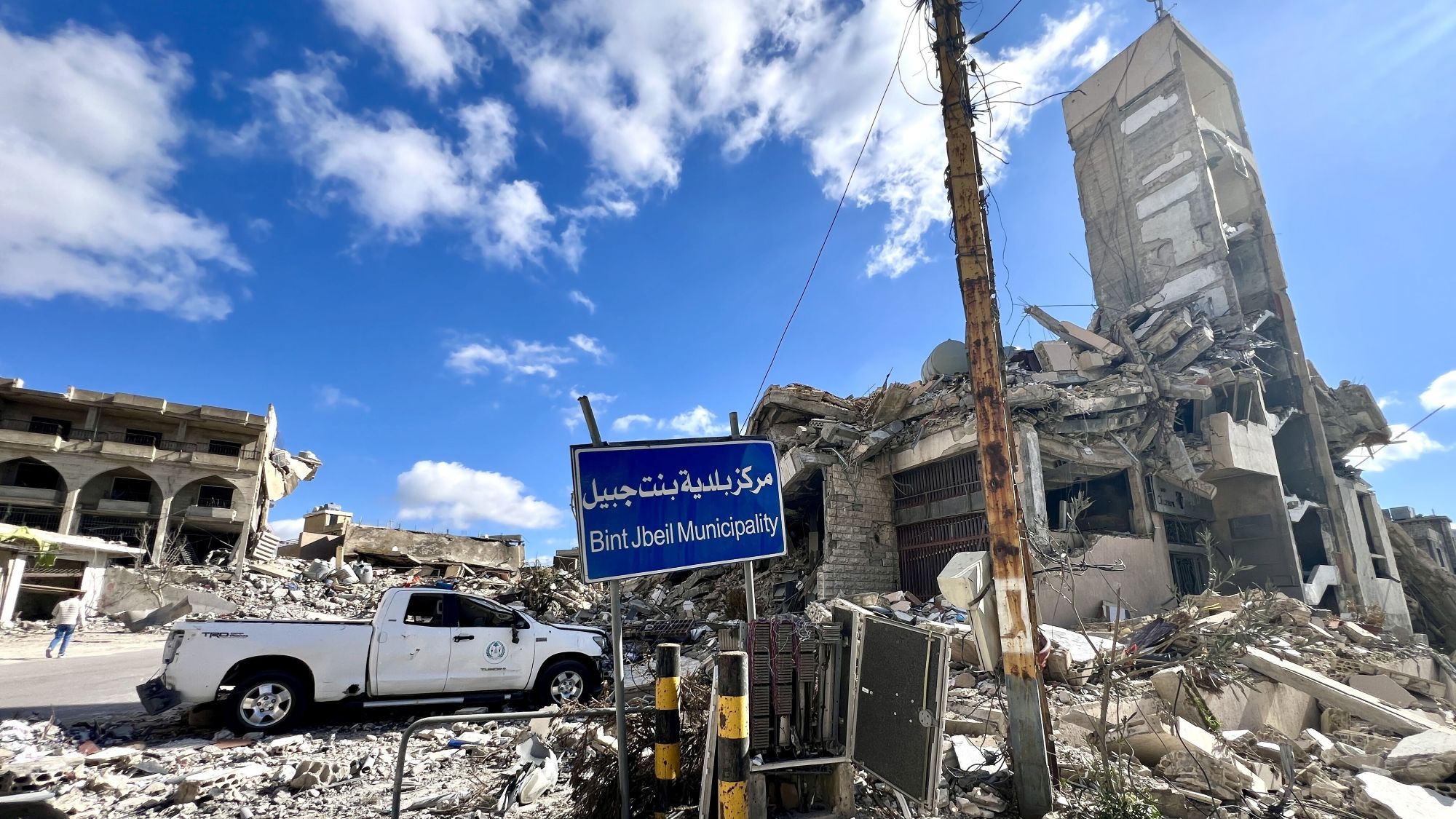
In southern Lebanon, the Israeli army is systematically destroying entire communities. The place names of these towns may be known, but for the most part, their history, and indeed, the wider history of this tradition-rich, Shiite-dominated region in southern Lebanon, are not. One of the region's key communities was Bint Jbeil, a small town now all but obliterated.
The devastation inflicted on Bint Jbeil is apparently aimed at ensuring the town is uninhabitable in the long-term. Satellite images indicate that the town centre, including the historic core, which had been restored after the 2006 Lebanon War, has been blown up, demolished, and levelled.
Israeli Likud MP Amit Halevi called for Bint Jbeil to be “erased like Dresden”, while his Likud colleague, Israel's Defense Minister Israel Katz, heralded the widespread destruction of southern Lebanese border towns.
Several mosques in Bint Jbeil have been destroyed, including the “Great Mosque”, which dates back to the Middle Ages, and was considered the region’s most historically significant Muslim place of worship. Expanded in the 17th century under the Ottomans, and partially restored after 2006, its library—which prior to its destruction held more than 3000 books—is likely lost forever.
Bint Jbeil is a particularly vivid example of the turbulent history of southern Lebanon. Predominantly inhabited by Shiites and located just four kilometers from the current border with Israel, the town has operated for centuries as an important hub between Lebanon and Palestine.
The small town was famous for its Thursday Market, which, due to the abundance of the goods it offered, was often referred to as "the Half-the-World Market”. Marriages were also common between residents of south Lebanon and Palestinians.
According to Mustafa Bazzi, a historian from Bint Jbeil, some 2,000 of the town’s residents settled in Palestine during the British Mandate period alone. Many fought side by side with the Palestinians, both during the uprising against Mandate rule (1936–1939) and again, a decade later, in the First Arab-Israeli War. The first Lebanese casualty of that conflict was from Bint Jbeil.
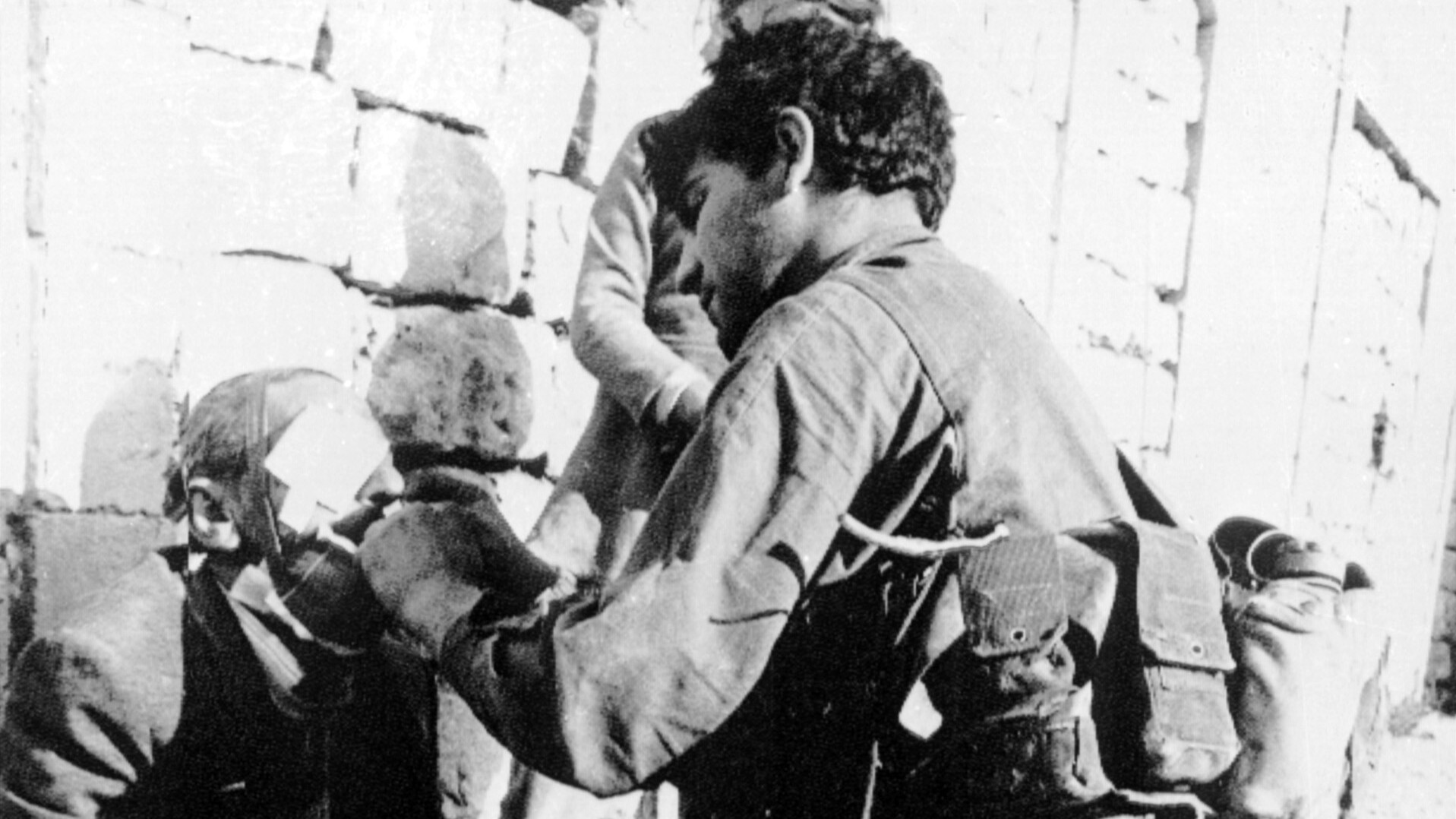
In the early 1970s, Palestinian militias transformed southern Lebanon into an operational base, with Bint Jbeil emerging as their primary stronghold. Young, left-leaning Shiites could easily be recruited for guerrilla operations against Israel. In retaliation, Bint Jbeil was the repeated target of Israeli strikes. In October 1976, an artillery attack on the Thursday Market claimed the lives of 14 visitors.
During the Lebanese Civil War (1975–1990), Israel initially provided support to Christian militias in the Bint Jbeil area, hoping to create a counterweight to the Palestinian Fatah and to its ally, the Muslim militia known as the Arab Lebanese Army .
The Israelis established the predominantly Christian, Free Lebanese Army (FLA) under the command of Major Saad Haddad. Following the week-long Israeli invasion of southern Lebanon in March 1978 (codenamed Operation Litani), Haddad took control of a broad band of land along the border. Bint Jbeil became one of the main bases of a region proclaimed by the FLA the “Free State of Lebanon.”
Hezbollah gains a foothold
Following the renewed Israeli invasion of Lebanon in 1982, the South Lebanon Army (SLA), which was equipped by Israel, emerged from the old FLA. To escape what they perceived as foreign rule, a significant portion of the Shiite population left Bint Jbeil. Those who remained, and those who supported Khomeini after the 1979 revolution in Iran, were subjected to repression.
Bint Jbeil became a symbol of the repressive occupation of the security zone, not least once the Lebanese Christian general, Antoine Lahad, was appointed SLA commander during a large military parade in Bint Jbeil in April 1984. By then, several Lebanese militias were fighting the occupiers. Initially, they were led by the Shiite Amal Movement, which had contributed significantly to the political awakening of the Shiites in Lebanon in the 1970s under its founder Musa as-Sadr (1928–1978).
In terms of armed resistance though, it was the Shiite Hezbollah—founded in 1982 and heavily supported by Iran—that took the lead from 1985 on. Operating with ever increasing professionalism, it raided SLA positions and attacked northern Israel with rocket launchers. When Israel and the SLA hurriedly withdrew from the southern Lebanese border region in the summer of 2000, credit was given, within Lebanon, to Hezbollah.
To celebrate this self-declared victory over the occupiers, Hezbollah was strategic in choosing Bint Jbeil as a location. On May 26, 2000, then Secretary General, Hassan Nasrallah delivered a famous speech at the local soccer stadium, comparing Israel to a spider’s web—a metaphor for an enemy that was easy to overcome.
In the years that followed, it was Hezbollah that used the town as its main base in the border region. In Israel, the town was increasingly referred to as the "capital of terror", a retort to the designation "capital of resistance and liberation", with which Nasrallah had honored Bint Jbeil.
At that point, however, the town was not wholly in the hands of the Shiite Khomeinists; traditionally Bint Jneil was more closely aligned with the pluralistic, Shiite umbrella movement, Amal.
But with Iran offering generous funding for reconstruction projects, Hezbollah was able to win over an increasing number of residents.
Bint Jbeil’s Reconstruction After 2006
Bint Jbeil, and the area surrounding the town, were used as a centre of operations by a regional division of the increasingly well-armed Shiite militia. With attacks on northern Israel intensifying, the Israeli army again invaded southern Lebanon in 2006.
Bint Jbeil’s infrastructure and residential neighbourhoods, as well as civilian facilities such as the Thursday market and the soccer stadium were deliberately bombed.
Within Israel, calls grew louder to "wipe out" Bint Jbeil. The massive bombardments were viewed as justified retaliation for the deaths of eight Israeli soldiers, whose unit had come under heavy fire. This battle is still remembered by Israelis as particularly traumatic, if also heroic, because one of the soldiers threw himself on a hand grenade to save his comrade.
After the 2006 Lebanon War, the residents of Bint Jbeil applied themselves to rebuilding their town. The development boom was funded not just by Hezbollah and its Iran-funded welfare organisations, but also by the Lebanese government, Qatar and, in the education sector, French, British, and Italian development projects.
Yet Hezbollah’s influence grew steadily, not least because it succeeded in forging an alliance with the powerful local Bazzi family clan. Since 2001, members of the Bazzi clan have topped Hezbollah-aligned electoral lists in the town, holding the office of mayor since 2004. More recently, they've had to cooperate with politicians from the Amal Movement, as happened in 2025, to run on a joint, "List of Development and Loyalty".
This close integration with the municipal administration helped Hezbollah further consolidate its position in Bint Jbeil. Together with the local government, the group organised an annual mass rally on the national "Day of Liberation", which marks the end of the Israeli occupation in 2000.
The event served primarily as a showcase, allowing Hezbollah to promote itself as leaders of the armed resistance against Israel. Posters depicting its martyred heroes became a fixture around town.
When the famous soccer stadium was renovated with the help of Hezbollah’s sports foundation in 2014, Nasrallah assumed the role of patron. At the inauguration ceremony, he was represented by a cadre of Hezbollah's "Loyalty to the Resistance Bloc", which has been a participant in the Lebanese government since 2005.
Target of Israeli counterattacks after October 7
Bint Jbeil's reconstruction proceeded rapidly. Roads, the power grid, and the water supply were expanded; sidewalks were paved; gardens and playgrounds were established, and the arched arcades flanking the Thursday market were renovated. Several of the 13 educational institutions and schools—including two Christian ones—that had been damaged during the 2006 war were renovated.
The local library, which had previously been housed in the local secondary school, was relocated to a restored historic building, where it was expanded into an active cultural centre that eventually held a collection of 10,000 books. Ministers from Beirut regularly attended the annual Bint Jbeil festival of culture, folklore, and tourism.
The local population grew. Most recently, residents numbered more than 6,000, although some 43,000 people were registered there, over half of whom live in exile in the city of Dearborn in the U.S. state of Michigan.
All that civic development came to a standstill when Hezbollah launched rocket and drone attacks against Israel in the wake of Hamas’s terrorist attack on October 7, 2023. According to the Israeli army, attacks on a massive scale originated in Bint Jbeil. As a result, the town was among the first targets of the Israeli counterattacks and was hit particularly hard during the widespread airstrikes in September 2024.
Returning to find ruins
The Israeli army is slowly and partially withdrawing from southern Lebanon. Returning residents are confronted by the destruction of their homes and local infrastructure. A view from the ground.
During the Israeli ground operation in the border region in April 2026, residents were ordered to leave Bint Jbeil. Several hundred Hezbollah militants remained. According to Israeli accounts—which cannot be verified—they operated out of an extensive tunnel system, set booby traps, and fought a fierce battle against the invading soldiers, suffering heavy losses.
As elsewhere in the border region, Israeli troops have now started systematically destroying Bint Jbeil. The first target was the soccer stadium, which had already been heavily bombed from the air. The military released a video showing the resulting decimation. In Israel, the operation is being hailed as a particular triumph over Hezbollah.
It is unclear to what extent the two hospitals—in Bint Jbeil and in the neighboring village of Ainatha—have fallen victim to Israel’s campaign of destruction.
The state-run hospital was already damaged by Israeli bombs at the end of March. According to the Israeli army, soldiers had been fired on from the building. A subsequent Israeli presentation of a weapons stash was dismissed as propaganda by the hospital administration on its Facebook page; they claim the premises shown did not belong to the hospital.
That was in mid-April. In recent satellite images, both hospitals appear largely intact, at least from an aerial perspective, but the destruction continues and has now extended to educational institutions.
The Saad School, which also housed a branch of the Lebanese University, and the historic Bint Jbeil Vocational School, were partially destroyed. At least one arcaded wing of the Thursday Market has also been destroyed; the other is visibly damaged. The historic town hall is still standing although it appears to be damaged.
The displaced residents of Bint Jbeil are watching with horror the unfolding destruction of their hometown via satellite imagery online. Nevertheless, they remain determined to return one day.
Historian and migration researcher Hana Jaber, director of the Lokman Slim Foundation and herself a native of Bint Jbeil, accuses the Israelis of “urbicide”: the targeted destruction of a living environment. She cannot comprehend why the Israelis are waging such a campaign of retribution. But whether in Gaza or in southern Lebanon, the kind of empathy she calls for is a rarity in Israel.
This text is a translation of the German original by Louise East.
© Qantara.de