Living between sewage and rubble
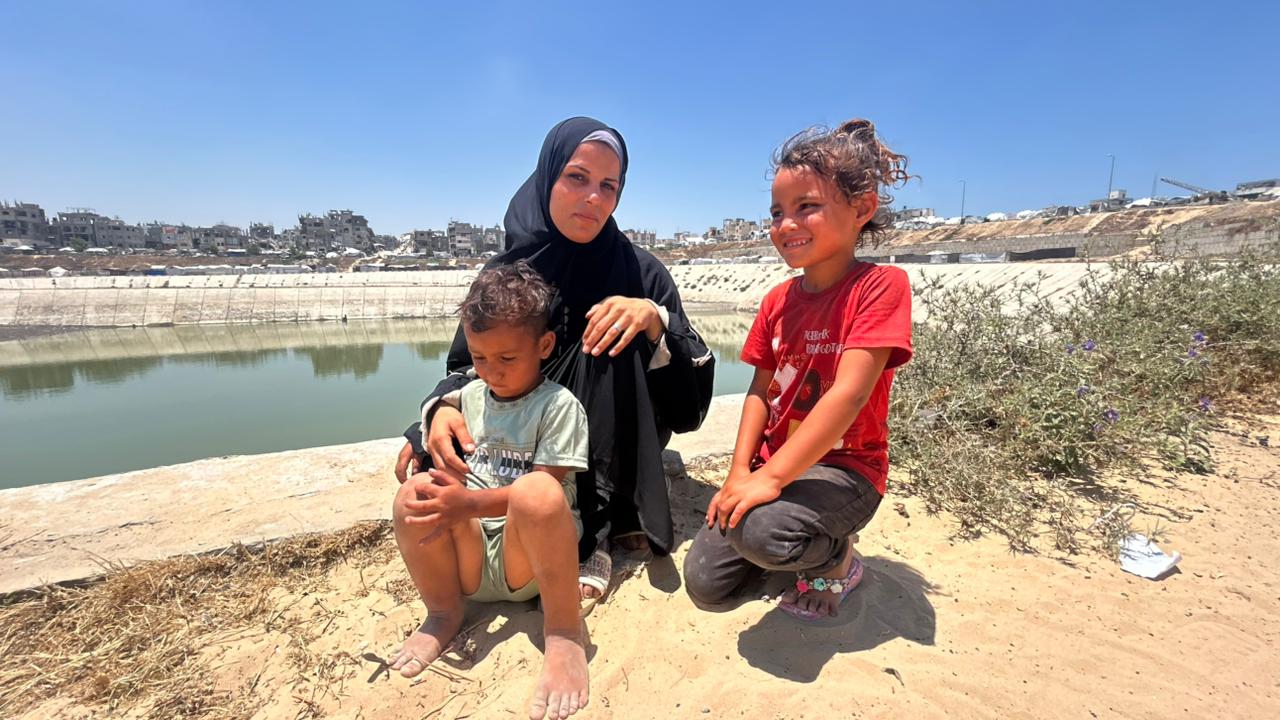
Palestinian mother Walaa al-Shafei rushes back to her tent after finally receiving her ration of bread from a distribution point in the Khan Younis area. Her two children, Hanan (6) and Amjad (4) are waiting for her out front. Just meters away from their tent is a large reservoir full of raw sewage water.
Walaa embraces her children with relief. Every time she leaves the tent, she fears they might fall into the reservoir, which is more than ten meters deep and separated from them only by a dirt embankment just four meters high. She touches their faces, then examines their bodies. She is hoping to see improvement in their blistering rashes, caused by flies and mosquitoes that swarm around the reservoir beside which the family took shelter nearly a year ago. The children's skin is redder than ever, and they can’t stop scratching.
"Life here is hell," the 22-year-old told Qantara. "Their skin and stomach ailments have not left them. I am constantly shuttling them between medical points. Sometimes they begin to improve, before the sickness overtakes them again."
The young mother has been caring for her children alone since her husband was killed in an Israeli airstrike while attempting to rescue wounded people near an UNRWA shelter school at al-Maghazi camp in central Gaza on 9 January 2024. The family were later displaced southward to Khan Younis.
Like Walaa, hundreds of displaced people now live in ragged tents and makeshift shelters around the sewage pool in the al-Amal neighbourhood, in the north of Khan Younis. The area was uninhabited before the war, but intense bombardment and Israeli evacuation orders across the strip forced the displaced to pitch their tents there.
As displacement persists and war-ravaged infrastructure continues to crumble, 2.1 million people in Gaza face a spiraling health and environmental crisis driven by deteriorating water security, a shortage of hygiene supplies and the spread of sewage water and mud near shelter areas. On 25 April 2026, the World Health Organisation (WHO) reported that more than 70,000 parasitic infections had been recorded among displaced people in Gaza during the first four months of the year. Over 80% of displacement sites also reported skin conditions such as scabies, lice and bedbug infestations.
Walaa gestured toward her thin children and explained: "They can barely move. The insects live with us and eat with us and we can't fight them. I can't move anywhere else." The young mother also fears that rats might bite her children. On more than one occasion, she woke at night to find mice in their blankets.
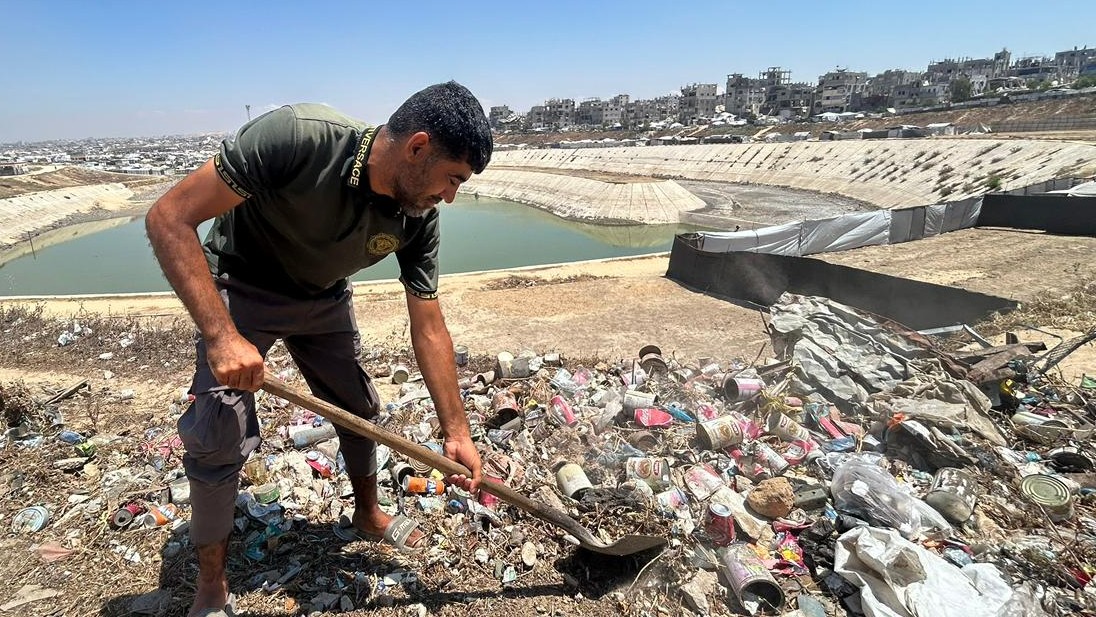
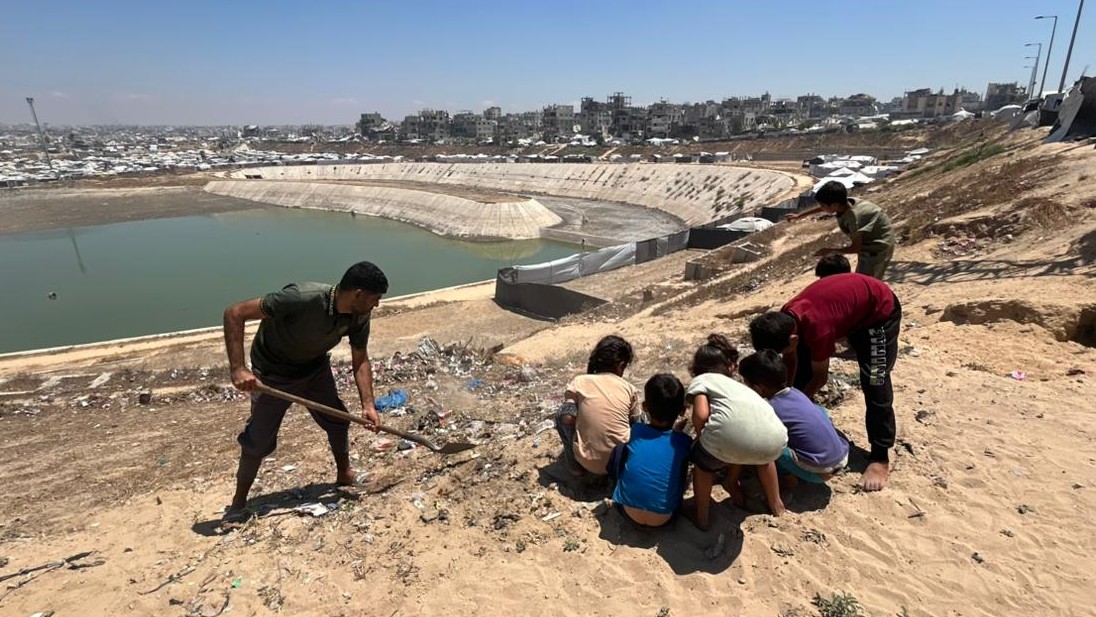
Further up from Walaa's tent, Ayesh Hamdan, 38, was cleaning the dirt slope leading down to the sewage pool with his children and some neighbors. He was clearing away rubbish and weeds in order to prevent rodents, scorpions and snakes from making their way through towards the tents.
"We've encountered all kinds of insects and reptiles here," he said. "We have to stay alert at all times so they don't bite or harm any of our children."
He has four children: Sharif (11), Mohamed (9), Jude (6) and Nidal, his six-month-old infant. They are all plagued by skin and gastrointestinal illnesses.
"We haven't escaped any of the diseases, in any of their forms," said Ayesh, a construction worker displaced with his family from Beit Hanoun in the northern Gaza Strip. "We move weekly from a dermatologist to an internist. Just as one of my children recovers, another falls ill. We've been living here since we were displaced nine months ago, through compounded catastrophes, winter to summer. The latter is by far the worst, with the constant suffocation, the killer smells and the diseases that never leave us."
Before the war, wastewater treatment basins were typically located east of Gaza, near the Israeli border and away from populated areas. They were funded by foreign nations to the tune of hundreds of millions of dollars. But with Israel's seizure of those zones and the destruction of the basins and sewer networks, Gaza's municipalities have been forced to open new dumping sites close to displaced populations, relying on whatever pre-war sewage pools were still available. This is the case across different parts of the strip.
The problem does not end there. Rubble-collection sites and solid-waste sorting areas are haphazardly scattered next to displacement camps, like this one next to the al-Amal pool. Diaa Qudeih, 20, who was displaced with his parents and sister six months ago, has watched his surroundings turn into a landfill and rubble-processing zone.
"We choke on the dust from trucks passing right by us," he explained. "Then we choke again when the rubble is sorted through large sieves that fill the entire area with dust."
The young man revealed his swollen feet, covered in blisters and sores from insect bites, as flies swarmed incessantly over his wounds. "We were in an overcrowded shelter school, and we wanted a bit more space. But we found nowhere other than this dump, so we were forced to move here. We never imagined life could be this hellish."
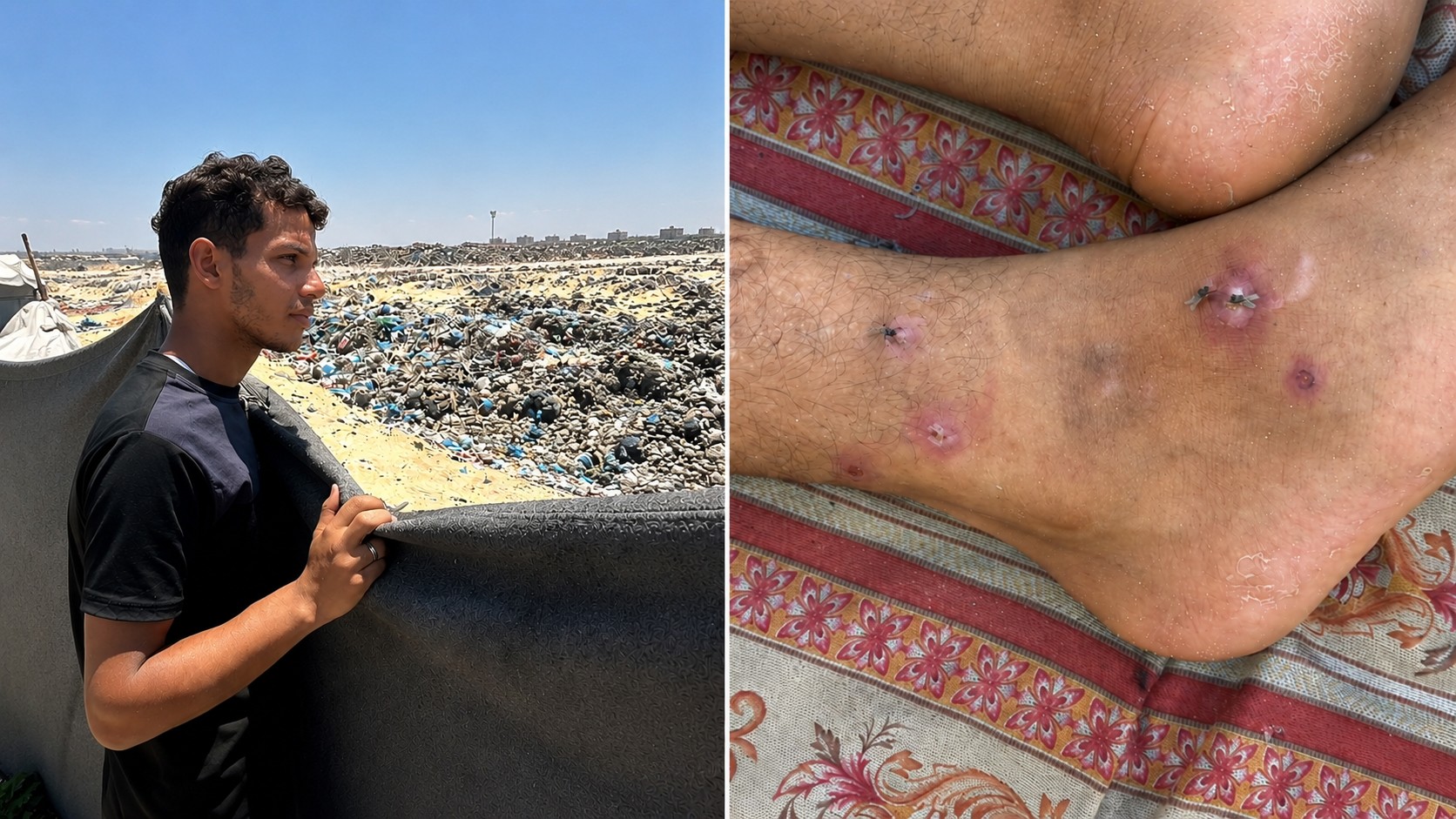
His greatest wish for the time being, he says, is to obtain medication to heal his wounds. He cannot return to his home, which lies beyond the "yellow line"—the zone controlled by the Israeli military since the October ceasefire, where residents are not allowed to return. That area comprises roughly 60% of the Gaza Strip territory.
Abdul Raouf al-Mana'ma, Dean of the Faculty of Health Sciences at the Islamic University of Gaza, explained that most current dumping sites were created after the Israeli military took control of the main treatment basins east of the strip, behind the "yellow line." These new sites now lie within displacement zones, adjacent to populated areas and with no treatment whatsoever.
Al-Mana'ma, a professor of microbiology, told Qantara that sewage basins, waste dumps, and rubble-sorting sites have become "deadly health hazards": ideal environments for insect and rodent proliferation and disease transmission. He added that foul odors generate severe psychological distress and weaken immune systems, making disease transmission easier and more widespread among communities living nearby.
He also noted that parasitic diseases such as scabies can trigger severe intestinal infections, including amoebiasis, giardiasis, and pinworm. He also pointed to a sharp rise in chickenpox cases, prompting the WHO and the Palestinian Ministry of Health to consider emergency responses, particularly in Khan Younis and Gaza City. The current health system in the strip, he stressed, is incapable of managing such an unprecedented surge in infectious diseases, given the absence of laboratory supplies and essential medicine.
According to the Ministry of Health in Gaza, laboratories are facing severe shortages of essential supplies: there is an 87% shortfall in laboratory testing materials and a 74% shortfall in the basic consumables—like sample vials and syringes—needed to carry out tests. As a result, blood gas testing has been completely suspended, while complete blood count (CBC) tests risk being halted entirely within days.
The solution, al-Mana'ma said, lies in the Israeli military's withdrawal and in allowing the displaced to return to their homes. This, he argued, would enable them to leave areas affected by these health hazards and help curb the spread of disease.
This text is an edited translation of the Arabic original. Translated from Arabic by Basyma Saad with the support of AI-assisted translation tools.
© Qantara.de