"We want to be a party for all citizens"
Topics
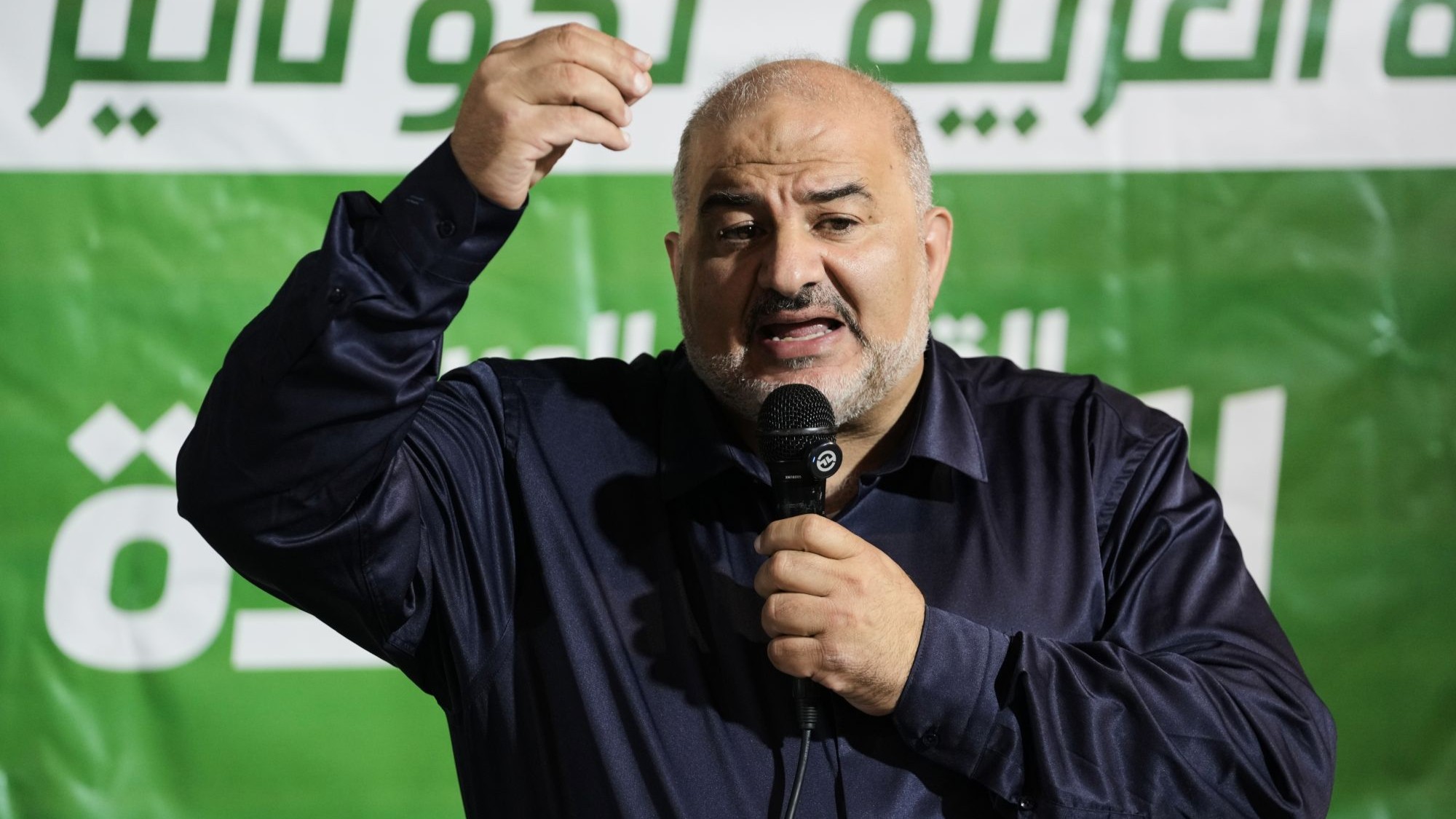
Qantara: Your party, Ra’am, currently holds five seats in the Israeli parliament. Elections take place on 27 October. How many seats would you like to win?
Mansour Abbas: At least eight. We expect the other opposition parties willing to form a government to win 53 seats. Ra'am would therefore need eight seats to help these parties secure a majority in the Knesset – 61 out of 120 seats. They would have to include us in the coalition negotiations.
Yoav Segalovich is second on the Ra'am list for the Knesset election. A Jewish-Zionist candidate on the list of an Arab-Muslim party is a first. What do you hope to achieve through this?
Right-wing parties and politicians repeatedly make racist remarks about the Arab section of Israeli society, even going so far as to question the legitimacy of their citizenship. By supporting Segalovich, we are taking a stand against this racism and in favour of cooperation. Furthermore, Segalovich is a pioneer in the fight against criminal groups, both Jewish-Israeli and Arab-Israeli. As such, he enjoys support from both sides of society.
Violent crime within the Arab-Israeli community has risen significantly under Benjamin Netanyahu's current government: there were almost 150 deaths in the first six months of 2026 alone. What other concerns do Arab voters have?
The rise in crime and violence is the most important issue. Everyone in Israel has the right to live in safety. The second major concern is the Bedouin population in the Negev. To this day, the Israeli state does not recognise many Bedouin villages. The people there have to get by without basic amenities – without electricity or tarmac roads.
These unrecognised villages are also at risk of being demolished. Under Itamar Ben-Gvir, the current far-right Minister of National Security, there has been a steady increase in demolitions: in 2024 alone, over 5,000 structures were demolished.
There are many problems in Arab society that can be attributed to discrimination, including the nature of the political system. In Israel, political parties often represent specific social groups. For example, there are parties that primarily champion the interests of the ultra-Orthodox from the Mizrahi community [Jews from West Asia and North Africa] or the Ashkenazi community [Jews from Europe]. This naturally influences government policy. And if you are not part of the coalition and the government, nobody will look after the interests of your group.
Ra'am has been in government before, from 2021 to 2022, as part of the so-called "Government of Change" under Naftali Bennett and Yair Lapid. What did you manage to achieve during that time?
Fundamentally, being part of an Israeli government was a political success. We demonstrated that Jewish and Arab citizens can work together politically – not just in social, economic and medical spheres. And we were able to make our issues priorities. For example, we achieved success in combating criminal groups and the number of cases fell. We were also able to channel funding into improving infrastructure and education within the Arab community.
"The system is based on violence"
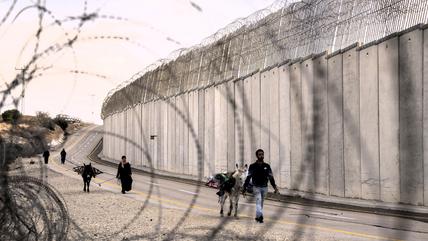
In this interview, the head of Israeli NGO B’Tselem discusses the increasingly boundless violence in the region and argues that defending Palestinian rights is defending human rights worldwide. She urges Germany to lead in upholding international law.
You say that politics in Israel is conducted along ethnic and religious lines. Who, then, are your voters?
Yoav Segalovich's membership shows that Ra'am is reaching out to all sections of society. We no longer represent only the conservative section of the Muslim-Arab community.
Ra'am, however, has its origins in the Islamic Movement in Israel, which was regarded as being close to the Muslim Brotherhood. In the 1990s, the movement split over the question of whether it was legitimate to stand for election in Israel. The more pragmatic southern wing of the movement came out in favour of standing for election; Ra'am became its political arm. In 2007, you became the party's general secretary and in 2019 you were elected to the Knesset for the first time. What has changed under your leadership?
It is true that we began as a party for conservative Muslims within Arab society. However, our focus has shifted: we want to be a party for all citizens. To achieve this, we must expand our partnerships within Arab society, but also within Jewish-Israeli society.
What we can achieve also depends on how many partners we can find, and how many different people we can bring together. It is, of course, a challenge to maintain our conservative base whilst at the same time showing other social groups that we take their interests seriously.
In the upcoming election, there is another Arab coalition running: the Joint List, comprising the Hadash, Ta'al and Balad parties. All three are left-wing, secular and have a predominantly nationalist orientation. Why should Arab voters choose Ra'am rather than the Joint List?
The key difference is this: we want to become part of the coalition and the government, whilst the Joint List wishes to remain in opposition and attempt to influence policy from the outside. We have pursued this approach for decades – without being able to improve our social and economic situation. Only by being in government will we have sufficient power and opportunities to tackle the problems facing the Arab population.
You firmly believe in the concept of participating in government. However, the "Government of Change" collapsed in 2022 and early general elections were called. Why did it fail?
The balance of power in the Knesset. Our coalition held 61 seats – a majority, but a very narrow one. Netanyahu's right-wing opposition held 53 seats at the time, eight fewer. Unfortunately, the Joint List, with its six seats, joined forces with Netanyahu's opposition. This brought the tally in the Knesset to 61 to 59. When a female MP finally defected from our coalition, we lost our majority.
Damage control
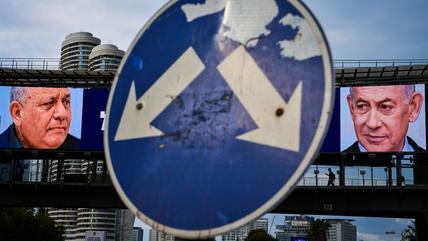
Israel votes on 27 October, with Netanyahu's far-right coalition facing an opposition bloc. Jonathan Shamir argues the opposition offers continuity, not change: it seeks to repair Israel's image, not end the violence or confront Palestinian suffering.
If the opportunity were to arise, would you also form a coalition with Benjamin Netanyahu and his Likud party?
We have held discussions with Netanyahu on this matter in the past. However, given the events of the past four years, I do not see this as an option. Many people in Israel – whether Jewish or Arab – want to see a new government at the helm of the country. That is what we are counting on.
You describe yourself as an Israeli citizen and as a Palestinian. The situation in the West Bank and Gaza is arguably more dire than ever before. How do you view this?
We immediately condemned the attack in Israel on 7 October 2023. The current government failed to protect its citizens at that time. The most important thing now is to restore hope to the people of Israel and the Palestinians. We cannot resolve this conflict on our own, but we can play our part: because, as Palestinian Arabs and Israeli citizens, we understand what is happening on both sides.
Ra'am supports a two-state solution – we are convinced that it serves the interests of both Israelis and Palestinians. Our priority, however, is first and foremost to work for the people who voted for us – and to address the problems facing Arab society in Israel.
Election day is drawing nearer. Right-wing parties have announced their intention to send so-called election observers specifically to Arab communities.
I say to them: a warm welcome. They are trying to undermine the morale of Arab citizens, to intimidate them, to prevent them from exercising their right to vote. They will not succeed.
© Qantara.de