How families are filling Gaza’s leadership void
Topics
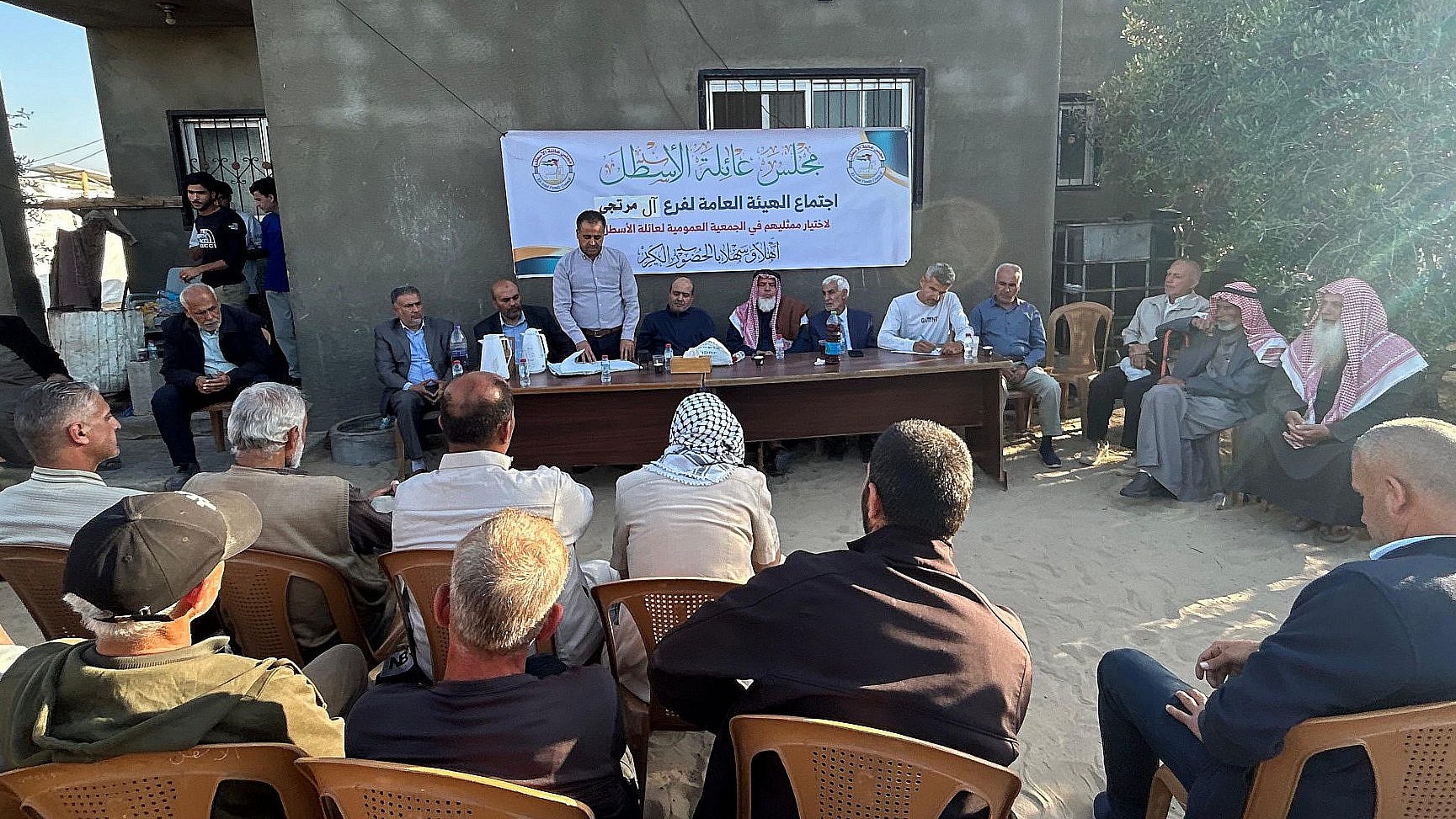
In the shade of a building in the Gaza Strip’s southern coastal plain of Al-Mawasi, hands quietly rise in approval. A legal adviser moves methodically through a list, collecting signatures from those gathered.
The atmosphere, around noon one day in early May, is deliberate and formal. It looks, in many ways, like any other organizational election. Except this is not a trade union or a municipal council. It is a family.
Some 160 men, representing the Murtaja branch of the Al-Astal family — one of the besieged enclave’s largest and most prominent clans — have just elected eight candidates to their general assembly by acclamation.
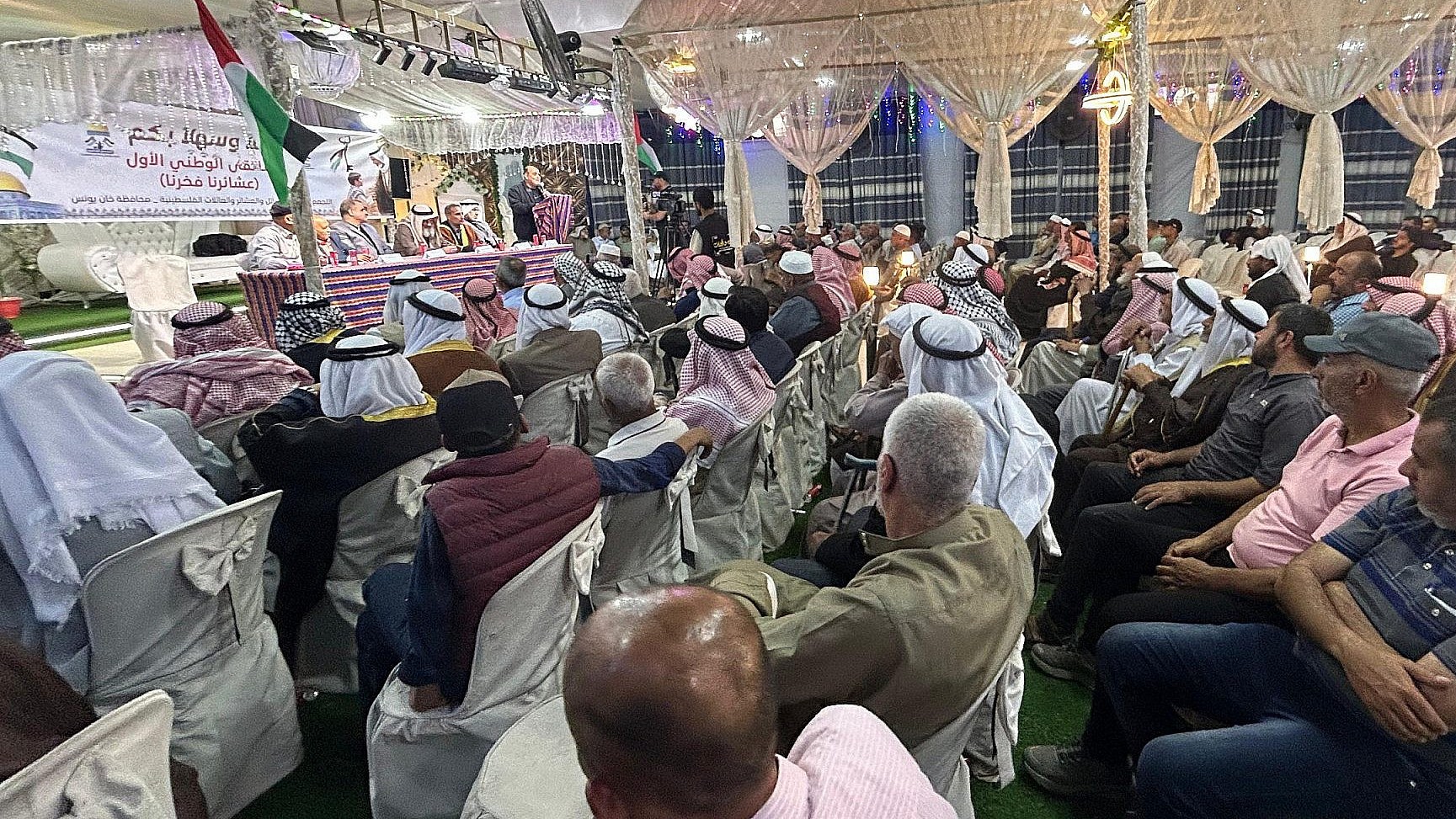
These internal elections, once informal and irregular, are now taking place across Gaza at a scale residents and analysts describe as unprecedented. Families that once relied on a single mukhtar — a community leader who is nominated rather than elected — are restructuring into tiered representative bodies, with general assemblies, elected family councils, and formal charters governing how decisions are made and who gets to make them.
But these elections are not confined to Gaza’s largest clans, explained Faten Harb, a feminist activist, community mediator, and mukhtara who was recently elected to the Deir Al-Balah municipal council. Through her work, she has witnessed the spread of such elections across the Strip.
“Every family, whether it numbers a few dozen or tens of thousands, wants a council to represent it,” Harb said. “A family without a council risks having its rights overlooked, including its access to aid from some organizations.”
This acceleration is occurring against the backdrop of the collapse of Hamas’ governing apparatus, the continued absence of the National Committee for the Administration of Gaza (which was supposed to take charge of the Strip in accordance with the so-called ceasefire), and the growing dependence of major aid organizations on clan-supplied registries to determine who receives assistance.
Following Israel’s crackdown on the UN Relief and Works Agency (UNRWA) and the broader international aid apparatus, Gaza’s family networks have started filling a void that formal institutions were forced to vacate.
Mohamed Mansour, spokesperson for the Egyptian Relief Committee — one of Gaza’s largest and most active humanitarian bodies — said that his organization has relied on clan-supplied registries since it began operations two years ago.
“These lists are the most accurate and professional,” he said, “particularly because each clan representative will not exclude any family from registration.” Via 40 distribution points across Gaza, and using databases provided by clans, Mansour said the committee’s aid has reached 450,000 families.
This arrangement is not without flaws. “Several times there are conflicts between clan representatives,” Mansour acknowledged, “and the Egyptian Committee asks them to agree on a single representative or body through which to receive assistance.” It is precisely this friction, he suggested, that generated a push for formalized, elected bodies whose legitimacy is harder to contest.
The mechanics of self-organization
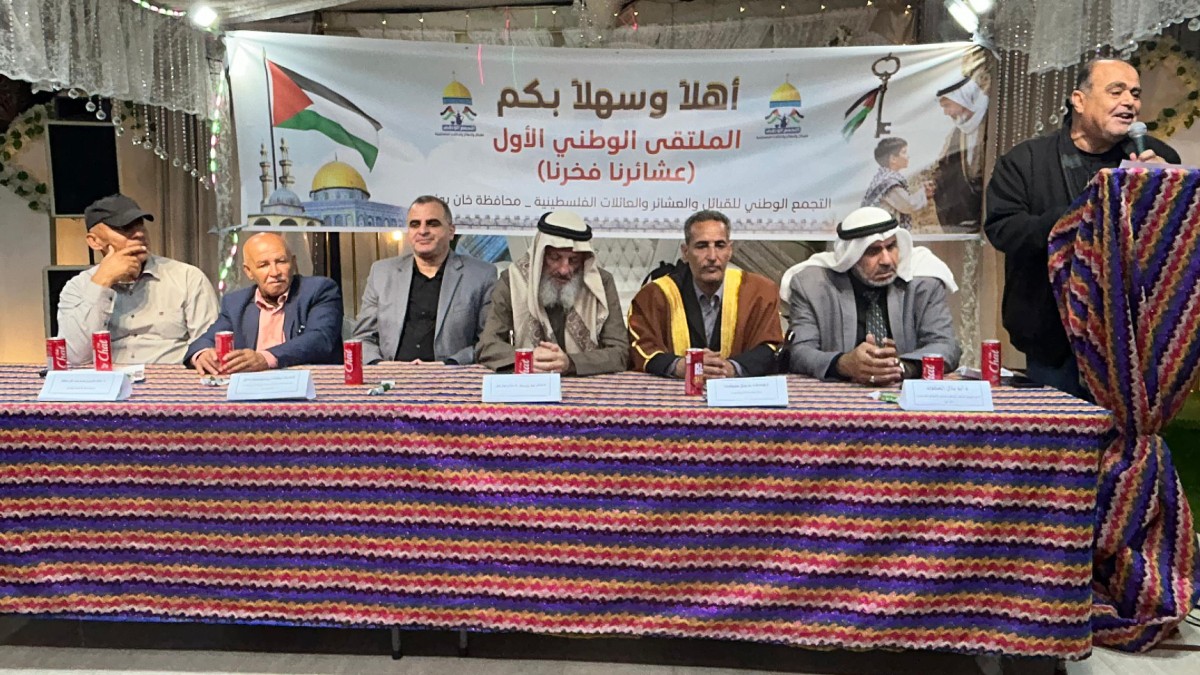
Sheikh Tariq Al-Astal, who chairs both the Al-Astal family council and the National Gathering of Palestinian Tribes, Clans, and Families, described the process his family undertook as a model for others. What was originally a clan of six branches was re-organized into 30 sub-branches to facilitate representation, with each branch electing delegates at a ratio of one representative per 20 members. The resulting general assembly then elects the family council, which in turn selects its own chair, deputy, and sub-committees, including one for women, another for social solidarity, and a third for sports.
“Families and clans are moving toward forming representative councils that speak on their behalf before various relevant bodies, in a way that helps organize their work, streamlines procedures, and strengthens their presence within the framework of civil society institutions,” Al-Astal said.
The elections themselves, he argued, promote consultation among members and strengthen institutional practice within clans. But he admitted that they are also a preparation for something larger: participation in general elections, municipal councils, and whatever governance structure eventually emerges in Gaza.
Taha Al-Qassas recalled how the killing of his clan’s mukhtar by an Israeli airstrike two years ago left the family without formal representation at a time when it was most needed. “The absence of a representative body prevented our family members from benefiting from many things, including assistance that depended on lists submitted by clan representatives,” he said.
To address this, the family founded a council, drafted a charter, and put it to a vote before a general assembly of more than 510 registered members, all male and over the age of 16. The assembly elected a 13-member family council for a four-year term, renewable once, which then elected its own chair and committees.
Even candidacy fees were formalized: 3,000 New Israeli Shekels (around $1,000) for the mukhtar position, NIS 200 for a council seat, NIS 100 for the general assembly, and NIS 10 for the broader membership body, with proceeds going to a fund that serves the clan. “The mukhtar is closer to a head of state and the council is like the government,” Al-Qassas explained.
Nourhan Al-Aqqad, coordinator of the Khan Younis Families Forum, said that access to aid became a central driver behind the rush to form representative clan bodies across the Strip. “Institutions, including the UN and [other] international ones, adopted this approach and contacted clan delegates and community leaders to deliver aid and even protection,” he explained.
The judicial vacuum across Gaza, Al-Aqqad and Harb both noted, is as significant as the humanitarian one. With courts, police, and the security apparatus nearly paralyzed and only partially resuming work since the ceasefire, family councils have become the primary mechanism for resolving disputes within clans and between them. “Even Hamas’ governing bodies are directing people toward mukhtars and clan councils to resolve disputes,” Harb said.
Clan-made laws and justice systems are deeply embedded in Palestinian culture, particularly in Gaza, Harb explained. But their current prominence is unprecedented, born directly from the absence of any functioning alternative.
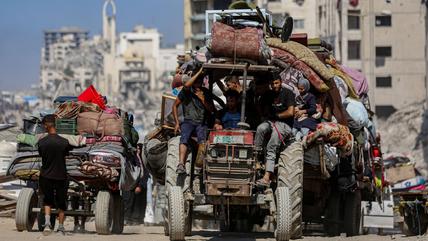
“The vacuum left by government bodies that became ineffective or entirely absent as a result of the war placed the burden on clans and families to organize social life, security, and politics,” Al-Aqqad said. “Institutions found themselves with no one to deal with but the families.”
Resisting co-optation by Israel
The importance of these growing institutional clan structures amid the war has not gone unnoticed by Israel. Prime Minister Benjamin Netanyahu publicly admitted last year to having “activated clans in Gaza that oppose Hamas.”
Indeed, throughout much of the war, the Israeli army and the Shin Bet security agency have been identifying and recruiting criminals and fugitives, promising them power, money, weapons, and access to food and other goods denied to ordinary Palestinians in Gaza.
The most notable product of this strategy was the Popular Forces militia led by Yasser Abu Shabab, who — according to multiple Israeli sources — had a reported criminal background and alleged smuggling ties to ISIS-linked networks in Sinai. With open Israeli backing, he operated in Rafah until his assassination by his own militia members in December 2025.
As Muhammad Shehada wrote for +972 Magazine at the time, “by outsourcing its occupation of a besieged population to the most violent and opportunistic collaborators, Israel will not produce a stable alternative to Hamas’ governance. Rather, such a strategy only fosters a miniature warlord economy, setting the stage for endless cycles of retributive violence.”
Yet while it has succeeded with some individuals, Israel has been unable to recruit any of Gaza’s clans as a whole. “Israel failed completely and utterly in winning over the families,” Harb said. “In fact, families whose members refused to cooperate with Israel were bombed for it.”
She cited the Bakr family, a prominent clan in Gaza, as one example: According to Euro-Med Human Rights Monitor, Israel carried out a massacre against the family a day after its mukhtar refused an Israeli demand that his family stay in Al-Shati refugee camp on the condition that its members serve in a local pro-Israel militia. Israeli missiles killed nine members of the family, including women and children.
Families whose members did join Israeli-backed militias — such as the Abu Shababs and the Al-Astals (Hussam Al-Astal is the leader of the Counter-Terrorism Strike Force militia, located in Israeli-controlled territory between Khan Younis and Rafah) — typically responded by issuing formal public statements disowning those individuals, calling their participation an act of betrayal, and warning other family members to stay away from Israeli-controlled areas. These families, Harb noted, nonetheless “left the door open for repentance and return.”
Gaza’s future governance
All the clan leaders interviewed for this article had one thing in common: their insistence that clans are not and will never be a substitute for Palestinian political leadership. “All clans announced their rejection of being an alternative to the Palestinian Authority or any Palestinian body governing Gaza when the Israeli occupation attempted that,” Al-Aqqad, of the Khan Younis Families Forum, explained.
Still, Al-Aqqad believes the elections also show that there is a profound loss of public confidence in political factions and that people are increasingly favoring family structures to protect their interests.
The recent municipal elections in Deir Al-Balah offered a glimpse of what that might look like in practice. Clan mobilization was a significant factor in the election’s success, partly because candidate lists deliberately avoided party affiliation, leaning instead on family networks for legitimacy and turnout. Although they ran independently, those who won had their family’s support.
Al-Qassas accordingly urges parties to integrate elected clan structures into whatever political framework emerges, rather than treat them as an obstacle to it. The elections themselves, he argues, should be encouraged as a healthy institutional response to a catastrophic institutional void, and as the most legitimate available mechanism for preparing clan structures to take part in future governance.
There is, however, a significant fault line running through the recent surge in clan elections: the total exclusion of women, both from voting and standing. According to Al-Qassas, this is true of every clan in Gaza, regardless of family size. The general assemblies, family councils, and mukhtar positions that are being formalized and elected at an unprecedented scale are, without exception, exclusively male domains.
Harb rejected this exclusion in principle, but explained the social logic behind it. “In Gaza, family councils are primarily charged with handling the most serious inter-family disputes — cases that typically involve killings, violent assaults, and confrontations that escalate from bladed weapons to firearms and house burnings,” she explained.
“These are not disputes that women have historically been part of resolving in Gaza,” she added, “and they are not compatible with the conservative environment in which Palestinian women have been raised.”
As a mukhtara, Harb mediates social disputes like marital conflicts, women’s rights cases, and problems facing divorcees, in an informal structure that exists alongside but separate from the male-dominated family councils. She noted that female mukhtaras outperformed their male counterparts in such cases of mediation, but that this has not translated into formal representation within the clan election system now being institutionalized across Gaza.
“This dilemma needs to be purposefully addressed,” Al-Qassas said. “We need genuine female participation, similar to what exists in general elections.” The recent Deir Al-Balah municipal elections — in which Harb herself won a seat — demonstrate that while voters can look beyond candidates’ gender, within the clan system the boundary remains intact.
As such, whether the integration of clan structures into Gaza’s future governance will be equitable — for smaller families, for those outside the established clan networks, and, above all, for women — is a question that remains to be answered. The structures are being built fast, and under enormous pressure. It is too early to tell what they will look like when the pressure lifts.
But according to Al-Qassas, one thing is certain: “No governmental or political effort can succeed without the clans — especially given current wartime conditions in Gaza.”
Originally published on +972 Magazine.
© Qantara.de