"All the fundamentals of genocide are present"
Topics
Qantara: Is genocide being committed in Sudan?
Scott Straus: The recent UN investigation states that there are "hallmarks of genocide" in Darfur, and I think that's valid.
All the fundamentals of genocide are present here. We see the specific targeting of several non-Arab ethnic groups. The violence that's being committed against them fits the definition in the genocide convention—killings, significant bodily and mental harm, and the creation of conditions of life that don't allow for survival.
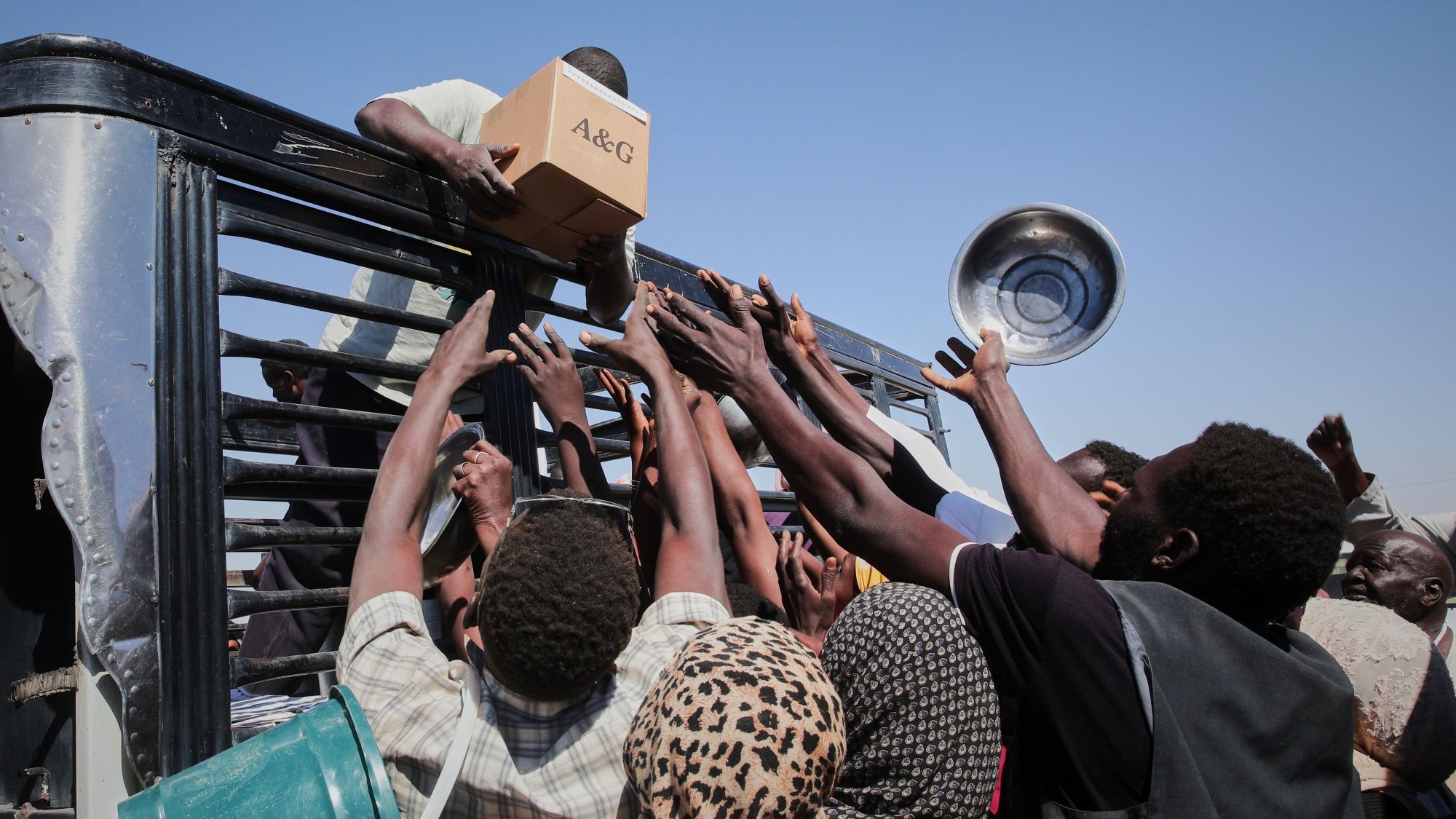
There is ample evidence from al-Fasher in Darfur. When the Rapid Support Forces (RSF) overran the city in October 2025, they engaged in mass killings in the streets, at hospitals and in areas where people were trying to flee. The survivors reported widespread use of language related to "cleansing" the city of non-Arabs. There were many social media posts by RSF fighters, bragging about killing large numbers of civilians.
Then there's the broader context. 20 years ago, the Janjaweed, the group that eventually became the foundation for the RSF, engaged in what I would call genocide against non-Arab groups in the same region. It's not exactly the same actors, but it's the same institutional structure. It suggests an ongoing pattern of efforts to eliminate and remove these non-Arab groups.
How did the Janjaweed evolve into the present-day RSF, the paramilitary force now fighting a civil war against the Sudanese Armed Forces (SAF)?
The Janjaweed was created in the early 2000s as part of a counterinsurgency strategy against non-Arab groups in the region. The government augmented, armed and supported Arab armed groups in Darfur. When the war died down in Darfur, the group remained. Then-president of Sudan, Omar al-Bashir, brought elements of the Janjaweed to Khartoum as a kind of coup-proofing loyalist armed group that would protect him from possible overthrow.
During the war in Yemen, when Saudi Arabia and the UAE came to Sudan to ask for support in that war, al-Bashir sent the Janjaweed, now called the RSF, to Yemen in 2015, where they gained additional combat experience and forged ties with the UAE and Russia. At the same time, the RSF's leader, Hemedti, was establishing an economic network of gold mines and trafficking routes, and accumulated a lot of wealth, becoming an important political figure within Sudan.
The group gained international experience, allies, recruits and wealth. Then, after the 2021 joint coup between the SAF and the RSF, you suddenly have a Darfuri, Hemedti, at the seat of power. That was previously unimaginable in Sudan's history.
The RSF had evolved from a regional group with very provincial, Darfur-oriented interests to a group with a national and even international profile that was basically co-leading the state in Sudan.
In your book, "Making and Unmaking Nations" (2015), you analysed the ideological drives behind Janjaweed atrocities in Darfur. What is driving RSF violence today? Have these drives changed?
There are clear elements of Arab supremacist ideology at play. The language the RSF is using against non-Arab groups, such as "Blacks" and "slaves," indicates that they view them as second-class citizens. This kind of Arab supremacy, or Arab nationalism, has infused Sudan since its origins as an independent country, and probably before. It is underlying the logic of violence, as it did in the past.
In Darfur there are also continuing material interests overlapping with that ideological orientation, to do with securing access to land and water. This remains an area where people need to compete for access to resources.
The same ingredients that caused genocide in 2003 are present again today. We have a war. We have a nationalist ideology that creates an identity-based hierarchy of citizenship. We also have very limited restraints on that violence, meaning very little international attention.
This war is routinely framed primarily as a power struggle between two military leaders. Do you agree with that framing? What else is driving the conflict?
Clearly, it's a power struggle. You have two extremely powerful heads of very significant militaries fighting for control of the state and territory. That's an element, but there are a few other dynamics.
One is a centre/periphery dynamic. Throughout the history of independent Sudan, an Arab elite ruled the country from the Khartoum area and the fertile areas around the Nile. The Sudanese Armed Forces (SAF) is an institution of that elite. The RSF are the upstarts. They are Arabs, but as they're from Darfur, they've been excluded from this elite Arab power structure. That explains the political support for Hemedti from other parts of Sudan, from people who feel power has been monopolised by one subgroup of Arabs, and this is a chance to dislodge that historic power structure.
Another element is the Islamist/secularist dynamic. Al-Burhan, SAF leader, has increasingly drawn on an Islamist network to shore up support. The SAF has a kind of Islamist backbone and a power base in the historic Islamist centres of Sudan. The RSF positions itself as a non-Islamist and secularist.
There is also the international dimension. The RSF is being supported by the UAE, which has several different interests. The UAE is wary of regional Islamist movements, so the secular element of the RSF is appealing. The UAE is also looking to increase its footprint in Africa, so they have a partner in the RSF that has expanded its influence in the region. There are also quite significant commercial ties between the RSF and the UAE.
By the same token, the SAF is supported by Egypt and Saudi Arabia. These competing actors add another significant layer of complexity to this conflict and its potential resolution.
The last dimension is economic. Hemedti has built a powerhouse illicit economy, created a lot of wealth and interests, which is fueling support for the RSF.
The same old tale of power and exclusion
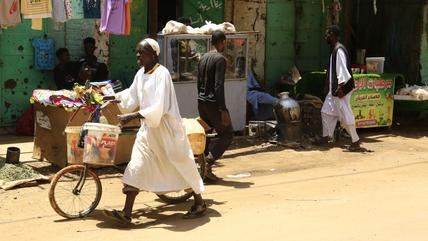
While Sudan's de facto government focuses on reviving the capital, its reconstruction policies follow a familiar pattern: channelling resources to the centre while neglecting the marginalised, war-torn periphery.
You have been researching Sudan for decades. Is the war today a "forgotten" conflict?
It's really remarkable to me, as someone who was writing about Darfur 20 years ago, how different the degree of international attention was then compared to today.
Now, there is virtually no coverage, no attention. 20 years ago, there was significant international concern, student-led protests and a broader civil society movement. The contrast is really striking. It speaks to where we are globally on the question of genocide prevention.
How do you explain that shift?
On the one hand, the global order as we know it is being upended and unwritten in many different ways. Genocide prevention is a more remote priority than some of these first-order issues of global security, economy and order.
I think Gaza is also part of the story. For a large part of the world, there is a conviction that Israel committed genocide in Gaza, and no one did anything about it. In fact, major states backed Israel and condemned those who criticised Israel as antisemitic. As a result, the moral authority of the term genocide weakened, lost legitimacy. It's difficult, I think, to mobilise young people by saying, "Hey, we have to stop a genocide!", because many of them have been saying that, and instead of being listened to, were demonised and called antisemitic.
The third element is that genocide prevention has always been difficult. 20 years ago, there was perhaps more naive optimism than there is today. In the historic cycle of genocide prevention policy, Darfur was on the upswing after the low point in the 1990s with Srebrenica and Rwanda. There was a sense that we had to do better. Then, after the intervention in Libya in 2011, there was a real concern that the logic of atrocity prevention could also create chaos. It undermined some of the arguments.
War demands unconvential strategies
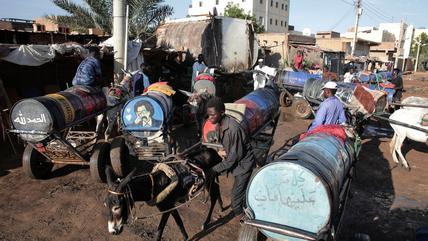
As the war continues in Sudan, survival has become a daily test of resilience for millions in the country. Business has to adapt and focuses on necessities: food, electricity, fuel and internet.
How could one envision a way out of the situation in Sudan?
I think that the movement that led to the ouster of al-Bashir was a really important development. What had been a moment of incredible hope for change in that country has now resulted in one of the deepest crises in Sudan's history. But I think there is still hope.
It starts with a ceasefire. The North Star should be to try to assist civilians and prevent future massacres. Then, ideally, you would see some type of return to civilian rule.
To get there, ideally, some of the key players, particularly the UAE and other Gulf states, would look for ways to resolve the crisis, rather than backing one side or the other.
The UN is basically defanged right now. Nonetheless, I think within the UN there exists the operational machinery to either draw attention to Sudan or to provide some civilian protection. Those institutions could be revived.
But I think that's all highly unlikely. All the other major crises in the world are going to take significant priority. The likelihood of Sudan gaining traction is low, unfortunately.
© Qantara.de