Stories from elsewhere
Topics
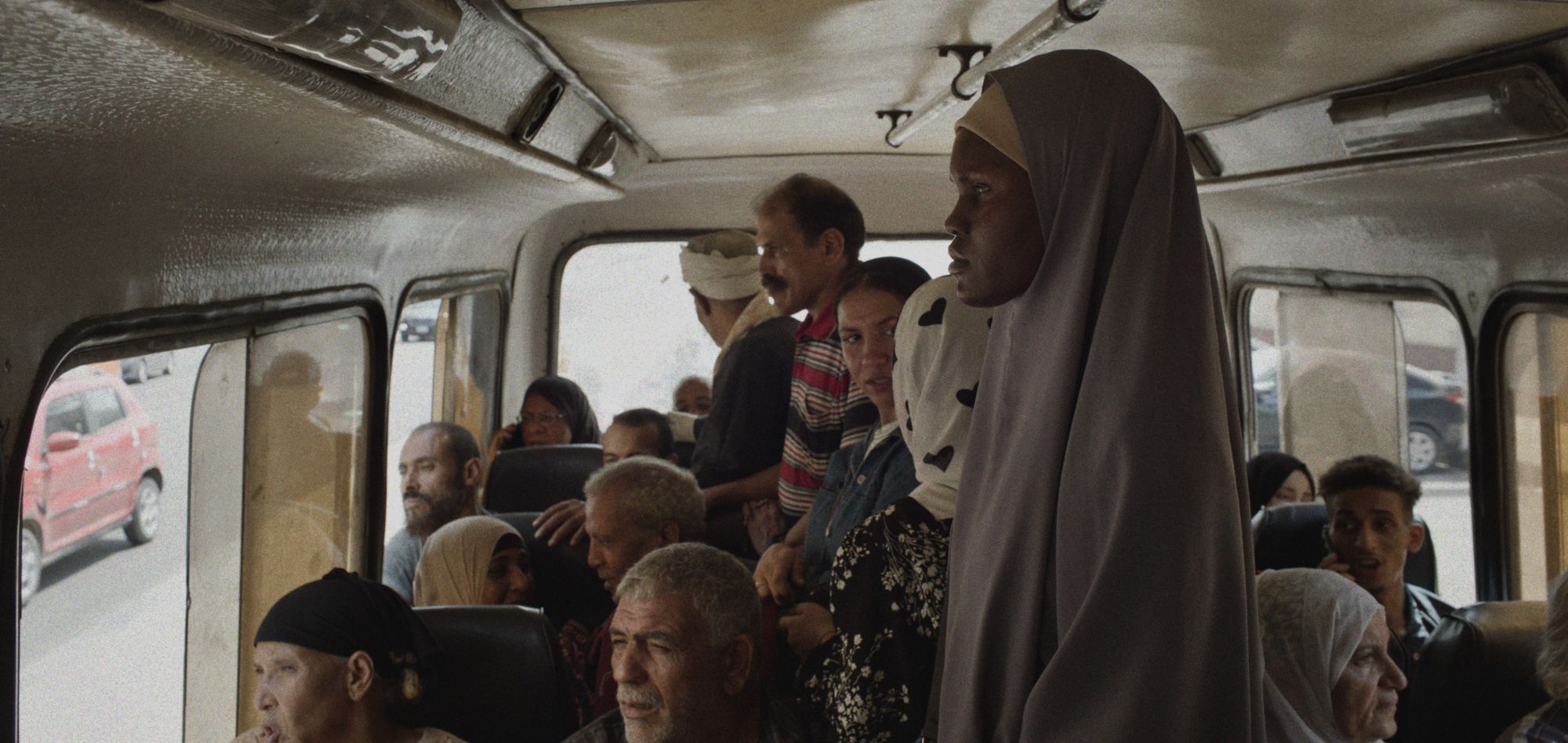
In "Aisha Can't Fly Away", the genre-hybrid debut feature by Egyptian filmmaker Morad Mostafa, the Cairo neighbourhood of Ain Shams is not just a setting but a character in its own right. Mostafa lived there until the age of 13 and experienced its roughness and poverty first-hand: "Ain Shams is a very complicated place," he explains in conversation with Qantara.
"Over the years, it has become home to a growing population of African migrants, and this new community clashes with local Egyptian gangs. The resulting tension isn't really about racism; it's about control. Who controls Ain Shams?"
Drawing on these experiences, Mostafa places his titular heroine, Aisha (Buliana Simon Arop), between the competing factions. She's a Sudanese woman who fled her home due to civil war and now lives and works in Cairo. Although "Aisha Can't Fly Away" never explicitly states her nationality or recounts the violence she escaped, her origins are clear.
Sudan remains a constant presence in her life, surfacing in phone calls back home (which include mentions of the Rapid Support Forces taking over entire regions), and in a broad, pervasive sense of something irretrievably lost. Aisha is physically in Egypt, working as a carer for elderly people, but mentally she remains elsewhere.
Her new environment offers her little legal protection. Like many migrants, she is forced into illegal labour, exploited not only by her employer but also by local gangsters seeking to profit from her access to various buildings. There is also the man she is assigned to care for, who treats her more like a slave than a helper.
Mostafa's research was rooted in reality: having grown up in Ain Shams, he understood the neighbourhood and spoke extensively with migrant women during casting. This research led him to what he describes as a "dark community" of illegal labour. The film does not sensationalise these networks, but it doesn't shy away from showing their brutality either.
The flightless bird
What begins as a social realist portrait gradually mutates into something more unsettling, a thriller with elements of magical realism and body horror. This fluidity finds its most striking expression in the recurring motif of an ostrich. Aisha's repeated encounters with a bird as large as herself feel both symbolic and visceral. The image of a flightless bird, Mostafa explains, reflects Aisha's condition as a Sudanese woman in Egypt, a member of a community of migrant workers yet perpetually alienated from it.
Mostafa has long been troubled by the absence of non-Egyptian protagonists in Egyptian cinema. "I always asked myself why Egyptian films are only about Egyptians," he says. "In France or Germany, you see films about migrants all the time. Why not here?" "Aisha Can't Fly Away" is not his first attempt to address this absence. Several of his earlier short films, such as "I Promise You Paradise" or "Ward's Henna Party", also focused on communities from outside Egypt. This debut feature allowed him to expand his interest into a more complex, genre-bending form.
The emotional core of the film, though, came from a fleeting real-life encounter. Mostafa recalls sitting on a public bus in Cairo next to a young woman who was sleeping deeply before waking up screaming and crying. "I started thinking about her nightmares. About her dreams, her life in Cairo." That moment shaped Aisha's inner world, giving the film its ruminative, restrained quality, with violence simmering beneath the surface rather than dominating it.
By placing a Sudanese woman's experience at the centre of his film, Mostafa insists on her subjectivity rather than reducing her to a symbol. "Aisha Can't Fly Away" opens a space for Sudanese stories to be seen beyond Sudanese cinema, not only as distant crises but as intimate realities unfolding in the heart of a metropolis.
Memories of Sudan's cotton fields
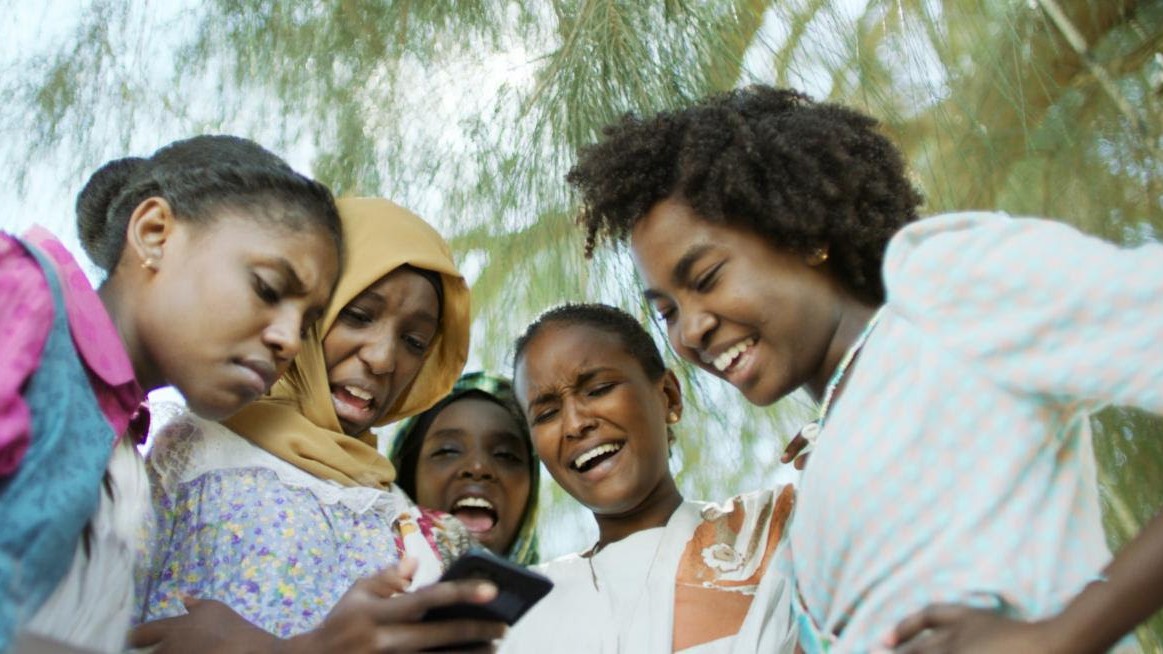
If Mostafa's film explores contemporary Sudanese life through exile and displacement, Suzannah Mirghani, who herself left Sudan for Qatar as a teenager, roots her debut feature in memory and myth. The first Sudanese feature film written and directed by a woman, "Cotton Queen", draws on Mirghani's childhood memories of Sudan's cotton fields and tells a story about family, trauma, gender and the legacy of British colonialism.
Far from Cairo's grit and shadows, "Cotton Queen" largely unfolds in daylight, with lush sceneries rendered in rich colours. The film centres on teenager Nafisa (Mihad Murtada), who works collecting cotton in a Sudanese farming village where she is raised on her grandmother Al-Sit's stories of resistance against the British. These stories have shaped her understanding of who she is, where she comes from and what is expected of her as a woman.
When businessman Nadir arrives with the promise of change in the form of genetically engineered cotton, Nafisa is entangled in a power struggle and made a pawn in negotiations between Al-Sit's authority and Nadir's vision. Her body and future are treated as bargaining chips, and she begins to push back against tradition, asserting her own agency.
Focusing on three generations of Sudanese women, the film examines the gendered expectations passed down through ritual, storytelling and even silence. "Cotton Queen" is based on Mirghani's acclaimed 2020 short film "Al-Sit", and she expands on its themes here, further excavating the remnants of British colonialism and the contemporary neo-colonialism that threatens the traditional village structure.
The film addresses female empowerment and emancipation in the context of a clash between generations. For the grandmother, superstitions dictate what a girl can and cannot do. This tension is highlighted especially in one recurring theme: young girls insisting on their own freedom by going to swim in the Nile whenever they want to.
The film's production history adds another layer. Ongoing war in Sudan forced Mirghani to relocate the shoot to Egypt, and she was already constructing the film from memory, depicting a country that might no longer match her recollections. The result is an image of Sudan doubly distanced: filtered through memory and filmed outside the country itself.
Seen together, "Aisha Can't Fly Away" and "Cotton Queen" reveal different registers of Sudanese storytelling—one about exile, the other about remembrance. Whether set in Egypt or forced there by circumstance, both films point to a broader condition: Sudanese stories are increasingly told from elsewhere. Watching them means engaging not only with Sudan's history and present, but with the fragile conditions through which Sudanese cinema and migrant stories can exist and be seen.
© Qantara.de