What is happening in Sudan?
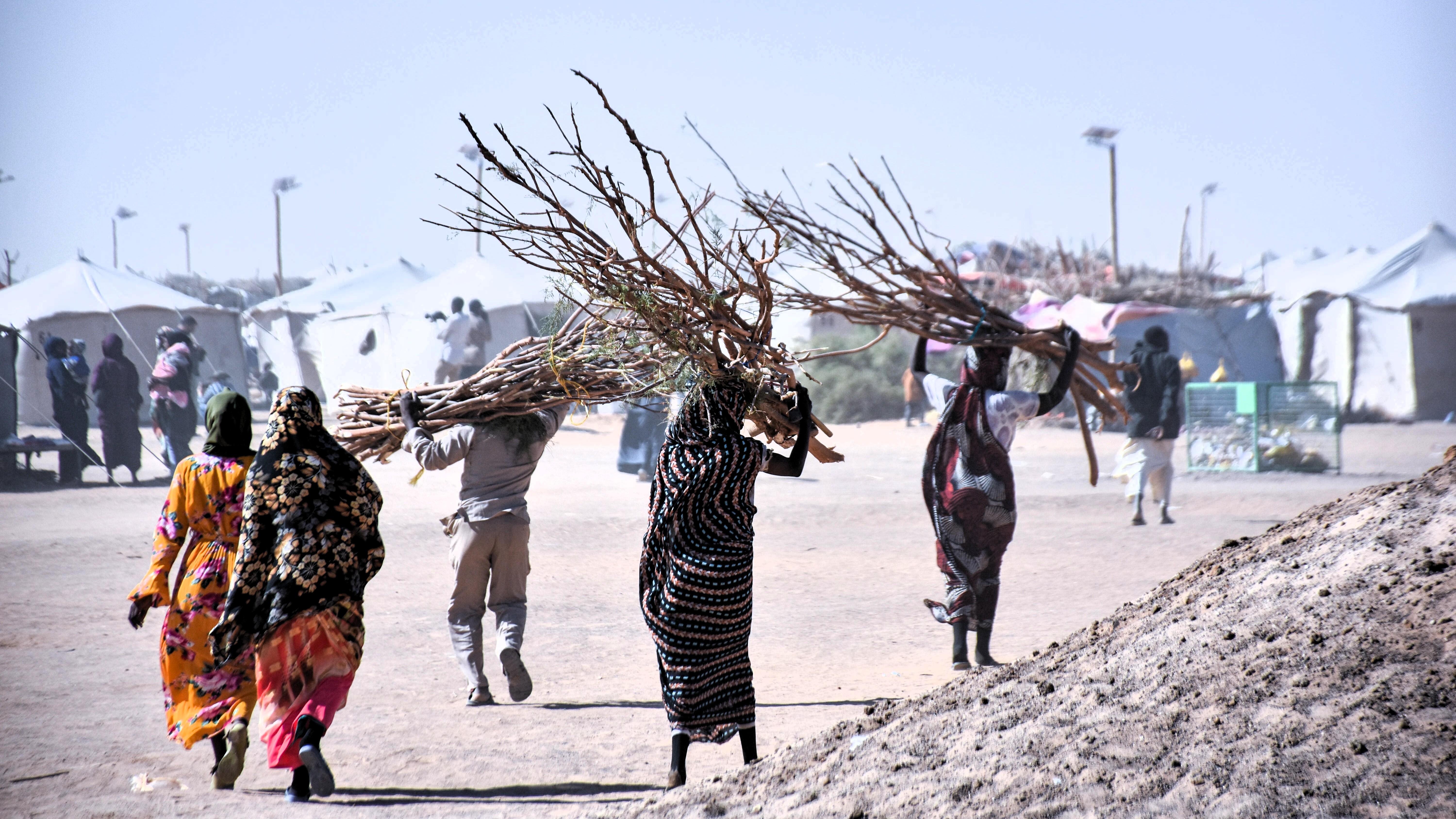
Why is there a war in Sudan?
Since 2023, the Sudanese Armed Forces (SAF) and the paramilitary Rapid Support Forces (RSF) have been fighting each other in Sudan. Both groups once served dictator Omar al-Bashir, who ruled the country for 30 years. The SAF were the official armed forces, while the RSF was primarily deployed by al-Bashir to control the border and in counter-insurgency operations.
When al-Bashir was overthrown in 2019, military and civilian forces formed a joint transitional government tasked with preparing for elections and reform. However, in 2021, the two military leaders, Abdel Fattah al-Burhan (SAF) and Mohammed Hamdan Daglo (RSF), staged a joint coup, dissolving the civilian government and seizing power. Their alliance collapsed, sparking a power struggle which escalated in April 2023 into a war that continues to this day.
What is happening in Darfur?
Darfur—a region roughly the size of France—is an impoverished area in western Sudan which has been marginalised and exploited by successive governments in Khartoum for decades. The RSF currently controls the area, and has repeatedly persecuted and killed ethnic communities categorised as "non-Arab" since the outbreak of war.
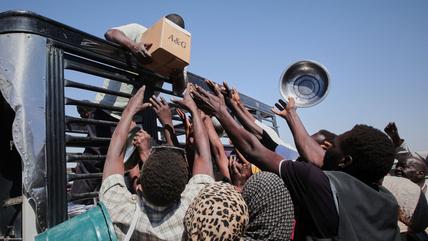
Until recently, only the city of al-Fasher in North Darfur remained under the control of the SAF. After the RSF laid siege to the city for over a year and a half, cutting off all transport and supply routes, food and medicines could no longer get in and civilians couldn't get out. The resulting famine has claimed many lives.
"All the fundamentals of genocide are present"
Genocide scholar Scott Straus has spent decades studying the causes of mass violence. He examines the dynamics of violence in Darfur, arguing that international inaction on Sudan highlights a broader crisis in genocide prevention.
On 25 October 2025, the RSF stormed al-Fashir and have since been committing devastating—and mostly ethnically motivated—crimes against the remaining population, including arrests, executions and rapes. Satellite images of suspected mass graves suggest that thousands of people have already been killed.
Is what is happening there now connected to the war in Darfur in the early 2000s?
Yes. The current conflict has its roots in the Darfur war, which began in 2003. Darfur is home to various ethnic communities, including indigenous groups who are primarily settled and engage in agriculture, and nomadic groups who roam the land herding livestock. Conflicts over land—the result of drought and population growth—started in the last century, but initially, they could be resolved without military intervention.
In the early 2000s, several local—and predominantly indigenous—rebel groups rose up against Omar al-Bashir's military government, which promoted an ideology of Islamic-Arab supremacy. To support the SAF in their fight against the rebels, the dictator deployed militias identifying as Arab—most notably the Janjaweed, many of whom came from nomadic communities and who used the war as an excuse to seize land.
The Janjaweed later evolved to become the RSF. Current RSF leader, Mohammed Hamdan Daglo, was formerly a Janjaweed member. The Darfur war ended with the deaths of over 250,000 people, predominantly members of the region's "non-Arab" indigenous populations, and in the displacement of millions.
What is the situation in other regions of Sudan?
Ethnically-motivated violence is primarily concentrated in Darfur but does occur in other regions, such as Kordofan, a region bordering Darfur where the RSF has launched multiple attacks. The SAF, which also promotes an ideology of Arab-Muslim supremacy, has also been implicated in ethnically-motivated crimes, if not to the same extent as the RSF.
Do the SAF and RSF receive support despite their crimes?
Both have numerous allies. Sudan has long been home to various militias and rebel groups, many of which have now sided with one of the two factions. Both sides also receive support from abroad. These alliances are political, but also strategic. Sudan is rich in gold, oil and other resources; the SAF and the RSF exercise control over major corporations and trade networks, particularly within the commodities sector, and finance their operations through exports.
The United Arab Emirates (UAE) faces particular criticism. Widely regarded as the main backer of the RSF, the UAE supplies the militia with weapons, ammunition and money, in return for gold. Consequently, critics accuse the Emirates of effectively co-financing the war—and the RSF's killings—through the gold trade.
Germany too faces criticism regarding arms exports to third countries which support the war. In 2024, the German government approved arms deliveries worth around 147 million euros to the UAE, and nearly the same amount to Saudi Arabia (considered a supporter of the SAF).
What's the current situation in Sudan, and what lies ahead?
Sudan is currently locked in a stalemate. The RSF and its allies control the south and west, whilst the SAF controls the north and south-east. This could lead to a partition of the country, but peace remains a distant prospect. To date, both sides have refused to curtail their claims to power, and peace negotiations have repeatedly failed. Ending the violence will require political pressure, both on the warring parties but also on those who support them.
This text is published with the kind permission of fluter.de, the youth magazine of the German Federal Agency for Civic Education (bpb). Translation of the German original by Louise East.
© CC-BY-NC-ND-4.0-DE/Fluter.de